
TP-Link SG2210XMP-M2 vs TP-Link SG2008P: Specification Comparison
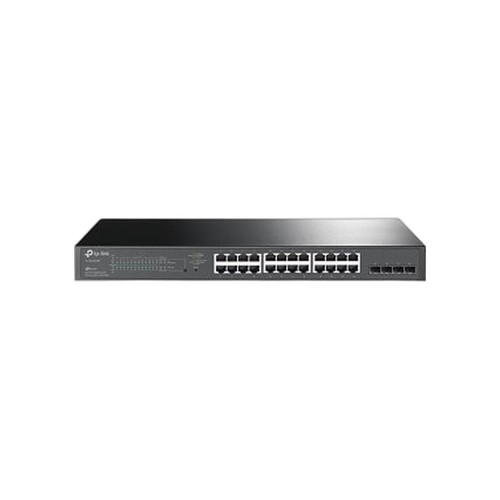
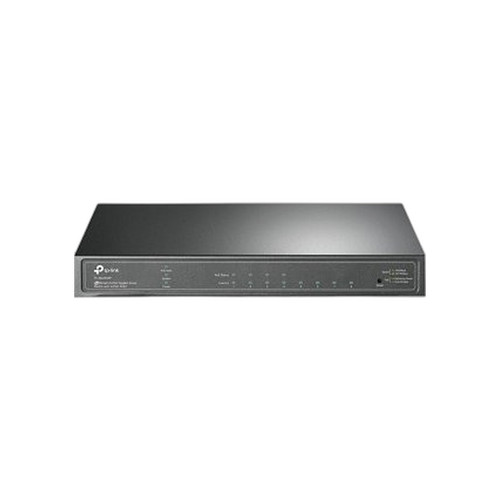
Both the TP-Link SG2210XMP-M2 and SG2008P are Omada-managed, 8-port PoE-capable Ethernet switches from TP-Link, positioned for small-to-medium IP security camera deployments. The comparison centers on three dimensions where they diverge sharply: port speed and uplink architecture, PoE budget and per-port power delivery, and operating environment with thermal tolerance. Buyers cross-shopping these models are typically evaluating whether 2.5G edge speeds and 10G fiber uplinks justify the step up from a baseline gigabit platform.
In This Guide
- Which switch delivers more bandwidth at the edge and how does each connect to the upstream network?
- How much PoE power can each switch deliver, and what camera loads will that support?
- How do these switches differ in operating environment tolerance and management platform support?
- Which should you choose: the SG2210XMP-M2 or the SG2008P?
- Side-by-Side Specs
- FAQ
Which switch delivers more bandwidth at the edge and how does each connect to the upstream network?
The SG2210XMP-M2 provides 8 × 2.5GBASE-T access ports running at 2.5 Gbps each, plus 2 × 10G SFP+ uplink slots rated for single-mode fiber. Its switching fabric is 80 Gbps with a forwarding rate of 59.52 Mpps. The 2.5G access ports support runs up to 64 m on Cat 6A cabling.
The SG2008P provides 8 × 1000BASE-T (gigabit) access ports with no dedicated fiber uplink slots specified in the provided data. Its switching fabric is listed at 16 Gbps. No forwarding rate (Mpps) figure is present in the SG2008P spec set.
For deployments streaming 4K or multi-stream 8MP feeds, the SG2210XMP-M2's 2.5G per-port headroom and 10G fiber uplinks offer a clear bandwidth ceiling advantage. The SG2008P's gigabit fabric is adequate for standard 1080p or 4MP camera loads where aggregate throughput does not approach 1 Gbps per port.
How much PoE power can each switch deliver, and what camera loads will that support?
The SG2210XMP-M2 carries a 160W PoE budget across all 8 access ports, conforming to 802.3af/at with a maximum of 30W per port (PoE+). Total system power consumption peaks at 193.3W under full PoE load at 25°C; standby draw is 15W. The power supply is a 53.5 VDC / 3.37 A external adapter.
The SG2008P carries a 62W PoE budget across its 8 ports, conforming to 802.3af/at. Total system power consumption is listed at 62W. The power supply is a 53.5 VDC / 1.31 A external adapter. No per-port maximum wattage figure is explicitly stated beyond the 802.3at standard ceiling of 30W.
The 160W budget on the SG2210XMP-M2 can simultaneously power up to eight 802.3at devices at up to 20W each with headroom remaining, or a mixed load of PTZ cameras (typically 25–30W each) and fixed cameras. The SG2008P's 62W budget constrains simultaneous full-PoE+ loads; powering eight 802.3at devices at even 7.75W average per port exhausts the budget.
How do these switches differ in operating environment tolerance and management platform support?
The SG2210XMP-M2 is rated for an operating temperature range of -5°C to 40°C (23°F to 104°F). Its MTBF is specified at 275,278 hours at 25°C. It supports both standalone operation and Omada SDN cloud/controller management. Memory is 32 MB Flash and 256 MB DRAM. ONVIF compatibility is listed in the provided specs.
The SG2008P is rated for -40°C to 60°C (-40°F to 140°F), a substantially wider thermal envelope that covers outdoor enclosures, unheated equipment rooms, and hot ambient environments where the SG2210XMP-M2 would fall out of spec. The SG2008P also supports Omada SDN management. Memory is listed as 32 MB; DRAM is not specified in the provided data. No MTBF figure is present for the SG2008P.
For indoor, climate-controlled server rooms and wiring closets, both switches operate within range. For outdoor enclosures, rooftop cabinets, or industrial spaces that reach above 40°C or below -5°C, only the SG2008P remains within its rated operating envelope. The SG2210XMP-M2's MTBF figure provides a reliability benchmark the SG2008P spec set does not match.
Which should you choose: the SG2210XMP-M2 or the SG2008P?
Our take: The SG2210XMP-M2 is the stronger choice when bandwidth, PoE headroom, and fiber uplinks are the primary requirements. It delivers 2.5G per-port access versus gigabit on the SG2008P — a 2.5× speed advantage at the edge — and a 160W PoE budget versus 62W, allowing substantially denser or higher-wattage camera loads. Its dual 10G SFP+ uplinks enable single-mode fiber backhaul that the SG2008P does not offer per the available specs. However, the SG2008P's -40°C to 60°C operating range is far broader than the SG2210XMP-M2's -5°C to 40°C window, making it the only specified choice for outdoor cabinets, unheated spaces, or high-ambient environments. Buyers running Omada SDN will find both switches compatible with that management platform. Choose the SG2210XMP-M2 for high-throughput, indoor, multi-stream 4K or 8MP camera deployments; choose the SG2008P where environmental extremes or cost constraints take priority over raw bandwidth.
Side-by-Side Comparison
Spec-for-spec, from manufacturer data.
| Specification | TP-Link SG2210XMP-M2 | TP-Link SG2008P |
|---|---|---|
| Access Port Count | 8 | 8 |
| Access Port Speed | 2.5GBASE-T (2.5 Gbps) | 1000BASE-T (1 Gbps) |
| Uplink Ports | 2 × 10G SFP+ | — |
| Fiber Support | Single Mode (SFP+ slots) | — |
| Switching Capacity | 80 Gbps | 16 Gbps |
| Forwarding Rate | 59.52 Mpps | — |
| PoE Standard | 802.3af/at (PoE+) | 802.3af/at (PoE+) |
| PoE Budget | 160W | 62W |
| Max PoE per Port | 30W | 30W (802.3at ceiling; not explicitly stated) |
| Max Power Consumption | 193.3W (full PoE load) | 62W |
| Power Supply | 53.5 VDC / 3.37 A adapter | 53.5 VDC / 1.31 A adapter |
| Operating Temperature | -5°C to 40°C | -40°C to 60°C |
| MTBF | 275,278 h @ 25°C | — |
| Flash / DRAM | 32 MB / 256 MB | 32 MB / — |
| Management | Standalone or Omada SDN | Omada SDN |
| ONVIF Listed | Yes | — |
Frequently Asked Questions
Which should you choose: the SG2210XMP-M2 or the SG2008P?
The SG2210XMP-M2 is the stronger choice when bandwidth, PoE headroom, and fiber uplinks are the primary requirements. It delivers 2.5G per-port access versus gigabit on the SG2008P — a 2.5× speed advantage at the edge — and a 160W PoE budget versus 62W, allowing substantially denser or higher-wattage camera loads. Its dual 10G SFP+ uplinks enable single-mode fiber backhaul that the SG2008P does not offer per the available specs. However, the SG2008P's -40°C to 60°C operating range is far broader than the SG2210XMP-M2's -5°C to 40°C window, making it the only specified choice for outdoor cabinets, unheated spaces, or high-ambient environments. Buyers running Omada SDN will find both switches compatible with that management platform. Choose the SG2210XMP-M2 for high-throughput, indoor, multi-stream 4K or 8MP camera deployments; choose the SG2008P where environmental extremes or cost constraints take priority over raw bandwidth.
Can either switch handle outdoor or unconditioned-space installation?
Only the SG2008P is rated for outdoor-range temperatures: -40°C to 60°C per its spec sheet. The SG2210XMP-M2 is rated only from -5°C to 40°C, which rules it out for unheated enclosures, rooftop cabinets, or environments that exceed 40°C ambient. If your installation point is not climate-controlled, the SG2008P is the only option between these two with a specified operating range to cover it.
How many PoE+ cameras can each switch realistically power simultaneously?
The SG2210XMP-M2's 160W budget at a typical PTZ or multi-imager draw of 20W per device supports up to 8 devices simultaneously with headroom; at the 30W 802.3at ceiling it supports approximately 5 at full draw. The SG2008P's 62W budget at 20W per device supports approximately 3 devices simultaneously, or up to 8 low-power 802.3af cameras drawing roughly 7–8W each. Exact numbers depend on actual per-device draw at runtime.
Is the SG2210XMP-M2 or SG2008P better for larger or growing deployments?
The SG2210XMP-M2 is better positioned for growing deployments where aggregate bandwidth may become a bottleneck. Its 80 Gbps switching fabric — five times the SG2008P's 16 Gbps — and dual 10G SFP+ fiber uplinks provide headroom for higher-resolution cameras, multi-stream recording, and stacking into a larger Omada SDN fabric. The SG2008P's gigabit fabric and 62W PoE budget are adequate for small, stable deployments but leave less room to add high-bandwidth or high-wattage devices without replacing the switch.
More Network Switch Comparisons
- TP-Link SG2210XMP-M2 vs Ubiquiti USW-FLEX-2.5G-8
- TP-Link SG2210XMP-M2 vs Comnet CNGE8MS
- TP-Link SG2210XMP-M2 vs Lantronix S2220-1014-NA
- TP-Link SG2210XMP-M2 vs TP-Link S4500-8GP
- TP-Link S4500-8GP vs Ubiquiti USW-FLEX-2.5G-8
- TP-Link S4500-8GP vs Comnet CNGE8MS
Network Switch Buying Guides
Get a Second Opinion on Your Camera Choice
Share your site layout, coverage goals, and budget. Our team will validate the camera selection, flag anything we would change, and recommend products that match the use case.