
TP-Link SG2210XMP-M2 vs Lantronix S2220-1014-NA: Specification Comparison
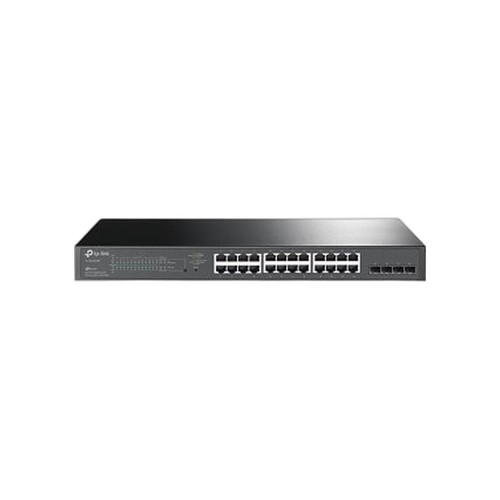
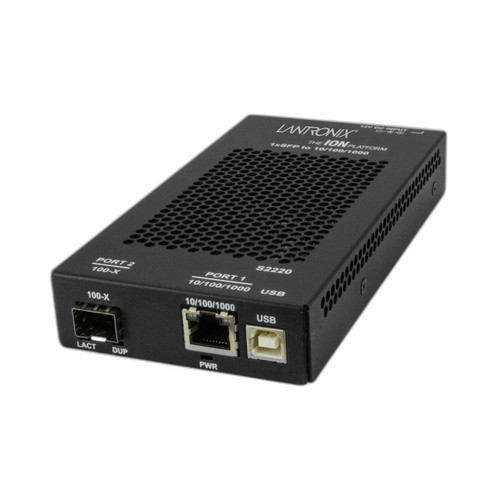
Both the TP-Link SG2210XMP-M2 and Lantronix S2220-1014-NA are managed Ethernet switches with 8 copper ports targeting security and surveillance infrastructure. However, they differ sharply in port speed, PoE capability, uplink architecture, and switching capacity. This comparison examines how those differences map to real deployment decisions: powering high-resolution IP cameras, connecting to fiber backbones, and fitting within existing management platforms.
In This Guide
- Which switch delivers the port speed and PoE budget your cameras actually need?
- How do the uplink options and switching capacity compare for aggregation and fiber backhaul?
- What management platform, power envelope, and environmental ratings apply to each unit?
- Which should you choose: the SG2210XMP-M2 or the S2220-1014-NA?
- Side-by-Side Specs
- FAQ
Which switch delivers the port speed and PoE budget your cameras actually need?
The SG2210XMP-M2 provides 8 × 2.5GBASE-T copper ports rated at 30 W per port under 802.3at (PoE+), with a total PoE budget of 160 W. That headroom supports 5 MP and 8 MP cameras with pan-tilt-zoom or integrated IR that routinely draw 15–25 W each. Maximum copper reach is specified at 64 m on Cat 6A at 2.5 G.
The S2220-1014-NA offers 8 × 10/100/1000BASE-T (Gigabit) copper ports. No PoE capability is stated in the provided specifications; installers relying on this switch would need separate PoE injectors or midspan units for every powered device. Port speed tops at 1 Gbps, which is adequate for most single-stream cameras today but leaves no headroom for multi-sensor or high-bitrate 4K streams at scale.
How do the uplink options and switching capacity compare for aggregation and fiber backhaul?
The SG2210XMP-M2 adds 2 × 10G SFP+ slots specified for single-mode fiber, giving a total switching capacity of 80 Gbps and a forwarding rate of 59.52 Mpps. These uplinks can feed a 10G aggregation switch or NVR directly, and the non-blocking architecture means all 8 × 2.5G ports can run simultaneously without contention.
The S2220-1014-NA includes one fiber port specified as 100BASE-LX10 single-mode via SC connector, capable of reaching up to 10 km — a meaningful advantage for campus or multi-building runs where the SG2210XMP-M2's 10G SFP+ slots are limited to shorter single-mode distances not explicitly quantified in the provided specs. Total switching capacity for the S2220-1014-NA is not stated in the provided specifications, nor is forwarding rate.
What management platform, power envelope, and environmental ratings apply to each unit?
The SG2210XMP-M2 is a fully managed Layer 2/Layer 3-lite switch operable in standalone mode or under TP-Link's Omada SDN controller, supporting cloud-based and on-premises management. It reports MTBF of 275,278 hours at 25 °C, an operating range of -5 °C to 40 °C (23 °F to 104 °F), and a power adapter rated at 53.5 VDC / 3.37 A. Maximum system draw is 193.3 W under full PoE load at 25 °C; standby is 15 W. Memory is 32 MB Flash and 256 MB DRAM. The unit supports wall, ceiling, or rack mounting.
The S2220-1014-NA is specified as Layer 2 managed with VLAN support, traffic prioritization, and remote monitoring. It carries a stated 2-year warranty. Operating temperature, MTBF, power consumption, power supply type, memory, and mounting options are not provided in the available specifications. Its management platform beyond Layer 2 feature set is not named in the provided data.
Which should you choose: the SG2210XMP-M2 or the S2220-1014-NA?
Our take: The SG2210XMP-M2 is the stronger choice when the deployment requires powered IP cameras, higher per-port throughput, or a unified SDN management platform. Concretely: it provides 160 W of 802.3at PoE budget versus zero stated PoE on the S2220-1014-NA; 2.5 Gbps per copper port versus 1 Gbps; and 80 Gbps total switching capacity versus an unspecified figure for the Lantronix. The S2220-1014-NA's single differentiating advantage is its 100BASE-LX10 single-mode fiber port rated to 10 km via SC connector, which suits long-haul fiber uplinks on sparse campuses where distance, not bandwidth, is the binding constraint. Buyers standardized on Omada SDN infrastructure or running high-bitrate multi-sensor cameras should select the TP-Link. Installers who need a simple Gigabit edge switch with a long-reach fiber uplink and can supply PoE externally may find the Lantronix adequate, subject to confirming the missing environmental and power specifications with Lantronix directly.
Side-by-Side Comparison
Spec-for-spec, from manufacturer data.
| Specification | TP-Link SG2210XMP-M2 | Lantronix S2220-1014-NA |
|---|---|---|
| Product Type | Managed Ethernet Switch | Managed Ethernet Switch |
| Copper Ports | 8 × 2.5GBASE-T | 8 × 10/100/1000BASE-T |
| Max Copper Port Speed | 2.5 Gbps | 1 Gbps |
| PoE Support | 802.3af/at (PoE+) | Not specified |
| PoE Budget | 160 W | — |
| Max PoE per Port | 30 W | — |
| Fiber Uplink | 2 × 10G SFP+ (single-mode) | 1 × 100BASE-LX10 SC (single-mode) |
| Max Fiber Reach | Not specified in provided specs | 10 km |
| Switching Capacity | 80 Gbps | Not specified |
| Forwarding Rate | 59.52 Mpps | Not specified |
| Management | Omada SDN (cloud/standalone) | Layer 2 (VLAN, prioritization, remote monitoring) |
| Operating Temp | -5 °C to 40 °C | Not specified |
| MTBF | 275,278 h @ 25 °C | Not specified |
| Memory | 32 MB Flash / 256 MB DRAM | Not specified |
| Mount Options | Wall, Ceiling, Rack | Not specified |
| Warranty | Not specified in provided specs | 2 Years |
Frequently Asked Questions
Which should you choose: the SG2210XMP-M2 or the S2220-1014-NA?
The SG2210XMP-M2 is the stronger choice when the deployment requires powered IP cameras, higher per-port throughput, or a unified SDN management platform. Concretely: it provides 160 W of 802.3at PoE budget versus zero stated PoE on the S2220-1014-NA; 2.5 Gbps per copper port versus 1 Gbps; and 80 Gbps total switching capacity versus an unspecified figure for the Lantronix. The S2220-1014-NA's single differentiating advantage is its 100BASE-LX10 single-mode fiber port rated to 10 km via SC connector, which suits long-haul fiber uplinks on sparse campuses where distance, not bandwidth, is the binding constraint. Buyers standardized on Omada SDN infrastructure or running high-bitrate multi-sensor cameras should select the TP-Link. Installers who need a simple Gigabit edge switch with a long-reach fiber uplink and can supply PoE externally may find the Lantronix adequate, subject to confirming the missing environmental and power specifications with Lantronix directly.
Can either switch power my IP cameras without a separate PoE injector?
Only the SG2210XMP-M2 has built-in PoE: 8 ports at up to 30 W each under 802.3at, totaling 160 W. The S2220-1014-NA has no PoE capability listed in its specifications, so all attached cameras would require external PoE injectors or a midspan unit.
Which switch is better suited for a multi-building campus with long fiber runs?
The S2220-1014-NA specifies a 100BASE-LX10 single-mode fiber port rated to 10 km via SC connector, which is purpose-built for long inter-building runs. The SG2210XMP-M2's 2 × 10G SFP+ slots accept single-mode fiber modules but no maximum reach is stated in the provided specifications; verify module compatibility and distance limits with TP-Link before deploying on runs beyond typical short-haul SFP+ distances.
Is the SG2210XMP-M2 or S2220-1014-NA better for larger deployments with centralized management?
The SG2210XMP-M2 integrates with TP-Link's Omada SDN controller for cloud or on-premises centralized management across multiple sites and devices. The S2220-1014-NA supports VLAN, traffic prioritization, and remote monitoring at Layer 2, but no named centralized management platform is identified in the provided specifications. For multi-switch, multi-site deployments under a single pane of glass, the SG2210XMP-M2 within the Omada ecosystem has a documented path; the Lantronix does not, based on available data.
More Network Switch Comparisons
- TP-Link SG2210XMP-M2 vs Ubiquiti USW-FLEX-2.5G-8
- TP-Link SG2210XMP-M2 vs Comnet CNGE8MS
- TP-Link SG2210XMP-M2 vs TP-Link S4500-8GP
- TP-Link SG2210XMP-M2 vs TP-Link SG2008P
- TP-Link S4500-8GP vs Ubiquiti USW-FLEX-2.5G-8
- TP-Link S4500-8GP vs Comnet CNGE8MS
Network Switch Buying Guides
Get a Second Opinion on Your Camera Choice
Share your site layout, coverage goals, and budget. Our team will validate the camera selection, flag anything we would change, and recommend products that match the use case.