
Showing Results for Unmanaged Switches
-
Save $0.01
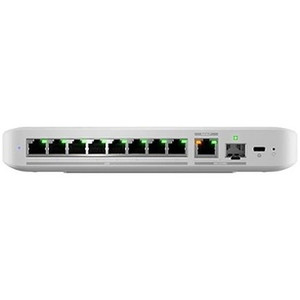
Ubiquiti USW-FLEX-2.5G-8-POE 8-Port PoE++ Switch
8-port 2.5G PoE++ switch with 10 GbE uplink for edge deployments
- Eight 2.5 GbE PoE++ ports deliver up to 90W each, powering 4K cameras without injectors.
- 60 Gbps fabric with 30 Gbps non-blocking throughput prevents congestion across all 8 ports.
- Combo 10 GbE RJ45/SFP+ uplink supports copper or fiber core integration without hardware swaps.
In stock · Ships same business day Free shipping over $499Add to quote$199.00 $198.99 Save $0.01 -
Save $0.01

Ubiquiti USW-FLEX-3 5-Port Managed Switch
5-port gigabit switch with PoE on every port for remote sites
- All 5 gigabit ports deliver PoE++ (802.3bt) at 54V for cameras and APs.
- Managed via Web GUI and CLI within the UniFi ecosystem for remote control.
- Rated -20 to 60°C and ±16kV ESD protection for demanding edge deployments.
In stock · Ships same business day Free shipping over $499$302.00 $301.99 Save $0.01 -
Save $0.01

Ubiquiti USW-FLEX-MINI 5-Port Gigabit PoE Switch
Compact 5-port gigabit switch powered by USB-C for tight spaces
- Five 1 Gbps ports with 5 Gbps non-blocking throughput prevent oversubscription.
- USB-C 2.5W power eliminates dedicated 12V/48V infrastructure in retrofit sites.
- Supports up to 1,000 VLANs for hard camera/guest/admin traffic segmentation.
In stock · Ships same business day Free shipping over $499$29.00 $28.99 Save $0.01 -
Save $0.01

Ubiquiti USW-FLEX-MINI-3 5-Port Managed PoE+ Switch
Compact 5-port gigabit switch with PoE+ on all ports
- All 5 gigabit ports deliver PoE+ power, eliminating separate injectors per endpoint.
- 10 Gbps switching capacity with VLAN support enables segmentation in space-constrained sites.
- Compact 0.33 lb form factor suits branch, retail, and edge installs with tight footprint limits.
In stock · Ships same business day Free shipping over $499$85.00 $84.99 Save $0.01 -
Save $0.01

Ubiquiti USW-FLEX-MINI-5 UniFi Network Switch
5-port Gigabit switch with PoE+ for compact UniFi deployments
- All 5 ports run full 1000 Mbps with 10 Gbps switching capacity and 7.44 Mpps forwarding.
- 802.3af PoE on every port powers cameras and APs without external injectors.
- Native UniFi adoption enables VLAN, port profiles, and firmware updates from one controller.
In stock · Ships same business day Free shipping over $499Add to quote$140.00 $139.99 Save $0.01 -
Save $0.01

Ubiquiti USW-FLEX-UTILITY UniFi Network Switch
Outdoor-rated UniFi switch for pole and wall mounting in harsh environments
- IP66-rated housing withstands rain, dust, and direct hose-down at remote sites.
- At 2.85 lb, mounts on poles, walls, or racks without structural reinforcement.
- Integrates with UniFi Controller for centralized monitoring and zero-touch provisioning.
In stock · Ships same business day Free shipping over $499Add to quote$49.00 $48.99 Save $0.01 -
Save $0.01
Ubiquiti USW-FLEX-XG UniFi Network Switch
Compact 10GbE switch with 82 Gbps capacity for UniFi networks
- Four 10GbE ports eliminate 1GbE bottlenecks when aggregating multi-camera streams.
- 82 Gbps non-blocking capacity with 61 Mpps forwarding prevents packet loss under load.
- 25W max draw via USB-C or 5.2V DC suits solar, UPS, or generator-backed remote sites.
In stock · Ships same business day Free shipping over $499Add to quote$299.00 $298.99 Save $0.01 -
Save $0.01

Ubiquiti USW-LITE-16-POE 16-Port Gigabit PoE+ Switch
16-port Gigabit PoE+ switch, 45W budget, compact desktop form
- All 16 ports deliver 802.3at PoE+ on a 45W budget—no external injectors needed.
- 32 Gbps non-blocking fabric at 24 Mpps sustains wire-speed throughput under full load.
- Compact 192×185×44 mm footprint with wall-mount support fits tight closet deployments.
In stock · Ships same business day Free shipping over $499$214.00 $213.99 Save $0.01 -
Save $0.01

Ubiquiti USW-LITE-8-POE 8-Port Managed PoE Switch
8-port managed switch with 52W PoE+ for distributed networks
- 52W PoE+ budget powers up to 8 cameras or APs at 802.3at without injectors.
- 8 Gbps non-blocking throughput handles parallel 4K streams across all ports.
- Supports 1,000 VLANs for segmenting IoT, cameras, and corporate traffic.
In stock · Ships same business day Free shipping over $499$117.00 $116.99 Save $0.01 -
Save $0.01

Ubiquiti USW-MISSION-CRITICAL 9-Port Managed Gigabit Switch
9-port Gigabit switch with non-blocking throughput and 120W PoE++ for mission-critical networks
- 9 Gbps non-blocking throughput prevents congestion across all nine ports under full load.
- 120W PoE++ budget powers up to eight high-draw cameras or APs without external injectors.
- 13 Mpps forwarding rate delivers sub-millisecond latency for VoIP and industrial control.
In stock · Ships same business day Free shipping over $499$999.00 $998.99 Save $0.01 -
Save $0.01

Ubiquiti USW-PRO-24-POE 24-Port PoE++ Managed Switch
24-port Gigabit + 400W PoE++ for dense access deployments
- 400W PoE++ budget powers 16–20 cameras or mixed APs and phones without injectors.
- 88 Gbps fabric with 44 Gbps non-blocking throughput ensures wire-speed on all 24 ports.
- Dual 10G SFP+ uplinks and 1,000 VLAN support scale cleanly into enterprise core stacks.
In stock · Ships same business day Free shipping over $499$699.00 $698.99 Save $0.01 -
Save $0.01
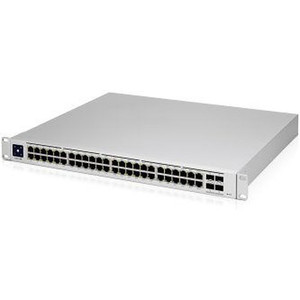
Ubiquiti USW-PRO-48 48-Port Gigabit Network Switch
48-port gigabit switch with 176 Gbps fabric for UniFi networks
- All 48 ports run at full 1 Gbps wire speed with 176 Gbps switching fabric.
- 131 Mpps forwarding rate handles simultaneous multi-gigabit flows without congestion.
- 60W internal AC/DC supply (100–240V) eliminates external adapters in 1U rack space.
In stock · Ships same business day Free shipping over $499Add to quote$646.00 $645.99 Save $0.01 -
Save $0.01
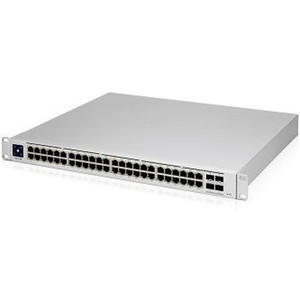
Ubiquiti USW-PRO-48-POE 48-Port Managed Network Switch
48-port managed switch with 660W PoE for converged enterprise deployments
- 660W PoE budget powers 40 PoE+ and 8 PoE++ ports without external injectors.
- Four 10G SFP+ uplinks prevent backhaul congestion when all 48 Gbps ports are loaded.
- Layer 2/3 management with 1,000 VLAN support segments cameras, APs, and voice traffic.
In stock · Ships same business day Free shipping over $499$1,099.00 $1,098.99 Save $0.01 -
Save $0.01

Ubiquiti USW-PRO-8-POE Managed PoE Network Switch
8-port Gigabit PoE switch with dual 10G uplinks and 120W power budget
- 120W PoE++ budget powers up to four 30W cameras without external power supplies.
- Dual 10G SFP+ uplinks handle aggregated traffic from all 8 ports without congestion.
- Supports 1,000 VLANs for segmenting cameras, APs, and IoT across one compact switch.
In stock · Ships same business day Free shipping over $499$349.00 $348.99 Save $0.01 -
Save $0.01
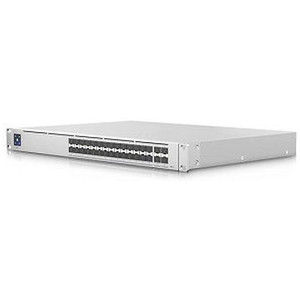
Ubiquiti USW-PRO-AGGREGATION UniFi Network Switch
760 Gbps aggregation switch with 28×10G + 4×25G for enterprise cores
- 760 Gbps / 380 Gbps non-blocking fabric eliminates oversubscription at the core layer.
- 28×10G SFP+ and 4×25G SFP28 ports enable phased fiber migration in a single 1U chassis.
- 565 Mpps forwarding sustains line-rate throughput across simultaneous high-volume flows.
In stock · Ships same business day Free shipping over $499Add to quote$899.00 $898.99 Save $0.01 -
Save $0.01

Ubiquiti USW-PRO-HD-24 UniFi Network Switch
24-port 2.5GbE switch with dual 10GbE uplinks for dense video deployments
- 24 × 2.5GbE ports let 4K cameras exceed 1 Gbps per port without fabric saturation.
- 115 Gbps non-blocking throughput sustains full line-rate recording across all 24 ports.
- Dual 10GbE + four SFP+ uplinks support copper or fiber backbone without proprietary modules.
In stock · Ships same business day Free shipping over $499Add to quote$599.00 $598.99 Save $0.01 -
Save $0.01

Ubiquiti USW-PRO-HD-24-POE 24-Port Multi-Gig PoE Switch
24-port multi-gig PoE switch with 600W budget for IP cameras and APs
- 600W PoE++ budget with DC backup powers all 24 ports even on AC failure.
- 22× 2.5GbE plus 2× 10GbE uplinks handle multi-gig cameras and WiFi 6 APs.
- 230 Gbps switching capacity and 1,000 VLANs support dense, segmented deployments.
In stock · Ships same business day Free shipping over $499$999.00 $998.99 Save $0.01 -
Save $0.01

Ubiquiti USW-PRO-MAX-16 16-Port Managed Network Switch
16-port managed switch with 84 Gbps capacity for branch offices
- 84 Gbps switching capacity handles converged voice, video, and data at 16 ports.
- 62 Mpps forwarding rate sustains burst traffic without frame drops across endpoints.
- NDAA-compliant SGCC steel enclosure operates from -5 to 40°C for branch deployments.
In stock · Ships same business day Free shipping over $499$301.00 $300.99 Save $0.01 -
Save $0.01

Ubiquiti USW-PRO-MAX-16-POE 84Gbps Managed Network Switch
16-port managed switch with 84 Gbps throughput and 210W PoE
- 84 Gbps non-blocking fabric handles 16 simultaneous PoE++ ports without queuing.
- 210W external PoE++ supply powers high-draw cameras and APs from a single switch.
- NDAA-compliant SGCC steel chassis with UniFi management via standard Ethernet.
In stock · Ships same business day Free shipping over $499Add to quote$399.00 $398.99 Save $0.01 -
Save $0.01

Ubiquiti USW-PRO-MAX-24 UniFi Managed Network Switch
24×2.5G + 2×10G SFP+ rack switch, 112 Gbps non-blocking backbone
- 24×2.5G ports deliver 312 MB/s each—no bottleneck for dense IP camera or AP deployments.
- 56 Gbps non-blocking throughput keeps campus aggregation at full line rate under load.
- 1,000 VLAN support and 83 Mpps forwarding handle segmented enterprise traffic at scale.
In stock · Ships same business day Free shipping over $499Add to quote$449.00 $448.99 Save $0.01 -
Save $0.01

Ubiquiti USW-PRO-MAX-24-POE 24-Port Managed PoE Switch
24-port PoE switch with 112 Gbps fabric for mid-size networks
- All 24 ports deliver PoE, eliminating separate injectors for cameras and APs.
- 112 Gbps switching fabric with 83 Mpps forwarding handles dense concurrent traffic.
- 550W internal PSU accepts 100–240V AC, simplifying global multi-site deployments.
In stock · Ships same business day Free shipping over $499Add to quote$799.00 $798.99 Save $0.01 -
Save $0.01

Ubiquiti USW-PRO-MAX-48 48-Port Managed Network Switch
48-port 1U switch with 224 Gbps fabric for mixed-speed enterprise LANs
- 224 Gbps fabric with 167 Mpps forwarding eliminates bottlenecks across all 48 ports.
- Mixed 32×1G, 16×2.5G, and 4×10G SFP+ ports match speed to tier without overprovisioning.
- NDAA-compliant, rack-ready 1U steel chassis supports 1,000 VLANs for segmented deployments.
In stock · Ships same business day Free shipping over $499Add to quote$649.00 $648.99 Save $0.01 -
Save $0.01
Ubiquiti USW-PRO-MAX-48-POE 48-Port Managed PoE Switch
48-port PoE switch with 720W simultaneous power for enterprise deployments
- 720W PoE++ budget powers up to 48 cameras or APs simultaneously—no injectors needed.
- 224 Gbps switching capacity with 112 Gbps non-blocking throughput handles peak mixed traffic.
- Supports 1,000 VLANs across 1G/2.5G/10G SFP+ ports for segmented enterprise deployments.
In stock · Ships same business day Free shipping over $499$1,299.00 $1,298.99 Save $0.01 -
Save $0.01

Ubiquiti USW-PRO-XG-10-POE 10GbE PoE Network Switch
10 ports of 10GbE PoE+++ in 1U for high-power device clusters
- Ten 10GbE PoE+++ ports deliver up to 90W each, eliminating external injectors.
- 400W PoE budget supports six 60W cameras simultaneously on a single 1U switch.
- Dual SFP+ uplinks and 120 Gbps non-blocking throughput prevent bottlenecks at aggregation.
In stock · Ships same business day Free shipping over $499$754.00 $753.99 Save $0.01 -
Save $0.01
Ubiquiti USW-PRO-XG-24 UniFi Network Switch
24-port 10GbE switch with 460 Gbps capacity for enterprise networks
- All 24 copper ports run at 10GbE with 460 Gbps non-blocking switching capacity.
- Up to 90W PoE++ per port powers PTZ cameras and edge AI devices without injectors.
- Two 25G SFP28 uplinks support fiber or copper spine connections in a 1U rack chassis.
In stock · Ships same business day Free shipping over $499Add to quote$1,099.00 $1,098.99 Save $0.01 -
Save $0.01

Ubiquiti USW-PRO-XG-24-POE UniFi Network Switch
24×10G SFP+ switch with integrated PoE for enterprise access layer
- 460 Gbps non-blocking fabric handles sustained multi-gigabit video and VoIP flows.
- 720W PoE+++ budget delivers up to 90W per port for 24 high-draw endpoints at once.
- Dual 25G SFP28 uplinks prevent bottlenecks when aggregating dense access-layer stacks.
In stock · Ships same business day Free shipping over $499$1,799.00 $1,798.99 Save $0.01 -
Save $0.01

Ubiquiti USW-PRO-XG-48 UniFi Network Switch
48-port 1U switch with 32x 10GbE + 16x 2.5GbE for mixed-speed deployments
- 460 Gbps non-blocking throughput eliminates congestion on storage and media traffic.
- 32×10GbE and 16×2.5GbE ports in 1U support mixed-speed devices without chaining.
- 1,000 VLANs with Layer 3 routing enable granular segmentation across a single chassis.
In stock · Ships same business day Free shipping over $499Add to quote$1,999.00 $1,998.99 Save $0.01 -
Save $0.01

Ubiquiti USW-PRO-XG-48-POE UniFi Network Switch
48-port 10G switch with 1,350W PoE for enterprise UniFi networks
- All 48 × 10G SFP+ ports deliver PoE++ (802.3bt) — no external injectors needed.
- 920 Gbps / 684 Mpps ensures line-rate throughput across all ports simultaneously.
- NDAA-compliant with CE, FCC, IC, and Anatel certs for federal and secure deployments.
In stock · Ships same business day Free shipping over $499$2,499.00 $2,498.99 Save $0.01 -
Save $0.01
Ubiquiti USW-PRO-XG-8-POE UniFi Network Switch
10GbE managed switch with 155W PoE for enterprise aggregation
- Eight PoE++ ports deliver up to 60W each across a 155W budget for cameras and WAPs.
- 100 Gbps non-blocking throughput at 149 Mpps handles dense aggregation without bottlenecks.
- Multi-speed RJ45 ports (100M–10G) support legacy and modern endpoints on a single fabric.
In stock · Ships same business day Free shipping over $499Add to quote$538.00 $537.99 Save $0.01 -
Save $0.01

Ubiquiti USW-PRO-XG-AGGREGATION 32-Port 25G SFP28 Switch
32-port 25G aggregation switch with 1.6 Tbps fabric for data center backbones
- 32 SFP28 ports run 25G/10G/1G per port, eliminating oversubscription at the aggregation layer.
- 1.6 Tbps switching fabric and 800 Gbps non-blocking throughput handle full line-rate east-west traffic.
- NDAA-compliant, 1U rack-mount design with 1,000 VLAN support suits enterprise and campus backbone builds.
In stock · Ships same business day Free shipping over $499$2,499.00 $2,498.99 Save $0.01 -
Save $0.01
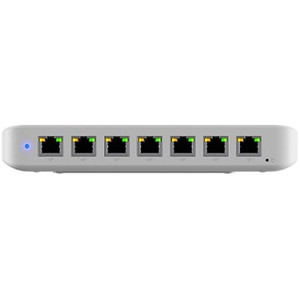
Ubiquiti USW-ULTRA 8-Port Gigabit PoE++ Network Switch
8-port Gigabit PoE++ switch for edge sites; powers itself and downstream devices
- Runs on 50–57V PoE++ input at 9W idle, eliminating AC infrastructure at edge sites.
- Delivers 42W PoE++ per port across 8 Gbabit ports on an 8 Gbps non-blocking fabric.
- Rated -30 to 60°C with NDAA compliance; mounts desktop, wall, or magnetic in 320g.
In stock · Ships same business day Free shipping over $499$139.00 $138.99 Save $0.01 -
Save $0.01

Ubiquiti USW-ULTRA-210W 8-Port Gigabit PoE++ Network Switch
8-port gigabit switch with 210W PoE++ for compact remote sites
- 210W PoE++ budget powers all 8 ports simultaneously—no separate PSUs at remote sites.
- 8 Gbps non-blocking throughput sustains full-rate video aggregation across all port pairs.
- Rated -30 to 60°C and NDAA compliant for outdoor enclosures and federal deployments.
In stock · Ships same business day Free shipping over $499Add to quote$199.00 $198.99 Save $0.01 -
Save $0.01

Ubiquiti USW-ULTRA-60W Compact Managed PoE Network Switch
8-port managed switch in compact form for edge locations, 60W PoE
- 8 Gbps non-blocking throughput handles concurrent video, voice, and data without congestion.
- 60W PoE++ (802.3bt) budget expands to 210W with optional AC adapter for denser deployments.
- Compact 203×76×33 mm enclosure mounts on walls or in utility closets; NDAA compliant.
In stock · Ships same business day Free shipping over $499$159.00 $158.99 Save $0.01 -
Save $0.01
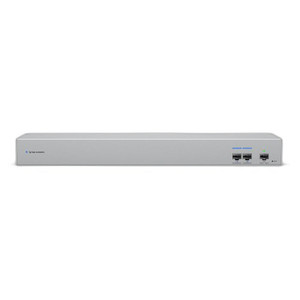
Ubiquiti USW-WAN UniFi Network Switch
Compact 1U edge switch with 20 Gbps capacity for UniFi networks
- Three 10GbE RJ45 ports deliver 20 Gbps switching capacity in a 1U rack footprint.
- Dual internal AC/DC power supplies provide active redundancy across 100–240V AC input.
- NDAA-compliant with CE, FCC, IC, and Anatel certifications for regulated deployments.
In stock · Ships same business day Free shipping over $499$268.00 $267.99 Save $0.01 -
Save $0.01
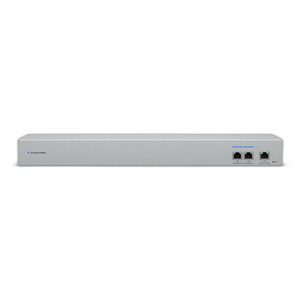
Ubiquiti USW-WAN-RJ45 UniFi Network Switch
1U rack switch with 3× 10 GbE + 1× 1 GbE for WAN aggregation
- Three 10 GbE + one 1 GbE port handles WAN aggregation and OOB management in 1U.
- 20 Gbps non-blocking fabric at 18W max keeps remote-site power budgets tight.
- Dual internal 36W AC/DC supplies eliminate single-point power failure at branch sites.
In stock · Ships same business day Free shipping over $499Add to quote$249.00 $248.99 Save $0.01 -
Save $0.01

Veracity VPSU-57V-1500-US PoE Switch Industrial
1500W PoE switch with industrial temp rating for multi-camera sites
- 1500W PoE switch at 57VDC input, industrial spec
- Powers 12+ IEEE 802.3af/at IP cameras simultaneously
- 1.04 lb compact unit for industrial cabinet install
Usually Ships in 2-3 Weeks Free shipping over $499$89.00 $88.99 Save $0.01