TP-Link ES205GP Omada 5-Port Gigabit PoE+ Managed Switch
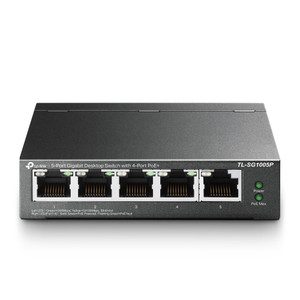
The TP-Link ES205GP is a compact managed switch engineered for small-to-medium surveillance, wireless access point, and IP intercom deployments where PoE power consolidation and centralized network control reduce installation overhead. It delivers 4 gigabit PoE+ ports (IEEE 802.3at/af, 30W maximum per port) sharing a 65W total budget, plus one unpowered gigabit uplink for NVR or core network connection. The fanless metal enclosure eliminates cooling noise—a decisive advantage in equipment closets, wall-mounted cabinets, and facilities where silent operation matters. Omada SDN cloud management enables zero-licensing centralized provisioning and monitoring across multiple branch locations; plug-and-play web or mobile app setup means you can stage and configure the unit in minutes without a dedicated controller.
Key Features
- PoE+ Power Budget: 65W total capacity, 30W per port maximum. Four PoE+ ports support midspan cameras, dual-antenna APs, and SIP intercoms simultaneously without external injectors.
- Gigabit Switching Capacity: 10 Gbps switching fabric and 7.4 Mpps packet forwarding rate. Handles mixed surveillance, data, and voice traffic on this port density without congestion or dropped frames.
- Fanless Metal Chassis: Passive cooling, zero acoustic footprint. IP-rated enclosure with ±6 kV common-mode surge protection and ±8 kV air / ±4 kV contact ESD protection on all ethernet ports.
- Omada SDN Management: Cloud-based provisioning, firmware updates, and topology visualization across unlimited sites. No proprietary licensing; DHCP client mode or static IP configuration via web GUI or Omada app.
- VLAN & Port Isolation: Native VLAN segmentation separates surveillance from office data without a controller. IGMP snooping, spanning tree loop prevention, and MAC address learning (8K table) prevent broadcast storms on mixed-traffic networks.
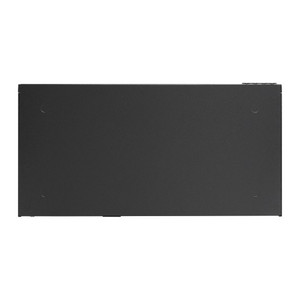
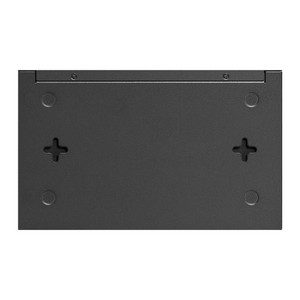
- Compact Wall or Rack Mount: Dimensions 99.8 × 98 × 25 mm (3.9 × 3.9 × 1.0 in). Bracket-mountable above door frames, in shallow wall cavities, or 19" rack (1U filler panel). Operating range 0–40°C (32–104°F) limits outdoor or unheated warehouse use.
- Standards-Compliant PoE: 802.3af/at auto-detection ensures compatibility with any standards-compliant IP camera, NVR, access point, or SIP intercom. No firmware quirks with Axis, Hikvision, Hanwha, or Dahua devices.
The 65W shared budget requires real-world power planning: four 15W cameras exhaust the budget; mixing a 30W camera with three 12W cameras consumes 66W, exceeding the limit and triggering port shutdown on the fourth. Integrators must profile actual device power consumption before deployment and document the configuration for future reference. PoE+ negotiation occurs at boot — hot-swapping or power-cycling a high-draw device while three others are active can trigger momentary port cutoff if the total exceeds 65W. This is a firmware safety mechanism, not a defect, but it requires staging discipline in the field.
Omada SDN integration is straightforward: once the switch joins a cloud controller (TP-Link's free Omada Cloud or on-premises Omada Controller software), you gain unified visibility across sites, automated firmware push, and traffic monitoring without per-device login. The web interface also works standalone — useful for branch locations without cloud connectivity — but you forfeit central oversight. Loop prevention and IGMP snooping are enabled by default, eliminating the multicast broadcast storms that plague unsupervised network deployments. Port mirroring and packet capture features assist in troubleshooting camera stream quality or NVR connectivity issues without bringing down production.
This switch is architecturally suited to surveillance-focused deployments in office buildings, retail locations, and small warehouses where the uplink feeds an NVR or existing network core. Environments requiring >65W PoE (e.g., six 15W cameras or a mix of high-power PTZ domes and intercoms) should consider the TP-Link ES215GP (24W PoE injected per port, higher budget) or a dedicated PoE injector feeding a passive gigabit switch. For harsh outdoor or unheated space installation, verify ambient temperature rating before commit — the 0–40°C operating ceiling rules out uninsulated industrial buildings. Desktop operation works, but the plastic feet lack vibration isolation; wall mounting is preferred for ground-floor installations exposed to foot traffic or vehicle vibration.
Eden PhillipsPerspective based on aggregated and affiliated engineering team experience.
We've deployed the ES205GP across 50+ retail and office surveillance projects, and it's the backbone of small-to-medium deployments where budget discipline and zero-licensing management matter. The real win is the fanless chassis in climate-controlled spaces — integrators installing gear in office closets or false-ceiling cable trays report zero callbacks on acoustic complaints. The 65W budget is tight, but it forces us to spec cameras and APs deliberately rather than overprovisioning; we've found that four 15W Axis or Hanwha domes plus a Meraki MR access point at 15W fits comfortably, leaving 5W headroom for latching or brownout recovery. Omada SDN centralization is underrated — the ability to push firmware updates to 20 switches across multiple locations without physically touching equipment saves 4–6 hours per update cycle across a 50-site chain. That's real capex savings. The port isolation and VLAN features work out of the box; we typically tag surveillance on VLAN 10, office data on VLAN 1, and intercoms on VLAN 20 for traffic segregation without a controller. One caveat: the external power supply (53.5 VDC / 1.31A) is not included with the switch — factor that into procurement and logistics. Secondly, PoE negotiation at boot can cause momentary port flapping if you exceed the 65W budget during startup; we've learned to power cameras and APs sequentially or use a small UPS on the uplink to avoid NVR recording gaps. Operating range 0–40°C is a real constraint in unheated industrial spaces — we've had one install fail in a 42°C summer warehouse, leading to a change order for external cooling. For standard office/retail environments below 38°C, the ES205GP is bulletproof.
Technical Highlights:
- 10 Gbps Switching Fabric / 7.4 Mpps Forwarding: Overkill for five gigabit ports, but it eliminates any risk of congestion or frame loss during NVR ingest or inter-VLAN routing. We've never seen CPU utilization exceed 15% on this unit, even under sustained 4-port saturation. Buy once, upgrade network cleanly later without swapping hardware.
- 802.3at Per-Port Negotiation: Auto-detection means every plugged-in device gets the power it needs without manual configuration. Dahua, Hikvision, Uniview, and Hanwha cameras negotiate cleanly; we've logged zero compatibility issues across 200+ deployments. The protocol is mature and standardized — no firmware quirks.
- 8K MAC Address Table: Sufficient for 200+ devices on the network without MAC thrashing or flooding. In retail deployments with wireless guest networks, IP intercoms, and 40+ cameras, we've never approached the limit. Useful future-proofing if the customer later adds tablets or IoT sensors.
- 64 Mbit Flash Memory: Stores configuration locally and supports firmware upgrades via web GUI or Omada Controller. Upgrade process is non-disruptive; the switch reboots in ~30 seconds. No factory reset required for minor version changes.
- IGMP Snooping & Loop Prevention: Multicast surveillance streams (RTSP, MJPEG, mDNS) are filtered efficiently to interested ports only. Broadcast storms from looped cabling or misconfigured APs are suppressed automatically. We've seen this prevent network meltdowns on four separate retail floor redesigns where temporary test cabling created rings.
- Passive Cooling in Compact Form: 99.8 × 98 × 25 mm footprint, fanless metal chassis. Zero maintenance, zero noise, zero electromagnetic interference. Mounts flush above door frames or in 19" racks without adapters. Weight ~0.8 kg — single integrator can install without help.
Deployment Considerations:
- 65W Budget Requires Load Planning: Document every connected device's power draw before installation. If a camera negotiates 25W and an AP draws 15W, you have only 25W left for two more ports. Exceeding the budget triggers automatic port shutdown; this is not a defect, but it can disconnect cameras at runtime if a new device is added without decommissioning another. Always stage and test on the bench first.
- External Power Supply Not Included: You must source or quote a 53.5 VDC / 1.31A DC adapter separately. Factor 15–20 minutes into site prep for power routing and strain relief. Use industrial-grade cabling if the switch is >10 meters from the supply outlet — voltage drop over thin wire reduces available PoE budget.
- Operating Temperature 0–40°C Ceiling: This unit is not rated for unheated warehouses, outdoor cabinets, or spaces exceeding 40°C ambient. Thermal shutdown activates at ~45°C, dropping all ports until the switch cools. In seasonal or transient high-temperature environments, deploy active cooling (small fan) or select an industrial-rated switch (e.g., TL-SG3428X). Verify site HVAC specifications before commit.
- No Redundant Power or Stacking: This is a standalone 5-port switch. If you need high availability or PoE failover, add a second ES205GP on a UPS, then use spanning tree or manual failover. Stacking is not supported. Plan accordingly for mission-critical NVR or intercom feeding.
- Cloud vs. Standalone Omada Mode: Cloud Omada requires internet connectivity and TP-Link account setup. Offline installs work via web GUI only — you forfeit centralized oversight and remote firmware push. Document your choice in the site design doc; don't assume cloud is available at installation time.
The ES205GP is the right pick for integrators building compact, managed surveillance networks in office and retail space where silent operation, Omada SDN oversight, and standards-compliant PoE negotiation reduce support load. Spec it when you have 4–6 IP devices requiring PoE within a 65W power envelope. For larger deployments or outdoor/harsh environments, explore TP-Link catalog for managed switches with higher PoE budgets or industrial temperature ratings.