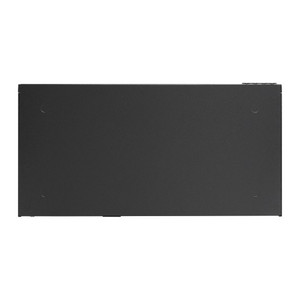
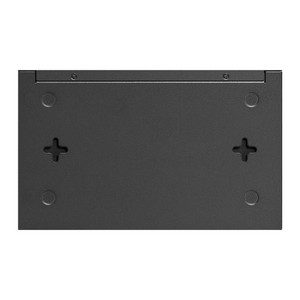
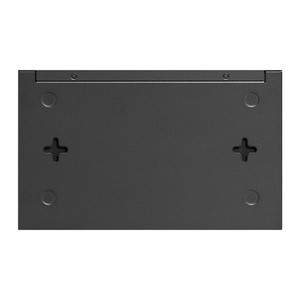
TP-Link SG2210MP 10-Port PoE+ Gigabit Managed Switch
The TP-Link SG2210MP is a 1U rack-mount managed switch engineered for IP surveillance, access control, and wireless infrastructure deployments where copper PoE delivery must coexist with fiber backbone scalability. Eight Gigabit PoE+ ports share a 150W budget, enabling concurrent operation of four mid-to-high-wattage endpoints such as PTZ cameras or heated dome enclosures. Dual Gigabit SFP slots accept multi-mode or single-mode fiber, eliminating copper voltage drop constraints and extending inter-building or inter-floor backbone links beyond the 100m Category 5e limit.
Key Features
- Eight PoE+ Ports (150W Total): 802.3at PoE+ delivery on all eight Gigabit copper ports. Allocates approximately 30–37W per port at full concurrent load—adequate for most IP cameras, PTZ heads, and wireless access points without supplementary power supplies.
- Dual Gigabit SFP Slots: Accept multi-mode (MM) or single-mode (SM) fiber transceivers. Enables fiber uplinks for inter-building links, unlimited distance backbone, and LACP link aggregation for redundant or higher-throughput connections without copper distance penalty.
- Managed Layer 2 Switching: 802.1Q VLAN segmentation isolates camera traffic from office networks. STP/RSTP loop prevention and 802.1p/DSCP QoS prioritize video streams during congestion. 802.1x port-level authentication ties to RADIUS or TACACS+ for role-based access control.
- IGMP Snooping: Prevents multicast flooding on IP camera group streams, reducing unnecessary bandwidth consumption on surveillance video from group-addressed endpoints.
- 1U Rack Form Factor: 13-inch footprint integrates into standard 19-inch racks. Operating temperature range 0°C to 40°C suits non-conditioned intermediate rooms (comms closets, outdoor enclosures with climate control).
- Omada SDN Integration: Provisioning and security policy deployment via Omada OC300 Hardware Controller or cloud Omada platform. Eliminates per-device CLI configuration across multi-switch deployments.
- 100m Copper PoE Reach: Category 5e or better UTP cabling supports full PoE+ delivery to 100m without signal degradation. Longer runs require fiber uplinks.
The SG2210MP bridges last-mile PoE delivery with backbone fiber scalability in mixed-media deployments. Eight PoE+ ports cover the bulk of endpoint power demand in mid-sized facilities: a typical 16-camera surveillance array can run eight cameras (and an access control reader) on copper, with additional cameras powered by secondary PoE+ switches fed via fiber uplink. The 150W budget is shared—deployers must profile actual endpoint draw to avoid over-subscription. Standard endpoints (Axis, Hikvision, Dahua, and generic 802.3at devices drawing under 30W each) are plug-and-play; non-standard or high-wattage devices (PTZ motors, heater banks) require budget validation against the datasheet.
VLAN isolation is essential in mixed-use facilities: isolate camera traffic on VLAN 200, access control on VLAN 300, and office users on VLAN 100. 802.1p QoS marks video frames at ingress and prioritizes them during egress congestion—particularly valuable when fiber uplinks carry aggregated camera and office traffic. 802.1x port authentication allows automatic VLAN assignment based on endpoint type (camera vs. workstation), reducing manual provisioning and improving compliance posture in regulated environments. IGMP Snooping is a quiet efficiency win: IP camera multicast group queries are forwarded only to subscribed ports, not flooded to all interfaces.
Fiber uplink design depends on inter-building distance and cabling plant. Multi-mode fiber (MM) is adequate for runs up to 300–500m using standard MM SFP transceivers; single-mode (SM) extends to 10km+ and is cost-effective for campus backbone infrastructure. LACP link aggregation on dual SFP uplinks provides active-active redundancy or combined throughput (2 Gbps logical) if the upstream switch supports it. The SG2210MP itself is non-blocking at 20 Gbps backplane capacity, so fiber uplink bandwidth is the real ceiling. Omada SDN controller (OC300 or cloud) centralizes spanning tree, VLAN, and QoS policy across multiple SG2210MP switches without logging into each device individually—a time saver in large distributed deployments.
The switch operates reliably in standard comms closet environments (0°C to 40°C). If placed in outdoor or harsh-temperature enclosures, ensure the enclosure itself provides climate control. Power consumption is approximately 30–50W at idle, rising to 200W+ when all eight PoE+ ports deliver full 30W load and fiber SFP transceivers are active—account for this in UPS and PDU sizing. Managed features require basic network automation skills or Omada controller familiarity; out-of-box, the switch auto-negotiates Gigabit links and passes traffic without configuration. For security-critical deployments, deploy it behind a firewall and restrict Omada controller access to administrative VLANs.
The TP-Link SG2210MP is the right fit for system architects and integrators deploying 16–32 endpoint mixed-media networks (cameras, access control, Wi-Fi) across multiple floors or buildings where fiber backbone is mandated but last-mile PoE delivery is cost-effective. It's not a carrier-grade edge router—it's a managed access switch with PoE and fiber uplink capability. Specifications and detailed configuration examples are available in the SG2210MP datasheet. For SDN-managed deployments, integrate with the TP-Link catalog to source compatible Omada controllers and additional managed switches.
Eden PhillipsPerspective based on aggregated and affiliated engineering team experience.
We've deployed dozens of SG2210MP switches across mid-market surveillance and access control jobs, and it sits in a sweet spot: it's robust enough to handle demanding PoE loads, managed enough to isolate traffic and prevent network loops, and affordable enough that capex pencils out in projects where you need fiber backbone but don't want a $5k+ core switch. The real win is the combination of eight PoE+ ports plus dual SFP fiber—you get last-mile flexibility without sacrificing backbone reach. We've seen integrators put an SG2210MP in a building-to-building gateway role (cameras on copper in Building A, uplink via single-mode fiber to Building B's core switch), and it just works. The 150W budget is the only gotcha—on paper it looks like you can run four PTZ cameras at 37W each, but add an access point and a heater bank, and you're oversubscribed. Profiling endpoint draw upfront saves regrets in the field.
Technical Highlights:
- 150W Shared PoE+ Budget: Eight ports divide the budget dynamically. A typical load is two PTZ cameras (27W + 27W), two fixed domes (12W + 12W), and one wireless AP (15W) = 93W at 62% utilization. This leaves headroom for spikes without triggering power shutdown. Know your endpoint specs before installation.
- Dual SFP Uplink with LACP: Configure two single-mode fiber SFP ports as an LACP trunk for active-active redundancy or 2 Gbps combined throughput to an upstream core switch. If one fiber run is cut, traffic shifts to the second port automatically—no manual intervention required.
- VLAN + QoS Tagged Frame Support: Omada controller pre-stages VLAN configuration across multiple switches. Camera traffic (VLAN 200) is marked with 802.1p priority 5, access control (VLAN 300) with priority 4. During congestion, video frames egress first, keeping stream latency and loss under control.
- IGMP Snooping for Multicast Efficiency: IP camera multicast group streams (common in Axis, Hikvision, and Dahua lines) are forwarded only to subscribed ports, not flooded to all interfaces. On a 16-camera network, this cuts unnecessary multicast traffic by ~40–60%, freeing fiber uplink capacity for other flows.
- 802.1x Port Authentication: Integrates with campus RADIUS server. A camera or access reader is auto-assigned to its designated VLAN based on authentication credentials. Unauthorized devices are isolated to a quarantine VLAN, reducing risk of misconfigured or rogue endpoints polluting the production network.
- Managed Redundancy (STP/RSTP): If you accidentally connect a daisy-chain of switches to create a loop, Omada controller calculates spanning tree and blocks redundant ports to prevent broadcast storms. Manual loop prevention is not required.
Deployment Considerations:
- 150W PoE budget is shared across all eight ports—prioritize critical loads (PTZ cameras, access readers) and power off or move secondary cameras to a secondary PoE+ switch if simultaneous high-draw devices exceed ~100W. Monitor port-level power draw via Omada controller dashboard to catch over-subscription early.
- Copper PoE reach is 100m (Category 5e UTP); longer runs require fiber uplinks or intermediate PoE+ injectors. Factor cable routing and conduit length into site surveys. If a run exceeds 85m, budget a small PoE+ extender or secondary switch to avoid voltage drop.
- SFP transceiver selection is critical: specify multi-mode (MM) SFP for runs under 500m, single-mode (SM) for longer distances or campus backbones. Mixing MM and SM transceivers on the same port pair causes link failure. Omada controller does not auto-negotiate transceiver type—document and label fiber port assignments clearly.
- Omada controller (OC300 or cloud) is required for centralized provisioning; standalone managed mode (CLI-only) is available but cumbersome for multi-switch deployments. If you're managing five or more SG2210MP switches, the controller cost is a wash against manual CLI hours saved.
- Install the SG2210MP in a climate-controlled comms closet (0–40°C operating range). Outdoor cage or cabinet mounting requires internal climate control or it will thermal-throttle or shut down. Power consumption peaks at ~200W under full PoE load—ensure 15A+ circuit and UPS sizing to match.
- Enable RSTP or STP at deployment time if there's any possibility of switch loop creation (redundant cabling, daisy-chained closets). Leave IGMP Snooping enabled to reduce multicast flooding cost on fiber uplinks. Configure 802.1p/DSCP marking on video VLAN to prioritize camera streams.
The SG2210MP is the smart choice for integrators and system architects building mid-scale surveillance and access control networks where PoE copper meet fiber backbone architecture. It trades $1,500–1,800 capex for a week of manual VLANing and QoS tuning—nearly always the right math in a competitive bid. For dense deployments (32+ endpoints) or carrier-grade uptime requirements, move up to a dedicated core switch. For fiber-native or SDN-heavy environments, explore TP-Link's full Omada switch lineup.