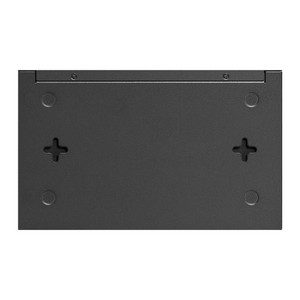
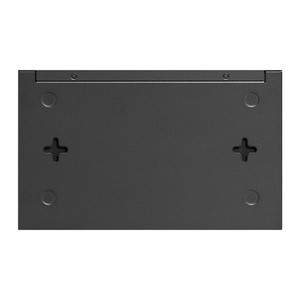
TP-Link SG2218P 18-Port PoE+ Gigabit Smart Switch
The TP-Link SG2218P is a managed PoE+ Gigabit switch designed for distributed IP camera systems, wireless access points, and networked security appliances across small-to-mid-scale commercial deployments. With 16 PoE+ ports and 2 Gigabit SFP fiber slots, the SG2218P consolidates power delivery and network connectivity—eliminating the need for separate injectors or wall-mount power supplies on individual devices. The 150W PoE budget supports sustained operation of high-draw loads (30W maximum per port), such as PTZ cameras with heaters or dual-radio access points, while 36 Gbps switching capacity ensures wire-speed forwarding across all ports without bottleneck.
Key Features
- 16 PoE+ Ports: 802.3at PoE+ delivery at up to 30W per port. Supports the full spectrum of powered devices: IP cameras, access points, intercoms, edge analytics appliances, and VoIP phones—no external splitters or injectors required.
- 150W PoE Budget: Powers 5 simultaneous 30W devices or more efficient 15–20W cameras at full port density. Eliminates capex and maintenance overhead of distributed power supplies across a multi-building campus.
- 2 Gigabit SFP Slots: Single-mode or multimode fiber modules for long-distance trunk uplinks to a core switch, network building, or remote site. Extends reach beyond 100m Ethernet limit without active equipment.
- 36 Gbps Switching Capacity: Non-blocking architecture ensures all 18 ports can operate simultaneously at full Gigabit speed—critical for real-time video and parallel PoE delivery.
- Omada Cloud / Standalone Management: Integrates with TP-Link Omada SDN platform for centralized multi-site device provisioning, traffic monitoring, and firmware rollout. Operates independently via CLI, SNMP, or web UI if cloud integration is not required.
- Advanced QoS, VLAN, ACL: Isolate camera and access point traffic from office networks using VLAN segmentation and ACL rules. Supports jumbo frames (9 KB) and rate limiting to prevent broadcast storms from misconfigured devices.
- Fanless, Metal Chassis: Silent operation suitable for wiring closets, network racks, and temperature-controlled environments. MTBF 612,090 hours @ 25°C indicates enterprise-grade component reliability.
- Compact 1U Rack Profile: 17.3″ × 7.1″ × 1.7″ dimensions fit standard 19-inch racks without custom mounting brackets. 100–240V AC power supply covers North American and international deployments.
The SG2218P bridges the gap between unmanaged PoE+ switches and enterprise-grade core infrastructure. Its 150W PoE budget and dual SFP uplink slots make it ideal as a distribution point for camera clusters in multi-zone facilities—warehouse perimeters, parking structures, or campus buildings—where you need to aggregate 10–16 cameras and wireless access points into a single power-managed node. The fanless design and wide operating temperature range (–5°C to 45°C) allow deployment in exposed network closets or equipment rooms that lack climate control.
Integration with Omada SDN simplifies multi-site camera rollouts: provision VLANs, mirror ports for IDS taps, and monitor port-level PoE draw from a single pane of glass across 50+ locations. For organizations already investing in TP-Link Omada controllers or cloud tenants, the SG2218P fits seamlessly into existing access-point and camera networks. Standalone mode via SNMP and syslog works equally well for single-site deployments or VMS-integrated camera systems where centralized management is handled by Genetec, Milestone, or ExacqVision instead.
Compatibility extends to all major IP camera vendors (Axis, Hikvision, Dahua, Uniview, Hanwha) and PoE wireless access points from Ubiquiti, TP-Link, Cisco, and others. The switch respects power budgets: if port draw exceeds 150W, the SG2218P either throttles low-priority ports or disconnects least-critical devices—behavior configurable via PoE priority rules. For deployments approaching 150W ceiling, monitor consumption during commissioning to avoid undersizing the PoE budget mid-project.
The dual SFP slots are a significant differentiator. In warehouse or campus settings, fiber trunk links eliminate cross-building Ethernet runs and provide isolation from electrical noise generated by heaters, motors, or loading-dock equipment. Multimode LC or single-mode modules are hot-swappable; cost per port is marginally higher than Gigabit Ethernet but justified by reach (64m+ single-mode) and noise immunity. Pair the SG2218P with a core PoE+ switch (such as TP-Link T2600G or Cisco Catalyst 3650) to create a resilient two-tier network: the SG2218P as the access layer, fiber as the backbone. This topology also simplifies troubleshooting—cameras and wireless devices connect to a single managed node, centralizing PoE diagnostics and VLAN enforcement.
Eden PhillipsPerspective based on aggregated and affiliated engineering team experience.
In our experience deploying TP-Link Omada switches into camera and wireless networks, the SG2218P occupies a sweet spot between cost and capability. It's a workhorse access switch—we've installed dozens across warehouse perimeters, office building MDFs, and multi-tenant campuses where camera distribution is the primary load. The 150W PoE budget is honest: you can run 5 PTZ cameras with heaters in winter or 10–12 standard 13W box cameras at sustainable density. What differentiates the SG2218P from consumer-grade PoE switches is dual management: Omada integration for large fleets (if you have 10+ sites, the controller investment pays for itself in automation), and rock-solid standalone operation via CLI or web UI. We've paired it with both cloud Omada and on-premises controllers without stumbling—the switch abstracts that choice cleanly. The SFP slots are genuinely useful in campus deployments; we've run single-mode fiber from building-to-building uplinks, eliminating ground loops and copper-run labor. That said, the switch isn't overpowered—if you're in a 50-camera facility with multiple distribution nodes, you'll want to model PoE draw carefully and potentially split camera feeds across two SG2218Ps.
Technical Highlights:
- 150W PoE+ Budget with Port Priority: Real-world deployments rarely draw 150W all at once. A typical mix of 8 box cameras (13W each = 104W) + 3 access points (20W each = 60W) = 164W theoretical—but Omada or CLI rules can deprioritize less-critical ports (like intercom or lighting controls) if total draw creeps toward the ceiling. We configure priority tiers: cameras first, then access points, then ancillary devices. No PoE analyzer needed—the switch logs per-port consumption in SNMP traps.
- 36 Gbps Non-Blocking Fabric: All 18 ports can operate simultaneously at Gigabit line rate without internal oversubscription. For a 16-camera cluster, each sending 5 Mbps (typical H.265 compressed stream) and each access point pulling 2–3 Mbps, total egress to the SFP uplink is ~85 Mbps—easily handled. Jumbo frame support (9 KB) keeps latency predictable for real-time streaming or synchronized multi-camera analytics workloads.
- Omada SDN Integration vs. Standalone: If you deploy Omada controller (on-premises or cloud), you get centralized VLAN provisioning, port mirroring for IDS taps, and PoE monitoring dashboards. If you don't, standalone mode via web UI or CLI works perfectly—many integrators prefer this for single-site jobs. We've toggled between both modes on the same SG2218P without factory reset; the switch remembers local config.
- VLAN and ACL Isolation: Critical for camera networks mixed with office traffic. Tag all camera ports in VLAN 10, access points in VLAN 20, and set an intra-VLAN deny rule to prevent cross-talk. The SG2218P enforces this at line rate without CPU overhead—egress QoS rules can also prioritize video during congestion, though we rarely see congestion with a 36 Gbps fabric and <150 Mbps typical load.
- SFP Dual-Mode Flexibility: Use multimode LC (short-distance, cheaper modules) for in-building uplinks or single-mode for cross-campus runs. We've deployed both on the same switch without conflicts. Single-mode reach is 64m+; it's overkill for most indoor campuses but mandatory for outdoor fiber runs or industrial parks.
- Fanless Reliability: 612,090-hour MTBF @ 25°C means you're looking at minimal maintenance overhead. We've installed switches in temperature-swinging wiring closets (–5°C to 45°C operating range) without thermal failures or capacitor bloom. Metal chassis dissipates heat passively; verify airflow in sealed cabinets in hot climates.
Deployment Considerations:
- PoE Budget Modeling: Before installation, sum the draw of every device intended to plug into the switch. A 30W PTZ + 13W box camera + 20W access point = 63W; multiply by the number of simultaneous powered devices. If you exceed 150W, you'll need a second switch or capacity planning becomes mission-critical. Omada dashboards show real-time PoE consumption; use it as a safety net during commissioning.
- SFP Module Cost and Availability: TP-Link brand LC fiber modules cost $40–80 per pair; third-party equivalents are cheaper but require validation. We test a sample module before bulk ordering. Single-mode modules are slightly more expensive than multimode but irreplaceable for long runs—factor this into capex if fiber is part of the plan.
- Uplink Bottleneck: The two SFP ports are your backhaul to the core. If you're feeding 16 cameras (16 Mbps × 16 = 256 Mbps typical total, worst-case H.264) plus access point traffic, a single Gigabit SFP easily handles it. Dual SFPs allow redundancy—RSTP (Rapid Spanning Tree) is supported for failover, though manual trunk aggregation is more predictable in small deployments.
- Omada Licensing and Cloud Dependency: The SG2218P works perfectly standalone; Omada cloud adds convenience but is optional. If you adopt Omada, verify your network has reliable internet to reach TP-Link cloud endpoints—or deploy an on-premises Omada controller ($400–1000 initial cost). We recommend cloud Omada for multi-site customers, standalone for single-site jobs.
- Power Supply Redundancy: The switch has a single 150W power supply. There is no hot-swappable PSU option or redundant supply. In high-availability deployments (e.g., mission-critical camera systems), pair the SG2218P with a UPS and a second backup switch on a separate UPS for N+1 failover. Omata RSTP failover between two SG2218Ps at the same site is transparent to cameras.
The SG2218P is the right choice for integrators and end-users building small-to-mid-scale camera and wireless networks where PoE consolidation and straightforward management matter more than cutting-edge AI-driven edge computing. Its 150W budget and dual SFP slots make it a credible access switch in tiered network designs; its Omada compatibility is a bonus for multi-site rollouts without pushing capex toward enterprise core switches. Explore the complete TP-Link catalog for related Omada infrastructure and wireless access points.