
Vivotek IHT-1271 vs Vivotek IHT-1000: Specification Comparison
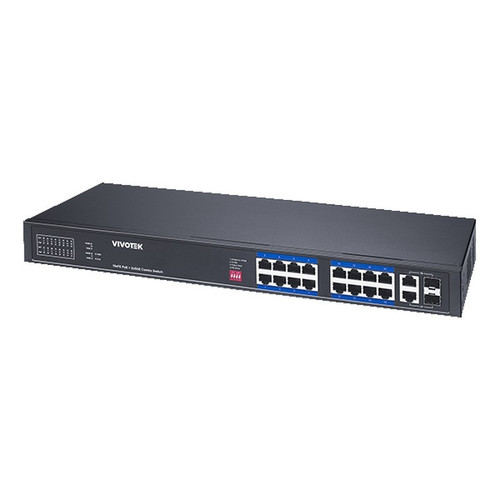
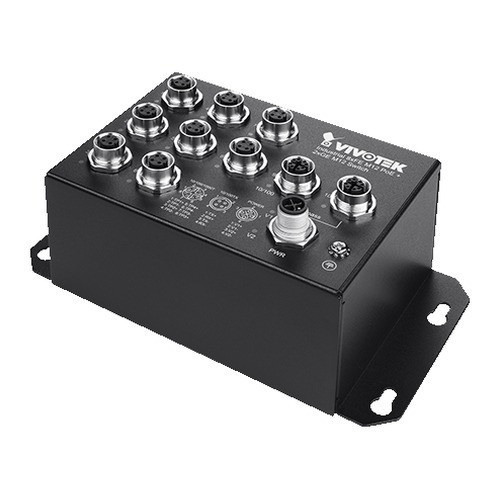
Both the Vivotek AW-IHT-1271 and AW-IHT-1000 are industrial-grade 8-port Gigabit PoE+ switches from Vivotek, designed for harsh-environment IP surveillance and industrial networking deployments. They share the same PoE power budget, port count, and operating temperature range, making them direct cross-shop candidates. The comparison centers on switching performance and fiber uplink count, surge protection rating, and the depth of Layer 2+ management and Vivotek-ecosystem integration features each unit delivers.
In This Guide
- Which switch delivers more throughput and how many fiber uplinks does each provide?
- How do the two switches compare on PoE power delivery, surge protection, and physical installation?
- Which switch offers deeper Layer 2+ management, QoS, security, and Vivotek-ecosystem integration?
- Which should you choose: the IHT-1271 or the IHT-1000?
- Side-by-Side Specs
- FAQ
Which switch delivers more throughput and how many fiber uplinks does each provide?
The IHT-1271 edges out the IHT-1000 on raw switching performance. Its switching capacity is rated at 24 Gbps versus the IHT-1000's 20 Gbps, and its forwarding capacity is listed at 17.856 Mpps compared to 14.88 Mpps on the IHT-1000. Both units support 8 Gigabit RJ45 PoE ports, but the IHT-1271 includes 4 x 100M/1G SFP uplink slots while the IHT-1000 provides only 2 x Gigabit SFP slots. For deployments requiring more fiber backbone connections or higher aggregate throughput—such as multi-building or large-campus surveillance rings—the IHT-1271's expanded fiber capacity and higher forwarding rate are tangible advantages.
The IHT-1271 also supports a larger MAC address table (8K entries vs. 4K on the IHT-1000) and a slightly larger jumbo frame size (9,600 bytes vs. 9,216 bytes). The IHT-1000 specifies its transmission method explicitly as Store and Forward and lists Auto-MDI/MDI-X and Auto-Negotiation as supported; the IHT-1271 spec sheet does not call these out explicitly, though these are implied by its IEEE 802.3 standard compliance listings. The IHT-1000 spec lists buffer memory at 128 KB; no buffer memory figure is provided for the IHT-1271.
How do the two switches compare on PoE power delivery, surge protection, and physical installation?
Both switches share a 240W total PoE power budget across 8 ports at up to 30W per port (IEEE 802.3at/af), and both accept dual redundant 48–57VDC (IHT-1271) or 48–56VDC (IHT-1000) inputs. The operating and storage temperature ranges are identical: -40°C to 75°C operating, -40°C to 85°C storage. However, the surge protection rating differs significantly: the IHT-1000 specifies 12 KV per PoE port, double the IHT-1271's 6 KV per port—a meaningful distinction in environments with frequent lightning exposure or high electrical transients, such as outdoor poles or rooftop installations.
The two units have different physical profiles. The IHT-1271 measures 62 × 135 × 130 mm and weighs 0.68 kg, specified for wall mounting. The IHT-1000 measures 172 × 132 × 39 mm and weighs 0.8 kg; no mount type is specified in the provided data. The IHT-1271's operating humidity ceiling is 90% non-condensing; the IHT-1000 tolerates up to 95% non-condensing humidity. Both units carry identical compliance certifications: FCC Part 15 Class A, CE, LVD, VCCI, IEC 60068-2-6 vibration, IEC 60068-2-27 shock, and IEC 60068-2-32 freefall. The IHT-1271 cites EMS compliance under ESD, RS, EFT, Surge, CS, and PFMF; the IHT-1000 cites EN61000-4-2/3/4/5/6/8.
Which switch offers deeper Layer 2+ management, QoS, security, and Vivotek-ecosystem integration?
The IHT-1271 is a fully managed L2+ switch with an extensive feature set documented in the provided specs. It supports STP/RSTP/MSTP, 802.1Q tag-based VLAN (up to 4096 VLAN IDs), Q-in-Q, Private VLAN Edge, Voice VLAN, GVRP, LACP (up to 4 ports per group, 6 groups), IGMP Snooping v1/v2/v3, IPv4/v6 static routing, DHCP server, ITU-T G.8031/G.8032 ring and linear protection switching with sub-20ms convergence, and a full QoS stack (8 hardware queues, DiffServ, ingress policing, egress shaping, strict priority and WRR). Security features include 802.1X, IP Source Guard, ACLs, Storm Control, RADIUS, DDoS prevention, DHCP Snooping, BPDU Guard, STP Root Guard, HTTPS/SSL, and SSH v1.5/v2.0. Management interfaces include CLI, Web GUI, SNMP v1/v2c/v3, RMON, Syslog, LLDP/LLDP-MED, NTP, UPnP, S-Flow, and IEEE 1588v2 PTP. Dual image and configuration export/import are supported.
The IHT-1271 also integrates directly with Vivotek's surveillance management platform: it supports auto-discovery of up to 256 Vivotek devices, ONVIF IP camera discovery, topology/floor/Google Map views, device name and credential management, static IP assignment, configuration file export/import, and PoE scheduling (7/24 on/off) with alive checking and power delay. The IHT-1000's provided specifications do not list any of these Layer 2+ management features, QoS parameters, security policies, or Vivotek-platform integration capabilities. Whether the IHT-1000 supports any of these features cannot be determined from the provided data.
Which should you choose: the IHT-1271 or the IHT-1000?
Our take: The IHT-1271 is the stronger choice when managed network infrastructure, Vivotek-ecosystem integration, or multi-ring redundancy is required. It delivers 24 Gbps switching capacity and 17.856 Mpps forwarding versus the IHT-1000's 20 Gbps and 14.88 Mpps, provides 4 SFP uplink slots versus 2 on the IHT-1000, and includes a deeply specified L2+ feature set—G.8031/G.8032 ring protection, 802.1X, IGMP Snooping v1-v3, IEEE 1588v2 PTP, and full Vivotek device management—none of which are documented for the IHT-1000. The IHT-1000 counters with a higher per-port surge rating of 12 KV versus the IHT-1271's 6 KV and a higher humidity tolerance of 95% versus 90%, making it potentially more appropriate for exposed outdoor or high-moisture environments where transient protection takes priority over management depth. Select the IHT-1271 for managed Vivotek surveillance networks; consider the IHT-1000 where surge resilience outweighs management requirements and the application is unmanaged or externally managed.
Side-by-Side Comparison
Spec-for-spec, from manufacturer data.
| Specification | Vivotek IHT-1271 | Vivotek IHT-1000 |
|---|---|---|
| RJ45 PoE Ports | 8x Gigabit | 8x Gigabit |
| SFP Uplink Ports | 4x 100M/1G SFP | 2x Gigabit SFP |
| Switching Capacity | 24 Gbps | 20 Gbps |
| Forwarding Capacity | 17.856 Mpps | 14.88 Mpps |
| MAC Address Table | 8K | 4K |
| Jumbo Frame Size | 9,600 Bytes | 9,216 Bytes |
| Total PoE Budget | 240W | 240W |
| Max PoE Per Port | 30W (PoE+) | 30W (PoE+) |
| Surge Protection / Port | 6 KV | 12 KV |
| Power Input | PW1+PW2: 48–57VDC Redundant | PW1+PW2: 48–56VDC Redundant |
| Operating Temperature | -40°C to 75°C | -40°C to 75°C |
| Operating Humidity | 5%–90% Non-Condensing | 5%–95% Non-Condensing |
| Dimensions (mm) | 62W × 135H × 130D | 172L × 132W × 39H |
| Weight | 0.68 kg | 0.80 kg |
| L2+ Management / VLAN / QoS | Full (STP/RSTP/MSTP, 4096 VLAN IDs, 8 HW queues, DiffServ, LACP) | Not documented in provided specs |
| Vivotek Device Integration | Up to 256 devices, ONVIF, topology/floor/map views, PoE scheduling | Not documented in provided specs |
Frequently Asked Questions
Which should you choose: the IHT-1271 or the IHT-1000?
The IHT-1271 is the stronger choice when managed network infrastructure, Vivotek-ecosystem integration, or multi-ring redundancy is required. It delivers 24 Gbps switching capacity and 17.856 Mpps forwarding versus the IHT-1000's 20 Gbps and 14.88 Mpps, provides 4 SFP uplink slots versus 2 on the IHT-1000, and includes a deeply specified L2+ feature set—G.8031/G.8032 ring protection, 802.1X, IGMP Snooping v1-v3, IEEE 1588v2 PTP, and full Vivotek device management—none of which are documented for the IHT-1000. The IHT-1000 counters with a higher per-port surge rating of 12 KV versus the IHT-1271's 6 KV and a higher humidity tolerance of 95% versus 90%, making it potentially more appropriate for exposed outdoor or high-moisture environments where transient protection takes priority over management depth. Select the IHT-1271 for managed Vivotek surveillance networks; consider the IHT-1000 where surge resilience outweighs management requirements and the application is unmanaged or externally managed.
Is the IHT-1271 or IHT-1000 better for larger or more complex surveillance deployments?
Based on the provided specifications, the IHT-1271 is better suited for larger and more complex deployments. It supports auto-discovery of up to 256 Vivotek devices, ring/linear protection switching (ITU-T G.8031/G.8032) with sub-20ms convergence, a MAC table of 8K entries (versus 4K on the IHT-1000), 4 SFP uplink slots (versus 2), and a full L2+ feature set including LACP, IGMP Snooping v1/v2/v3, static routing, and IEEE 1588v2 PTP. None of these capabilities are documented for the IHT-1000 in the provided data.
Which switch is more resilient against lightning and electrical surges in outdoor installations?
The IHT-1000 specifies 12 KV surge protection per PoE port, which is double the IHT-1271's rated 6 KV per port. For outdoor or pole-mounted installations with higher lightning or electrical transient exposure, the IHT-1000's higher surge rating provides a greater margin based on the provided specifications. Both units share the same -40°C to 75°C operating temperature range and IEC 60068-2-6/27/32 environmental certifications, but the IHT-1000 also tolerates slightly higher humidity at 95% non-condensing versus the IHT-1271's 90%.
Do both switches support the same PoE power budget and are they compatible with the same cameras?
Yes—both the IHT-1271 and IHT-1000 provide a 240W total PoE budget across 8 ports, with a maximum of 30W per port, and both support IEEE 802.3at (PoE+) and IEEE 802.3af standards. The power pin assignment (1/2(+), 3/6(-)) and PoE PD auto-detection are the same on both units. Either switch will power the same range of PoE and PoE+ cameras and access points within the 30W per-port ceiling.
More Network Switch Comparisons
- Vivotek IHT-1271 vs TP-Link SG3210XHP-M2
- Vivotek IHT-1271 vs TP-Link S4500-8GP2F
- Vivotek IHT-1271 vs TP-Link SG1210P
- Vivotek IHT-1271 vs Allied Telesis AT-x530L-10GHXm-10
- Vivotek IHT-1271 vs Vivotek GEV-108A-130
- Vivotek GEV-108A-130 vs TP-Link SG3210XHP-M2
Network Switch Buying Guides
Get a Second Opinion on Your Camera Choice
Share your site layout, coverage goals, and budget. Our team will validate the camera selection, flag anything we would change, and recommend products that match the use case.