
Vivotek IHT-1271 vs TP-Link SG1210P: Specification Comparison
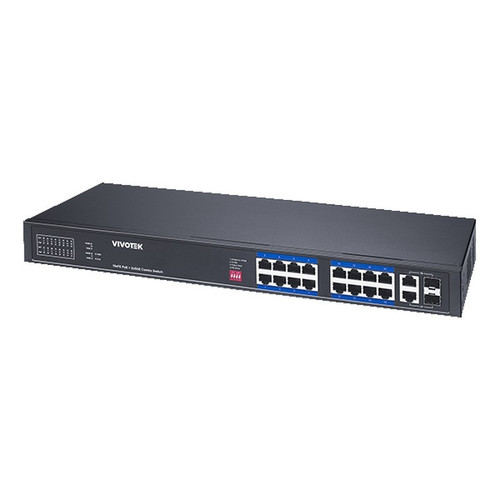
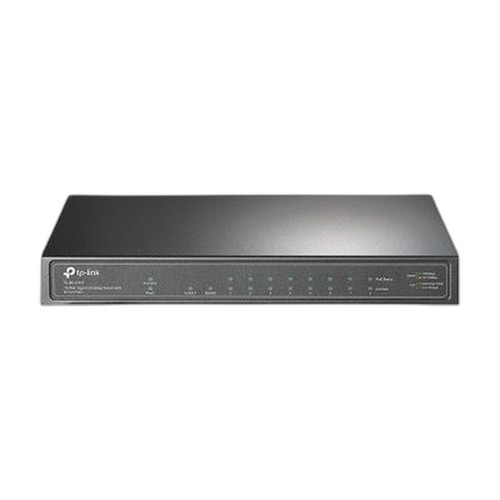
The Vivotek AW-IHT-1271 and TP-Link TL-SG1210P are both eight-port gigabit PoE switches targeting IP security and surveillance installations. The IHT-1271 is an L2+ managed industrial switch with hardened environmental ratings, redundant power, and deep VIVOTEK ecosystem integration. The TL-SG1210P is an unmanaged desktop switch designed for plug-and-play simplicity. Buyers choosing between them are typically weighing deployment environment severity, management depth, and budget against a shared port count and per-port PoE wattage.
In This Guide
- How do the port counts, PoE power budget, and switching throughput compare?
- How do the operating environment ratings, power design, and physical build differ?
- What management depth and ecosystem integration does each switch offer?
- Which should you choose: the IHT-1271 or the SG1210P?
- Side-by-Side Specs
- FAQ
How do the port counts, PoE power budget, and switching throughput compare?
The IHT-1271 provides 8× 10/100/1000 RJ45 PoE+ ports plus 4× 100M/1G SFP uplink slots, yielding 12 total ports. Its switching capacity is 24 Gbps with a forwarding rate of 17.856 Mpps and a MAC address table of 8K entries. Total PoE power budget is 240W at up to 30W per port (802.3at/af). Surge protection per PoE port is rated at 6KV.
The TL-SG1210P provides 8× PoE+ ports and 2 additional gigabit ports (10 ports total per the spec listing 'Ports: 10'), all RJ45. No SFP uplinks are specified. Switching capacity, forwarding rate, and MAC table size are not stated in the provided specs. Total PoE budget is 120W at up to 30W per port. Per-port surge protection is not specified. An extended-reach PoE mode up to 250m is listed.
The IHT-1271 holds a decisive advantage in uplink flexibility (4× SFP vs. none) and total PoE budget (240W vs. 120W), enabling denser camera deployments without budget splitting. The TL-SG1210P's 250m PoE extend mode is a spec present on the TP-Link unit with no equivalent stated for the IHT-1271.
How do the operating environment ratings, power design, and physical build differ?
The IHT-1271 is rated for operation from -40°C to 75°C (-40°F to 167°F) and storage from -40°C to 85°C, making it suitable for outdoor enclosures, parking structures, and industrial floors. It carries IEC 60068-2-6 vibration, IEC 60068-2-27 shock, and IEC 60068-2-32 freefall certifications. EMS compliance covers ESD, RS (radiated susceptibility), EFT, surge, conducted susceptibility, and power-frequency magnetic fields. EMI is FCC Part 15 Class A; safety marks are CE, LVD, and VCCI.
The TL-SG1210P is rated for operation from 0°C to 40°C (32°F to 104°F). No storage temperature, vibration, shock, or EMS certifications are provided in the supplied specs. It is a desktop form factor powered by 12V DC external supply. No redundant power input is specified.
The IHT-1271 accepts dual 48–57VDC inputs with redundant power backup, eliminating single-supply failure risk. Its 75°C upper operating limit and -40°C lower limit versus the TL-SG1210P's 0–40°C range represent a fundamentally different environmental class. The IHT-1271's 0.68 kg compact chassis (62×135×130 mm) is wall-mountable; the TL-SG1210P supports wall or rack mount but no industrial certifications are cited.
What management depth and ecosystem integration does each switch offer?
The IHT-1271 is a fully managed L2+ switch with a web GUI, CLI, SSH v1.5/v2.0, HTTPS/SSL, SNMP v1/v2c/v3, RMON groups 1/2/3/9, Syslog, NTP, UPnP, S-Flow, and IEEE 1588v2 PTP. VLAN support spans 802.1Q tag-based (4096 VLAN IDs), port-based, MAC-based, management, Q-in-Q, private VLAN edge, voice VLAN, and GVRP. Spanning tree includes STP, RSTP, and MSTP with ITU-T G.8031/G.8032 ring and linear protection and sub-20ms convergence. QoS offers 8 hardware queues with DiffServ, 802.1p, DSCP, WRR, strict priority, ingress policing, and egress shaping. Security features include IEEE 802.1x, ACLs, IP source guard, DHCP snooping, BPDU guard, STP root guard, storm control, RADIUS authentication, and DDoS prevention. IPv6 is fully supported across management planes.
The TL-SG1210P is unmanaged. No CLI, web GUI, SNMP, VLAN, spanning tree, QoS, or ACL features are specified. Management is described only as app-based provisioning and monitoring (Wi-Fi 6 Management App), with specifics not detailed in the supplied specs. Layer 2 loop avoidance, port security, and traffic prioritization capabilities are not stated.
The IHT-1271 additionally integrates with the VIVOTEK surveillance ecosystem: auto-discovery of up to 256 VIVOTEK devices, topology/floor/Google Map views, camera reboot/restore, configuration file management, DHCP server for IP assignment, PoE on/off scheduling, alive-checking for powered devices, and ONVIF IP camera discovery. None of these surveillance-specific features are present or specified for the TL-SG1210P.
Which should you choose: the IHT-1271 or the SG1210P?
Our take: The IHT-1271 is the stronger choice when the deployment demands industrial operating conditions, managed network control, or tight VIVOTEK ecosystem integration. Concretely: its PoE budget is 240W versus the TL-SG1210P's 120W, doubling available power for camera-dense runs; it operates from -40°C to 75°C against the TL-SG1210P's 0–40°C, supporting outdoor and industrial enclosures where the TP-Link unit cannot be warranted; and it adds 4× SFP fiber uplinks absent entirely on the TL-SG1210P, enabling long-haul backbone connectivity. The IHT-1271 carries a 60-month warranty versus no warranty term stated for the TL-SG1210P. The TL-SG1210P is appropriate where the environment is conditioned, the network is flat and unmanaged, camera count is low enough to stay within 120W, and first-cost minimization is the primary driver. Buyers running VIVOTEK VMS or requiring VLAN segmentation, QoS, or ring redundancy should specify the IHT-1271.
Side-by-Side Comparison
Spec-for-spec, from manufacturer data.
| Specification | Vivotek IHT-1271 | TP-Link SG1210P |
|---|---|---|
| Product Class | Industrial Managed L2+ PoE Switch | Unmanaged Desktop PoE+ Switch |
| PoE Ports | 8× Gigabit RJ45 PoE+ | 8× Gigabit RJ45 PoE+ |
| Total Ports | 12 (8× RJ45 + 4× SFP) | 10 (8× PoE+ RJ45 + 2× RJ45) |
| PoE Standard | 802.3at / 802.3af | 802.3at (PoE+) |
| Max PoE per Port | 30W | 30W |
| Total PoE Budget | 240W | 120W |
| Switching Capacity | 24 Gbps | — |
| Forwarding Rate | 17.856 Mpps | — |
| SFP Uplinks | 4× 100M/1G SFP | — |
| Management | Managed (Web GUI, CLI, SSH, SNMP v1/v2c/v3) | Unmanaged (App-based provisioning) |
| VLAN Support | 802.1Q, port-based, MAC-based, Q-in-Q, up to 4096 IDs | — |
| Spanning Tree | STP / RSTP / MSTP + ITU-T G.8031/G.8032 | — |
| Operating Temperature | -40°C to 75°C | 0°C to 40°C |
| Power Input | Dual 48–57VDC redundant | 12VDC (single) |
| Per-Port Surge Protection | 6KV | — |
| Warranty | 60 months | — |
Frequently Asked Questions
Which should you choose: the IHT-1271 or the SG1210P?
The IHT-1271 is the stronger choice when the deployment demands industrial operating conditions, managed network control, or tight VIVOTEK ecosystem integration. Concretely: its PoE budget is 240W versus the TL-SG1210P's 120W, doubling available power for camera-dense runs; it operates from -40°C to 75°C against the TL-SG1210P's 0–40°C, supporting outdoor and industrial enclosures where the TP-Link unit cannot be warranted; and it adds 4× SFP fiber uplinks absent entirely on the TL-SG1210P, enabling long-haul backbone connectivity. The IHT-1271 carries a 60-month warranty versus no warranty term stated for the TL-SG1210P. The TL-SG1210P is appropriate where the environment is conditioned, the network is flat and unmanaged, camera count is low enough to stay within 120W, and first-cost minimization is the primary driver. Buyers running VIVOTEK VMS or requiring VLAN segmentation, QoS, or ring redundancy should specify the IHT-1271.
Is the IHT-1271 or TL-SG1210P better for a multi-camera outdoor installation?
The IHT-1271 is the appropriate choice for outdoor installations. Its operating range of -40°C to 75°C, IEC 60068-2-6/27/32 vibration/shock/freefall ratings, 6KV per-port surge protection, and ESD/EFT/surge EMS compliance are designed for harsh environments. The TL-SG1210P is rated only to 0°C minimum with no stated environmental certifications, making it unsuitable for uncontrolled outdoor enclosures.
Can either switch segment camera traffic from corporate LAN using VLANs?
Only the IHT-1271 supports VLAN segmentation. It provides 802.1Q tag-based VLANs (up to 4096 VLAN IDs), port-based, MAC-based, management, Q-in-Q, private VLAN edge, and voice VLANs, plus GVRP. The TL-SG1210P is unmanaged and no VLAN capability is stated in its specifications.
Which switch is better suited for a small, budget-conscious office camera installation in a climate-controlled space?
For a conditioned indoor environment with a limited camera count (eight or fewer), the TL-SG1210P offers plug-and-play simplicity with no configuration overhead, a 120W PoE budget sufficient for eight cameras at 15W or four at 30W, and a lower unit cost implied by its desktop positioning. Where no managed features, fiber uplinks, or sub-zero operation are required, it reduces deployment complexity. The IHT-1271's industrial and management capabilities would be underutilized in that scenario.
More Network Switch Comparisons
- Vivotek IHT-1271 vs TP-Link SG3210XHP-M2
- Vivotek IHT-1271 vs TP-Link S4500-8GP2F
- Vivotek IHT-1271 vs Allied Telesis AT-x530L-10GHXm-10
- Vivotek IHT-1271 vs Vivotek GEV-108A-130
- Vivotek IHT-1271 vs Vivotek IHT-1000
- Vivotek GEV-108A-130 vs TP-Link SG3210XHP-M2
Network Switch Buying Guides
Get a Second Opinion on Your Camera Choice
Share your site layout, coverage goals, and budget. Our team will validate the camera selection, flag anything we would change, and recommend products that match the use case.