
Vivotek IHT-1271 vs Vivotek GEV-108A-130: Specification Comparison
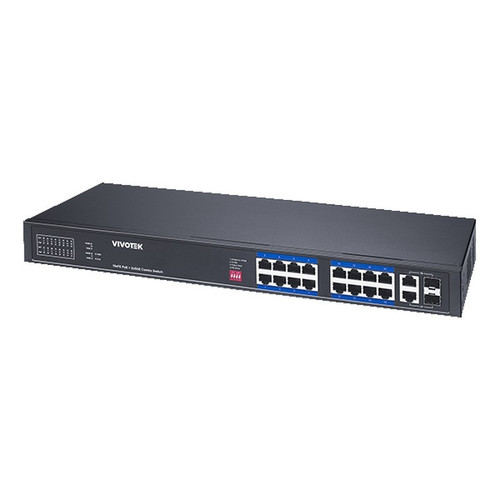
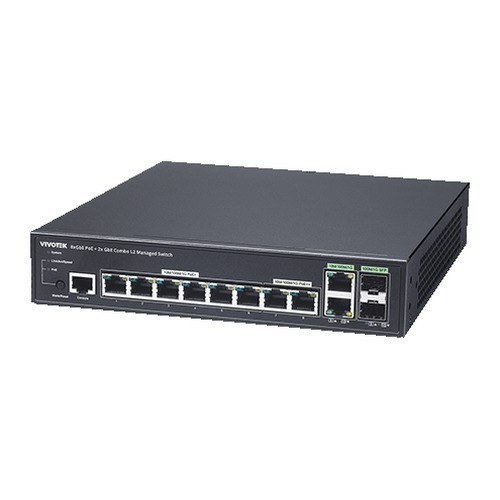
Both the Vivotek AW-IHT-1271 and AW-GEV-108A-130 are 8-port Gigabit PoE managed switches from Vivotek's surveillance-oriented lineup, designed to power and connect IP cameras and related devices. The IHT-1271 is an industrial-grade unit targeting harsh or outdoor edge deployments, while the GEV-108A-130 is a rackmount unit aimed at controlled indoor environments with higher per-port PoE headroom on select ports. This comparison evaluates throughput and port architecture, power delivery and environmental tolerance, and management depth.
In This Guide
- Which switch delivers more throughput and better port architecture for a surveillance edge deployment?
- Which switch is better suited for demanding power requirements and harsh operating environments?
- Which switch offers deeper management, security, and Vivotek platform integration?
- Which should you choose: the IHT-1271 or the GEV-108A-130?
- Side-by-Side Specs
- FAQ
Which switch delivers more throughput and better port architecture for a surveillance edge deployment?
The IHT-1271 posts a higher switching capacity of 24 Gbps versus the GEV-108A-130's 20 Gbps, and a higher forwarding rate of 17.856 Mpps versus 14.88 Mpps. Both switches provide 8 Gigabit RJ45 PoE ports and a MAC address table of 8K entries. Jumbo frame support differs slightly: the IHT-1271 supports up to 9,600 bytes while the GEV-108A-130 supports 9,216 bytes.
For uplink architecture, the IHT-1271 provides 4 dedicated 100M/1G SFP fiber ports, giving it significant fiber expansion headroom. The GEV-108A-130 offers 2 Gigabit Combo ports (shared RJ45/SFP), yielding a total of 10 ports but with only 2 uplink slots. Buyers needing multiple fiber uplinks or a ring topology with redundant fiber paths will find the IHT-1271's 4-port SFP bank more capable.
The IHT-1271 also includes ITU-T G.8031 and G.8032 Ethernet ring protection with sub-20ms convergence and support for up to 250 switches in a ring — specs not present in the GEV-108A-130's datasheet. The GEV-108A-130 adds Extended PoE Mode (up to 250m at 10 Mbps) and Non-Stop PoE, neither of which are listed for the IHT-1271.
Which switch is better suited for demanding power requirements and harsh operating environments?
The IHT-1271 operates from -40°C to 75°C and stores from -40°C to 85°C, with 5–90% non-condensing humidity tolerance. It is rated to IEC 60068-2-6 (vibration), IEC 60068-2-27 (shock), and IEC 60068-2-32 (freefall), and carries EMS compliance covering ESD, RS, EFT, surge, CS, and PFMF. Per-port surge protection is rated at 6KV.
The GEV-108A-130 operates from -10°C to 50°C and stores from -20°C to 70°C, with 10–90% RH humidity tolerance. No vibration, shock, or freefall ratings are listed in its datasheet, and per-port surge protection is not specified.
On PoE power, the IHT-1271 delivers a total budget of 240W across 8 ports at up to 30W each (IEEE 802.3at/af). The GEV-108A-130 delivers a total budget of 130W, with ports 1–6 at 30W (802.3af/at) and ports 7–8 at 90W (802.3bt). Buyers powering high-draw devices such as PTZ cameras or multi-sensor units on one or two ports will benefit from the GEV-108A-130's 90W bt ports; buyers needing maximum aggregate PoE capacity across all 8 ports will favor the IHT-1271's 240W budget. The IHT-1271 is powered by dual 48–57VDC inputs with redundant backup; the GEV-108A-130 uses a standard 100–240VAC input at 50–60Hz.
Which switch offers deeper management, security, and Vivotek platform integration?
Both switches support Vivotek's surveillance-centric management feature set: auto-discovery of up to 256 Vivotek devices, surveillance device management list, DHCP server function, device name edit, account/password setting, reboot/restore default, redirect link, on/off line status, topology view, floor view, Google Map view, configuration file export/import, floor image management, and export of the device list. The IHT-1271 additionally lists VIVOTEK Device Static IP Setting, VIVOTEK Camera/Video Server Configuration Files Management, Security, Trouble Shooting, and Discover ONVIF IP Camera — none of which appear in the GEV-108A-130's specification sheet.
On Layer 2/3 security, the IHT-1271 lists IEEE 802.1x, DDoS Prevention, SSH v1.5/v2.0, HTTPs/SSL, BPDU Guard, STP Root Guard, IP Source Guard, Storm Control, RADIUS Authentication (RFC2138), Layer 3 Isolation, Dual Image firmware, and ACL up to 256 entries. The GEV-108A-130 covers SSL, Port Security, IP Source Guard, Storm Control, RADIUS/TACACS+, DHCP Snooping, Loop Detection, and ACL up to 384 entries. The GEV-108A-130 adds TACACS+ and a higher ACL entry count (384 vs. 256); the IHT-1271 adds DDoS prevention, SSH, BPDU Guard, STP Root Guard, and Layer 3 Isolation.
IPv6 management depth is broader on the IHT-1271, which explicitly lists IPv6 Web/SSL, SNTP, Telnet/SSH, Ping Trace Route, TFTP, RADIUS, Syslog, DNS Client, Protocol-based VLANs, and SNMP. The GEV-108A-130 lists IPv4/IPv6 support but does not enumerate IPv6 management services individually. The IHT-1271 also includes IEEE 1588v2 PTP (precision time protocol) and S-Flow; the GEV-108A-130 lists S-Flow but does not list IEEE 1588v2 PTP. The GEV-108A-130 adds IGMP-RADIUS Based authentication, Multicast VLAN Registration (MVR), MLD v1/v2 Snooping, DHCP Relay, IP Subnet-based VLAN, and Non-Stop PoE — none of which are listed for the IHT-1271. Warranty is 60 months for the IHT-1271 versus 24 months for the GEV-108A-130.
Which should you choose: the IHT-1271 or the GEV-108A-130?
Our take: The IHT-1271 is the stronger choice when the deployment environment is harsh, aggregate PoE budget is the primary constraint, or fiber ring redundancy is required. Its operating range of -40°C to 75°C versus the GEV-108A-130's -10°C to 50°C, 240W total PoE budget versus 130W, and 4 dedicated SFP uplink ports versus 2 combo ports make it the correct fit for outdoor enclosures, industrial sites, or multi-switch fiber rings. Its 60-month warranty versus 24 months further reduces lifecycle cost. The GEV-108A-130 is the stronger choice when two devices need high-draw 802.3bt power (90W per port), extended cable reach to 250m is required, or the installation is an indoor rack environment fed by standard AC power. Its TACACS+ support and Non-Stop PoE also suit IT-managed indoor deployments. Neither switch should be selected based on unspecified capabilities.
Side-by-Side Comparison
Spec-for-spec, from manufacturer data.
| Specification | Vivotek IHT-1271 | Vivotek GEV-108A-130 |
|---|---|---|
| Gigabit RJ45 PoE Ports | 8 | 8 |
| Uplink / Fiber Ports | 4× SFP (dedicated) | 2× Gigabit Combo (RJ45/SFP) |
| Total Ports | 12 (8 RJ45 + 4 SFP) | 10 (8 RJ45 + 2 Combo) |
| Switching Capacity | 24 Gbps | 20 Gbps |
| Forwarding Capacity | 17.856 Mpps | 14.88 Mpps |
| Jumbo Frames | 9,600 Bytes | 9,216 Bytes |
| MAC Address Table | 8K | 8K |
| Total PoE Power Budget | 240W | 130W |
| Max PoE Per Port | 30W (802.3at) | 30W ports 1–6 / 90W ports 7–8 (802.3bt) |
| PoE Standards | IEEE 802.3af/at | IEEE 802.3af/at/bt |
| Extended PoE (250m) | — | Yes (10 Mbps) |
| Non-Stop PoE | — | Yes |
| Per-Port Surge Protection | 6KV | — |
| Operating Temperature | -40°C to 75°C | -10°C to 50°C |
| Power Input | Dual 48–57VDC (redundant) | 100–240VAC, 50–60Hz |
| Warranty | 60 months | 24 months |
Frequently Asked Questions
Which should you choose: the IHT-1271 or the GEV-108A-130?
The IHT-1271 is the stronger choice when the deployment environment is harsh, aggregate PoE budget is the primary constraint, or fiber ring redundancy is required. Its operating range of -40°C to 75°C versus the GEV-108A-130's -10°C to 50°C, 240W total PoE budget versus 130W, and 4 dedicated SFP uplink ports versus 2 combo ports make it the correct fit for outdoor enclosures, industrial sites, or multi-switch fiber rings. Its 60-month warranty versus 24 months further reduces lifecycle cost. The GEV-108A-130 is the stronger choice when two devices need high-draw 802.3bt power (90W per port), extended cable reach to 250m is required, or the installation is an indoor rack environment fed by standard AC power. Its TACACS+ support and Non-Stop PoE also suit IT-managed indoor deployments. Neither switch should be selected based on unspecified capabilities.
Is the IHT-1271 or GEV-108A-130 better for powering high-wattage PTZ cameras?
The GEV-108A-130 is better for high-wattage PTZ cameras on up to two ports: ports 7 and 8 deliver 90W each under IEEE 802.3bt, which can power demanding multi-sensor or high-speed PTZ units. The IHT-1271 caps every port at 30W (802.3at), so it cannot supply 802.3bt class power. If you need 90W delivery, the GEV-108A-130 is the only option of the two.
Can either switch be installed in an outdoor or unheated cabinet?
The IHT-1271 is rated for -40°C to 75°C operation with vibration, shock, and freefall certifications (IEC 60068-2-6/27/32) and 6KV per-port surge protection, making it suitable for outdoor or industrial enclosures. The GEV-108A-130 is rated only to -10°C to 50°C with no listed mechanical stress ratings or per-port surge protection figure, so it is not specified for outdoor or uncontrolled environments.
Which switch supports a larger or more resilient multi-switch network?
The IHT-1271 explicitly supports ITU-T G.8031 and G.8032 Ethernet ring protection with convergence within 20ms and a ring of up to 250 switches. It provides 4 SFP fiber uplinks to build redundant ring paths. The GEV-108A-130 supports STP/RSTP/MSTP and LACP but does not list G.8031/G.8032 ring protection or a maximum ring-switch count. For large or fault-tolerant multi-switch topologies, the IHT-1271 has documented ring-redundancy capabilities that the GEV-108A-130 does not.
More Network Switch Comparisons
- Vivotek IHT-1271 vs TP-Link SG3210XHP-M2
- Vivotek IHT-1271 vs TP-Link S4500-8GP2F
- Vivotek IHT-1271 vs TP-Link SG1210P
- Vivotek IHT-1271 vs Allied Telesis AT-x530L-10GHXm-10
- Vivotek IHT-1271 vs Vivotek IHT-1000
- Vivotek GEV-108A-130 vs TP-Link SG3210XHP-M2
Network Switch Buying Guides
Get a Second Opinion on Your Camera Choice
Share your site layout, coverage goals, and budget. Our team will validate the camera selection, flag anything we would change, and recommend products that match the use case.