
Vivotek IHT-1271 vs TP-Link S4500-8GP2F: Specification Comparison
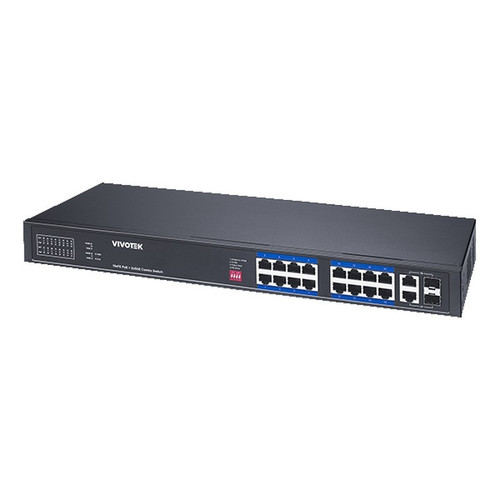
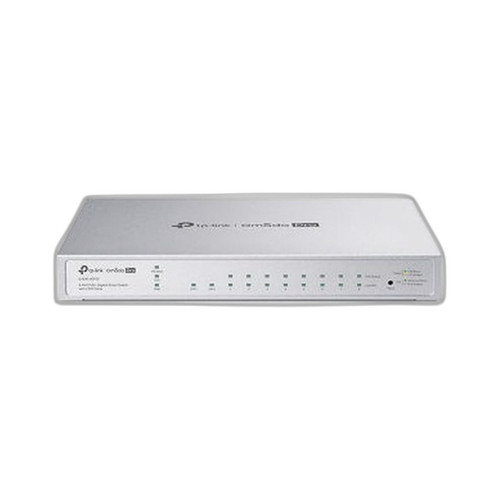
Both the Vivotek AW-IHT-1271 and TP-Link S4500-8GP2F are 8-port Gigabit PoE+ switches targeting network edge deployments, particularly in surveillance and SMB environments. The IHT-1271 is a DIN-rail-eligible industrial-grade L2+ managed switch with a 240W PoE budget, dual redundant power inputs, and a -40°C to 75°C operating range. The S4500-8GP2F is a smart PoE+ switch in the TP-Link Omada Pro line with a 58W PoE budget, 2 SFP uplinks, and wall or rack mounting. This comparison evaluates PoE capacity and switching throughput, physical environment tolerance and power architecture, and management depth and ecosystem integration.
In This Guide
- Which switch delivers more PoE power and switching throughput?
- Which switch is better suited to harsh or outdoor-adjacent environments and demanding power conditions?
- Which switch offers deeper management capabilities and better ecosystem integration for surveillance or IT deployments?
- Which should you choose: the IHT-1271 or the S4500-8GP2F?
- Side-by-Side Specs
- FAQ
Which switch delivers more PoE power and switching throughput?
The Vivotek AW-IHT-1271 provides a total PoE power budget of 240W across its 8 RJ45 ports, with a maximum per-port output of 30W (802.3at/af compliant). Its switching capacity is 24 Gbps with a forwarding rate of 17.856 Mpps. In addition to the 8 PoE data ports, it includes 4 SFP fiber uplink slots, giving it a total of 12 active ports contributing to the switching fabric.
The TP-Link S4500-8GP2F lists a PoE budget of 58W across its 8 RJ45 PoE+ ports, with per-port power noted as up to 30W (802.3at). Its switching capacity is listed in the provided specs as 16 Gbps, with throughput also noted as 16 Gbps. It includes 2 SFP slots. Note: the spec data for the S4500-8GP2F contains internally inconsistent PoE budget figures (58W, 62W, 61W, and 30W appear across different fields); the 58W figure is used here as it is the most frequently cited. Buyers should verify the confirmed PoE budget directly from TP-Link's current datasheet.
On both PoE budget and switching capacity, the IHT-1271 holds a substantial advantage: 240W versus 58W (a 4:1 ratio), and 24 Gbps versus 16 Gbps. For deployments requiring multiple 30W PoE+ devices — such as PTZ cameras, access control panels, or wireless APs — the IHT-1271 can sustain full 30W draw on all 8 ports simultaneously, while the S4500-8GP2F's 58W budget would be exhausted by fewer than two ports at maximum draw.
Which switch is better suited to harsh or outdoor-adjacent environments and demanding power conditions?
The Vivotek AW-IHT-1271 is rated for an operating temperature range of -40°C to 75°C (-40°F to 167°F) and a storage temperature of -40°C to 85°C. It carries IEC 60068-2-6 (vibration), IEC 60068-2-27 (shock), and IEC 60068-2-32 (freefall) certifications, and its EMS compliance covers ESD, RS, EFT, surge, conducted susceptibility, and power frequency magnetic field. Per-port surge protection is rated at 6KV. Power input is 48–57VDC with dual redundant inputs (PW1 and PW2), eliminating a single point of failure at the power supply. Weight is 0.68 kg in a compact 62×135×130 mm enclosure designed for industrial installation.
The TP-Link S4500-8GP2F's operating temperature range is not stated in the provided specifications. Power is supplied via an external 53.5 VDC / 1.31A adapter — a single, non-redundant supply. No vibration, shock, freefall, or EMS/ESD certifications are cited in the available spec data. Mount options include wall or rack. Memory is listed at 32 MB; no comparable figure is provided for the IHT-1271.
For installations in enclosures subject to temperature extremes, vibration, electrical transients, or power instability — including outdoor cabinets, transportation, manufacturing floors, or remote sites — the IHT-1271's certified industrial ratings, 6KV surge protection, and dual redundant DC inputs represent a fundamentally different design class. The S4500-8GP2F, based on available specs, is not certified for those conditions and relies on a single external AC adapter.
Which switch offers deeper management capabilities and better ecosystem integration for surveillance or IT deployments?
The Vivotek AW-IHT-1271 is a fully L2+ managed switch with an extensive feature set documented in the provided specifications. VLAN support includes 802.1Q tag-based (4096 VLAN IDs), port-based, MAC-based, management VLAN, Q-in-Q, Private VLAN Edge, Voice VLAN, and GVRP. Spanning tree coverage includes STP (802.1D), RSTP (802.1w), and MSTP (802.1s), plus ITU-T G.8031 linear and G.8032 ring protection switching with sub-20ms convergence. QoS includes 8 hardware queues, 802.1p, DiffServ, DSCP, ingress policing, and egress shaping. Security features include 802.1x, IP Source Guard, DHCP Snooping, BPDU Guard, STP Root Guard, Storm Control, RADIUS (RFC2138), DDoS prevention, HTTPS/SSL, SSH v1.5/v2.0, and Layer 3 isolation. LACP supports up to 4 ports per group, up to 6 groups. Management interfaces include Web GUI, CLI, SNMP v1/v2c/v3, RMON (groups 1/2/3/9), Syslog, Telnet, SSH, NTP, LLDP/LLDP-MED, UPnP, S-Flow, IEEE 1588v2 PTP, and dual image firmware. IPv6 is fully supported across management planes.
Critically, the IHT-1271 also integrates natively with the Vivotek surveillance ecosystem: it supports auto-discovery of up to 256 Vivotek devices, a surveillance device management list, topology view, floor view, Google Map view, ONVIF IP camera discovery, DHCP server function, PoE PD alive checking, PoE scheduling (7/24 on/off), power delay, and remote on/off control per port. Configuration file export/import for Vivotek cameras is supported directly from the switch interface. It can manage up to 250 switch units in a network.
The TP-Link S4500-8GP2F is described as a 'smart' switch in the Omada Pro line. Management features cited in the available specifications are limited to SNMP Trap/Inform and EEE (Energy Efficient Ethernet). No VLAN depth, spanning tree variants, QoS queue count, ACL specifics, or security feature inventory is provided in the spec data supplied. The S4500-8GP2F is expected to integrate with TP-Link's Omada SDN controller ecosystem, but no Omada-specific management features are enumerated in the provided data. Buyers evaluating Omada SDN capabilities should consult TP-Link's full product documentation.
Based solely on the specifications provided, the IHT-1271 has a substantially more detailed and verifiable managed-switch feature set, as well as native Vivotek camera management built into the switch firmware — a meaningful differentiator for pure Vivotek surveillance deployments.
Which should you choose: the IHT-1271 or the S4500-8GP2F?
Our take: The IHT-1271 is the stronger choice when deploying Vivotek surveillance infrastructure in industrial or environmentally demanding locations. Its 240W PoE budget dwarfs the S4500-8GP2F's 58W, enabling all 8 ports to run at full 30W simultaneously versus the TP-Link's budget being exhausted by under two ports at max draw. Its switching capacity of 24 Gbps versus 16 Gbps provides additional headroom for high-bitrate camera streams. Its -40°C to 75°C rating with IEC vibration, shock, and 6KV surge certifications and dual redundant 48–57VDC inputs position it for harsh environments where the S4500-8GP2F offers no documented equivalent ratings. The S4500-8GP2F may be appropriate for cost-sensitive, climate-controlled, single-power-source SMB deployments on the TP-Link Omada SDN platform — but its PoE budget and undocumented environmental tolerance make it unsuitable where the IHT-1271 is specified.
Side-by-Side Comparison
Spec-for-spec, from manufacturer data.
| Specification | Vivotek IHT-1271 | TP-Link S4500-8GP2F |
|---|---|---|
| PoE Ports (RJ45) | 8x Gigabit PoE+ | 8x Gigabit PoE+ |
| SFP Uplink Slots | 4 | 2 |
| Total PoE Power Budget | 240W | 58W (spec inconsistency noted) |
| Max PoE Per Port | 30W (802.3at) | 30W (802.3at) |
| PoE Standards | 802.3at / 802.3af | 802.3at / 802.3af |
| Switching Capacity | 24 Gbps | 16 Gbps |
| Forwarding Rate | 17.856 Mpps | — |
| MAC Address Table | 8K | — |
| Operating Temperature | -40°C to 75°C | — |
| Surge Protection (per port) | 6KV | — |
| Power Input | 48–57VDC Dual Redundant | 53.5VDC External Adapter (single) |
| Environmental Certifications | IEC 60068-2-6 / -2-27 / -2-32 | — |
| Management Level | L2+ Fully Managed | Smart Managed |
| VLAN Support | 4096 VLAN IDs (802.1Q, MAC, Q-in-Q, PVE, Voice) | — |
| Spanning Tree | STP / RSTP / MSTP / G.8031 / G.8032 | — |
| Warranty | 60 months | — |
Frequently Asked Questions
Which should you choose: the IHT-1271 or the S4500-8GP2F?
The IHT-1271 is the stronger choice when deploying Vivotek surveillance infrastructure in industrial or environmentally demanding locations. Its 240W PoE budget dwarfs the S4500-8GP2F's 58W, enabling all 8 ports to run at full 30W simultaneously versus the TP-Link's budget being exhausted by under two ports at max draw. Its switching capacity of 24 Gbps versus 16 Gbps provides additional headroom for high-bitrate camera streams. Its -40°C to 75°C rating with IEC vibration, shock, and 6KV surge certifications and dual redundant 48–57VDC inputs position it for harsh environments where the S4500-8GP2F offers no documented equivalent ratings. The S4500-8GP2F may be appropriate for cost-sensitive, climate-controlled, single-power-source SMB deployments on the TP-Link Omada SDN platform — but its PoE budget and undocumented environmental tolerance make it unsuitable where the IHT-1271 is specified.
Can either switch power multiple PTZ or high-watt PoE+ cameras simultaneously?
The IHT-1271 can power all 8 ports at 30W simultaneously within its 240W total budget. The S4500-8GP2F lists a 58W total budget with up to 30W per port — meaning it cannot sustain more than one or two high-draw 30W PoE+ devices at once. If your deployment includes several PTZ cameras or other high-watt PoE+ devices, the IHT-1271's budget is the decisive advantage. Note: the S4500-8GP2F's spec data contains conflicting budget figures (58W, 62W, 61W); confirm with TP-Link before specifying.
Is the IHT-1271 or S4500-8GP2F better suited for outdoor cabinets or industrial enclosures?
The IHT-1271 is rated -40°C to 75°C operating with IEC 60068-2-6 vibration, IEC 60068-2-27 shock, and IEC 60068-2-32 freefall certifications, plus 6KV per-port surge protection and dual redundant DC power inputs. The S4500-8GP2F provides no operating temperature range, environmental certifications, or surge protection figures in the available specifications. For outdoor cabinets, transportation, or industrial enclosures, only the IHT-1271 has documented ratings for those conditions.
Does either switch integrate directly with IP camera management software?
The IHT-1271 includes built-in Vivotek device management: auto-discovery of up to 256 Vivotek devices, ONVIF camera discovery, topology/floor/map views, PoE alive checking, per-port on/off scheduling, and camera configuration file management — all from the switch interface. This is a native feature confirmed in the provided specifications. The S4500-8GP2F is part of TP-Link's Omada Pro ecosystem; Omada SDN controller integration is expected but no specific camera-management or surveillance-oriented features are enumerated in the available spec data. Buyers in a mixed-vendor environment should evaluate both vendors' management platforms independently.
More Network Switch Comparisons
- Vivotek IHT-1271 vs TP-Link SG3210XHP-M2
- Vivotek IHT-1271 vs TP-Link SG1210P
- Vivotek IHT-1271 vs Allied Telesis AT-x530L-10GHXm-10
- Vivotek IHT-1271 vs Vivotek GEV-108A-130
- Vivotek IHT-1271 vs Vivotek IHT-1000
- Vivotek GEV-108A-130 vs TP-Link SG3210XHP-M2
Network Switch Buying Guides
Get a Second Opinion on Your Camera Choice
Share your site layout, coverage goals, and budget. Our team will validate the camera selection, flag anything we would change, and recommend products that match the use case.