
Vivotek IHT-1271 vs TP-Link SG3210XHP-M2: Specification Comparison
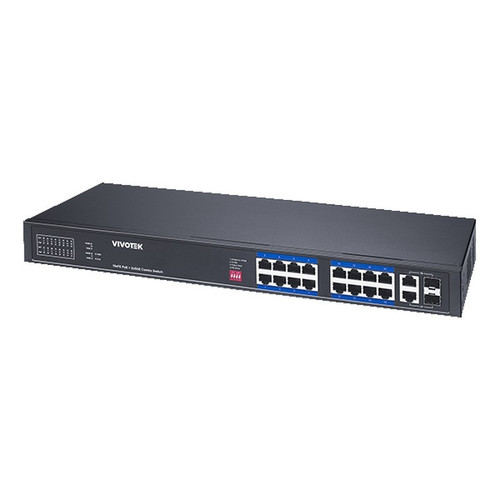
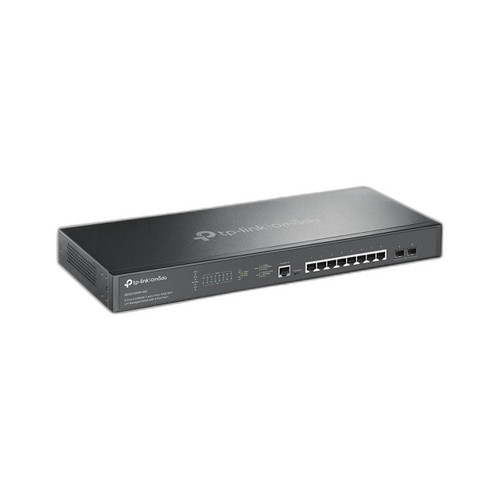
Both the Vivotek AW-IHT-1271 and the TP-Link SG3210XHP-M2 are managed 8-port PoE switches targeting network edge deployments, but they address meaningfully different environments. The IHT-1271 is a compact wall-mount industrial switch rated for extreme temperatures and hardened against electrical disturbances, while the SG3210XHP-M2 is a rack-mount L2+ switch built around 2.5GBASE-T copper and 10G SFP+ uplinks. This comparison examines which unit fits a given installation, based strictly on published specifications.
In This Guide
- Which switch is better suited for harsh or outdoor-adjacent environments?
- Which switch delivers more PoE power per port and to what device classes?
- Which switch provides higher throughput and more capable uplinks for high-density or high-bandwidth workloads?
- Which should you choose: the IHT-1271 or the SG3210XHP-M2?
- Side-by-Side Specs
- FAQ
Which switch is better suited for harsh or outdoor-adjacent environments?
The IHT-1271 is purpose-built for industrial deployments. Its operating temperature range spans -40°C to 75°C, compared with the SG3210XHP-M2's 0°C to 50°C range — a 40-degree advantage at the cold end and a 25-degree advantage at the hot end. That difference matters in unheated enclosures, rooftop cabinets, or outdoor-rated housings where ambient temperatures regularly fall below freezing.
The IHT-1271 also carries formal environmental stress certifications: IEC 60068-2-6 (vibration), IEC 60068-2-27 (shock), and IEC 60068-2-32 (freefall), plus a full EMS compliance suite covering ESD, radiated susceptibility, EFT, surge, conducted susceptibility, and power-frequency magnetic field. Per-PoE-port surge protection is rated at 6 kV. The SG3210XHP-M2's published specifications do not list any of these environmental or EMS certifications.
The IHT-1271 accepts 48–57 VDC with a redundant second power input (PW2), which is common in industrial and transit installations where AC power may be unavailable or where supply redundancy is required. The SG3210XHP-M2 runs on 100–240 V AC only, with no redundant input specified.
Which switch delivers more PoE power per port and to what device classes?
The SG3210XHP-M2 supports 802.3bt (PoE++), delivering up to 90 W per port. This covers high-draw devices such as pan-tilt-zoom cameras with integrated heaters, 802.11ax Wi-Fi 6E access points, and thin clients that require Class 6–8 power. The IHT-1271 supports 802.3at/af only, capping at 30 W per port. Both switches share an identical 240 W total PoE budget.
For conventional IP cameras, access control readers, VoIP phones, and standard Wi-Fi 5 access points — all of which draw under 25.5 W — the IHT-1271's 30 W ceiling is sufficient. Deployments that include high-wattage 802.3bt endpoints require the SG3210XHP-M2. Neither switch's specifications indicate whether PoE budget is shared dynamically or allocated statically.
The IHT-1271 adds operational PoE management features not listed for the SG3210XHP-M2: per-port PoE ON/OFF scheduling (7/24 calendar), alive checking for powered devices (automatic port reset on PD failure), and power delivery delay on boot. These are relevant in unattended remote sites where manual troubleshooting is impractical.
Which switch provides higher throughput and more capable uplinks for high-density or high-bandwidth workloads?
The SG3210XHP-M2's copper ports run at 2.5GBASE-T, providing 2.5 Gbps per device connection — 2.5 times the 1 Gbps ceiling of the IHT-1271's RJ45 ports. Its switching capacity is 80 Gbps versus 24 Gbps on the IHT-1271, and its two uplinks are 10G SFP+. These figures reflect a platform designed for workloads where per-device bandwidth or aggregate throughput is a primary constraint: high-resolution multi-sensor cameras streaming at 50+ Mbps, NAS-attached recording servers, or converged IT/OT backbones.
The IHT-1271 offers four 100M/1G SFP uplinks versus two 10G SFP+ on the SG3210XHP-M2. For typical 4K surveillance camera deployments where individual streams run 8–20 Mbps, the IHT-1271's 1G uplinks are rarely the bottleneck. The additional SFP count provides more uplink or fiber extension flexibility.
The IHT-1271 includes ITU-T G.8031 (Ethernet Linear Protection Switching) and G.8032 (Ethernet Ring Protection Switching) with a stated convergence time under 20 ms, plus IEEE 1588v2 PTP for time-sensitive applications. These are industrial ring and precision-timing protocols absent from the SG3210XHP-M2's published specifications. The IHT-1271 also supports IPv4/v6 static routing, DHCP server, IP Source Guard, GVRP, Voice VLAN, Q-in-Q, and DDoS prevention — features not confirmed in the SG3210XHP-M2's spec sheet.
Which should you choose: the IHT-1271 or the SG3210XHP-M2?
Our take: The IHT-1271 is the stronger choice when the installation environment is harsh, when ring or redundant-power topologies are required, or when native Vivotek surveillance management is in use. Its -40°C to 75°C operating range, 6 kV per-port surge protection, dual DC power inputs, IEC environmental certifications, and G.8032 ring protection with sub-20 ms convergence are capabilities the SG3210XHP-M2 does not specify. Conversely, the SG3210XHP-M2 is the correct selection when endpoints require 802.3bt (up to 90 W per port versus the IHT-1271's 30 W cap), when devices connect at 2.5GBASE-T, or when 80 Gbps switching capacity is needed for high-throughput workloads. Both units share a 240 W total PoE budget. Buyers in controlled indoor environments running PoE++ devices should choose the SG3210XHP-M2; buyers deploying in industrial, transit, or outdoor-adjacent sites with Vivotek cameras should choose the IHT-1271.
Side-by-Side Comparison
Spec-for-spec, from manufacturer data.
| Specification | Vivotek IHT-1271 | TP-Link SG3210XHP-M2 |
|---|---|---|
| PoE Copper Ports | 8 x 1G RJ45 | 8 x 2.5GBASE-T |
| Uplink Ports | 4 x 1G SFP | 2 x 10G SFP+ |
| Switching Capacity | 24 Gbps | 80 Gbps |
| PoE Standard | 802.3at / 802.3af | 802.3bt / 802.3at / 802.3af |
| Max PoE per Port | 30 W | 90 W |
| Total PoE Budget | 240 W | 240 W |
| Operating Temperature | -40°C to 75°C | 0°C to 50°C |
| Power Input | 48–57 VDC (dual redundant) | 100–240 V AC |
| Mount Type | Wall | Rack (1U) |
| Surge Protection per PoE Port | 6 kV | — |
| Ring Protection (G.8032) | Yes, <20 ms convergence | — |
| IEEE 1588v2 PTP | Yes | — |
| IPv4/v6 Static Routing | Yes | Yes (static routing listed) |
| Environmental Certifications | IEC 60068-2-6/-27/-32, EMS suite | — |
| Surveillance Integration | Vivotek native (up to 256 devices) | — |
| Warranty | 60 months | Not specified |
Frequently Asked Questions
Which should you choose: the IHT-1271 or the SG3210XHP-M2?
The IHT-1271 is the stronger choice when the installation environment is harsh, when ring or redundant-power topologies are required, or when native Vivotek surveillance management is in use. Its -40°C to 75°C operating range, 6 kV per-port surge protection, dual DC power inputs, IEC environmental certifications, and G.8032 ring protection with sub-20 ms convergence are capabilities the SG3210XHP-M2 does not specify. Conversely, the SG3210XHP-M2 is the correct selection when endpoints require 802.3bt (up to 90 W per port versus the IHT-1271's 30 W cap), when devices connect at 2.5GBASE-T, or when 80 Gbps switching capacity is needed for high-throughput workloads. Both units share a 240 W total PoE budget. Buyers in controlled indoor environments running PoE++ devices should choose the SG3210XHP-M2; buyers deploying in industrial, transit, or outdoor-adjacent sites with Vivotek cameras should choose the IHT-1271.
Can either switch power a PTZ camera with an integrated defroster that draws 60–70 watts?
Only the SG3210XHP-M2. It supports 802.3bt (PoE++) with up to 90 W per port, which covers that load class. The IHT-1271 is limited to 802.3at/af and a 30 W per-port maximum, which is insufficient for 60–70 W devices.
Will the IHT-1271 operate reliably in an unheated outdoor enclosure in a northern climate where temperatures drop to -30°C?
Yes, based on its published specification. The IHT-1271's operating temperature range is -40°C to 75°C, which covers -30°C. It also carries IEC 60068-2-6 vibration and IEC 60068-2-27 shock certifications and per-port 6 kV surge protection. The SG3210XHP-M2's operating range begins at 0°C, so it does not meet that environmental requirement.
Does either switch support ring topology with fast failover for a campus-wide fiber loop?
The IHT-1271 explicitly supports ITU-T G.8032 Ethernet Ring Protection Switching with a stated convergence time under 20 ms, making it suitable for ring topologies. The SG3210XHP-M2's published specifications list STP/RSTP/MSTP but do not mention G.8032 or a convergence time target; ring protection capability for that unit cannot be confirmed from available data.
More Network Switch Comparisons
- Vivotek IHT-1271 vs TP-Link S4500-8GP2F
- Vivotek IHT-1271 vs TP-Link SG1210P
- Vivotek IHT-1271 vs Allied Telesis AT-x530L-10GHXm-10
- Vivotek IHT-1271 vs Vivotek GEV-108A-130
- Vivotek IHT-1271 vs Vivotek IHT-1000
- Vivotek GEV-108A-130 vs TP-Link SG3210XHP-M2
Network Switch Buying Guides
Get a Second Opinion on Your Camera Choice
Share your site layout, coverage goals, and budget. Our team will validate the camera selection, flag anything we would change, and recommend products that match the use case.