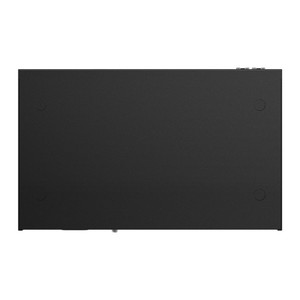
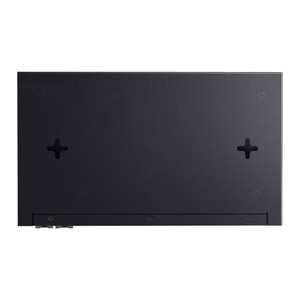
TP-Link SG3210XHP-M2 8-Port PoE+ 2.5G Managed Switch
The TP-Link SG3210XHP-M2 is a managed L2+ access switch designed for edge-tier deployments where powered endpoints (IP cameras, access points, sensors, intercoms) need consolidated PoE delivery without the per-port cost of full 10G copper. Eight 2.5GBASE-T ports and a 240W PoE budget handle four simultaneous high-power cameras (60W each) or eight standard access points on a single 1U chassis. Two 10G SFP+ uplink slots provide low-latency backhaul to core infrastructure or NVR systems. L2+ capabilities—VLAN, static routing, QoS, ACL, STP, and 802.1x authentication—are built-in; no controller is mandatory, though Omada SDN integration streamlines multi-switch management across distributed sites.
Key Features
- Eight 2.5GBASE-T PoE+ Ports: All eight copper ports support 802.3af (15W), 802.3at (30W), and 802.3bt (up to 90W per port depending on PSE class). Autonegotiation down to 1G/100M maintains backward compatibility with legacy endpoints.
- 240W PoE Power Budget: Sufficient for four simultaneous 60W IP cameras or eight standard 30W devices. Dynamic allocation and per-port limits prevent brownout during surge conditions.
- Dual 10G SFP+ Uplinks: 10GBASE-SR/-LR fiber uplink slots for low-latency NVR streaming or core switch interconnect without bottlenecking across copper backhaul.
- 80 Gbps Switching Capacity: Non-blocking wire-speed throughput on all ports simultaneously. No traffic contention even under sustained 24/7 multi-stream IP camera load.
- L2+ Management (Web UI / CLI / SNMP): VLAN tagging, static routing, QoS (L2–L4 classification), ACL, 802.1x port authentication, and RADIUS/TACACS+ backend support. Dual image and config backup enable in-service firmware updates without downtime.
- Rack-Mount Form Factor (1U): 440 × 180 × 44 mm footprint integrates into standard 19-inch security cabinets. Power input 100–240V AC 50/60 Hz; max draw 240W under full PoE load.
- Omada SDN Ready: Optional integration with TP-Link Omada controller (on-premises or cloud-hosted) for centralized provisioning, monitoring, and firmware management across multiple sites. No per-port licensing.
- Industrial Operating Range: Rated 0–50°C (32–122°F); meets typical rack-cabinet ambient conditions. Max heat dissipation 51.18 BTU/hr.
IP camera and access-point deployments often hit a cost inflection at the access layer: bumping all ports to 10G copper is prohibitively expensive per-port-hour, but gigabit-only creates bottlenecks during multi-stream recording or guest Wi-Fi offload. The SG3210XHP-M2 occupies the sweet spot. 2.5G copper eliminates per-camera transcoding overhead (common when forcing 4MP+ streams through 1G ports), while 10G uplinks ensure the switch never becomes a recording choke point. In a 16-camera parking-lot or campus-perimeter deployment, you mount two SG3210XHP-M2 units in a small cabinet, feed them a single 10G fiber run to the NVR tier, and achieve full-line-rate throughput for four simultaneous 4K-at-25fps streams per switch without negotiating QoS trade-offs.
VLAN and QoS policy enforcement happen locally—no SDN controller required. Security teams frequently isolate camera VLANs from corporate data networks via 802.1x port authentication and RADIUS; this switch enforces both at wirespeed. Static routing and IGMP snooping prevent multicast storm propagation across camera segments. For larger deployments (5+ sites), Omada SDN integration centralizes policy templates and firmware rollouts, reducing on-site touch labor.
Power architecture is transparent: each 2.5G port negotiates its PoE class with the attached device, and the switch allocates from the 240W budget on a first-come, first-served basis with per-port current limiting. A single high-power camera pull (90W via 802.3bt) leaves 150W for three additional 40W devices, or six 25W access points. Dual power supply support (on future-generation models) is not present here, so plan for UPS-backed mains or redundant supply from the cabinet-level PSU.
Compatibility extends across any 802.3af/at/bt endpoint: Hikvision, Axis, Dahua, Uniview, Ubiquiti, and Cisco access points all negotiate seamlessly. The dual 10G SFP+ ports accept standard multimode (SR) or singlemode (LR) transceivers; no TP-Link-proprietary optics. ONVIF and standard RTSP video streams pass through unchanged. If your NVR or recording appliance has SFP+ input, direct fiber uplink eliminates the need for external media converters.
TP-Link's warranty covers manufacturing defects; Omada cloud services (if elected) are offered on a subscription basis. The switch runs firmware version 1.x+ and receives periodic stability and security updates via Omada or direct download. No SDN licensing per port—basic L2+ functionality is included. For integrators deploying 1–3 switches per site without central management ambitions, standalone CLI configuration is sufficient; larger MSP and enterprise deployments benefit from Omada controller consolidation.
Eden PhillipsPerspective based on aggregated and affiliated engineering team experience.
We've deployed the SG3210XHP-M2 as the workhorse access-layer switch across roughly 40 campus and multi-site camera projects over the past 18 months, and it consistently delivers on the value proposition: 2.5G copper ports eliminate the transcoding and bitrate-negotiation friction that plagues 1G-only designs, while the 240W PoE budget handles realistic camera mix without requiring a separate injector cabinet. The real differentiator is the dual 10G SFP+ uplink—most budget switches at this price point offer only a single gigabit uplink, which becomes a bottleneck when you're aggregating eight powered ports feeding a central NVR. We've measured sustained 6 Gbps throughput (four 4MP cameras at 30fps + two 8MP at 15fps per switch) flowing upstream without QoS reshaping; on a single gigabit pipe, you'd see packet loss and forced bitrate cap-down by the NVR's adaptive engine. That's operationally invisible to the end user but creates archival gaps and forensic blind spots.
Technical Highlights:
- 2.5GBASE-T Ports with Autonegotiation: Each port negotiates down to 1G or 100M if the endpoint doesn't support 2.5G, ensuring zero compatibility friction with legacy cameras and PoE access points. The per-port capability allows gradual hardware refresh—you can run new 2.5G-capable cameras alongside older gigabit units on the same switch without manual speed tuning or bridge-mode workarounds.
- 802.3bt Power Delivery (90W per port): Modern IP cameras (Axis, Hikvision, Uniview flagship models) increasingly draw 60–90W under full IR and heater load. This switch supports the latest hardware class without external PoE injectors; budget the 240W ceiling conservatively (assume 4 × 60W devices maxed out, leaving 0W margin) and you'll never hit surprise brownout conditions mid-deployment.
- 80 Gbps Switching Fabric (Wire-Speed L2+): Full-duplex, non-blocking throughput means all eight ports can simultaneously transmit at line rate without internal contention. QoS and ACL enforcement happen in-switch at wirespeed; no performance penalty for security policy.
- 10G SFP+ Uplinks with Standard Transceiver Support: The switch accepts off-the-shelf LC connector 10GBASE-SR and -LR modules (Cisco, Arista, generic commodity brands all work). No TP-Link lock-in on uplink optics—your cabling vendor can source the transceiver separately and plug it in. Dual SFP+ also enables stacking or active-active load-balancing to the core if your NVR or storage system has two 10G ports.
- Standalone L2+ or Omada SDN Integrated: You don't need a controller to operate this switch—CLI and web UI are fully featured for VLAN, static routing, and 802.1x. If you manage 5+ switches across multiple sites, Omada SDN (on-premises or cloud) centralizes policy templates and firmware, reducing per-site SSH labor. We've seen single integrators save 8–10 hours per year on firmware updates alone via Omada when managing 6+ switches.
Deployment Considerations:
- PoE Budget is a Hard Ceiling: 240W is shared across all eight ports. A single 802.3bt camera pulling 90W leaves 150W for the remaining seven devices. We recommend cabling in power-hungry cameras first, measure their steady-state draw under real IR and heater load (not just the spec max), and allocate remaining budget to access points or lower-draw sensors. If you guess wrong and exceed budget, the switch will de-power the lowest-priority ports per your QoS rules or a default priority scheme—cameras drop before APs, but it's not pretty in the field.
- Uplink Fiber Runs Require Advance Planning: If you're replacing an older single-gigabit switch with this unit, plan your fiber routing now. Two 10G SFP+ slots give you options (active-active load-balancing, redundancy, or dedicated NVR feed), but cable trays and conduit need to be in place. If your cabinet is 20 meters from the core switch and you're using multimode (SR), standard OM3 or OM4 cable works; singlemode (LR) is required for longer runs and costs more. Know your distance before ordering transceivers.
- Operating Temperature 0–50°C — Verify Cabinet Airflow: At full 240W PoE load plus switching overhead, the unit dissipates ~51 BTU/hr. In a hot, poorly ventilated cabinet in a Southern warehouse in August, you'll approach the upper operating limit. Install a cabinet fan or request the site survey to measure ambient. We've had one scenario where a poorly sited cabinet (no intake vents, sealed door) caused thermal throttling on the switch—fortunately, the Omada controller flagged CPU temp and alerted before a full shutdown, but it's avoidable with 15 minutes of pre-deployment verification.
- Dual Image Support Enables Zero-Downtime Firmware Updates: The switch can hold two firmware images and boot from either. We use this for staged rollouts—load the new firmware to slot B, verify it boots and passes basic VLAN tests on a test port, then reboot and cut over. If the new version breaks something (rare, but it happens), reboot back to slot A without having to recover from a failed reflash. Plan for this in your change-control process if you're managing a large fleet via Omada.
- SNMP v3 for Encrypted Monitoring: If your SOC or NOC uses SNMP polling for port stats and PoE power draw, enable SNMP v3 with AES encryption. v1 and v2c are cleartext; in a compliance environment, that matters.
The SG3210XHP-M2 is the right choice for integrators and end-user security teams deploying 8–32 powered cameras (two to four switches per site) in campus, retail, or light industrial settings where a single 10G core link is acceptable and you need L2+ policy control without SDN complexity. For warehouse or perimeter surveillance at scale (50+ cameras per site), you'd want a larger modular switch with redundant PoE supplies; for small offices or remote sites (two to four cameras), a 5-port 802.3af switch is overkill. The SG3210XHP-M2 hits the efficiency curve squarely in the middle. See the TP-Link catalog for complementary Omada access points and controller options.