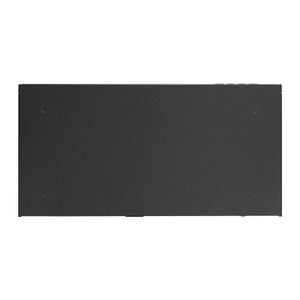
TP-Link SG3428X-M2 24-Port 2.5GBASE-T L2+ Managed Switch
The TP-Link SG3428X-M2 is an L2+ managed access-layer switch designed for distributed IP camera systems, warehouse automation networks, and multi-gigabit edge deployments. With 24×2.5GBASE-T RJ45 ports and four 10GBASE SFP+ uplink slots, it delivers 200 Gbps switching capacity and 148.8 Mpps forwarding rate — enough headroom to aggregate dozens of 1080p/4K cameras, PTZ controllers, and PoE+ powered devices without bottlenecking. The switch operates either standalone via web/CLI or integrated into TP-Link's Omada SDN ecosystem for centralized management across multi-site installations. Its 1U rackmountable form factor and 37.9 W maximum power draw make it suitable for tight cabinet spaces and shared UPS infrastructure.
Key Features
- 24×2.5GBASE-T + 4×10G SFP+: Twenty-four 2.5 Gbps copper ports on Cat6A cabling (100 m reach) plus four dedicated 10 Gbps SFP+ slots for fiber uplinks or high-bandwidth inter-switch trunks. Eliminates the cost and complexity of gigabit-bottleneck aggregation.
- 200 Gbps Switching Fabric / 148.8 Mpps: Non-blocking backplane handles line-rate forwarding across all ports simultaneously — no frame loss under sustained multi-user or multi-camera traffic loads.
- L2+ Management + Omada SDN Integration: VLAN (802.1Q/QinQ), STP/RSTP/MSTP, static routing, ACL, QoS (802.1p/DSCP), and IGMP Snooping. Manageable via web interface, CLI, SNMP, or TP-Link Omada cloud/on-premises controller for centralized policy across distributed sites.
- 802.1X + RADIUS/TACACS+ Authentication: Port-level authentication enforces network access control — critical for separating IP camera VLANs from office workstations and guest networks.
- 1U Rackmount Chassis, 37.9 W Max Power: Fits standard 19-inch racks; low thermal footprint reduces cooling overhead and compatible with 100-240 V~ 50/60 Hz sources (wall outlet or rack PDU).
- Store-and-Forward with Jumbo Frame Support: 9 KB jumbo frame capability (MTU up to 1500+) supports iSCSI, NVR backup, and high-resolution video streaming without fragmentation; store-and-forward prevents frame loss at line rate.
- Console Access (RJ45 + Micro-USB): Dual console ports enable initial configuration without network connectivity — essential for emergency recovery or headless deployment in remote locations.
- 16K MAC Address Table: Sufficient capacity for enterprise access-layer deployments with hundreds of endpoints; RMON support integrates with third-party network monitoring and syslog aggregation platforms.
The SG3428X-M2 addresses a common pain point in distributed camera systems: the jump from gigabit access switches to costly 10 Gbps core infrastructure. By enabling 2.5 Gbps on every port, this switch lets integrators future-proof edge deployments without licensing expensive core bandwidth. A typical 24-camera deployment (each pulling 5–15 Mbps sustained) consumes only 120–360 Mbps of access capacity, leaving ample headroom for PTZ pan/tilt/zoom commands, two-way audio, and redundant recording streams to a local NVR or cloud gateway.
Omada SDN integration is optional but powerful in multi-site scenarios. By controlling switch policies centrally — VLAN assignments, QoS for camera traffic, port security rules — you eliminate the manual configuration drift that plagues heterogeneous networks. On-premises Omada controllers run on a Docker container or physical appliance; cloud-based Omada Central works for organizations that prefer managed control without server capex. Both modes support API-driven automation for provisioning new camera ports or creating isolated forensic recording subnets on the fly.
From a total cost of ownership perspective, the SG3428X-M2 splits the difference between commodity gigabit switches and premium 10 Gbps fabric. A single unit covers up to 24 wired cameras, PTZ controllers, and door readers with room to grow. Four SFP+ slots enable stacking or uplinks to a core 10 Gbps switch without requiring external media converters (which add latency and single points of failure). The 32 MB flash and 256 MB DRAM are sufficient for configuration state and transient routing tables; there is no onboard recording or edge video analytics — this is a network appliance, not an NVR.
The SG3428X-M2 ships with a 1U rack-mount kit, power cable, and RJ45 console cable. Fiber transceivers (10GBASE-SR/LR single-mode SFP+ modules) are sold separately — expect $150–300 per pair for quality single-mode optics if you are running longer uplink distances. The switch's modest power draw (14.9 W standby, 37.9 W operational) and passive cooling make it a good fit for always-on surveillance infrastructure where efficiency matters on metered utility or limited UPS budget.
Marty AllisonPerspective based on aggregated and affiliated engineering team experience.
We've deployed the SG3428X-M2 across a range of mid-market camera systems — warehouses with 30+ networked domes, multi-tenant office buildings with distributed access points, and campus deployments where a single gigabit access layer became the choke point. The 2.5 Gbps per-port architecture is the real differentiator here. It gives you breathing room on camera traffic without forcing you into a full 10 Gbps overhaul for the entire access tier. On paper, 2.5G sounds incremental; in practice, when you are aggregating video, audio, and PTZ commands across 20+ cameras on one switch, that extra 1.5 Gbps of headroom means the difference between smooth 30 fps playback and dropped frames during peak recording. We've also found the Omada integration invaluable in multi-site rollouts. Instead of SSH'ing into each switch individually to adjust VLANs or QoS policies, you push policy from the controller and it propagates instantly. That centralization cuts provisioning time by half and reduces configuration drift — a real win when you are managing 50+ switches across five locations.
Technical Highlights:
- 200 Gbps Non-Blocking Switching Fabric: Ensures that traffic from any port can reach any other port at full line rate without contention. For a 24-port camera deployment, this means zero artificial bottlenecks — each camera stream gets its guaranteed bandwidth allocation. Store-and-forward transmission prevents frame loss during congestion, critical for forensic-grade recording.
- 4×10GBASE SFP+ Uplinks (Single-Mode Fiber): Avoids the cost and latency overhead of media converters. Fiber uplinks also isolate your core network from EMI and electrical noise common in industrial camera sites. Single-mode support extends reach to 10+ km for campus or multi-building campuses without regenerators.
- 802.1X Port Authentication + RADIUS/TACACS+ Backend: Integrates with your corporate identity directory (Active Directory, LDAP) to enforce port-level network access. In our experience, this is the single most effective control for preventing unauthorized NVRs or rogue recording devices from joining the camera subnet.
- VLAN + QoS with 802.1p/DSCP: Segment camera traffic from management traffic, isolate PoE device charging from data streams, and prioritize live-view streams over archival background processes. Works cleanly with VMS platforms that tag their own traffic.
- 37.9 W Max Power Draw + Passive Cooling: In always-on surveillance deployments, power efficiency compounds month to month. At 37.9 W, this switch draws roughly 330 kWh per year — trivial on a shared UPS, and no fan noise (passive cooling is rare at this port density, a big plus for quiet cabinet installations).
- Dual Console Ports (RJ45 + Micro-USB): If your network is down, you still have console access via a simple rollover cable or USB-to-serial adapter. We've used this recovery path more times than we'd like to admit on late-night emergency re-provisioning calls.
Deployment Considerations:
- SFP+ transceiver modules are not included — budget $150–300 per pair (TX/RX) for quality single-mode 10GBASE-SR (≤400 m) or 10GBASE-LR (≤10 km) optics. Mixing transceiver brands can introduce latency jitter; stick with one vendor per fiber run if timing-sensitive PTZ control is critical.
- The switch requires TP-Link Omada Controller software (free tier available, cloud or on-premises) for full management features. Standalone mode via web/CLI works, but you lose centralized policy and multi-switch stacking orchestration. Plan for a Docker container or small physical appliance if you want on-premises control.
- PoE power is not built in — if you need to power cameras directly from the switch, add an external PoE injector or PoE+ injector on the uplink. The switch's 37.9 W budget is for its own operation, not device power delivery. (For PoE-fed camera ports, consider TP-Link's PoE-enabled access switches in parallel.)
- Cat6A cabling is required to reach the 100 m 2.5G specification; legacy Cat5e runs will negotiate to 1 Gbps and negate much of the switch's value. If existing infrastructure is Cat5e, budget for re-cabling or use fiber uplinks to bypass old runs.
- Store-and-forward switching introduces minimal but measurable latency (~10–20 microseconds) compared to cut-through switching. For real-time PTZ or two-way audio, this is negligible; for sub-millisecond timing (e.g., synchronized multi-camera triggers), test in your environment first.
- 16K MAC address table is plenty for most deployments, but very large VLANs with dynamic MAC learning (e.g., guest Wi-Fi networks connected via the uplink) can cause occasional table overflow. Monitor via SNMP if you run >10K active endpoints.
The SG3428X-M2 is the right choice if you are deploying 15+ IP cameras at a single site or managing 20+ distributed sites with centralized management. It bridges the gap between consumer-grade gigabit switches and enterprise 10 Gbps infrastructure — no wasted capex, no bottlenecks, and tight integration with TP-Link's Omada ecosystem. Explore the full TP-Link catalog for compatible controllers, PoE injectors, and fiber transceivers.