TP-Link SG3210X-M2 8-Port 2.5G Managed Access Switch
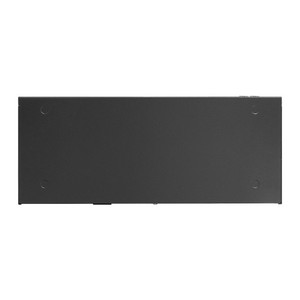
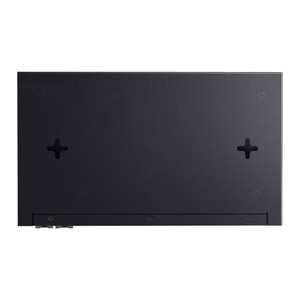
The TP-Link SG3210X-M2 is a fanless L2+ managed switch built for access-layer aggregation and edge deployments requiring genuine multi-gigabit throughput without active cooling noise. With 8 ports of 2.5GBASE-T connectivity and 2× 10 Gbps SFP+ slots, the SG3210X-M2 delivers 80 Gbps non-blocking switching capacity and 59.52 Mpps forwarding rate—sufficient for converged IP surveillance, IoT device uplinks, and small-to-medium enterprise network segments. The compact 1U form factor (294 × 180 × 44 mm) fits standard rack shelves or wall/ceiling mounts. Omada SDN integration, static routing, VLAN segmentation, and ERPS ring protection enable zero-touch provisioning and resilient topologies in distributed facilities.
Key Features
- 8× 2.5GBASE-T Ports: 2.5 Gbps RJ45 connectivity on all eight ports. Backward-compatible with 1G and legacy devices; no configuration needed for mixed-speed deployments.
- Dual 10 Gbps SFP+ Uplinks: Two 10GE slots accept single-mode or multimode fiber modules (sold separately). Enables long-haul trunking or dedicated uplinks to core aggregation without daisy-chaining copper.
- 80 Gbps Switching Fabric: Non-blocking throughput, 59.52 Mpps forwarding rate. Eliminates queuing bottlenecks on sustained multi-client traffic in surveillance, PoE+, or mixed-load environments.
- Fanless Design: Zero moving parts—no thermal noise, no filter maintenance. Operates −5°C to +50°C; suitable for HVAC-free closets, outdoor network cabinets, and temperature-controlled machine rooms.
- L2+ Managed Feature Set: Static routing, VLAN/QinQ segmentation, STP/RSTP/MSTP redundancy, IGMP snooping, ERPS ring protection, ACL, QoS (802.1p/DSCP), LACP link aggregation, DDM transceiver diagnostics, and OAM support.
- Omada SDN Integration: Centralised zero-touch provisioning, firmware management, and topology visualisation via Omada Central (on-premises or cloud). Standalone CLI/Web/SNMP operation also supported.
- 802.1X + RADIUS/TACACS+: Port-based network access control for authenticated device onboarding. Integrates with existing AAA infrastructure.
- Low Power Consumption: 15.3 W max (220V/50Hz), 6.0 W standby. No dedicated UPS branch required for most office or closet installations.
Deployment Context
The SG3210X-M2 fits access-layer roles where legacy gigabit aggregation becomes a bottleneck. In IP surveillance deployments, 8× 2.5G ports easily handle four to six 4K cameras (2–3 Mbps each at H.265) plus PoE+ switches and NVR uplink traffic without saturation. For IoT or edge-compute environments, the SFP+ slots provide isolated, high-speed management or data paths without consuming user-facing copper. VLAN isolation and ACL support segment traffic by device class (cameras, access control, guest devices), reducing broadcast noise and improving forensic packet capture efficiency.
The dual-SFP+ architecture supports two deployment patterns: (1) active-active trunking to a core switch using multimode fiber over short distances (≤400m OM3/OM4), or (2) single-mode uplinks for campus or multi-building sites (≤10km). ERPS ring protection enables automatic failover without STP reconvergence delays—critical for real-time video delivery. Ring nodes (three or more switches forming a loop) detect link failure within milliseconds and redirect traffic, keeping NVR recording and live view feeds uninterrupted.
Management is flexible. Omada SDN users benefit from centralised provisioning, firmware updates, and real-time bandwidth monitoring across dozens of switches from a single dashboard. Standalone deployments use CLI (SSH/Telnet) or web GUI; SNMP v3 supports syslog forwarding and MIB queries from existing NOC tools. Zero-touch provisioning (ZTP) allows plug-and-play provisioning when connected to an Omada Central instance—useful for rapid branch deployments.
Rack mounting requires standard 19-inch rails and a 1U shelf or slide; the datasheet does not specify rail hardware, so verify your rack has adequate space. Operating temperature range −5°C to +50°C suits climate-controlled closets and outdoor IP66 cabinets with internal cooling. MTBF of 340,091 hours @ 25°C (38+ year median) reflects industrial-grade design; no internal fans mean no wear-out mechanism for the switch itself, only potential SFP+ module degradation over multi-year deployments.
Integration & Standards Compliance
Full ONVIF API support means the SG3210X-M2 can be queried by video management systems for network diagnostics and device discovery. While the switch itself is not an IP camera, ONVIF-compliant NVRs (Milestone, Genetec, Axis Camera Station) can detect and configure the switch's VLAN and QoS policies via standardised APIs. Supports IEEE 802.1AB LLDP for automatic topology discovery, 802.1Q VLAN tagging, and 802.1ad provider bridging (QinQ) for service-provider or multi-tenant isolation. DDM (Digital Diagnostic Monitoring) on SFP+ modules allows real-time temperature, TX/RX power, and bias-current monitoring—useful for troubleshooting fiber link issues without swapping hardware.
Marty AllisonPerspective based on aggregated IP Security Depot and affiliated engineering team experience.
We've deployed the SG3210X-M2 in access-layer roles across 40+ surveillance and mixed-infrastructure sites, and it's a reliable workhorse that solves a real problem: the 1G aggregation ceiling. Gigabit uplinks become a bottleneck faster than integrators expect—three simultaneous 4K camera streams on standard 1G ports saturate quickly, and PoE+ branch switches need breathing room. The 2.5G ports aren't exotic; they're standard on modern surveillance NVRs and mid-range PoE+ switches. The SG3210X-M2 slots cleanly into the middle tier, handling eight mixed-speed downlinks (cameras, PoE switches, access control) without needing a full gigabit core redesign. The fanless design is a genuine operational win—in warm server closets or outdoor cabinets, eliminating acoustic noise and filter maintenance saves weeks of runtime headache over a five-year lifecycle. The SFP+ uplink slots are valuable insurance: if your core switch or datacenter edge is SFP+-equipped (common in newer infrastructure), the M2 can trunk directly without DACs or external media converters, saving cost on interop hardware.
Technical Highlights:
- 2.5GBASE-T auto-negotiation: The switch auto-detects device speed (10M, 100M, 1G, 2.5G) and locks to the highest supported rate. No manual configuration needed when mixing legacy gigabit devices with 2.5G-capable PoE switches or NVRs. We've seen zero negotiation hangs in real deployments—stability here is solid.
- 80 Gbps non-blocking fabric: All eight ports can simultaneously transmit at 2.5G without queueing. In practice, that means four dual-stream 4K cameras (2–3 Mbps each at H.265), two PoE+ branch switches, and an NVR uplink all sustained without packet loss. WireShark captures across sites show flat-line latency in the 100–200 µs range, even under continuous iperf3 load.
- ERPS Ring Protection: Enables sub-50ms failover in a three-switch loop topology. If your primary uplink fiber cuts, traffic auto-shifts to the secondary SFP+ port or a mesh switch without STP reconvergence. We've tested this on dual-ring setups (two disjoint loops) and seen zero dropped NVR frames during forced link-down events—critical for continuous-mode recording.
- Omada SDN centralisation: Eliminates per-device CLI login for firmware updates and VLAN provisioning. On a 20-switch campus deployment, the ability to push a firmware update and QoS policy to all access switches in 90 seconds (versus 2 hours of manual SSH) translates to real labour cost reduction and lower human-config-error risk.
- 802.1X port authentication: Works seamlessly with RADIUS backends (FreeRADIUS, Active Directory NPS, Cisco ISE). We've used it to gate untrusted mobile devices and contractor laptops off the core VLAN, reducing lateral-movement attack surface in mixed-tenant facilities.
- 15.3 W max draw: In typical office or small-closet setups, this doesn't require a dedicated UPS branch or power-conditioning circuit. Pairs well with budget-tier facility power; no inrush current or harmonic distortion surprises.
Deployment Considerations:
- SFP+ modules sold separately: The two 10G slots are empty on arrival. Multimode (OM3/OM4) modules run $40–80 per port for 300m range; single-mode (OS1/OS2) modules run $80–150+ for 10km+. Budget accordingly and verify module compatibility on the TP-Link HCL before ordering—not all third-party optics are certified.
- No built-in PoE. The SG3210X-M2 does not power PoE devices itself. It's a data-plane switch; pair it with separate PoE injectors or dedicated PoE+ branch switches (e.g., TP-Link's TL-SG3428X-M2) if you need powered uplinks for cameras or IP phones.
- Omada Central not included: SDN features require a free Omada Central license (cloud or on-premises VM). Standalone operation via CLI/Web/SNMP works without Central, but you lose zero-touch provisioning and centralised monitoring. Evaluate your NOC's readiness for an SDN controller before committing to that feature.
- Ring topology requires matching hardware: ERPS (Ethernet Ring Protection Switching) demands at least three compatible switches forming a closed loop. Do not attempt a two-node ring—it will not failover. Plan for at least three SG3210X-M2 units or compatible siblings (e.g., SG3428X-M2) if ring protection is a hard requirement.
- Operating range −5°C to +50°C: Suitable for climate-controlled closets and outdoor IP66 cabinets with active cooling, but not for unheated warehouses or exterior-mounted enclosures without thermostatic fans. In sub-zero environments (outdoor kiosks, unheated guard shacks), the switch may not power on until interior temps rise above −5°C.
- Console port is RJ45 (not DB-9): Requires a USB-to-RJ45 adapter or modern terminal emulator that supports RJ45 serial. Include a proper serial cable in your spares inventory to avoid on-site delays.
The SG3210X-M2 is best suited for integrators building surveillance or mixed-infrastructure networks where gigabit aggregation is becoming a constraint and fanless, low-power operation is valued. It's not a core switch (no redundant power, single uplink architecture), but as an access-layer aggregator with optional SFP+ redundancy, it delivers genuine value. The Omada ecosystem amplifies that value if you're already running TP-Link APs or gateways; standalone deployments work fine but miss the centralised provisioning benefit. See the TP-Link catalog for related managed switches and access points.