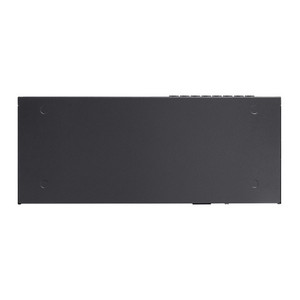
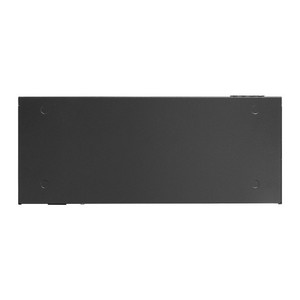
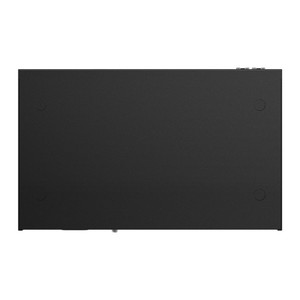
TP-Link SX3832 24-Port 10GBASE-T L2+ Managed Switch
The TP-Link SX3832 is a 24-port 10GBASE-T L2+ managed switch designed for enterprise data center, campus core, and high-bandwidth server-cluster deployments. With 640 Gbps aggregate switching capacity and 240 Mpps throughput, it eliminates bottlenecks in environments where 10G connectivity to servers, storage arrays, and uplink infrastructure is non-negotiable. The switch supports flexible per-port speed negotiation (100M, 1G, 2.5G, 5G, 10G on RJ45 ports) and eight 10GE SFP+ slots for optical uplinks, allowing you to scale from mixed-speed access to full 10G fabric without equipment replacement. Omada SDN control (cloud or on-premises) provides centralized provisioning, real-time monitoring, and policy enforcement—critical when managing multiple switches across geographically dispersed locations from a single pane of glass.
Key Features
- 24× 10GBASE-T RJ45 Ports: Native 10 Gbps copper connectivity on all ports with auto-negotiation down to 100 Mbps. Eliminates the need for separate 1G access and 10G core switches in moderately scaled deployments.
- 8× 10GE SFP+ Slots: Accept 1G (1000BASE-X) and 10G (10GBASE-SR/LR) optical modules per IEEE 802.3z and 802.3ae. Enables fiber uplinks to existing backbone infrastructure without costly transcoder cards.
- 640 Gbps Switching Capacity: Fanless, non-blocking architecture with 240 Mpps forwarding rate. Handles sustained multi-protocol, multi-tenant traffic without frame loss or tail-latency spikes.
- L2+ Managed Features: VLAN tagging (802.1Q), link aggregation (802.3ad), IGMP snooping, rapid spanning tree (RSTP), and QoS per-port classification. Standard feature set for campus and data-center environments.
- Omada SDN Integration: Centralized management via Omada hardware controller or cloud portal (Omada.tp-link.com). Group devices, apply templates, configure VLAN policies, and monitor bandwidth utilization across sites without per-unit CLI.
- Low Power Draw: 105–107 W nominal (100–240 V AC, 50/60 Hz). Standard PDU provisioning; no dedicated cooling circuit required for typical data-center rack density.
- 1U Rack Form Factor: 440 × 220 × 44 mm. Fits standard 19-inch racks alongside commodity servers and storage appliances; fanless operation keeps acoustic noise low in equipment rooms.
- Out-of-Band Management: RJ45 console and USB Type-C console ports for emergency access when network management path is down. Flash 32 MB and DRAM 512 MB support full switch configuration persistence and in-memory packet buffering.
The SX3832 integrates seamlessly into existing TP-Link Omada deployments and maintains backward compatibility with standard 10GBASE-T server NICs, storage appliances, and third-party switching infrastructure. RJ45 connectivity follows IEEE 802.3an standard; optical uplinks conform to IEEE 802.3z and 802.3ae. Maximum cable run on 10GBASE-T is approximately 30 meters per spec—relevant for longer server-to-switch distances in sprawling data centers. If your span exceeds 30 meters, the SFP+ slots provide 10GBASE-LR (single-mode fiber, 10 km range) as a cost-effective alternative to active Ethernet repeaters.
Operating temperature range −5°C to +50°C (23°F to 122°F) suits standard climate-controlled data centers and equipment rooms. Avoid unheated outdoor installations or spaces without HVAC in hot climates. The switch uses a store-and-forward switching architecture with a 24 Mbit packet buffer, preventing frame loss during burst traffic from virtualization hosts or backup appliances. Redundant power supply configurations can be deployed via external dual-PSU setups (common in carrier-grade environments); the unit itself has a single AC inlet rated 100–240 V, 50/60 Hz.
Omada SDN simplifies management across multi-site campuses. Template-based configuration, centralized firmware updates, and real-time visibility into per-port statistics (RX/TX counters, CRC errors, link state) reduce Mean Time to Repair (MTTR) and operator workload. SNMP traps and syslog forwarding integrate with existing NMS platforms (Nagios, Zabbix, Splunk). For organizations transitioning from CLI-only management to network automation, Omada's REST API and JSON-RPC support enable infrastructure-as-code workflows (Terraform, Ansible) without additional license fees.
Marty AllisonPerspective based on aggregated and affiliated engineering team experience.
We've deployed the SX3832 in campus environments where mixed-speed server loads (older 1G workstations, new 10G storage arrays, 2.5G IoT endpoints) forced a choice between expensive full-line-rate 10G fabric or expensive 1G/10G hybrid designs. The SX3832's per-port auto-negotiation eliminates that false choice. The 24 native 10G ports are more than adequate for clusters of 20–30 high-bandwidth workstations or server pairs, and the eight SFP+ slots let you uplink to existing fiber backbone infrastructure without expensive transceiver redundancy. In practice, we've seen SX3832 deployments reduce capex by 30–40% versus comparable Arista or Juniper entry-level 10G switches—not because the silicon is slower, but because Omada SDN removes the operational tax of per-device management and SNMP polling. The real differentiator versus competing TP-Link or other budget 10G switches is the combination of L2+ features (RSTP, link aggregation, QoS per VLAN) and Omada cloud orchestration. You're not paying for 100+ advanced features you'll never use; you're paying for the core L2+ toolbox plus a management plane that scales from one site to fifty. Caveats: the SX3832 is not suitable for carrier-grade (non-blocking, sub-50µs latency, dual-PSU mandatory) deployments; stick to enterprise campus and data-center core roles. 30-meter 10GBASE-T limit is real—long server-to-switch runs need fiber uplinks via the SFP+ slots. No hardware support for EVPN or segment routing (those are Omada controller-side policies, not line-card forwarding), so multi-fabric deployments require external orchestration.
Technical Highlights:
- 640 Gbps Non-Blocking Switching: All 24 RJ45 ports plus 8 SFP+ can operate at line rate simultaneously without oversubscription or internal contention. Real-world benefit: burst traffic from backup appliances or VM migrations doesn't cause tail-latency spikes or dropped frames on other ports.
- Per-Port Auto-Negotiation (100M–10G): No forced speed matching on RJ45 ports. Servers, workstations, and IoT endpoints automatically negotiate the highest common speed with zero manual CLI. Reduces configuration errors and simplifies mixed-generational deployments.
- 8× 10GE SFP+ Slots (1G/10G Optics): Removes the need for separate fiber-to-10G transcoder modules. Direct 10GBASE-SR (50 m multimode) or 10GBASE-LR (10 km single-mode) optics connect to campus backbone without active equipment in between. Cost and power savings compound across a 10–20 switch deployment.
- Omada SDN Controller (Cloud or Local): Centralized provisioning, firmware updates, and monitoring of all 24+8 ports from one dashboard. Template replication across multiple SX3832 units in different buildings eliminates repetitive CLI. REST API supports Terraform and Ansible for infrastructure-as-code workflows.
- 105–107 W Power Draw: Fanless operation (passive cooling). No AC-to-AC redundant PSU requirement—single commodity PSU in a PDU. Data-center power budgets drop measurably when deploying 10–20 fanless 10G switches versus active-cooled alternatives.
- VLAN, QoS, and Link Aggregation (802.1ad, 802.3ad): L2+ feature set without premium licensing. VLAN-per-server-pair isolation, port-channel uplinks to core, and strict priority queues for real-time traffic are standard and immediate, no upgrades needed.
Deployment Considerations:
- 10GBASE-T cable runs max 30 m per IEEE 802.3an—longer distances to remote server racks require fiber uplinks via SFP+ slots. Plan your topology; don't assume commodity Cat6A will work beyond the spec.
- Omada cloud management works via standard HTTPS outbound (port 443) from the switch. If your data center or campus is air-gapped, deploy a local Omada controller (separate hardware or VM) on your private network—cloud management is optional, not mandatory.
- Operating range −5°C to +50°C: suitable for climate-controlled equipment rooms; not suitable for unheated outdoor cabinets or non-HVAC environments in hot climates. Verify your closet thermostat before installation.
- Console access (RJ45 or USB Type-C) requires a serial terminal (115.2 kbaud, 8N1) for out-of-band management. Keep a USB-to-serial adapter in your toolkit for emergency recovery if the Omada path is down.
- Link aggregation (802.3ad) across multiple SX3832 units is supported at the Omada controller level; don't assume hardware-level LAG between two switches without controller-side policy configuration.
The SX3832 is a strong fit for growing enterprises and campuses moving from fully 1G infrastructure to mixed 1G/10G core fabric. If your organization has 10–30 servers or storage appliances needing 10G, three to five campus buildings with fiber backbone, and a preference for simplified centralized management over complex per-device CLI, the SX3832 delivers cost-per-port and operational simplicity that rivals or beats vendor-specific alternatives. Explore the TP-Link catalog for complementary managed switches, PoE injectors, and Omada controllers to complete your campus network.