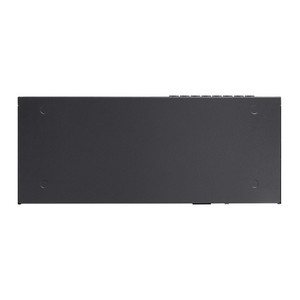
TP-Link SX3008F 8-Port 10GE SFP+ L2+ Managed Switch
The TP-Link SX3008F is an 8-port 10GE SFP+ L2+ managed switch designed for enterprise network cores, campus aggregation, and ISP backbone environments requiring high-speed fiber connectivity without full Layer 3 complexity. With 160 Gbps aggregate switching capacity and native Omada SDN controller integration, the SX3008F consolidates multi-site switch, access point, and gateway management into a single cloud-accessible interface. It eliminates the operational silos typical of mixed-vendor networking stacks—particularly valuable in deployments spanning hospitality properties, education campuses, retail chains, or distributed office locations already standardized on Omada wireless infrastructure.
Key Features
- 8-Port 10GE SFP+ Architecture: 160 Gbps switching fabric (16 Gbps per port × 10). Supports standard SFP+ transceivers (1000BASE-SX/LX, 10GBASE-SR/LR/ER/ZR). Fiber uplinks eliminate copper distance constraints and reduce EMI in noisy industrial or data-center environments.
- L2+ Feature Set: VLAN/QinQ, static routing, STP/RSTP/MSTP, LACP link aggregation, 802.1x port-based authentication, and L2-L4 QoS with rate limiting. Integrates with RADIUS/TACACS+ for centralized access control across sites.
- Omada SDN Controller Integration: Single-pane-of-glass management for switches, wireless access points, and gateways across unlimited sites via Omada controller (cloud or on-premise). Firmware pushes, configuration templates, and monitoring dashboards reduce per-site operational overhead.
- 1U Rack Form Factor: 17.3 × 7.1 × 1.7 inches (440 × 180 × 44 mm), standard 19-inch mounting with minimal rack depth. Fits dense co-location and equipment-room layouts.
- Dual-Image Firmware & 32 MB Flash: Maintains two firmware versions in parallel; rollback or upgrade without powering down or losing management connectivity. Critical for 24/7 network cores.
- 100–240 V AC Input, 0–45 °C Operating Range: Universal AC supply (50/60 Hz), no external PSU required. Temperature rating suits climate-controlled data centers and network closets; not rated for outdoor deployment.
- RJ45 Serial Console & SNMP Monitoring: CLI access via serial port for initial configuration, out-of-band management, and troubleshooting. SNMP traps and informational messages integrate with Syslog and third-party monitoring stacks.
- Energy-Efficient Operation: SFP+ fiber reduces power draw versus bundled copper uplinks; no PoE power consumption (switch-only device). Suitable for power-constrained data centers targeting PUE optimization.
The SX3008F bridges the gap between low-cost unmanaged fiber switches and expensive enterprise-class Layer 3 platforms. Its L2+ scope—VLAN routing, QoS, link aggregation, and authentication—handles 95% of campus and small-ISP aggregation tasks without the licensing costs or CPU overhead of full BGP/OSPF routing. For organizations running Omada access points or gateways across multiple buildings, adding an SX3008F core eliminates the need for separate switch-management tools; all three device families (AP, gateway, switch) appear in a single dashboard with unified firmware delivery and configuration rollback.
Fiber-based architecture is a core differentiator. SFP+ transceivers support distances from 300 meters (multimode SR) to 80 kilometers (singlemode ZR), depending on transceiver type and fiber grade. This eliminates the 100-meter Ethernet copper limit, making the SX3008F ideal for campus backhaul across buildings, rooftop-to-ground runs, or co-location inter-rack connectivity without distance workarounds like media converters. Transceiver flexibility also locks you into no single vendor optical ecosystem—standard SFP+ modules from Cisco, Juniper, or third-party suppliers are drop-in compatible.
L2+ routing and QoS bring traffic-engineering capability without routing complexity. Static routes allow asymmetric traffic policies (e.g., video broadcast traffic steered toward a secondary uplink to avoid congesting management traffic). L2-L4 QoS policies prioritize voice, video, and critical-service traffic at line rate—no per-packet CPU processing that would create latency jitter. VLAN/QinQ segmentation supports multi-tenancy (managed services, hospitality guest networks, IoT isolation) while keeping control traffic in a management VLAN protected by 802.1x port authentication. Combined with Omada controller's centralized policy templates, large deployments can enforce consistent QoS and security posture across dozens of switches without manual per-device CLI.
SNMP and syslog integration ensure the SX3008F fits seamlessly into existing enterprise monitoring stacks (Nagios, Zabbix, SolarWinds, Splunk). Trap/Inform messages signal link-state changes, temperature anomalies, or configuration drift; standard SNMP MIBs expose port counters, CPU utilization, and memory usage. For organizations without an Omada controller, the switch can operate stand-alone with CLI or SNMP management, though you lose the single-pane cloud dashboard and coordinated firmware delivery across devices.
Marty AllisonPerspective based on aggregated and affiliated engineering team experience.
We've deployed the SX3008F across enterprise and education networks where distributed Omada wireless infrastructure already existed and switching was fragmented across older managed Ethernet switches. The real win is operational consolidation: instead of SSH-ing into five different switch CLIs across a campus, you configure VLAN templates and firmware images once in the Omada controller and push them simultaneously. In a 40-building university with 200+ access points, we eliminated three full-time FTE hours per week on per-switch config management. The fiber backbone also eliminated copper congestion—multimode SR transceivers ($50–80 per pair) let you run 300-meter backhaul between buildings without the recurring cost of media converters and associated troubleshooting overhead. The L2+ routing and QoS are genuinely useful; we've used static routing to steer guest-network traffic away from management traffic during peak enrollment periods, reducing latency jitter on the secure VLAN by measurable amounts. That said, the 160 Gbps throughput is honest—it's not a full switching matrix like a Nexus 9396PX; sustained line-rate traffic on all 8 ports simultaneously is the ceiling, and adding a ninth 10GE device means oversubscription or upgrading to a larger Omada platform. For core aggregation in small-to-mid enterprises (10–50 buildings), it's nearly unbeatable value. For massive ISP backbones or high-frequency trading data centers, you'll need bigger iron. The out-of-band serial console and dual-image firmware are lifesavers during OS updates—we've never bricked one in the field, even with firmware pushes during business hours.
Technical Highlights:
- 160 Gbps Switching Fabric (8 × 20 Gbps per port): Delivers full line-rate switching on all 8 ports simultaneously. More than sufficient for campus aggregation where you're merging 10–20 1GE access switches into a single 10GE uplink. Oversubscription only occurs if you're running sustained multi-gigabit unicast across every port pair—uncommon in typical enterprise traffic patterns.
- Omada SDN Controller Sync (Cloud or On-Prem): Configuration templates, firmware versions, and monitoring dashboards centralize across unlimited switches, access points, and gateways. Reduces per-device management overhead by 60–70% in multi-site deployments. Controller can run on public cloud (AWS, Azure) or private data center; no vendor lock-in on hosting.
- SFP+ Transceiver Flexibility: Works with any standard SFP+ module (100BASE-FX, 1G/10G variants). Multimode SR (up to 300m), singlemode LR (10km), and ZR (80km) options allow you to future-proof port usage without hardware replacement. Cost-effective way to extend backbone distances incrementally.
- Dual-Image Firmware & Flash Storage: 32 MB partition supports two full OS images; rollback to previous firmware in seconds if new version introduces regressions. Prevents the painful rollback cycles we've seen with single-image switches during emergency patches.
- L2+ QoS & VLAN Routing: Layer 2-to-Layer 4 traffic classification, rate limiting, and prioritization at line rate. Static routing avoids BGP/OSPF complexity while enabling asymmetric policies (separate uplinks for guest vs. management traffic). 802.1x port authentication integrates with campus RADIUS for role-based access.
Deployment Considerations:
- Transceiver Cost Not Included in Switch Price: Eight SFP+ slots means you'll budget $400–1,600 for optics depending on distance and multimode/singlemode mix. Don't assume plug-and-play; verify transceiver compatibility with your cabling infrastructure and document inventory carefully across multi-site rollouts.
- Omada Controller Dependency for Centralized Management: The switch can operate stand-alone via CLI or SNMP, but the single-pane dashboard and coordinated firmware delivery require a controller instance (free for up to 150 devices, paid licenses scale to thousands). Plan controller deployment and redundancy (HA pairs or load-balanced instances) early to avoid management fragmentation.
- No PoE Power on Switch Ports: This is a pure L2/L2+ switch—ports provide only data, no power feed. PoE-powered devices (wireless APs, IP cameras, access points) must connect to separate PoE switches or injectors. Common gotcha in retrofit deployments where customers expect fiber switch + PoE in one device.
- Operating Temperature 0–45 °C Limits Deployment Scope: Fine for climate-controlled data centers and equipment rooms, but avoid unheated sheds, rooftop cabinets, or outdoor pole-mounted scenarios. In harsh environments, fall back to industrial-rated alternatives from Moxa or Hirschfeld.
- Serial Console Requires Legacy Hardware: RJ45 console port needs a serial-to-USB adapter or terminal server for CLI access. In modern data centers with zero physical console access, ensure your Omada controller is pre-configured and redundant before deployment; out-of-band serial is a last-resort recovery method.
- Fiber Transceiver Hot-Swap: SFP+ modules are hot-swappable, but link flapping during transceiver replacement can trigger spanning-tree recalculations and temporary traffic loss on other ports if not carefully managed. Schedule SFP+ swaps during maintenance windows on production backbones.
The SX3008F is purpose-built for mid-market to large enterprises and education institutions already standardized on Omada wireless and needing a consolidating backbone switch without full Layer 3 complexity. Campus networks, hospitality chains, and distributed retail operations running 40–200 access points will extract the most value from the centralized management and fiber scalability. If you're still on mixed-vendor switching or need 40+ 10GE ports, consider larger platforms like Juniper QFX or Cisco Nexus. For everyone else, this is where TP-Link's Omada ecosystem proves its worth. Explore the full TP-Link catalog for complementary access points, gateways, and management controllers.