
Vivotek GEV-108A-130 vs TP-Link SG3210XHP-M2: Specification Comparison
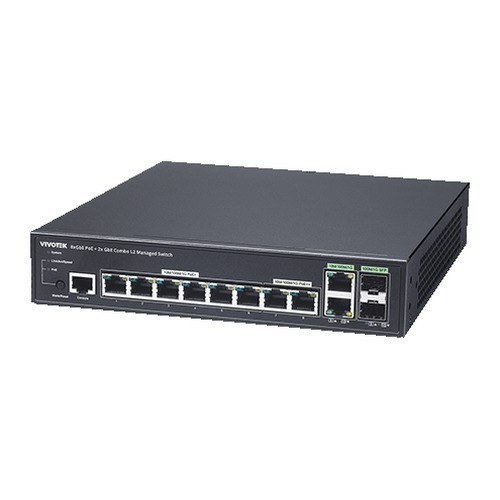
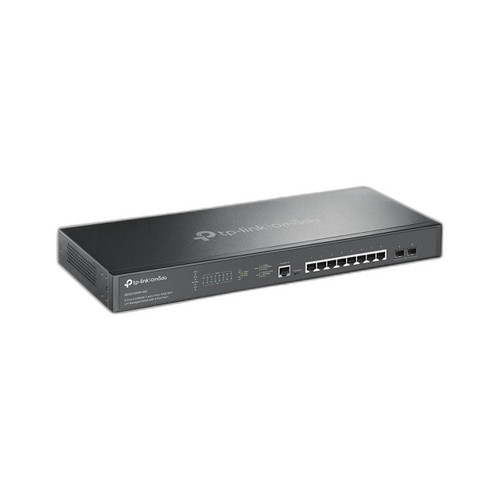
Both the Vivotek AW-GEV-108A-130 and the TP-Link SG3210XHP-M2 are managed 8-port PoE switches aimed at network professionals and security installers who need powered edge connectivity with uplink flexibility. The Vivotek unit is a Gigabit PoE/PoE+ switch with a 130 W budget and surveillance-centric management tools, while the TP-Link Omada unit is a 2.5GBASE-T PoE++ switch with an 80 Gbps switching fabric and a 240 W budget. This comparison evaluates PoE capacity, switching performance, and management depth across both platforms.
In This Guide
- Which switch delivers more PoE power and how is that budget distributed across ports?
- How do the two switches compare on switching throughput, port speed, and uplink capability?
- Which switch offers deeper management features, and how do the surveillance and platform integration capabilities compare?
- Which should you choose: the GEV-108A-130 or the SG3210XHP-M2?
- Side-by-Side Specs
- FAQ
Which switch delivers more PoE power and how is that budget distributed across ports?
The TP-Link SG3210XHP-M2 carries a significantly larger total PoE budget of 240 W versus the Vivotek AW-GEV-108A-130's 130 W. Both switches provide 8 PoE-capable ports, but the power profile differs substantially. The Vivotek allocates 30 W per port on ports 1–6 (IEEE 802.3af/at) and 90 W per port on ports 7–8 (IEEE 802.3bt), enabling two high-draw devices such as PTZ cameras or access control panels. The TP-Link specifies PoE++ (802.3bt) compliance on its ports with a 240 W total budget; individual per-port maximums beyond the 802.3bt ceiling of 90 W are not itemized in the provided specs, so a per-port breakdown equivalent to the Vivotek's is not available for direct comparison.
The Vivotek also specifies an Extended PoE Mode supporting spans up to 250 m at 10 Mbps, which is a notable advantage in large physical facilities where cable runs exceed the standard 100 m Ethernet limit. No equivalent extended-reach PoE mode is documented in the TP-Link specification set provided.
How do the two switches compare on switching throughput, port speed, and uplink capability?
The TP-Link SG3210XHP-M2 offers a substantially higher switching capacity of 80 Gbps compared to the Vivotek AW-GEV-108A-130's 20 Gbps. This four-fold difference reflects the TP-Link's higher base port speed: its 8 access ports run at 2.5GBASE-T (with auto-negotiation to 1G/100M) versus the Vivotek's 8 ports at Gigabit Ethernet. Uplinks also differ: the TP-Link provides 2 × 10G SFP+ fiber slots, while the Vivotek provides 2 × Gigabit Combo (RJ45/SFP) uplinks. For environments where access-layer bandwidth or high-density NVR uplink throughput is a constraint, the TP-Link's architecture offers considerably more headroom.
The Vivotek specifies a forwarding rate of 14.88 Mpps and support for jumbo frames up to 9,216 bytes. The TP-Link specification set provided does not state a forwarding rate in Mpps or a jumbo frame size, so those parameters cannot be compared. MAC address table size is 8 K on the Vivotek; this value is not specified in the TP-Link data provided.
Which switch offers deeper management features, and how do the surveillance and platform integration capabilities compare?
The Vivotek AW-GEV-108A-130 is purpose-built for Vivotek surveillance deployments. It includes an auto-discovery engine for up to 256 Vivotek devices, a Topology View, Floor View, and Google Map View, device grouping via VLAN, account and password push to cameras, remote reboot and factory-restore of Vivotek cameras, configuration file export/import, and a Surveillance Device Management List. These features are native to the switch GUI and require no separate controller. Standard Layer 2 capabilities include 802.1Q VLAN (4,096 IDs), Q-in-Q, Voice VLAN, IP Subnet-based VLAN, MAC-based VLAN, IGMP/MLD Snooping, DHCP Server/Relay/Snooping, 8 hardware QoS queues with WRR and DSCP, RADIUS/TACACS+, SSL, IP Source Guard, Storm Control, LLDP-MED, RMON (groups 1/2/3/9), S-Flow, PoE scheduling, and cable diagnostics.
The TP-Link SG3210XHP-M2 is positioned as an Omada L2+ managed switch, indicating it participates in TP-Link's Omada SDN controller ecosystem. The provided specification set confirms CLI, SNMP (v1/v2c/v3), RMON, 802.1x, RADIUS/TACACS+, static routing, VLAN, QoS, ACL, STP/RSTP/MSTP, IGMP snooping, and LACP. The Omada controller integration itself—including cloud management and app-based provisioning documented in TP-Link's broader product line—is not detailed in the specs provided, so no claims are made about those capabilities here. The TP-Link stores 32 MB of flash for firmware; the Vivotek's flash capacity is not specified. Neither switch specifies IPv6 routing beyond the Vivotek's listed IPv4/IPv6 dual-stack notation.
Which should you choose: the GEV-108A-130 or the SG3210XHP-M2?
Our take: The AW-GEV-108A-130 is the stronger choice when the deployment is a Vivotek-centric IP surveillance system requiring deep camera management, extended PoE reach, and a lower-wattage edge switch. Its native auto-discovery of up to 256 Vivotek devices, topology visualization, and per-camera reboot/restore controls eliminate the need for a separate NMS in small-to-mid-size camera networks, and its 250 m extended PoE mode addresses long cable runs that standard switches cannot serve. Conversely, the SG3210XHP-M2 holds a decisive edge on raw infrastructure specs: 80 Gbps switching capacity versus 20 Gbps, 2.5GBASE-T access ports versus Gigabit, 10G SFP+ uplinks versus 1G combo uplinks, and a 240 W PoE budget versus 130 W. Buyers running vendor-mixed or high-bandwidth environments—multi-gigabit NVRs, Wi-Fi 6 APs, or large PoE++ device mixes—should favour the TP-Link. Vivotek-only sites with standard cable runs and moderate power loads are the natural home for the AW-GEV-108A-130.
Side-by-Side Comparison
Spec-for-spec, from manufacturer data.
| Specification | Vivotek GEV-108A-130 | TP-Link SG3210XHP-M2 |
|---|---|---|
| Product Class | 8-Port Gigabit PoE Switch (L2+) | 8-Port 2.5GBASE-T PoE++ Switch (L2+) |
| Access Port Speed | 1 Gbps (8× GbE) | 2.5 Gbps (8× 2.5GBASE-T) |
| Uplink Ports | 2× Gigabit Combo (RJ45/SFP) | 2× 10G SFP+ |
| Switching Capacity | 20 Gbps | 80 Gbps |
| Forwarding Rate | 14.88 Mpps | — |
| Total PoE Budget | 130 W | 240 W |
| PoE Standard | IEEE 802.3af/at (ports 1–6), 802.3bt (ports 7–8) | 802.3af/at/bt (PoE++) |
| Max PoE per Port | 90 W (ports 7–8), 30 W (ports 1–6) | 90 W (802.3bt max; per-port breakdown not specified) |
| Extended PoE Reach | Up to 250 m at 10 Mbps | — |
| VLAN Support | 802.1Q (4,096 IDs), Port, MAC, IP Subnet, Voice, Q-in-Q, MVR | VLAN (type/count not specified in provided specs) |
| Surveillance Management | Auto-discovery up to 256 Vivotek devices; topology/floor/map view; camera reboot, restore, credential push | — |
| SNMP | v1, v2c, v3 | v1, v2c, v3 |
| RADIUS / TACACS+ | Yes | Yes |
| Jumbo Frames | 9,216 bytes | — |
| Operating Temperature | -10 °C to 50 °C | 0 °C to 50 °C |
| Warranty | 24 months | — |
Frequently Asked Questions
Which should you choose: the GEV-108A-130 or the SG3210XHP-M2?
The AW-GEV-108A-130 is the stronger choice when the deployment is a Vivotek-centric IP surveillance system requiring deep camera management, extended PoE reach, and a lower-wattage edge switch. Its native auto-discovery of up to 256 Vivotek devices, topology visualization, and per-camera reboot/restore controls eliminate the need for a separate NMS in small-to-mid-size camera networks, and its 250 m extended PoE mode addresses long cable runs that standard switches cannot serve. Conversely, the SG3210XHP-M2 holds a decisive edge on raw infrastructure specs: 80 Gbps switching capacity versus 20 Gbps, 2.5GBASE-T access ports versus Gigabit, 10G SFP+ uplinks versus 1G combo uplinks, and a 240 W PoE budget versus 130 W. Buyers running vendor-mixed or high-bandwidth environments—multi-gigabit NVRs, Wi-Fi 6 APs, or large PoE++ device mixes—should favour the TP-Link. Vivotek-only sites with standard cable runs and moderate power loads are the natural home for the AW-GEV-108A-130.
Is the AW-GEV-108A-130 or SG3210XHP-M2 better for powering high-wattage devices like PTZ cameras or Wi-Fi 6 access points?
The TP-Link SG3210XHP-M2 has the higher total PoE budget at 240 W versus the Vivotek's 130 W, so it can sustain more simultaneously powered high-draw devices. Both switches support IEEE 802.3bt (PoE++) with up to 90 W per port. If you have two or fewer high-wattage devices alongside standard cameras, the Vivotek's dual 90 W ports (ports 7–8) may suffice; for three or more high-draw devices or dense AP deployments, the TP-Link's larger budget is the better fit.
Which switch is easier to manage in a pure Vivotek camera installation?
The AW-GEV-108A-130 is specifically designed for Vivotek environments. It auto-discovers up to 256 Vivotek cameras, displays them in topology, floor-plan, and Google Map views, and lets you reboot, restore, rename, and push credentials to cameras directly from the switch GUI—without any external controller. The SG3210XHP-M2 does not include vendor-specific surveillance management features in the specifications provided; it operates within TP-Link's Omada SDN ecosystem and standard SNMP/CLI management, which requires a separate Omada controller for full-stack automation.
Does either switch support longer cable runs beyond the standard 100-metre Ethernet limit?
Yes—the Vivotek AW-GEV-108A-130 specifies an Extended PoE Mode supporting cable runs up to 250 m at 10 Mbps, which is useful in warehouses, parking structures, or campus buildings where conduit paths exceed standard limits. No equivalent extended-reach PoE mode is documented in the TP-Link SG3210XHP-M2 specifications provided.
More Network Switch Comparisons
- Vivotek IHT-1271 vs TP-Link SG3210XHP-M2
- Vivotek IHT-1271 vs TP-Link S4500-8GP2F
- Vivotek IHT-1271 vs TP-Link SG1210P
- Vivotek IHT-1271 vs Allied Telesis AT-x530L-10GHXm-10
- Vivotek IHT-1271 vs Vivotek GEV-108A-130
- Vivotek IHT-1271 vs Vivotek IHT-1000
Network Switch Buying Guides
Get a Second Opinion on Your Camera Choice
Share your site layout, coverage goals, and budget. Our team will validate the camera selection, flag anything we would change, and recommend products that match the use case.