
Vivotek IHT-1000 vs TP-Link SG1210P: Specification Comparison
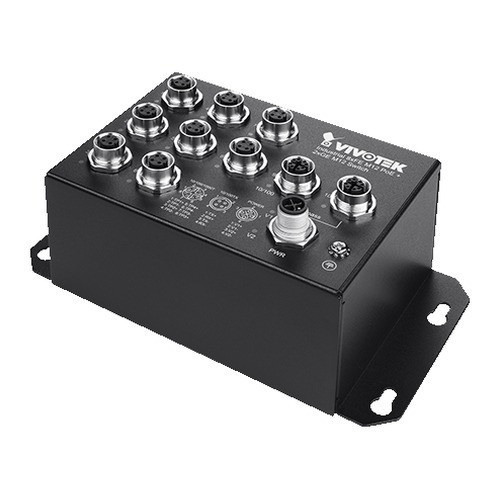
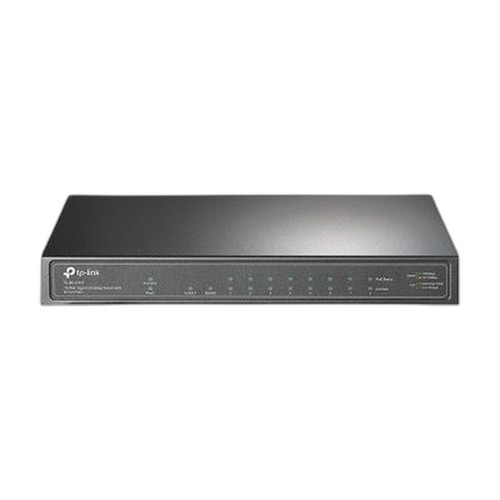
Both the Vivotek AW-IHT-1000 and TP-Link TL-SG1210P are unmanaged gigabit PoE+ switches built around eight PoE+ RJ45 ports, making them candidates for IP camera and access-control edge deployments. The comparison examines switching capacity and PoE power delivery, physical and environmental ruggedness, and uplink and connectivity options — the three axes that most directly govern total-cost-of-ownership and site suitability for security integrators choosing between an industrial-hardened switch and a commercial desktop unit.
In This Guide
- Which switch delivers more PoE power, and how does switching capacity compare?
- How do the two switches compare on environmental ratings, surge protection, and build quality?
- What uplink options and management capabilities does each switch offer?
- Which should you choose: the IHT-1000 or the SG1210P?
- Side-by-Side Specs
- FAQ
Which switch delivers more PoE power, and how does switching capacity compare?
The AW-IHT-1000 provides a total PoE power budget of 240W across its 8 PoE+ ports, with a maximum of 30W per port under IEEE 802.3at. Its switching bandwidth is specified at 20 Gbps with a forwarding capacity of 14.88 Mpps and a 128 KB packet buffer, supporting jumbo frames up to 9,216 bytes. The MAC address table holds 4K entries.
The TL-SG1210P is specified at a total PoE budget of 120W, also with a per-port maximum of 30W under 802.3at. Its switching bandwidth, forwarding rate, buffer size, MAC table size, and jumbo frame support are not provided in the supplied specifications. The power consumption figure of 30W listed in its spec sheet appears to describe adapter draw, not the PoE budget — the 120W PoE budget figure is the operative number for load planning.
For deployments powering high-draw devices — PTZ cameras, thermal imagers, multi-radio WAPs — the AW-IHT-1000's 240W budget allows all 8 ports to run near 30W simultaneously. The TL-SG1210P's 120W budget limits average per-port draw to 15W before the budget is exhausted, requiring the installer to stage device loads carefully.
How do the two switches compare on environmental ratings, surge protection, and build quality?
The AW-IHT-1000 carries a rated operating temperature of -40°C to 75°C (-40°F to 167°F) and storage down to -40°C. It is tested to IEC 60068-2-6 (vibration), IEC 60068-2-27 (shock), and IEC 60068-2-32 (freefall). Each PoE port incorporates 12kV surge protection. EMS compliance covers EN61000-4-2/3/4/5/6/8; EMI compliance is FCC Part 15 Class A; safety marks include CE, LVD, and VCCI. It accepts dual redundant DC inputs at 48–56VDC, enabling backup power wiring.
The TL-SG1210P is rated for 0–40°C (32–104°F) operating temperature. Storage temperature, vibration, shock, freefall, per-port surge protection voltage, and redundant power input specifications are not provided in the supplied data. Power input is 12V DC. Safety and EMI certifications are not listed in the supplied specifications.
The environmental gap is substantial. The AW-IHT-1000 is engineered for outdoor enclosures, traffic-cabinet installs, and sites subject to electrical transients — conditions where the TP-Link unit's 0°C lower bound and unspecified surge tolerance would be disqualifying. In a conditioned indoor server room or SMB closet, neither environmental limit would be tested.
What uplink options and management capabilities does each switch offer?
The AW-IHT-1000 provides two Gigabit SFP slots (IEEE 802.3z 1000-BASE-X) in addition to its 8 copper PoE+ ports, for a total of 10 ports. The SFP slots support fiber runs for long-distance backbone connections to head-end equipment. Transmission method is store-and-forward. Auto-MDI/MDI-X and auto-negotiation are supported. No management interface (web GUI, SNMP, CLI) is specified — it presents as an unmanaged switch.
The TL-SG1210P has 10 ports total: 8 PoE+ RJ45 and 2 additional ports whose type (copper uplink vs. SFP) is not definitively stated in the supplied specifications. A PoE extend mode is listed that extends reach to 250m at reduced speed. The product is explicitly listed as unmanaged. App-based monitoring and Wi-Fi 6 management provisioning are referenced in the spec data, but the underlying detail and scope are not fully specified.
For fiber backbone integration — common in campus or multi-building surveillance systems — the AW-IHT-1000's dual SFP slots are a direct functional advantage. The TL-SG1210P's 250m PoE extend mode offers a cost-effective option for stretching copper runs to distant cameras without a media converter, a feature not mentioned in the AW-IHT-1000 specifications. Neither unit offers Layer 2 managed switching (VLANs, QoS, SNMP) based on the supplied data.
Which should you choose: the IHT-1000 or the SG1210P?
Our take: The AW-IHT-1000 is the stronger choice when the installation environment is subject to temperature extremes, electrical transients, or requires fiber uplinks and a higher PoE power budget. Key spec deltas: the AW-IHT-1000 delivers 240W total PoE vs. the TL-SG1210P's 120W — double the headroom for high-draw devices; it adds 2x SFP fiber slots absent on the TL-SG1210P; and it is rated to -40°C with 12kV per-port surge protection versus the TL-SG1210P's 0°C floor and unspecified surge tolerance. The TL-SG1210P is appropriate for climate-controlled indoor deployments — SMB offices, retail back-of-house, or light commercial access control — where the lower power budget is acceptable and industrial certifications are unnecessary. Installers on hardened outdoor, transportation, or industrial projects should specify the AW-IHT-1000; those outfitting a conditioned indoor wiring closet on a tighter bill-of-materials will find the TL-SG1210P a serviceable fit.
Side-by-Side Comparison
Spec-for-spec, from manufacturer data.
| Specification | Vivotek IHT-1000 | TP-Link SG1210P |
|---|---|---|
| PoE+ RJ45 Ports | 8 | 8 |
| Total Ports | 10 (8x RJ45 + 2x SFP) | 10 |
| Total PoE Budget | 240W | 120W |
| Max PoE Per Port | 30W (IEEE 802.3at) | 30W (IEEE 802.3at) |
| Switching Bandwidth | 20 Gbps | — |
| Forwarding Capacity | 14.88 Mpps | — |
| MAC Address Table | 4K entries | — |
| Packet Buffer | 128 KB | — |
| Jumbo Frame Support | 9,216 bytes | — |
| Fiber Uplinks | 2x SFP (1000-BASE-X) | — |
| Operating Temperature | -40°C to 75°C | 0°C to 40°C |
| Per-Port Surge Protection | 12kV | — |
| Power Input | 48–56VDC (dual redundant) | 12VDC |
| PoE Extend Mode (250m) | — | Supported |
| Management | Unmanaged | Unmanaged |
| Transmission Method | Store and Forward | — |
Frequently Asked Questions
Which should you choose: the IHT-1000 or the SG1210P?
The AW-IHT-1000 is the stronger choice when the installation environment is subject to temperature extremes, electrical transients, or requires fiber uplinks and a higher PoE power budget. Key spec deltas: the AW-IHT-1000 delivers 240W total PoE vs. the TL-SG1210P's 120W — double the headroom for high-draw devices; it adds 2x SFP fiber slots absent on the TL-SG1210P; and it is rated to -40°C with 12kV per-port surge protection versus the TL-SG1210P's 0°C floor and unspecified surge tolerance. The TL-SG1210P is appropriate for climate-controlled indoor deployments — SMB offices, retail back-of-house, or light commercial access control — where the lower power budget is acceptable and industrial certifications are unnecessary. Installers on hardened outdoor, transportation, or industrial projects should specify the AW-IHT-1000; those outfitting a conditioned indoor wiring closet on a tighter bill-of-materials will find the TL-SG1210P a serviceable fit.
Can the TL-SG1210P handle the same number of 30W cameras as the AW-IHT-1000?
No. The AW-IHT-1000 has a 240W total PoE budget, allowing all 8 ports to run at or near 30W simultaneously. The TL-SG1210P has a 120W total PoE budget, which means running all 8 ports at 30W each would exceed its budget — in practice, average per-port draw must stay around 15W or below unless not all ports are loaded.
Is the AW-IHT-1000 or TL-SG1210P better for an outdoor traffic-cabinet or curbside pole installation?
The AW-IHT-1000 is the appropriate choice. It is rated for -40°C to 75°C operation, tested to IEC vibration and shock standards, and provides 12kV per-port surge protection with redundant 48–56VDC power inputs. The TL-SG1210P is rated for indoor use down to 0°C only, and per-port surge protection and redundant power are not specified for that model.
Does either switch support fiber uplinks for connecting back to a head-end NVR or core switch?
The AW-IHT-1000 includes two Gigabit SFP slots supporting IEEE 802.3z 1000-BASE-X fiber, making it suitable for long-distance backbone runs. The TL-SG1210P's uplink port type and fiber support are not specified in the provided data — installers requiring confirmed fiber uplink capability should specify the AW-IHT-1000.
More Network Switch Comparisons
- Vivotek IHT-1271 vs TP-Link SG3210XHP-M2
- Vivotek IHT-1271 vs TP-Link S4500-8GP2F
- Vivotek IHT-1271 vs TP-Link SG1210P
- Vivotek IHT-1271 vs Allied Telesis AT-x530L-10GHXm-10
- Vivotek IHT-1271 vs Vivotek GEV-108A-130
- Vivotek IHT-1271 vs Vivotek IHT-1000
Network Switch Buying Guides
Get a Second Opinion on Your Camera Choice
Share your site layout, coverage goals, and budget. Our team will validate the camera selection, flag anything we would change, and recommend products that match the use case.