
Vivotek IHT-1000 vs TP-Link S4500-8GP2F: Specification Comparison
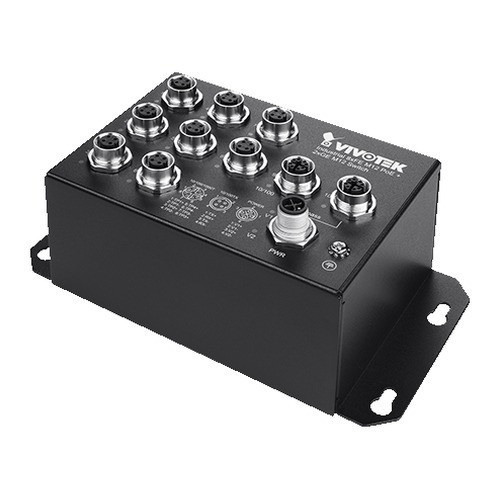
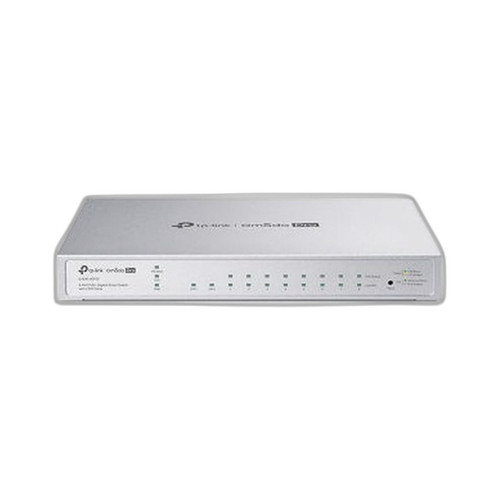
Both the Vivotek AW-IHT-1000 and the TP-Link S4500-8GP2F are 8-port gigabit PoE+ switches with dual SFP uplinks, placing them squarely in the same cross-shop category for installers deploying IP cameras, access control panels, and wireless access points at the edge. The comparison turns on three axes where the two diverge most sharply: PoE power budget and per-port delivery, physical ruggedization and operating environment, and management depth alongside platform integration.
In This Guide
Which switch delivers more PoE headroom and per-port power?
The Vivotek AW-IHT-1000 carries a 240 W total PoE budget across its 8 RJ45 ports, with each port rated at a maximum of 30 W under IEEE 802.3at. That budget is sufficient to simultaneously drive eight 802.3at devices at or near full draw without throttling.
The TP-Link S4500-8GP2F specifies a 58 W PoE budget (with a secondary figure of 62 W appearing in the raw feed data — the lower value is used here as the conservative spec). Per-port maximum is listed at 30 W under 802.3at, matching the Vivotek on a per-port basis, but the aggregate budget is dramatically lower: the S4500-8GP2F cannot sustain more than roughly one or two high-draw devices simultaneously without budget exhaustion.
For camera deployments mixing PTZ cameras, thermal sensors, or heated-dome units — each potentially drawing 15–30 W — the AW-IHT-1000's 240 W budget provides genuine headroom. The S4500-8GP2F's 58 W aggregate makes it unsuitable for installations where more than two or three PoE+ devices run concurrently at meaningful wattage.
Which switch is rated for harsh outdoor or industrial environments?
The Vivotek AW-IHT-1000 is explicitly specced for industrial deployment. Its operating temperature range is −40 °C to +75 °C (−40 °F to +167 °F), it carries IEC 60068-2-6 vibration, IEC 60068-2-27 shock, and IEC 60068-2-32 freefall certifications, and each PoE port includes 12 kV surge protection. EMS compliance is listed to EN 61000-4-2/3/4/5/6/8. The unit supports dual redundant DC power inputs (48–56 VDC on PW1 and PW2), eliminating single-point power failure risk in critical infrastructure.
The TP-Link S4500-8GP2F provides no operating temperature range in its supplied specifications, no surge protection rating, no vibration or shock certification, and no redundant power input. Its power supply is listed as an external 53.5 VDC / 1.31 A adapter — a form factor associated with indoor, climate-controlled installation.
For any deployment exposed to temperature extremes, lightning-induced surges, vibration (rooftop, vehicle, industrial floor), or where uptime demands redundant power, the AW-IHT-1000 is the only specced option between these two. The S4500-8GP2F's environmental specifications are absent, and no claims can be made about its suitability in harsh conditions.
Which switch offers stronger management and platform integration?
The TP-Link S4500-8GP2F is characterized as a 'Smart' managed switch within the Omada Pro ecosystem. Its supplied spec data references SNMP Trap/Inform and EEE (Energy-Efficient Ethernet) as management features. Omada Pro typically implies cloud or controller-based management via TP-Link's Omada SDN platform, though the depth of VLAN, QoS, and IGMP snooping support is not fully enumerated in the provided specs.
The Vivotek AW-IHT-1000 specification sheet as provided does not enumerate management protocols, VLAN support, SNMP version, or software platform integration. The spec confirms store-and-forward transmission, auto-MDI/MDI-X, and auto-negotiation, but layer-2 management feature depth is not stated in the supplied data.
On the basis of provided specifications only, the S4500-8GP2F has a documented management reference (SNMP, Omada Pro controller ecosystem). The AW-IHT-1000's management capabilities cannot be characterized from the supplied spec data. Buyers requiring a specific management platform — particularly Omada SDN — should verify AW-IHT-1000 compatibility independently before specifying.
Which should you choose: the IHT-1000 or the S4500-8GP2F?
Our take: The AW-IHT-1000 is the stronger choice when the installation demands industrial-grade ruggedization and high aggregate PoE capacity. Its 240 W PoE budget is more than four times the S4500-8GP2F's specified 58 W, making it the only viable option when more than two or three 802.3at devices run concurrently. Its −40 °C to +75 °C operating range, 12 kV per-port surge protection, IEC-certified shock and vibration resistance, and dual redundant DC inputs address deployment conditions the S4500-8GP2F has no documented rating for. The S4500-8GP2F may suit IT-closet or low-density indoor camera runs where Omada SDN controller integration is already deployed and aggregate PoE draw stays below 58 W, but its environmental and power specs disqualify it for outdoor enclosures, transportation, or industrial edge sites. Confirm AW-IHT-1000 management feature depth via its datasheet before specifying for SDN-managed networks.
Side-by-Side Comparison
Spec-for-spec, from manufacturer data.
| Specification | Vivotek IHT-1000 | TP-Link S4500-8GP2F |
|---|---|---|
| RJ45 PoE+ Ports | 8 | 8 |
| SFP Uplink Ports | 2 | 2 |
| Switching Bandwidth | 20 Gbps | 16 Gbps |
| Forwarding Capacity | 14.88 Mpps | — |
| Total PoE Budget | 240 W | 58 W |
| Max PoE Per Port | 30 W (802.3at) | 30 W (802.3at) |
| PoE Standards | IEEE 802.3af/at | IEEE 802.3af/at |
| Surge Protection (PoE) | 12 kV per port | — |
| Operating Temperature | −40 °C to +75 °C | Not specified |
| Redundant Power Input | Yes (PW1 + PW2, 48–56 VDC) | No (single external adapter) |
| Power Supply | 48–56 VDC DC (dual input) | 53.5 VDC / 1.31 A external adapter |
| MAC Address Table | 4 K | — |
| Buffer Memory | 128 KB | — |
| Jumbo Frame | 9,216 Bytes | — |
| Management | Not specified in provided specs | Smart / SNMP / Omada Pro |
| Vibration / Shock Cert | IEC 60068-2-6 / -27 / -32 | — |
| Dimensions | 172 × 132 × 39 mm | 294.6 × 180.3 × 43.2 mm (11.6 × 7.1 × 1.7 in) |
| Weight | 0.8 kg | — |
Frequently Asked Questions
Which should you choose: the IHT-1000 or the S4500-8GP2F?
The AW-IHT-1000 is the stronger choice when the installation demands industrial-grade ruggedization and high aggregate PoE capacity. Its 240 W PoE budget is more than four times the S4500-8GP2F's specified 58 W, making it the only viable option when more than two or three 802.3at devices run concurrently. Its −40 °C to +75 °C operating range, 12 kV per-port surge protection, IEC-certified shock and vibration resistance, and dual redundant DC inputs address deployment conditions the S4500-8GP2F has no documented rating for. The S4500-8GP2F may suit IT-closet or low-density indoor camera runs where Omada SDN controller integration is already deployed and aggregate PoE draw stays below 58 W, but its environmental and power specs disqualify it for outdoor enclosures, transportation, or industrial edge sites. Confirm AW-IHT-1000 management feature depth via its datasheet before specifying for SDN-managed networks.
Can either switch power eight cameras simultaneously at full 30 W each?
The AW-IHT-1000's 240 W budget supports all eight ports at 30 W simultaneously (8 × 30 W = 240 W). The S4500-8GP2F's 58 W budget does not — it would be exhausted after roughly two ports at 30 W. If your camera count or device mix approaches full 802.3at draw, only the AW-IHT-1000 is specced to handle it.
Is the AW-IHT-1000 or S4500-8GP2F better for rooftop or outdoor enclosure installs?
The AW-IHT-1000 is the only one of the two with documented outdoor/industrial ratings: −40 °C to +75 °C operating range, 12 kV surge protection per port, and IEC 60068-2-6/27/32 vibration, shock, and freefall certifications. The S4500-8GP2F carries none of these ratings in its supplied specifications, and its external-adapter power supply is characteristic of indoor use.
Which switch fits better into a TP-Link Omada managed network?
The S4500-8GP2F is a native Omada Pro device and integrates with TP-Link's Omada SDN controller, with SNMP Trap/Inform referenced in its specs. The AW-IHT-1000's management protocol support is not enumerated in its supplied specifications, so Omada compatibility cannot be confirmed from the data provided. For Omada-centric deployments, the S4500-8GP2F is the documented fit — provided its 58 W PoE budget and unrated environmental specs are acceptable for the site.
More Network Switch Comparisons
- Vivotek IHT-1271 vs TP-Link SG3210XHP-M2
- Vivotek IHT-1271 vs TP-Link S4500-8GP2F
- Vivotek IHT-1271 vs TP-Link SG1210P
- Vivotek IHT-1271 vs Allied Telesis AT-x530L-10GHXm-10
- Vivotek IHT-1271 vs Vivotek GEV-108A-130
- Vivotek IHT-1271 vs Vivotek IHT-1000
Network Switch Buying Guides
Get a Second Opinion on Your Camera Choice
Share your site layout, coverage goals, and budget. Our team will validate the camera selection, flag anything we would change, and recommend products that match the use case.