
Vivotek GEV-108A-130 vs Vivotek IHT-1000: Specification Comparison
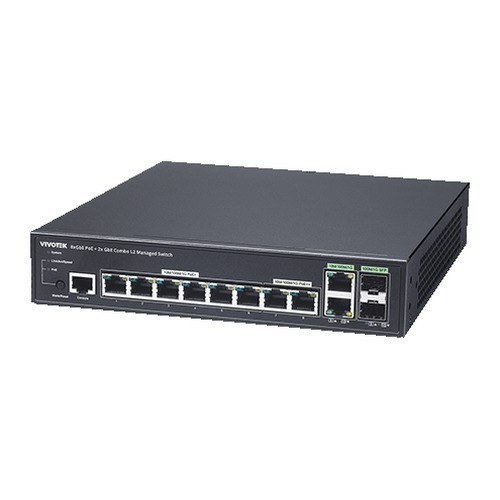
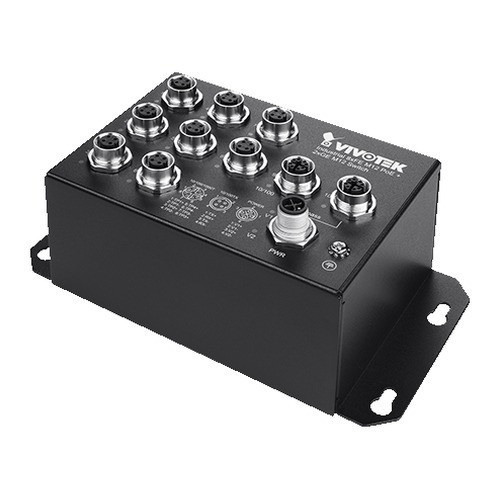
Both the Vivotek AW-GEV-108A-130 and AW-IHT-1000 are 8-port Gigabit PoE switches with dual SFP uplinks, targeting IP surveillance deployments — making them direct cross-shop candidates for installers selecting edge switching infrastructure. The GEV-108A-130 is a managed Layer 2 switch designed for indoor rack or desktop use with full VLAN, QoS, and VIVOTEK-native management features. The IHT-1000 is an unmanaged industrial-grade switch built for harsh or outdoor environments. This comparison covers PoE capacity and port flexibility, physical and environmental durability, and management and integration capabilities.
In This Guide
- Which switch delivers more PoE power, and how is that budget distributed across ports?
- Which switch is rated for harsher physical and environmental conditions?
- Which switch provides richer management, VLAN, and VIVOTEK-ecosystem integration?
- Which should you choose: the GEV-108A-130 or the IHT-1000?
- Side-by-Side Specs
- FAQ
Which switch delivers more PoE power, and how is that budget distributed across ports?
The IHT-1000 holds a decisive advantage in total PoE budget: 240W across 8 ports at up to 30W each (IEEE 802.3af/at), enabling all 8 ports to run at full 30W simultaneously. The power input is DC (48–56VDC) with a redundant dual-input design.
The GEV-108A-130 carries a 130W total budget, but distributes power unevenly: ports 1–6 deliver up to 30W (IEEE 802.3af/at), while ports 7–8 support up to 90W each (IEEE 802.3bt), enabling high-draw devices such as pan-tilt-zoom cameras with heaters or multi-radio access points. Total budget is 130W, which means not all ports can run at maximum simultaneously.
The IHT-1000's 240W budget and uniform 30W per-port allocation is better suited to dense PoE+ deployments where all 8 ports are active. The GEV-108A-130's 802.3bt support on two ports is a differentiator for specific high-draw devices, but its lower total budget (130W) requires load planning. Per-port surge protection of 12kV is specified only for the IHT-1000; the GEV-108A-130 lists no surge protection spec.
Which switch is rated for harsher physical and environmental conditions?
The IHT-1000 is purpose-built for industrial and outdoor-adjacent environments. Its operating temperature range is -40°C to 75°C (-40°F to 167°F), storage temperature -40°C to 85°C, and operating humidity 5–95% non-condensing. It carries formal vibration (IEC 60068-2-6), shock (IEC 60068-2-27), and freefall (IEC 60068-2-32) certifications, and electromagnetic compliance per EN61000-4-2/3/4/5/6/8. Its compact form factor (172 × 132 × 39 mm, 0.8 kg) suits DIN-rail or surface mounting in enclosures.
The GEV-108A-130 is rated for operating temperatures of -10°C to 50°C (14°F to 122°F) and storage from -20°C to 70°C. Operating humidity is 10–90% RH. No vibration, shock, or freefall certifications are listed. Its rack-mount form factor (220 × 44 × 242 mm, 1.95 kg) and AC power input (100–240V, 50–60Hz) assume a controlled indoor environment.
For any deployment exposed to temperature extremes, vibration, moisture, or power instability — parking structures, manufacturing floors, outdoor enclosures, transit — the IHT-1000's industrial ratings are the clear specification match. The GEV-108A-130 is appropriate for conditioned indoor spaces such as IDF closets, server rooms, or desk installations.
Which switch provides richer management, VLAN, and VIVOTEK-ecosystem integration?
The GEV-108A-130 is a fully managed Layer 2 switch with an extensive feature set. It supports 802.1Q tag-based VLAN (4096 IDs), port-based VLAN, private VLAN edge, Q-in-Q, MAC-based VLAN, voice VLAN, IP subnet-based VLAN, and multicast VLAN registration. Spanning tree protocols include STP (802.1D), RSTP (802.1w), and MSTP (802.1s). QoS is implemented with 8 hardware queues, WRR scheduling, DSCP/CoS marking, and 802.1p priority. Security features include RADIUS/TACACS+, SSL, port security, IP source guard, DHCP snooping (up to 384 entries), storm control, loop detection, and ACL filtering by MAC, IP, protocol, TCP/UDP port, ICMP type, Ethernet type, and TCP flag. Management protocols include SNMP v1/v2c/v3, RMON (groups 1, 2, 3, 9), LLDP/LLDP-MED, UPnP, NTP, and S-Flow.
VIVOTEK-native features are also extensive: auto-discovery of up to 256 VIVOTEK devices, PoE alive checking and scheduling, non-stop PoE, extended PoE mode to 250m at 10Mbps, topology view, floor view, Google Map view, traffic monitoring, cable diagnostics, and configuration file export/import for VIVOTEK cameras and video servers.
The IHT-1000 provides no management features per its specifications — MAC table size is 4K, buffer memory 128KB, and transmission method is store-and-forward; no VLAN, QoS, SNMP, RADIUS, or any Layer 2 management protocol is listed. For installers who need segmentation, security policies, or remote monitoring, the GEV-108A-130 is the only option of the two.
Which should you choose: the GEV-108A-130 or the IHT-1000?
Our take: The IHT-1000 is the stronger choice when the deployment environment is harsh — extreme temperatures, vibration, or unstable power — and when all 8 PoE+ ports must run simultaneously at full 30W load (240W total budget vs. 130W). The GEV-108A-130 is the stronger choice for any installation requiring network management: it supports 4096-ID 802.1Q VLANs, RADIUS/TACACS+ security, SNMP v3, and native VIVOTEK device discovery for up to 256 units — none of which are present in the IHT-1000's published spec. The GEV-108A-130 also adds 802.3bt ports (90W each on ports 7–8) for high-draw devices not supportable on the IHT-1000. Buyers selecting for a controlled IDF room with mixed camera types and a VIVOTEK VMS platform should specify the GEV-108A-130. Buyers specifying a ruggedized outdoor enclosure or industrial site with uniform PoE+ cameras and no requirement for managed switching should specify the IHT-1000.
Side-by-Side Comparison
Spec-for-spec, from manufacturer data.
| Specification | Vivotek GEV-108A-130 | Vivotek IHT-1000 |
|---|---|---|
| PoE RJ45 Ports | 8 (ports 1–6: 802.3af/at; ports 7–8: 802.3bt) | 8 (all 802.3af/at) |
| Uplink Ports | 2× Gigabit Combo (RJ45/SFP) | 2× Gigabit SFP |
| Total PoE Power Budget | 130 W | 240 W |
| Max PoE Per Port | 30W (ports 1–6); 90W (ports 7–8) | 30W (all ports) |
| PoE Standards | IEEE 802.3af / at / bt | IEEE 802.3af / at |
| Extended PoE Mode | Up to 250m at 10Mbps | — |
| Surge Protection (per port) | — | 12 kV |
| Switching Bandwidth | 20 Gbps | 20 Gbps |
| Forwarding Capacity | 14.88 Mpps | 14.88 Mbps (as spec'd) |
| MAC Address Table | 8K | 4K |
| Jumbo Frames | 9,216 Bytes | 9,216 Bytes |
| Operating Temperature | -10°C to 50°C | -40°C to 75°C |
| Operating Humidity | 10–90% RH | 5–95% RH non-condensing |
| Vibration / Shock / Freefall Certs | — | IEC 60068-2-6 / -2-27 / -2-32 |
| Power Input | AC 100–240V, 50–60Hz | DC 48–56V (dual redundant inputs) |
| Management | Full Layer 2 managed (SNMP, VLAN, QoS, RADIUS/TACACS+, VIVOTEK discovery) | Unmanaged |
| VLAN Support | 802.1Q (4096 IDs), port-based, MAC-based, Q-in-Q, voice VLAN, and more | — |
| Weight | 1.95 kg | 0.8 kg |
| Warranty | 24 months | — |
Frequently Asked Questions
Which should you choose: the GEV-108A-130 or the IHT-1000?
The IHT-1000 is the stronger choice when the deployment environment is harsh — extreme temperatures, vibration, or unstable power — and when all 8 PoE+ ports must run simultaneously at full 30W load (240W total budget vs. 130W). The GEV-108A-130 is the stronger choice for any installation requiring network management: it supports 4096-ID 802.1Q VLANs, RADIUS/TACACS+ security, SNMP v3, and native VIVOTEK device discovery for up to 256 units — none of which are present in the IHT-1000's published spec. The GEV-108A-130 also adds 802.3bt ports (90W each on ports 7–8) for high-draw devices not supportable on the IHT-1000. Buyers selecting for a controlled IDF room with mixed camera types and a VIVOTEK VMS platform should specify the GEV-108A-130. Buyers specifying a ruggedized outdoor enclosure or industrial site with uniform PoE+ cameras and no requirement for managed switching should specify the IHT-1000.
Can the IHT-1000 support all 8 cameras at full 30W simultaneously?
Yes. The IHT-1000's total PoE power budget is 240W with a maximum of 30W per port across all 8 ports, so all ports can operate at full 30W concurrently. The GEV-108A-130's 130W total budget across 8 ports means simultaneous full-load operation on all ports is not possible and requires load planning.
Does either switch support VLAN segmentation for separating camera traffic from corporate LAN traffic?
Only the GEV-108A-130 supports VLAN segmentation. It provides 802.1Q tag-based VLANs (up to 4096 VLAN IDs), port-based VLAN, private VLAN edge, Q-in-Q, MAC-based VLAN, and voice VLAN. The IHT-1000 lists no VLAN capability in its published specifications.
Which switch is better for an outdoor or industrial enclosure installation?
The IHT-1000 is purpose-rated for industrial and outdoor enclosure use. It operates from -40°C to 75°C, carries vibration (IEC 60068-2-6), shock (IEC 60068-2-27), and freefall (IEC 60068-2-32) certifications, includes 12kV surge protection per PoE port, and accepts redundant 48–56VDC power inputs. The GEV-108A-130 is rated only to -10°C to 50°C with AC input and no published vibration or shock rating, making it unsuitable for harsh or outdoor-adjacent environments.
More Network Switch Comparisons
- Vivotek IHT-1271 vs TP-Link SG3210XHP-M2
- Vivotek IHT-1271 vs TP-Link S4500-8GP2F
- Vivotek IHT-1271 vs TP-Link SG1210P
- Vivotek IHT-1271 vs Allied Telesis AT-x530L-10GHXm-10
- Vivotek IHT-1271 vs Vivotek GEV-108A-130
- Vivotek IHT-1271 vs Vivotek IHT-1000
Network Switch Buying Guides
Get a Second Opinion on Your Camera Choice
Share your site layout, coverage goals, and budget. Our team will validate the camera selection, flag anything we would change, and recommend products that match the use case.