
Vivotek GEV-108A-130 vs TP-Link SG1210P: Specification Comparison
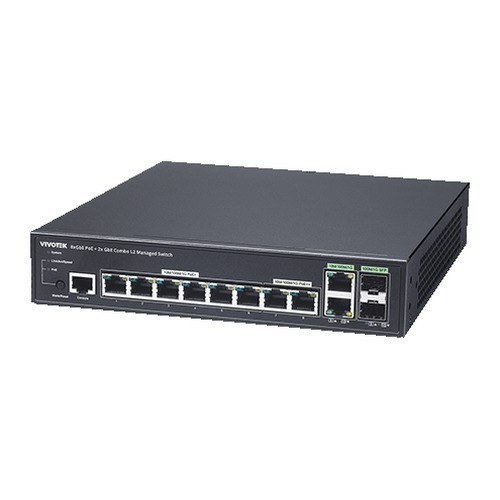
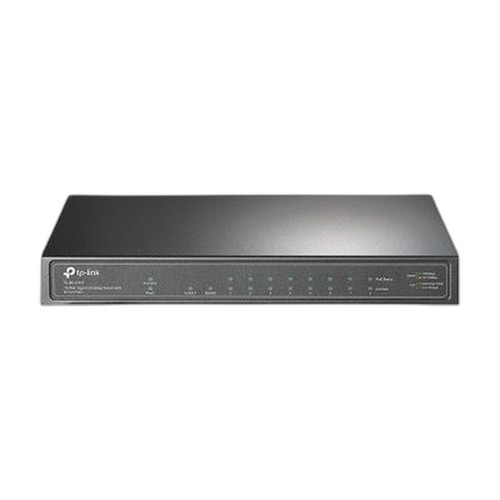
Both the Vivotek AW-GEV-108A-130 and the TP-Link TL-SG1210P are 10-port gigabit switches offering 8 PoE-capable RJ45 ports and a 250m extended PoE reach mode, placing them in the same general desktop/rackmount PoE switch class that installers evaluate for IP camera deployments. The comparison covers three decision-critical axes for this product type: PoE power capacity and port flexibility; operating environment and physical build; and management depth, protocol support, and surveillance-platform integration.
In This Guide
- Which switch delivers more PoE headroom and flexible per-port power allocation?
- How do the two switches compare on operating environment, mounting options, and physical specifications?
- Which switch offers deeper management, VLAN control, and surveillance-specific integration features?
- Which should you choose: the GEV-108A-130 or the SG1210P?
- Side-by-Side Specs
- FAQ
Which switch delivers more PoE headroom and flexible per-port power allocation?
The Vivotek AW-GEV-108A-130 carries a 130 W total PoE budget across 8 ports, with ports 1–6 rated at 30 W each (IEEE 802.3af/at) and ports 7–8 rated at 90 W each (IEEE 802.3bt / 4-pair). That bt-class capability on two dedicated ports supports high-draw devices such as multi-sensor panoramic cameras, PTZ units with integrated heaters, or access-control panels without requiring an injector. The PoE pin assignment differentiates accordingly: ports 1–6 use 2-pair AF/AT, ports 7–8 use 4-pair BT.
The TP-Link TL-SG1210P specifies a 120 W total PoE budget with a uniform 30 W per-port ceiling across all PoE ports, which the spec sheet labels as 802.3at (PoE+). The product data also references '802.3bt' and 'PoE++' in separate fields, but no per-port wattage above 30 W is stated, and total budget is 10 W lower at 120 W. Buyers powering exclusively standard 802.3at cameras will find either budget adequate, but the Vivotek's dual 90 W ports and higher aggregate headroom provide a concrete advantage for mixed or high-power loads.
How do the two switches compare on operating environment, mounting options, and physical specifications?
The Vivotek AW-GEV-108A-130 is rated for –10 °C to 50 °C operating temperature and ships with a rack mount kit, placing it in rackable desktop form factor. Dimensions are 220 × 44 × 242 mm and weight is 1.95 kg. AC input is 100–240 V, 50–60 Hz, making it universally mains-compatible. Storage temperature extends to –20 °C / 70 °C. Operating humidity is specified at 10–90% RH.
The TP-Link TL-SG1210P is rated for 0–40 °C operating temperature, a narrower band at both ends compared to the Vivotek. It is powered by 12 V DC (external adapter implied by the voltage spec), not directly from AC mains. The spec lists wall and rack mount options. Physical dimensions, weight, and humidity range are not provided in the supplied specification data. The 0–40 °C ceiling and DC-only supply are meaningful constraints for installations in unheated enclosures or outdoor cabinets.
Which switch offers deeper management, VLAN control, and surveillance-specific integration features?
The Vivotek AW-GEV-108A-130 is a fully managed Layer 2 switch. Its feature set includes 802.1Q tag-based VLAN (4096 IDs), port-based VLAN, private VLAN edge, Q-in-Q, MAC-based VLAN, voice VLAN, IP subnet-based VLAN, and multicast VLAN registration. Spanning tree support covers STP/RSTP/MSTP. QoS provides 8 hardware queues with WRR, DSCP, and 802.1p. Security includes RADIUS, TACACS+, SSL, IP source guard, DHCP snooping, and storm control. Management protocols span SNMP v1/v2c/v3, RMON, LLDP/LLDP-MED, and S-Flow. Surveillance-specific additions include auto-discovery of up to 256 Vivotek devices, topology/floor/Google Map views, PoE scheduling, PoE alive checking, non-stop PoE, and per-device account/VLAN/reboot control.
The TP-Link TL-SG1210P is specified as an unmanaged switch. No VLAN, spanning tree, QoS, ACL, SNMP, or security protocol support is listed in the provided specifications. Management is described as app-based provisioning and monitoring (referencing Wi-Fi 6 management in the spec, which appears inconsistent with a wired PoE switch and may be a data-entry error). No surveillance-device discovery, PoE scheduling, or topology features are documented. For installers who require network segmentation, traffic prioritization, or remote device management, the absence of these capabilities is a hard constraint.
Which should you choose: the GEV-108A-130 or the SG1210P?
Our take: The AW-GEV-108A-130 is the stronger choice when the deployment requires managed switching, high-power PoE devices, or Vivotek-ecosystem integration. On power, the Vivotek provides a 130 W budget with two 802.3bt 90 W ports versus the TL-SG1210P's 120 W budget capped at 30 W per port — a decisive advantage for PTZ cameras, multi-sensor heads, or heated enclosure devices. On operating environment, the Vivotek's –10 °C to 50 °C AC-powered range versus the TP-Link's 0–40 °C DC-powered design makes the Vivotek more suitable for non-climate-controlled spaces. On management, the Vivotek is fully managed (4096 VLANs, SNMP v3, RADIUS, QoS, STP/RSTP/MSTP) while the TP-Link is explicitly unmanaged — a fundamental architectural difference for any installation requiring traffic isolation or remote monitoring. The TL-SG1210P suits small, budget-constrained, plug-and-play deployments with standard 802.3at cameras; the AW-GEV-108A-130 is appropriate for professional surveillance infrastructure on Vivotek or mixed platforms.
Side-by-Side Comparison
Spec-for-spec, from manufacturer data.
| Specification | Vivotek GEV-108A-130 | TP-Link SG1210P |
|---|---|---|
| Total PoE Ports | 8 | 8 |
| Total Ports (incl. uplinks) | 10 (8 PoE + 2 SFP combo) | 10 |
| Total PoE Power Budget | 130 W | 120 W |
| Max Per-Port PoE Power | 90 W (ports 7–8, 802.3bt) | 30 W (802.3at) |
| PoE Standard | IEEE 802.3af / at / bt | IEEE 802.3at (bt referenced but no >30W port spec) |
| Extended PoE Range | 250 m (10 Mbps mode) | 250 m (extend mode) |
| Switching Bandwidth | 20 Gbps | — |
| Forwarding Capacity | 14.88 Mpps | — |
| Management | Fully managed (web, SNMP v1/v2c/v3, RMON, CLI) | Unmanaged |
| VLAN Support | 802.1Q (4096 IDs), port, MAC, voice, IP subnet, Q-in-Q | — |
| Spanning Tree | STP / RSTP / MSTP | — |
| QoS Hardware Queues | 8 | — |
| Operating Temperature | –10 °C to 50 °C | 0 °C to 40 °C |
| Power Input | 100–240 V AC, 50–60 Hz | 12 V DC |
| Surveillance Device Discovery | Up to 256 Vivotek devices | — |
| Warranty | 24 months | — |
Frequently Asked Questions
Which should you choose: the GEV-108A-130 or the SG1210P?
The AW-GEV-108A-130 is the stronger choice when the deployment requires managed switching, high-power PoE devices, or Vivotek-ecosystem integration. On power, the Vivotek provides a 130 W budget with two 802.3bt 90 W ports versus the TL-SG1210P's 120 W budget capped at 30 W per port — a decisive advantage for PTZ cameras, multi-sensor heads, or heated enclosure devices. On operating environment, the Vivotek's –10 °C to 50 °C AC-powered range versus the TP-Link's 0–40 °C DC-powered design makes the Vivotek more suitable for non-climate-controlled spaces. On management, the Vivotek is fully managed (4096 VLANs, SNMP v3, RADIUS, QoS, STP/RSTP/MSTP) while the TP-Link is explicitly unmanaged — a fundamental architectural difference for any installation requiring traffic isolation or remote monitoring. The TL-SG1210P suits small, budget-constrained, plug-and-play deployments with standard 802.3at cameras; the AW-GEV-108A-130 is appropriate for professional surveillance infrastructure on Vivotek or mixed platforms.
Can either switch power a high-wattage PTZ camera or multi-sensor unit?
The AW-GEV-108A-130 can: ports 7 and 8 are rated at 90 W each via IEEE 802.3bt (4-pair), which covers virtually all commercially available high-power PTZ and panoramic cameras. The TL-SG1210P specifies a maximum of 30 W per port; no per-port rating above 30 W is stated in the provided specifications, so high-draw devices exceeding that threshold would require an external injector or a different switch.
Is the AW-GEV-108A-130 or TL-SG1210P better for a deployment that needs VLAN segmentation between cameras and other network traffic?
The AW-GEV-108A-130 supports 802.1Q tag-based VLANs with 4096 VLAN IDs, plus port-based, MAC-based, voice, and IP subnet-based VLANs. The TL-SG1210P is an unmanaged switch; no VLAN capability is listed in the provided specifications. For any deployment requiring network segmentation, only the Vivotek meets that requirement.
Which switch is more appropriate for installation in a warm or mildly cold environment such as an outdoor cabinet or utility room?
The AW-GEV-108A-130 is rated –10 °C to 50 °C operating temperature and accepts 100–240 V AC directly, making it compatible with a wider range of environmental conditions. The TL-SG1210P is rated 0–40 °C and requires a 12 V DC supply. In spaces that drop below 0 °C or exceed 40 °C, only the Vivotek's published ratings cover the condition; the TP-Link's specs do not.
More Network Switch Comparisons
- Vivotek IHT-1271 vs TP-Link SG3210XHP-M2
- Vivotek IHT-1271 vs TP-Link S4500-8GP2F
- Vivotek IHT-1271 vs TP-Link SG1210P
- Vivotek IHT-1271 vs Allied Telesis AT-x530L-10GHXm-10
- Vivotek IHT-1271 vs Vivotek GEV-108A-130
- Vivotek IHT-1271 vs Vivotek IHT-1000
Network Switch Buying Guides
Get a Second Opinion on Your Camera Choice
Share your site layout, coverage goals, and budget. Our team will validate the camera selection, flag anything we would change, and recommend products that match the use case.