
Vertiv GXT5-1500IRT2UXL vs Vertiv EDGE-1500IRT2UXL: Specification Comparison
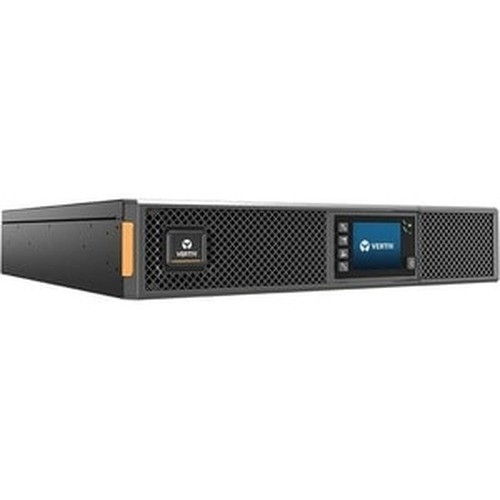
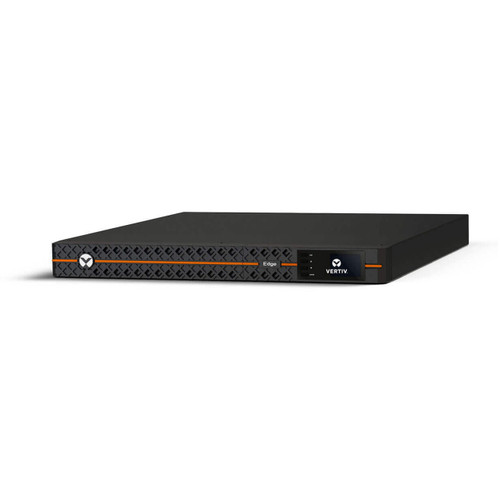
The Vertiv GXT5-1500IRT2UXL and the Vertiv EDGE-1500IRT2UXL are both 2U rack/tower 1500VA uninterruptible power supplies designed for small server rooms, network closets, and edge deployments. The GXT5 is specified at 1500 W output with 200–240 V AC input; the EDGE delivers 1350 W from the same 1500VA rating. Both ship with six IEC C13 output outlets, USB connectivity, and LCD displays, making them direct cross-shop candidates for buyers selecting a 1500VA UPS for light IT infrastructure.
In This Guide
- How do the two units compare on real output power, input range, and waveform quality?
- What UPS topology does each unit use, and what does that mean for load protection?
- How do the units differ in connectivity, management interfaces, and operating environment specs?
- Which should you choose: the GXT5-1500IRT2UXL or the EDGE-1500IRT2UXL?
- Side-by-Side Specs
- FAQ
How do the two units compare on real output power, input range, and waveform quality?
The GXT5-1500IRT2UXL is rated at 1500 W output at 1500 VA — a unity (1.0) power factor — across an input range of 200, 208, 220, 230, and 240 VAC. The EDGE-1500IRT2UXL delivers 1350 W at 1500 VA, giving it a 0.9 power factor, and accepts input from an unspecified minimum up to a stated maximum of 278 V with output regulated between 200 V and 240 V. Both units produce a pure sine waveform, which is the correct output for active PFC power supplies found in modern servers and network gear. The GXT5's 150 W advantage (1500 W vs. 1350 W) means it can sustain heavier loads at full VA rating without derating.
Input voltage flexibility is better documented for the EDGE: its 278 V maximum input tolerance is explicitly stated, which is useful in regions with elevated mains voltage. The GXT5's multi-tap input voltage list (200/208/220/230/240 VAC) confirms broad international compatibility, but a maximum input voltage tolerance figure is not provided in the available spec data.
What UPS topology does each unit use, and what does that mean for load protection?
The EDGE-1500IRT2UXL explicitly specifies a Line-Interactive topology. In line-interactive designs, the inverter conditions output continuously and switches to battery only when mains voltage falls outside the regulation window, resulting in a near-zero transfer time and lower battery cycling compared to standby designs.
The GXT5-1500IRT2UXL's topology is not stated in the provided spec data. The product listing identifies it as a DSP-controlled unit across a broad 500 VA–3 kVA platform, but the datasheet content needed to confirm Online Double-Conversion (the topology common to the GXT product family) was not available from the provided specifications. Buyers requiring a confirmed topology — particularly those evaluating online double-conversion for zero-transfer-time critical loads — should verify the GXT5 topology directly from the Vertiv datasheet before specifying.
How do the units differ in connectivity, management interfaces, and operating environment specs?
Both units provide a USB port and six IEC C13 output outlets. Neither spec block lists an RS-232 serial port, dry contacts, or a network management card slot, though such features are common in the GXT5 family — they are simply absent from the provided data and cannot be assumed.
The EDGE-1500IRT2UXL provides the only stated environmental envelope: 0–40 °C operating temperature and 0–3,000 m altitude. Both units include an LCD display. The EDGE carries RoHS compliance and EN60020-1:2008+A1:2013 safety certification. No environmental ratings, certifications, weight, or physical dimensions are present in the GXT5 spec data provided. The EDGE's 3,000 m altitude rating is meaningful for high-elevation data center or campus deployments.
Product color is specified as black for the EDGE; no color or chassis finish data is provided for the GXT5. Battery runtime figures, recharge time, and efficiency percentages are absent from both spec sets as provided.
Which should you choose: the GXT5-1500IRT2UXL or the EDGE-1500IRT2UXL?
Our take: The GXT5-1500IRT2UXL is the stronger choice when maximizing usable output power is the priority: its 1500 W rating delivers 150 W more than the EDGE's 1350 W ceiling, and its unity power factor means no derating when connected to modern server PSUs with active PFC. The EDGE-1500IRT2UXL, however, is the only unit here with a confirmed Line-Interactive topology, an explicitly rated 278 V input ceiling, a documented 0–40 °C / 0–3,000 m operating envelope, and RoHS/EN60020-1 certification on record — all specs a specifying engineer needs for compliance documentation. For buyers in high-altitude or high-mains-voltage environments who need certification paperwork, the EDGE is the documentable choice. For buyers prioritizing raw watt headroom and are willing to pull the GXT5 datasheet directly to confirm topology and environmental ratings, the GXT5's power advantage is real and should be evaluated in context of the full Vertiv datasheet.
Side-by-Side Comparison
Spec-for-spec, from manufacturer data.
| Specification | Vertiv GXT5-1500IRT2UXL | Vertiv EDGE-1500IRT2UXL |
|---|---|---|
| Output capacity (VA) | 1500 VA | 1500 VA |
| Output power (W) | 1500 W | 1350 W |
| Power factor | 1.0 (unity) | 0.9 |
| UPS topology | — | Line-Interactive |
| Waveform | — | Pure sine |
| Input voltage options | 200 / 208 / 220 / 230 / 240 VAC | — |
| Max input voltage | — | 278 V |
| Output voltage range | 200–240 VAC | 200–240 V |
| Output outlets | 8 × IEC C13 | 6 × IEC C13 |
| USB port | — | Yes |
| Form factor | Rackmount / Tower (2U) | Rackmount / Tower (2U) |
| Display | — | LCD |
| Operating temperature | — | 0–40 °C |
| Operating altitude | — | 0–3,000 m |
| Product color | — | Black |
| Certifications | — | RoHS; EN60020-1:2008+A1:2013 |
Frequently Asked Questions
Which should you choose: the GXT5-1500IRT2UXL or the EDGE-1500IRT2UXL?
The GXT5-1500IRT2UXL is the stronger choice when maximizing usable output power is the priority: its 1500 W rating delivers 150 W more than the EDGE's 1350 W ceiling, and its unity power factor means no derating when connected to modern server PSUs with active PFC. The EDGE-1500IRT2UXL, however, is the only unit here with a confirmed Line-Interactive topology, an explicitly rated 278 V input ceiling, a documented 0–40 °C / 0–3,000 m operating envelope, and RoHS/EN60020-1 certification on record — all specs a specifying engineer needs for compliance documentation. For buyers in high-altitude or high-mains-voltage environments who need certification paperwork, the EDGE is the documentable choice. For buyers prioritizing raw watt headroom and are willing to pull the GXT5 datasheet directly to confirm topology and environmental ratings, the GXT5's power advantage is real and should be evaluated in context of the full Vertiv datasheet.
Which unit supports heavier loads — the GXT5-1500IRT2UXL or the EDGE-1500IRT2UXL?
The GXT5-1500IRT2UXL is rated at 1500 W output versus 1350 W for the EDGE-1500IRT2UXL, a 150 W difference at the same 1500 VA nameplate. If your load calculations approach 1350 W, the GXT5 provides meaningful headroom; if your loads are well below 1350 W, both units are equally adequate and the difference is not decision-relevant.
Is the GXT5-1500IRT2UXL or EDGE-1500IRT2UXL confirmed as a pure sine wave UPS suitable for active PFC server power supplies?
Yes — both units produce a pure sine waveform as specified. Either is compatible with active PFC power supplies used in modern servers, network switches, and storage arrays. Quasi-sine (simulated sine) output is not listed for either product.
Which unit is better documented for compliance and environmental certification?
The EDGE-1500IRT2UXL is better documented in the provided specs: it carries explicit RoHS compliance, EN60020-1:2008+A1:2013 safety certification, a 0–40 °C operating temperature range, and a 0–3,000 m altitude rating. None of these figures appear in the GXT5-1500IRT2UXL spec data as provided; buyers who require certified environmental specs for a project submittal should obtain the GXT5 datasheet directly from Vertiv to confirm equivalent ratings before specifying.
More UPS Comparisons
- APC by Schneider Electric SMX1500RMI2U vs CyberPower PRL1500RT2UC
- APC by Schneider Electric SMX1500RMI2U vs CyberPower BRG1500AVRLCD2
- APC by Schneider Electric SMX1500RMI2U vs CyberPower PR1500LCD
- APC by Schneider Electric SMX1500RMI2U vs APC by Schneider Electric BR1500MS2
- APC by Schneider Electric SMX1500RMI2U vs APC by Schneider Electric SMTL1500RM3UCUS
- CyberPower PRL1500RT2UC vs APC by Schneider Electric BR1500MS2
UPS Buying Guides
Get a Second Opinion on Your Camera Choice
Share your site layout, coverage goals, and budget. Our team will validate the camera selection, flag anything we would change, and recommend products that match the use case.