
APC by Schneider Electric SMX1500RMI2U vs CyberPower BRG1500AVRLCD2: Specification Comparison
Both the APC by Schneider Electric SMX1500RMI2U and the CyberPower BRG1500AVRLCD2 are 1500 VA line-interactive UPS units aimed at protecting network infrastructure and IT equipment. Despite sharing the same VA rating, they diverge sharply in form factor, power output, output waveform, outlet standard, and target deployment environment. This comparison evaluates the three dimensions most critical to a B2B buyer selecting a 1500 VA UPS: power capacity and output quality; physical deployment and connectivity; and monitoring, management, and ecosystem integration.
In This Guide
- Which UPS delivers more usable watt capacity and a cleaner output waveform?
- How do form factor, outlet configuration, and physical connectivity differ between the two units?
- Which unit offers stronger monitoring, software integration, and management expandability?
- Which should you choose: the SMX1500RMI2U or the BRG1500AVRLCD2?
- Side-by-Side Specs
- FAQ
Which UPS delivers more usable watt capacity and a cleaner output waveform?
The SMX1500RMI2U is rated at 1200 W (1500 VA), giving it a 0.8 power factor. The BRG1500AVRLCD2 is rated at 900 W (1500 VA), a 0.6 power factor. For loads that draw close to rated VA, the APC unit supports 33% more real power delivery — a meaningful difference when protecting servers, PoE switches, or other inductive loads.
Output waveform is a critical differentiator for sensitive electronics. The SMX1500RMI2U produces a true sine wave output, which is required by many active PFC power supplies found in servers and network appliances. The BRG1500AVRLCD2 produces a simulated sine wave (stepped approximation), which can cause compatibility issues or increased heat in active-PFC equipment. Neither spec sheet qualifies this restriction further, but installers should factor waveform type into server-grade deployments.
Automatic voltage regulation (AVR) ranges differ: the APC unit specifies an input operating range of 151–302 V (adjustable) for its 230 V AC environment, while the CyberPower unit specifies 57–120 VAC ±10% boost/buck for its 120 V AC environment. These units are designed for different regional mains voltages and are not interchangeable from an input-voltage standpoint.
How do form factor, outlet configuration, and physical connectivity differ between the two units?
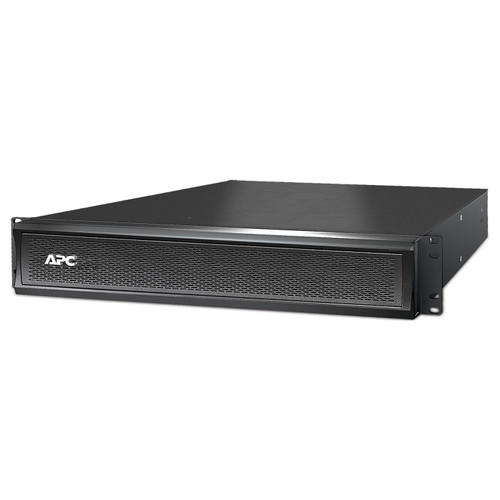
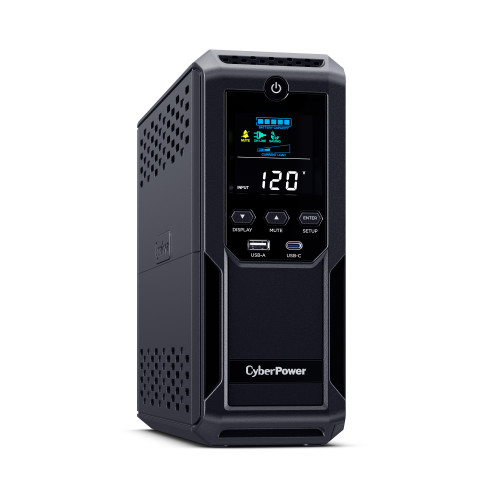
The SMX1500RMI2U is a 2U rack-mount unit (89 mm height) shipped with rack mounting rails and removable support feet, targeting data-centre and server-room rack installations. It weighs 24.82 kg. The BRG1500AVRLCD2 is a mini-tower desktop unit measuring 3.94 × 10.2 × 13.78 in and weighing 23.8 lb (approx. 10.8 kg). The two form factors serve fundamentally different installation environments.
Outlet standards reflect their regional designs. The SMX1500RMI2U provides 8 × IEC 320 C13 battery-backed outlets plus 2 × IEC jumper outlets (10 total), using an IEC 320 C14 input — standard for 230 V rack equipment. The BRG1500AVRLCD2 provides 12 × NEMA 5-15R outlets (6 battery-backed + surge, 6 surge-only) with a NEMA 5-15P input — standard for 120 V North American environments.
The BRG1500AVRLCD2 adds integrated data-line protection (RJ-45 Ethernet in/out) and two USB charging ports (1 × USB-A 2.4 A, 1 × USB-C 18 W PD). The SMX1500RMI2U specifies no USB charging ports and no data-line protection ports in its listed specifications. Power cord length is 1.8 m (APC) versus 6 ft / 1.83 m (CyberPower) — effectively equivalent.
Which unit offers stronger monitoring, software integration, and management expandability?
Both units include an LCD multifunction display for local status monitoring (load, battery, fault indicators). The SMX1500RMI2U specifies its display as a 'multifunction LCD status and control console,' while the BRG1500AVRLCD2 lists load, runtime, voltage, battery, and fault readouts. Neither spec sheet quantifies display resolution or backlight specifics.
For host connectivity, both units provide USB and serial (RS-232/DB9) ports. The SMX1500RMI2U additionally specifies an available expansion slot (1 free slot) that supports APC's SmartSlot network management cards, enabling SNMP/web-card options without replacing the unit. The BRG1500AVRLCD2 supports optional SNMP/HTTP management via CyberPower's RMCARD series, but the spec does not confirm whether a card slot is physically present in this specific model — buyers should verify before assuming slot availability.
Bundled software differs: the SMX1500RMI2U includes APC's PowerChute software (CD-based per the listed provided equipment). The BRG1500AVRLCD2 includes CyberPower PowerPanel Personal, supporting Windows, Mac, and Linux. Both provide graceful shutdown and monitoring capability. Surge energy rating is 645 J (APC) versus 1500 J (CyberPower). The BRG1500AVRLCD2 includes a $500,000 connected equipment guarantee; no equivalent guarantee value is listed in the SMX1500RMI2U spec sheet.
Which should you choose: the SMX1500RMI2U or the BRG1500AVRLCD2?
Our take: The SMX1500RMI2U is the stronger choice when protecting rack-mounted servers and network appliances in a 230 V AC data-centre or server-room environment. It delivers 1200 W versus the BRG1500AVRLCD2's 900 W — a 300 W (33%) real-power advantage — and outputs a true sine wave rather than a simulated sine wave, making it compatible with active-PFC server power supplies that can be damaged or stressed by stepped waveforms. Its 2U rack form factor and SmartSlot expansion bay support enterprise network management cards natively. The BRG1500AVRLCD2 is better suited to 120 V AC North American office or edge environments where a desktop mini-tower is appropriate, surge suppression energy (1500 J vs 645 J) and the $500,000 connected equipment guarantee carry weight, and USB charging ports add convenience. The two units are not cross-shoppable on voltage alone: the APC is a 230 V product; the CyberPower is a 120 V product.
Side-by-Side Comparison
Spec-for-spec, from manufacturer data.
| Specification | APC by Schneider Electric SMX1500RMI2U | CyberPower BRG1500AVRLCD2 |
|---|---|---|
| VA Rating | 1500 VA | 1500 VA |
| Watt Rating | 1200 W | 900 W |
| Power Factor | 0.80 | 0.60 |
| Topology | Line Interactive | Line Interactive |
| Output Waveform | Sine Wave | Simulated Sine Wave |
| Input Voltage (Nominal) | 230 V AC | 120 V AC |
| Input Voltage Range | 151–302 V (adjustable) | 57–120 VAC |
| Form Factor | 2U Rack-Mount | Mini-Tower Desktop |
| Outlet Type & Count | 8× IEC 320 C13 + 2× IEC Jumper | 12× NEMA 5-15R (6 battery+surge, 6 surge) |
| Surge Energy Rating | 645 J | 1500 J |
| Battery Type | Sealed Lead-Acid | Sealed Lead-Acid (2× 12V/9Ah) |
| Typical Recharge Time | 3 hours | — |
| Battery Life (Expected) | 3–5 years | — |
| Management Expansion Slot | 1× SmartSlot | Optional RMCARD (slot presence unconfirmed in spec) |
| Host Connectivity | USB, Serial (RS-232) | USB, Serial (DB9) |
| Connected Equipment Guarantee | — | $500,000 |
| Acoustic Level | 40 dBA | — |
| Weight | 24.82 kg | 23.8 lb (approx. 10.8 kg) |
Frequently Asked Questions
Which should you choose: the SMX1500RMI2U or the BRG1500AVRLCD2?
The SMX1500RMI2U is the stronger choice when protecting rack-mounted servers and network appliances in a 230 V AC data-centre or server-room environment. It delivers 1200 W versus the BRG1500AVRLCD2's 900 W — a 300 W (33%) real-power advantage — and outputs a true sine wave rather than a simulated sine wave, making it compatible with active-PFC server power supplies that can be damaged or stressed by stepped waveforms. Its 2U rack form factor and SmartSlot expansion bay support enterprise network management cards natively. The BRG1500AVRLCD2 is better suited to 120 V AC North American office or edge environments where a desktop mini-tower is appropriate, surge suppression energy (1500 J vs 645 J) and the $500,000 connected equipment guarantee carry weight, and USB charging ports add convenience. The two units are not cross-shoppable on voltage alone: the APC is a 230 V product; the CyberPower is a 120 V product.
Is the SMX1500RMI2U or BRG1500AVRLCD2 compatible with active-PFC server power supplies?
The SMX1500RMI2U produces a true sine wave output, which is required by most active-PFC power supplies used in servers and network appliances. The BRG1500AVRLCD2 produces a simulated sine wave, which can cause compatibility issues or increased thermal load with active-PFC equipment. If protecting servers with active-PFC supplies, the SMX1500RMI2U is the specified-safe choice based on the provided specs.
Can I install the BRG1500AVRLCD2 in a standard equipment rack?
No. Per the provided specifications, the BRG1500AVRLCD2 is a mini-tower desktop unit (3.94 × 10.2 × 13.78 in) with no rack-mount form factor listed. The SMX1500RMI2U is a 2U rack-mount unit shipped with rack mounting rails. If rack installation is required, only the SMX1500RMI2U meets that requirement based on the specs provided.
Which unit provides a longer warranty and connected equipment guarantee?
The BRG1500AVRLCD2 specifies a 5-year warranty and a $500,000 connected equipment guarantee per the provided specs. The SMX1500RMI2U spec sheet does not list a warranty duration or connected equipment guarantee value — buyers should consult APC's current warranty terms directly. On the data provided, the CyberPower unit has the documented advantage on these two points.
More UPS Comparisons
- APC by Schneider Electric SMX1500RMI2U vs CyberPower PRL1500RT2UC
- APC by Schneider Electric SMX1500RMI2U vs CyberPower PR1500LCD
- APC by Schneider Electric SMX1500RMI2U vs APC by Schneider Electric BR1500MS2
- APC by Schneider Electric SMX1500RMI2U vs APC by Schneider Electric SMTL1500RM3UCUS
- CyberPower PRL1500RT2UC vs APC by Schneider Electric BR1500MS2
- CyberPower PRL1500RT2UC vs APC by Schneider Electric SMTL1500RM3UCUS
UPS Buying Guides
Get a Second Opinion on Your Camera Choice
Share your site layout, coverage goals, and budget. Our team will validate the camera selection, flag anything we would change, and recommend products that match the use case.