
Best UPS for a Server Room
Sizing a UPS for a server room — 2000 VA and up, online double-conversion for clean power, runtime for graceful shutdown, and network management.

Eden Phillips
Networking & Infrastructure Specialist · Working integrator
Bottom line
For a server room, online double-conversion is the non-negotiable baseline — line-interactive and standby topologies introduce transfer-time gaps that modern servers tolerate poorly. Size for your actual measured load at 60–80% of UPS nameplate capacity to preserve runtime headroom and battery longevity, then choose a model with a network management card (NMP/SNMP) so you can trigger graceful OS shutdowns before batteries exhaust. The 3000–5000VA rack-mount options listed here cover the sweet spot for single-cabinet and multi-server deployments with 208V or 120V infrastructure.
What This Setup Needs
Server room UPS selection is driven by load math, power topology, runtime requirements, and management integration — get any one wrong and you either lose protection or leave budget on the table. Here are the factors that matter most:
- Topology (Online Double-Conversion vs. Line-Interactive): Online double-conversion regenerates a clean sine wave continuously — the inverter is always online, so there is zero transfer time on utility failure. Line-interactive topologies have a 2–10ms switch window that most servers tolerate, but high-density virtualization hosts, storage arrays, and power-sensitive network gear benefit from true online conversion. For any server room above a single workstation, double-conversion is the professional standard.
- VA and Watt Sizing: VA is apparent power; watts (real power) are what your gear actually draws — typical server UPS units have a 0.8–0.9 power factor, so a 3000VA unit delivers roughly 2400–2700W. Audit your actual load with a clamp meter or PDU readings, then size the UPS to 60–80% of nameplate. This keeps batteries from deep-cycling on normal load spikes and extends battery service life significantly.
- Voltage and Step-Down Transformer: Many high-density rack PDUs and servers run at 208V for efficiency. If your UPS is 208V input but your servers or PDUs are 120V, you need a step-down transformer — either built into the UPS or as an external unit. Spec this carefully; mis-matched voltage destroys equipment.
- Runtime and Battery Expandability: Runtime at full load is typically 5–15 minutes for built-in batteries — enough for graceful shutdown scripts but not extended outages. If you need longer runtime (remote sites, extended generator start times), look for models that support external battery modules (EBMs/EBPs) on the same bus. Plan for shutdown, not ride-through, unless you have a generator.
- Network Management and Shutdown Integration: A UPS without a network management card (NMC/SNMP card) is a black box. SNMP visibility lets your monitoring stack poll battery health, load percentage, and runtime remaining. Paired with vendor shutdown agents (APC PowerChute, Vertiv Liebert SiteScan, CyberPower PowerPanel), the UPS can trigger graceful OS shutdown across multiple hypervisors before batteries are exhausted. Treat NMC as mandatory for any multi-server environment.
- Form Factor and Rail Compatibility: Rack-mount (1U, 2U) is standard for server rooms. Confirm rail kit compatibility with your cabinet brand and depth — some UPS units require vendor-specific rails sold separately. Rack/Tower convertible units offer flexibility during initial deployment or future reorganization.
- Serviceability and Warranty: Hot-swappable user-replaceable batteries eliminate planned downtime for battery maintenance. Confirm battery replacement intervals (typically 3–5 years), whether the vendor offers advance replacement, and what the warranty covers on the inverter/charger electronics separately from consumable batteries.
Our Picks
Selected from our catalog by spec-fit. All channel-direct and factory-new — not ranked by price.
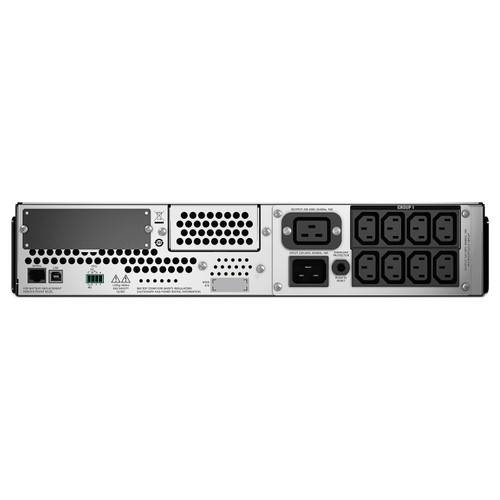
APC by Schneider Electric SMT3000RMI2U
3000VA
The APC Smart-UPS SMT3000RMI2U is a 3000VA rack-mount unit well-suited for single-cabinet server deployments where clean, line-interactive protection and APC's broad ecosystem of NMC cards and PowerChute shutdown software are priorities — a strong fit when your infrastructure is already standardized on APC and you need reliable mid-range capacity in a space-efficient 2U form factor.
View product →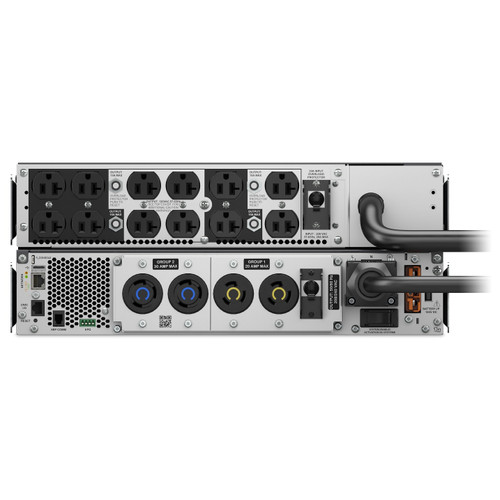
APC by Schneider Electric SRTL5KRM2UT-5KRMTF
5kVA
The APC Smart-UPS SRTL5KRM2UT-5KRMTF is a 5kVA online double-conversion unit with a built-in 208V-to-120V step-down transformer in a 2U rack footprint, making it a strong fit for higher-density server rooms fed by 208V PDUs or panel circuits where downstream 120V devices need clean, regenerated power without a separate transformer in the rack.
View product →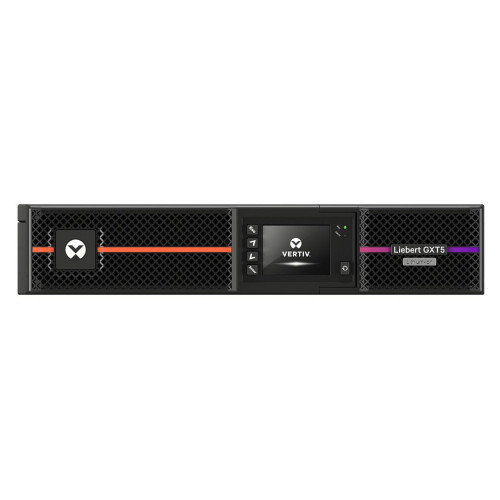
Vertiv GXT5-3000LVRT2UXL
3000VA
The Vertiv Liebert GXT5-3000LVRT2UXL is a 3000VA online double-conversion unit with USB, serial, and native SNMP connectivity built in, well-suited for server rooms where zero-transfer-time power conditioning and multi-protocol management integration are required without additional card purchases — a practical choice when SNMP visibility needs to be operational on day one.
View product →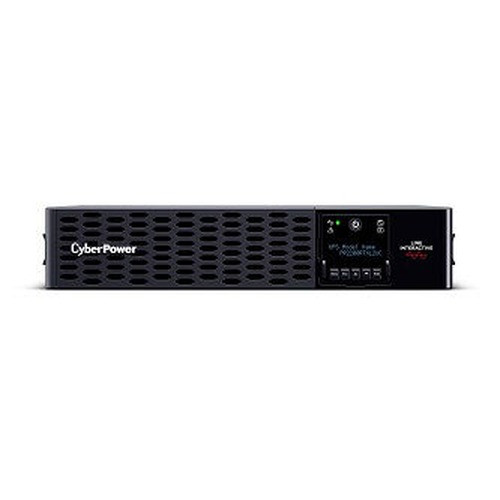
CyberPower PR2200RTXL2UC
2200VA
The CyberPower PR2200RTXL2UC is a 2200VA rack/tower convertible unit well-suited for smaller server closets or edge deployments where deployment flexibility between rack and freestanding configurations matters and the load profile falls within the 2200VA class — CyberPower's PowerPanel software provides shutdown integration for environments where budget efficiency is a priority alongside functional protection.
View product →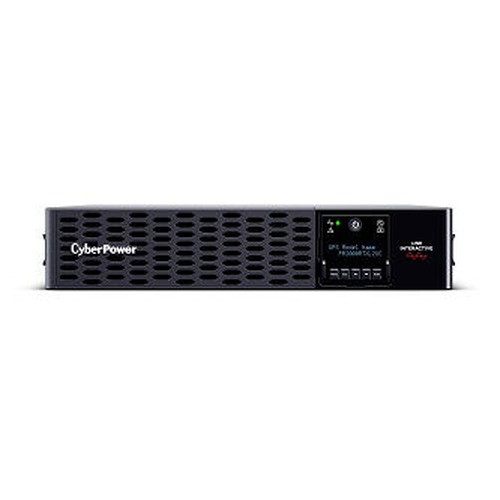
CyberPower PR2000RTXL2UC
2000VA
The CyberPower PR2000RTXL2UC is a 2000VA rack/tower convertible unit positioned at the entry point of the server-room sizing range, well-suited for a single-server or small NVR/networking deployment in a confined space where the rack/tower form factor provides installation flexibility and the 2000VA class covers the measured load with appropriate headroom.
View product →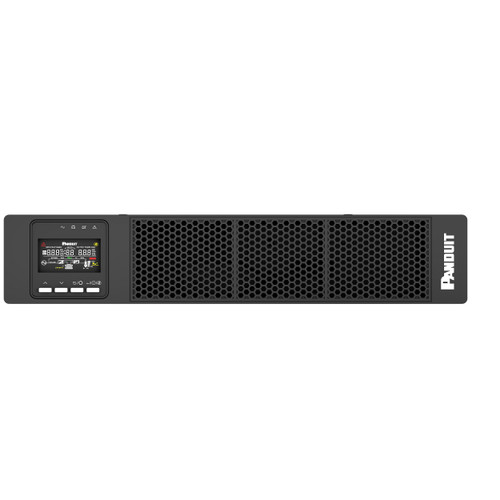
Panduit U02N12V
2kVA
The Panduit U02N12V is a 2kVA 2U rack-mount unit rated for 0°C–40°C operating environments, well-suited for structured cabling and network infrastructure deployments where Panduit's ecosystem integration is already in place — a reasonable fit for IDF closets or access-layer switches and small servers where the 2kVA class matches the load and the standard rack form factor fits into an existing Panduit cabinet build.
View product →Frequently Asked Questions
What is online double-conversion and why does it matter for a server room?
In a double-conversion online UPS, incoming AC is rectified to DC, which charges the battery and simultaneously feeds an inverter that produces a clean, regulated AC output — the load always runs off the inverter, never directly off utility power. This means there is zero transfer time on a utility failure and the output is continuously conditioned against sags, surges, harmonics, and frequency instability. For server rooms with multiple hypervisors, storage arrays, or sensitive network gear, this topology eliminates the risk of equipment resets or data corruption during the milliseconds a line-interactive unit is switching.
How do I calculate what VA size UPS I need for my server room?
Measure actual watt draw at the PDU or with a clamp meter under realistic load — do not rely on equipment nameplate maximums, which overstate real consumption by 30–60%. Sum the watt draw of all protected loads, then divide by the UPS power factor (typically 0.8–0.9 for rack UPS units) to get the minimum VA requirement. Add 20–40% headroom above your current load to allow for expansion and to keep the UPS operating in its efficiency sweet spot. For example, 1,800W of measured load ÷ 0.9 PF = 2,000VA minimum, so a 3000VA unit gives you comfortable headroom.
Do I need a network management card in my UPS?
For any multi-server environment, yes — a UPS without SNMP visibility is unmanageable at scale. An NMC or built-in SNMP interface lets your monitoring platform poll real-time battery state, load percentage, input voltage, and estimated runtime, and triggers alerts before a problem becomes an outage. Paired with vendor shutdown agents, the UPS can initiate graceful OS shutdowns across multiple virtual machines or hosts in a defined sequence before battery reserves are exhausted. Without this integration, a UPS is purely reactive insurance; with it, you have a managed infrastructure component.
How long will a server room UPS run on battery?
Runtime depends on battery capacity and actual watt load — most 2000–5000VA rack UPS units provide 5–12 minutes at full rated load on internal batteries, which is typically sufficient to trigger automated shutdown scripts and reach a safe state before a generator comes online. If your site lacks a generator or your shutdown sequence requires more time, look for models that support external battery modules on the same bus to extend runtime to 20–45 minutes or more. Plan your UPS strategy around graceful shutdown, not indefinite ride-through, unless you have generator backup.
What is the difference between 120V and 208V UPS units, and does it matter?
120V single-phase is the standard outlet voltage in North America; 208V is a two-leg derived voltage common in commercial buildings and data centers fed by three-phase distribution. High-density server racks increasingly use 208V input because it allows higher power delivery per circuit with lower current draw and thinner wiring. If your utility feed or PDUs operate at 208V but your servers or networking gear require 120V, you need a step-down transformer — either built into the UPS (as with the SRTL5KRM2UT-5KRMTF) or as a separate unit. Mismatching voltages without proper transformation will damage equipment, so confirm your feed voltage before specifying a UPS.
How often do UPS batteries need to be replaced, and can I do it myself?
Most valve-regulated lead-acid (VRLA) batteries in rack UPS units reach end-of-service life at 3–5 years under normal operating conditions — heat, frequent deep discharge, and operation above 25°C accelerate aging significantly. Most enterprise-class rack UPS units support hot-swappable user-replaceable batteries, meaning you can swap battery modules without powering down the protected load, which eliminates planned downtime for maintenance. Monitor battery health continuously via SNMP and replace on the vendor's recommended schedule rather than waiting for a failure event — a degraded battery discovered during an actual outage is too late.
Related Resources
- UPS comparisons — head-to-head spec matchups
- UPS Buying Guide for Network & Security Systems
- Best UPS for a Network Rack or NVR
- Best Rackmount UPS for a Data Center
- All product comparisons
Speccing this for a project?
Send us your requirements and our senior specialists will confirm specs, compatibility, availability and pricing — free, usually within one business day. Channel-direct, factory-new, serving commercial integrators since 2014.
Get a Free QuoteComparing for a project?
Send us the models you are weighing and our team will confirm specs, compatibility, availability, and pricing — free, usually within one business day.