
Best UPS for a Network Rack or NVR
Sizing a UPS for a network rack, NVR or small server — 1000 to 3000 VA, line-interactive or online topology, rack or tower form factor, and a network management card for clean shutdown.

Eden Phillips
Networking & Infrastructure Specialist · Working integrator
Bottom line
For a network rack or NVR installation, match VA capacity to your measured load (NVR plus switches plus cameras, with a 20–25% headroom buffer), choose line-interactive topology for most commercial deployments, and insist on a network management card or SNMP port so the UPS can issue a graceful shutdown before battery runs dry. Online double-conversion is worth the premium only when your load is sensitive to voltage instability or you're protecting a storage server where an unclean shutdown causes data corruption.
What This Setup Needs
Sizing and specifying a UPS for a network rack or NVR closet is a load-math and topology problem first, a form-factor problem second. Get the fundamentals right and any solid unit will serve you; miss them and even an oversized unit will fail you when the power does.
- VA and watt sizing: Add the rated watt draw of every device in the rack — NVR, PoE switches, servers, management gear — then divide by 0.8 to account for power-factor and add another 20% headroom for growth. Running a UPS above 80% of its rated load shortens battery life and accelerates thermal stress. Most NVR-plus-switch racks land in the 800–1,800 W range, which puts you in 1500–3000 VA territory depending on power factor.
- Topology — line-interactive vs. online double-conversion: Line-interactive units (the majority here) regulate voltage using an AVR transformer without switching to battery for every sag or surge — quiet, efficient (90–96%), and sufficient for NVRs, switches and access-control servers. Online double-conversion units (Vertiv GXT5) route all power through the inverter continuously, providing zero-transfer-time and the cleanest sine wave output; right for storage arrays, hyper-converged nodes, or any load that logs errors on micro-interruptions.
- Pure sine wave output: All units in this class produce true sine wave on battery, which matters for active-PFC power supplies found in modern servers, NVRs and multi-core switches. Modified sine wave UPS units are not appropriate for this equipment.
- Network management and remote shutdown: An SNMP-capable network management card (or built-in SNMP/USB with software agent) lets you configure shutdown thresholds, receive SNMP traps in your NMS, and trigger a graceful OS shutdown before battery is exhausted. This is non-negotiable for any unattended remote site. Verify whether the card is included or an add-on SKU before you order.
- Form factor and rack density: 2U rack-mount fits cleanly into 12U–24U IDF and NVR racks; confirm rail kit inclusion. Tower units are valid for wiring closets where a rack is absent, but they occupy floor or shelf space and are harder to cable cleanly. Convertible rack/tower units offer flexibility for installations that may later migrate to a rack.
- Runtime and external battery packs: Internal batteries typically deliver 5–15 minutes at full load and 20–40 minutes at half load — enough for a controlled shutdown or a short outage. If your site needs 30+ minutes of protected runtime (remote sites, generator start-lag), plan for an external battery module (EBM/BP) compatible with your chosen UPS model and verify the chassis supports it.
- Scalability and serviceability: Hot-swappable batteries matter in live racks where pulling the UPS offline for a battery swap is disruptive. Check whether replacement batteries are field-swappable and whether the manufacturer's service program covers the site. For distributed deployments, standardizing on one brand simplifies spare battery inventory and NMS integration.
Our Picks
Selected from our catalog by spec-fit. All channel-direct and factory-new — not ranked by price.
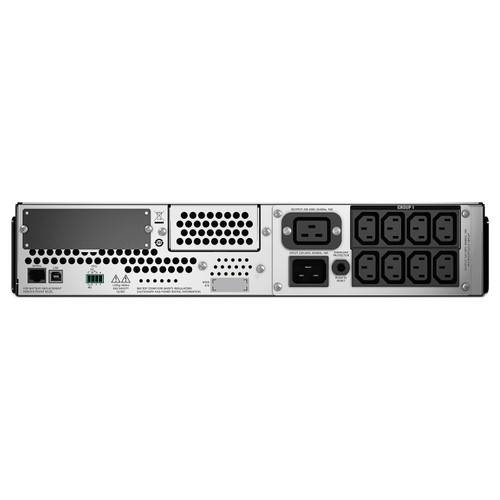
APC by Schneider Electric SMT3000RMI2U
3000VA
The SMT3000RMI2U is a 3000VA line-interactive, 2U rack-mount unit well-suited for mid-size NVR racks or IDF closets with a heavier mix of PoE switches and servers; its Smart-UPS lineage includes AVR, true sine wave output, and native APC SmartConnect and NMC2 network management card compatibility, making it a strong fit for multi-site deployments already standardized on APC infrastructure.
View product →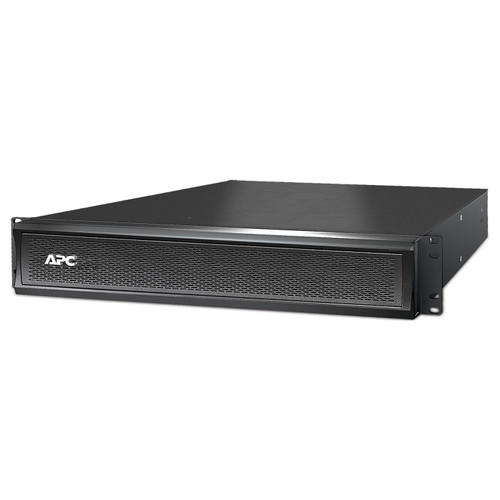
APC by Schneider Electric SMX1500RMI2U
1500VA
The SMX1500RMI2U is a 1500VA Smart-UPS X series line-interactive 2U unit that adds external battery module (EBM) support to the Smart-UPS platform, making it well-suited for remote or unattended NVR closets where extended runtime beyond the internal battery is a requirement — install one EBM and runtime at half-load can extend significantly without changing the rack footprint.
View product →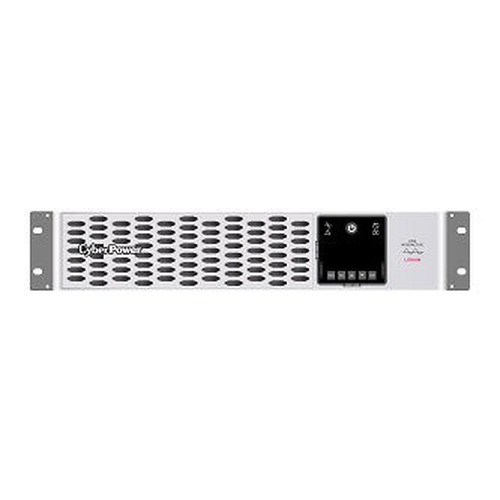
CyberPower PRL1500RT2UC
1500VA
The CyberPower PRL1500RT2UC is a 1500VA rack/tower convertible line-interactive UPS suited for smaller NVR and network rack builds where the installation may start tower and later migrate to a rack; its 32–104 °F operating range fits typical IDF and wiring-closet conditions, and CyberPower's PowerPanel Business software provides USB-connected shutdown management for a cost-effective single-rack deployment.
View product →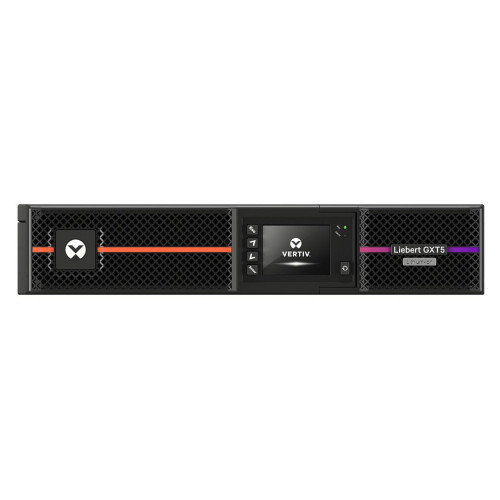
Vertiv GXT5-3000LVRT2UXL
3000VA
The Vertiv GXT5-3000LVRT2UXL is a 3000VA online double-conversion 2U unit with USB, serial, and SNMP connectivity, making it a strong fit when the protected load includes storage servers, hyper-converged nodes, or any device sensitive to micro-interruptions — the zero-transfer topology means utility power never reaches the load directly, eliminating sags, surges, and frequency anomalies entirely; the built-in SNMP port supports direct integration with enterprise NMS without an additional card.
View product →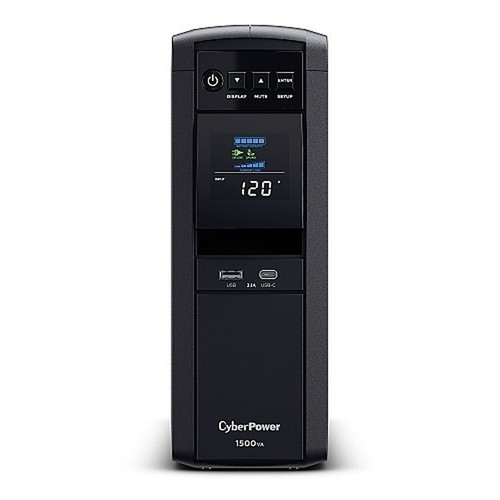
CyberPower PR1000RTXL2UC
1000VA
The CyberPower PR1000RTXL2UC is a 1000VA rack/tower convertible unit well-suited for compact NVR or access-control builds where the combined load stays under roughly 700–800W and budget and space are primary constraints; the rack/tower convertible form factor makes it a practical choice for small branch or edge deployments where a dedicated rack may not be present.
View product →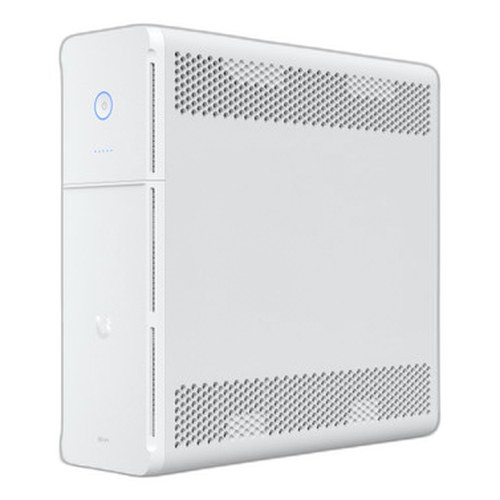
Ubiquiti UPS-TOWER-US
1kVA
The Ubiquiti UPS-TOWER-US is a 1kVA desktop/tower unit with wired connectivity, well-suited for small Ubiquiti-centric network deployments — a single UniFi switch, router, and small NVR in a wiring closet without a rack — where the priority is clean power protection and integration with the Ubiquiti ecosystem; its desktop form factor and single-port connectivity make it most appropriate as a targeted device-level solution rather than a full-rack UPS.
View product →Frequently Asked Questions
How do I calculate the right UPS size for my NVR rack?
Sum the watt draw (not VA) of every device you plan to protect — check the nameplate or spec sheet for each. Divide that total by 0.8 to account for typical power factor, then add 20% headroom for future devices and battery aging. A rack with a 16-channel NVR drawing 80W, two 24-port PoE switches at 60W each, and a managed switch at 30W totals 230W — divided by 0.8 gives ~288W of required UPS capacity, which a 1000VA unit handles easily. Scale up if you plan to add cameras, encoders, or servers.
What is the difference between line-interactive and online double-conversion UPS?
A line-interactive UPS uses an AVR transformer to correct voltage sags and surges without switching to battery, then only goes to battery during a true outage — efficient (90–96%) and sufficient for most NVR, switch, and access-control loads. An online double-conversion unit (like the Vertiv GXT5) routes all power through its rectifier and inverter continuously, so the load always runs on clean, synthesized power with zero transfer time — preferred for storage arrays, virtualization hosts, or any equipment whose PSU logs faults on micro-interruptions. The trade-off is slightly lower efficiency and higher cost.
Do I need a network management card in my UPS?
For any unattended or remote site, yes — a network management card or built-in SNMP port is essential. It lets your NMS receive SNMP traps when the UPS goes on battery, sends alerts when runtime drops below your threshold, and can trigger a graceful OS or NVR shutdown before the battery is fully exhausted. Without it, an extended outage will cause a hard power-loss to the NVR, risking database corruption or lost video. Verify whether the NMC is included in the base SKU or sold separately before ordering.
How long will a UPS power my NVR during an outage?
Runtime depends on battery capacity and actual load — not rated VA. Most internal batteries at full load provide 5–10 minutes; at 50% load, 20–40 minutes is typical. The goal for most commercial deployments is not to run through a long outage but to execute a clean shutdown or bridge the gap until a generator starts (usually 10–30 seconds). If you need 30+ minutes of runtime, select a model that supports an external battery module and factor that into the budget.
Can I use a rack-mount UPS in a tower or wiring-closet installation?
Yes — most rack-mount UPS units in this class can be set on a shelf or floor in a wiring closet if a rack is not present, though they are not as stable as purpose-built tower units in that orientation. Convertible rack/tower models (the CyberPower PRL1500RT2UC and PR1000RTXL2UC) include hardware to orient the chassis either way cleanly. If you know the installation will always be in a rack, a dedicated rack-mount unit is the cleaner choice.
What is the difference between VA and watts, and why does it matter for UPS selection?
VA (volt-amperes) is apparent power; watts are real power — the relationship is watts = VA × power factor. Modern servers and NVRs have active-PFC power supplies with power factors of 0.95–0.99, so a 1500VA UPS with a 0.9 power factor rating delivers roughly 1350W. If you size to VA alone without checking the watt rating, you may undersize the unit for a load with a high power factor. Always check both the UPS watt rating and your load's watt draw — the watt figure is the binding constraint.
Related Resources
- UPS comparisons — head-to-head spec matchups
- UPS Buying Guide for Network & Security Systems
- All product comparisons
Speccing this for a project?
Send us your requirements and our senior specialists will confirm specs, compatibility, availability and pricing — free, usually within one business day. Channel-direct, factory-new, serving commercial integrators since 2014.
Get a Free QuoteComparing for a project?
Send us the models you are weighing and our team will confirm specs, compatibility, availability, and pricing — free, usually within one business day.