
APC by Schneider Electric SMX1500RMI2U vs CyberPower PRL1500RT2UC: Specification Comparison
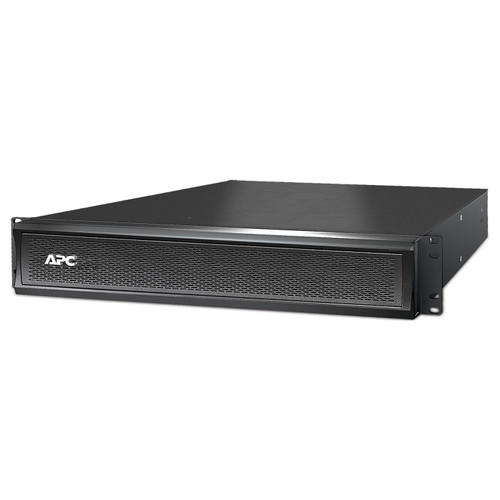
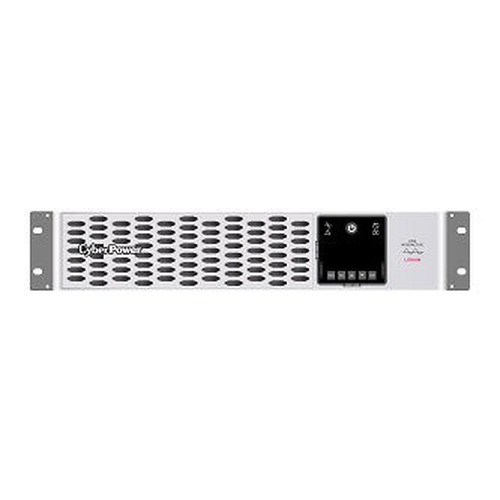
Both the APC by Schneider Electric SMX1500RMI2U and the CyberPower PRL1500RT2UC are 1500VA, 2U rack-mount line-interactive UPS units with pure sine wave output, targeting servers, network switches, and point-of-sale equipment. However, they serve distinct regional markets and carry fundamentally different battery chemistries — lead-acid versus lithium-ion — making this a meaningful cross-shop for buyers evaluating total cost of ownership, runtime sustainability, and regional power compatibility against a shared VA class.
In This Guide
- Which UPS delivers more usable power and better surge protection for your load?
- What battery technology and runtime should buyers expect, and what is the maintenance burden?
- How do these units differ in remote management, software integration, and connectivity options?
- Which should you choose: the SMX1500RMI2U or the PRL1500RT2UC?
- Side-by-Side Specs
- FAQ
Which UPS delivers more usable power and better surge protection for your load?
The SMX1500RMI2U is rated at 1500 VA / 1200 W, yielding a power factor of 0.80. It is designed for 230 V AC single-phase input (IEC 320 C14 connector) with an input voltage range of approximately 151–302 V (adjustable) and a 10 A switching current capacity. Surge energy absorption is rated at 645 J, with APC specifying full-time multi-pole noise filtering, a 5% IEEE surge let-through, and zero clamping response time meeting UL 1449. Output is delivered across 8 IEC 320 C13 receptacles and 2 IEC jumper outlets, with harmonic distortion under 5% THD.
The PRL1500RT2UC is rated at 1500 VA / 1500 W, yielding a power factor of 1.00. It is designed for 100–125 V AC input (NEMA 5-15P, 15 A circuit breaker) with an input voltage range of 70–155 VAC. Surge energy absorption is rated at 2430 J — nearly 3.8× the APC figure. Output is provided across 8 NEMA 5-15R receptacles, 4 of which are designated as critical-load battery-backed outlets. Automatic voltage regulation uses a double-boost, single-buck topology. Output power factor of 1.0 means all 1500 VA translates directly to 1500 W of usable power with no derate.
Key distinction: the SMX1500RMI2U's 1200 W real-power ceiling requires buyers to size loads accordingly, while the PRL1500RT2UC's unity power factor allows the full 1500 W to be drawn. On surge suppression the PRL1500RT2UC holds a clear advantage at 2430 J vs. 645 J. Voltage compatibility is non-overlapping: the SMX1500RMI2U is a 230 V product; the PRL1500RT2UC is a 120 V product.
What battery technology and runtime should buyers expect, and what is the maintenance burden?
The SMX1500RMI2U uses a sealed valve-regulated lead-acid (VRLA) battery (replacement cartridge APCRBC115, 1 RBC unit). APC specifies a typical recharge time of 3 hours and a battery design life of 3–5 years. Runtime figures are not provided as fixed numbers in the supplied specs — APC references a runtime graph. Battery charging power is rated at 103 W. The lead-acid chemistry is a mature, widely serviceable technology but is heavier and has a shorter cycle life relative to lithium alternatives.
The PRL1500RT2UC uses lithium-ion batteries: four packs rated at 12.8 V / 6 Ah each (replacement cartridge RB1260x4). CyberPower specifies runtime at half load as 18.7 minutes and at full load as 8.7 minutes. Typical recharge time is 2 hours — 33% faster than the APC. Lithium-ion chemistry generally supports more charge-discharge cycles and a longer calendar life than VRLA lead-acid, though CyberPower does not state an explicit battery design-life figure in the provided specs.
The PRL1500RT2UC provides concrete published runtime figures (18.7 min at half load / 8.7 min at full load) enabling direct load-planning; the SMX1500RMI2U does not supply equivalent fixed numbers in its spec sheet. The PRL1500RT2UC's lithium chemistry and faster recharge time favor environments with frequent power events, while the SMX1500RMI2U's lead-acid system is serviceable through a broader network of battery suppliers globally.
How do these units differ in remote management, software integration, and connectivity options?
The SMX1500RMI2U provides a USB port, an RS-232 serial port, and one available SmartSlot expansion slot that accepts APC network management cards. The control panel is a multifunction LCD. Included accessories cover an RS-232 signalling cable and a USB cable. Software is bundled on CD. The unit belongs to APC's Smart-UPS range, which is broadly supported by PowerChute software (not explicitly named in the provided specs) and by third-party NMS platforms through its SmartSlot ecosystem.
The PRL1500RT2UC provides USB, RS-232 serial, a dry-contact relay port, an EPO (Emergency Power Off) connection, and built-in SNMP/HTTP with an optional RMCARD205 network management card. Cloud management and PowerPanel® Business Edition software are specified. The management cable set includes a USB cable and an EPO cable. An LCD multifunction display is standard. The FCC Class B certification indicates suitability for office environments alongside end-user equipment.
The PRL1500RT2UC offers a broader out-of-box connectivity set, including dry-contact relay, EPO, and cloud management, plus SNMP/HTTP via an optional card — matching features the SMX1500RMI2U also delivers via its optional SmartSlot card. The SMX1500RMI2U's SmartSlot ecosystem is APC's established enterprise-management platform; the PRL1500RT2UC pairs with CyberPower's PowerPanel® Business ecosystem. Buyers already standardized on either vendor's NMS will find their native platform more economical. EPO support on the PRL1500RT2UC is a differentiator for data-center and high-density installations requiring hard-cut shutdown.
Which should you choose: the SMX1500RMI2U or the PRL1500RT2UC?
Our take: The SMX1500RMI2U is the stronger choice when deploying into 230 V AC infrastructure outside North America, where its IEC 320 C14 input, 230 V output receptacles, and CE/CSA/ACRCM certifications are required. Conversely, the PRL1500RT2UC is the stronger choice for 120 V North American deployments where a unity power factor (1500 W vs. 1200 W usable), substantially higher surge suppression (2430 J vs. 645 J), and lithium-ion batteries with published runtimes (18.7 min at half load) are decision drivers. The PRL1500RT2UC also recharges 33% faster (2 h vs. 3 h) and includes EPO and dry-contact relay as standard. The SMX1500RMI2U's lead-acid battery and APC SmartSlot ecosystem suit sites already invested in APC infrastructure management. These two units are non-interchangeable on voltage: confirm regional mains voltage before any procurement decision.
Side-by-Side Comparison
Spec-for-spec, from manufacturer data.
| Specification | APC by Schneider Electric SMX1500RMI2U | CyberPower PRL1500RT2UC |
|---|---|---|
| Rated Capacity (VA) | 1500 VA | 1500 VA |
| Rated Capacity (W) | 1200 W | 1500 W |
| Output Power Factor | 0.80 (derived) | 1.00 |
| UPS Topology | Line Interactive | Line Interactive |
| Waveform Type | Sine Wave | Sine Wave |
| Nominal Input Voltage | 230 V AC | 120 V AC |
| Input Voltage Range | 151–302 V (adjustable) | 70–155 VAC |
| Input Connection | IEC 320 C14 | NEMA 5-15P |
| Output Receptacles | 8× IEC 320 C13 + 2 IEC Jumpers | 8× NEMA 5-15R (4 critical-load) |
| Surge Energy Rating | 645 J | 2430 J |
| Battery Chemistry | Lead-Acid (VRLA) | Lithium-Ion |
| Typical Recharge Time | 3 Hours | 2 Hours |
| Runtime at Full Load | — (runtime graph, not specified) | 8.7 Minutes |
| Runtime at Half Load | — (runtime graph, not specified) | 18.7 Minutes |
| Form Factor / Rack Height | 2U Rack-Mount | 2U Rack/Tower |
| Management Connectivity | USB, RS-232, SmartSlot expansion | USB, RS-232, Dry Contact, EPO, optional SNMP/Cloud (RMCARD205) |
| Replacement Battery | APCRBC115 | RB1260x4 |
| Battery Design Life | 3–5 Years | — (not specified) |
| Unit Weight | 24.82 kg (54.7 lbs) | 54.2 lbs (24.6 kg) |
| Connected Equipment Guarantee | — | $400,000 |
| Product Warranty | — | Five-Year Limited |
Frequently Asked Questions
Which should you choose: the SMX1500RMI2U or the PRL1500RT2UC?
The SMX1500RMI2U is the stronger choice when deploying into 230 V AC infrastructure outside North America, where its IEC 320 C14 input, 230 V output receptacles, and CE/CSA/ACRCM certifications are required. Conversely, the PRL1500RT2UC is the stronger choice for 120 V North American deployments where a unity power factor (1500 W vs. 1200 W usable), substantially higher surge suppression (2430 J vs. 645 J), and lithium-ion batteries with published runtimes (18.7 min at half load) are decision drivers. The PRL1500RT2UC also recharges 33% faster (2 h vs. 3 h) and includes EPO and dry-contact relay as standard. The SMX1500RMI2U's lead-acid battery and APC SmartSlot ecosystem suit sites already invested in APC infrastructure management. These two units are non-interchangeable on voltage: confirm regional mains voltage before any procurement decision.
Can I use the SMX1500RMI2U or PRL1500RT2UC interchangeably in any country?
No. The SMX1500RMI2U is designed for 230 V AC single-phase input with IEC 320 C14 connectors, making it suitable for European, Middle Eastern, Asian, and other 230 V markets. The PRL1500RT2UC is designed for 100–125 V AC input with NEMA 5-15P connectors, making it a North American 120 V product. Using either unit outside its rated voltage range is not supported by the provided specifications.
Which UPS will keep my server running longer during a power outage — the SMX1500RMI2U or the PRL1500RT2UC?
The PRL1500RT2UC is the only model in this comparison with published runtime figures: 18.7 minutes at half load and 8.7 minutes at full load. The SMX1500RMI2U's specs reference a runtime graph rather than fixed numbers, so a direct numerical comparison cannot be made from the provided specifications. Buyers requiring guaranteed runtime values for planning should consult APC's published runtime graph for the SMX1500RMI2U under their specific load.
Is the SMX1500RMI2U or PRL1500RT2UC better for a data center that needs emergency power-off capability?
The PRL1500RT2UC specifies an EPO (Emergency Power Off) port and an EPO cable as included management accessories, making it directly suitable for data-center installations with a centralized emergency shutdown requirement. The SMX1500RMI2U's provided specifications do not list an EPO port; its expansion slot supports optional APC management cards, but EPO capability via that slot is not confirmed in the supplied specs.
More UPS Comparisons
- APC by Schneider Electric SMX1500RMI2U vs CyberPower BRG1500AVRLCD2
- APC by Schneider Electric SMX1500RMI2U vs CyberPower PR1500LCD
- APC by Schneider Electric SMX1500RMI2U vs APC by Schneider Electric BR1500MS2
- APC by Schneider Electric SMX1500RMI2U vs APC by Schneider Electric SMTL1500RM3UCUS
- CyberPower PRL1500RT2UC vs APC by Schneider Electric BR1500MS2
- CyberPower PRL1500RT2UC vs APC by Schneider Electric SMTL1500RM3UCUS
UPS Buying Guides
Get a Second Opinion on Your Camera Choice
Share your site layout, coverage goals, and budget. Our team will validate the camera selection, flag anything we would change, and recommend products that match the use case.