
CyberPower PRL1500RT2UC vs APC by Schneider Electric SMTL1500RM3UCUS: Specification Comparison
Both the CyberPower PRL1500RT2UC and the APC SMTL1500RM3UCUS are 1500VA-class lithium-ion rack/tower UPS units designed for IT infrastructure protection in data center and network closet environments. Both deliver sine-wave output, lithium-ion battery technology, and 2U-class rack-mount form factors targeting the same B2B buyer segment. This comparison evaluates runtime and power capacity, physical footprint and environmental ratings, and communications and management capabilities as the three most decision-relevant axes for this product class.
In This Guide
- Which UPS delivers more usable power and how long will it run your load?
- How do the two units compare in physical size, weight, and environmental tolerance?
- Which unit offers more comprehensive remote management and integration options?
- Which should you choose: the PRL1500RT2UC or the SMTL1500RM3UCUS?
- Side-by-Side Specs
- FAQ
Which UPS delivers more usable power and how long will it run your load?
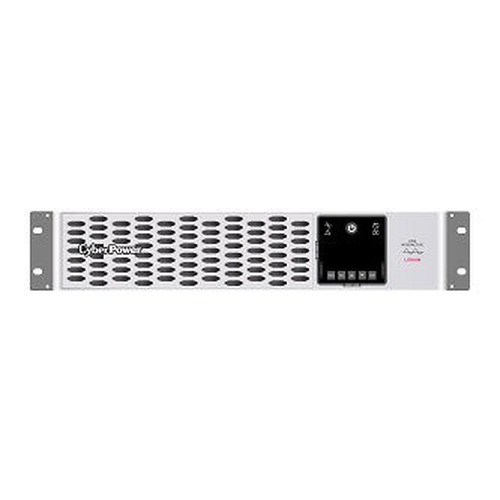
The CyberPower PRL1500RT2UC is rated at 1500 VA and 1500 W, yielding a power factor of 1.0. Published runtime at half load (750 W) is 18.7 minutes, and at full load (1500 W) is 8.7 minutes. Automatic Voltage Regulation employs a double-boost, single-buck topology, and the unit accepts an input voltage range of 70–155 VAC, providing broad tolerance for utility sag and swell conditions.
The APC SMTL1500RM3UCUS is rated at a maximum configurable output of 1.35 kW / 1.44 kVA — meaningfully lower than the CyberPower's 1500 W / 1500 VA ceiling. APC does not publish specific runtime-at-load figures in the provided specifications; the battery volt-amp-hour capacity is listed as 310 VAh and battery charge power as 154 W, but no half-load or full-load runtime minutes are stated. The APC spec sheet does not specify its input voltage range beyond 'auto-sensing 50/60 Hz ±3 Hz.'
On raw power capacity, the PRL1500RT2UC offers a higher watt ceiling (1500 W vs. 1350 W) and a unity power factor. Its runtime specs are explicitly published; the APC's are not present in the provided data, making direct runtime comparison impossible from spec alone.
How do the two units compare in physical size, weight, and environmental tolerance?
The CyberPower PRL1500RT2UC measures 17.1 in. (W) × 3.4 in. (H) × 19.7 in. (D) and weighs 54.2 lbs. It ships in a 22.1 × 10.8 × 24.4 in. carton at 68.3 lbs. The rack height is 2U. Operating temperature is 32–104 °F; operating humidity is 0–95% non-condensing; operating elevation is 0–9,843 ft; storage elevation reaches 49,213 ft.
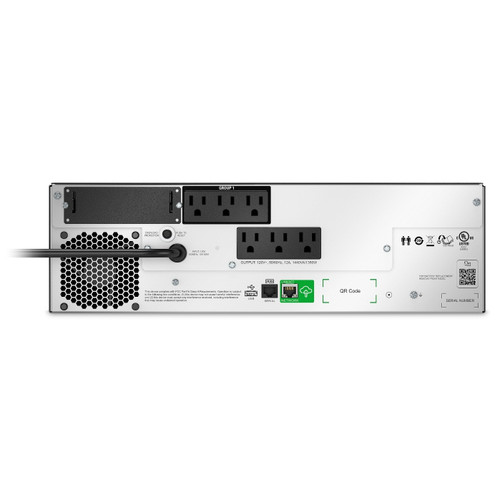
The APC SMTL1500RM3UCUS measures 17.25 in. (W) × 5.14 in. (H) × 11.89 in. (D) and weighs 43 lbs. Shipping dimensions are 23 × 11 × 17.64 in. at an unspecified shipping weight. APC does not specify a rack-unit height in the provided data, but the 5.14 in. height corresponds to approximately 3U. The APC's depth of 11.89 in. is substantially shallower than the CyberPower's 19.7 in. — a critical advantage in short-depth rack cabinets. Operating temperature is identical at 32–104 °F; humidity is 0–95% non-condensing; operating elevation is 0–10,000 ft; storage elevation is 0–25,000 ft.
The APC unit is significantly lighter (43 lbs. vs. 54.2 lbs.) and dramatically shallower (11.89 in. vs. 19.7 in.), making it the practical choice for shallow-depth wall-mount racks and telco cabinets. The CyberPower occupies less height (2U vs. ~3U) but requires a deeper rack. APC holds the edge in storage elevation tolerance (25,000 ft vs. 49,213 ft for CyberPower — CyberPower actually leads here), and both share identical operating environment specs.
Which unit offers more comprehensive remote management and integration options?
The CyberPower PRL1500RT2UC ships with USB and RS-232 serial ports and includes a dry-contact relay and EPO (Emergency Power Off) input as standard. SNMP and cloud management are listed as available interfaces; however, per the specifications, network management card capability requires the optional RMCARD205 accessory — it is not built in. The unit ships with management cables (USB and EPO). Management software is PowerPanel® Business Edition. The connected equipment guarantee is $400,000.
The APC SMTL1500RM3UCUS provides an RJ-45 serial port, a USB port, and a Smart-Slot expansion bay for optional network management cards. The 'SmartConnect' designation in the model name implies cloud connectivity capability, but the provided specifications do not explicitly confirm built-in SmartConnect functionality beyond listing interface ports. No connected equipment guarantee figure is present in the provided specifications. The unit ships with an RS-232 signalling cable and USB cable.
Both units require an optional card for full SNMP network management. The CyberPower explicitly names and prices the optional RMCARD205 and states a $400,000 connected equipment guarantee; APC provides a Smart-Slot bay for an optional card but the provided specs do not name a connected equipment guarantee. CyberPower additionally specifies EPO and dry-contact relay as standard — specs the APC data does not address — which may be relevant in monitored server-room deployments requiring emergency shutdown integration.
Which should you choose: the PRL1500RT2UC or the SMTL1500RM3UCUS?
Our take: The PRL1500RT2UC is the stronger choice when maximum watt capacity, EPO/dry-contact integration, and a published runtime at load are primary decision criteria. CyberPower delivers a true 1500 W / 1500 VA at unity power factor versus APC's 1350 W / 1440 VA ceiling — a 150 W advantage relevant for high-density PoE switch or NVR loads. Runtime at half load is explicitly stated at 18.7 minutes; APC's runtime is not published in the provided spec data. CyberPower also adds a standard dry-contact relay, EPO port, and a $400,000 connected equipment guarantee not documented for the APC. Conversely, the SMTL1500RM3UCUS weighs 11.2 lbs. less and is 7.8 in. shallower, making it the only viable option for short-depth or wall-mount rack enclosures. Buyers with depth-constrained installations should specify the APC; those needing full watt headroom, EPO capability, or documented runtime figures should specify the CyberPower.
Side-by-Side Comparison
Spec-for-spec, from manufacturer data.
| Specification | CyberPower PRL1500RT2UC | APC by Schneider Electric SMTL1500RM3UCUS |
|---|---|---|
| Capacity (VA) | 1500 VA | 1440 VA |
| Capacity (Watts) | 1500 W | 1350 W |
| Output Power Factor | 1.0 | — |
| Topology | Line Interactive | — |
| Waveform | Sine Wave | Sine Wave |
| Battery Chemistry | Lithium Ion | Lithium Ion |
| Expected Battery Life | — | 5–10 years |
| Typical Recharge Time | 2 hours | 2 hours |
| Transfer Time | 6 ms typical / 11 ms max | 6 ms typical / 10 ms max |
| Runtime at Half Load | 18.7 min | — |
| Runtime at Full Load | 8.7 min | — |
| Surge Energy Rating | 2430 J | 680 J |
| Form Factor / Rack Height | Rack/Tower / 2U | Rack / ~3U (5.14 in. H) |
| Unit Depth | 19.7 in. | 11.89 in. |
| Unit Weight | 54.2 lbs. | 43 lbs. |
| EPO / Dry Contact | Yes (standard) | — |
| Network Management | Optional RMCARD205 | Optional via Smart-Slot |
| Connected Equipment Guarantee | $400,000 | — |
| Input Voltage Range | 70–155 VAC | — |
| Operating Elevation | 0–9,843 ft | 0–10,000 ft |
| Storage Elevation | 0–49,213 ft | 0–25,000 ft |
| Certifications | UL 1778, CSA C22.2 No 107.3, FCC Class B | UL 1778, UL 1973, CSA C22.2 No 107.3, FCC Part 15 Class A, NOM |
| Product Warranty | Five-Year Limited | — |
Frequently Asked Questions
Which should you choose: the PRL1500RT2UC or the SMTL1500RM3UCUS?
The PRL1500RT2UC is the stronger choice when maximum watt capacity, EPO/dry-contact integration, and a published runtime at load are primary decision criteria. CyberPower delivers a true 1500 W / 1500 VA at unity power factor versus APC's 1350 W / 1440 VA ceiling — a 150 W advantage relevant for high-density PoE switch or NVR loads. Runtime at half load is explicitly stated at 18.7 minutes; APC's runtime is not published in the provided spec data. CyberPower also adds a standard dry-contact relay, EPO port, and a $400,000 connected equipment guarantee not documented for the APC. Conversely, the SMTL1500RM3UCUS weighs 11.2 lbs. less and is 7.8 in. shallower, making it the only viable option for short-depth or wall-mount rack enclosures. Buyers with depth-constrained installations should specify the APC; those needing full watt headroom, EPO capability, or documented runtime figures should specify the CyberPower.
Is the PRL1500RT2UC or SMTL1500RM3UCUS better for short-depth rack cabinets?
The SMTL1500RM3UCUS is the only practical choice for short-depth racks. Its maximum depth is 11.89 in. versus the PRL1500RT2UC's 19.7 in. — a difference of nearly 8 inches. If your rack cabinet has a usable depth under 18–19 inches, the CyberPower will not physically fit.
Which unit supports Emergency Power Off (EPO) for data center compliance?
Only the CyberPower PRL1500RT2UC lists EPO as a standard feature in the provided specifications. The APC SMTL1500RM3UCUS specifications do not mention EPO capability. If your facility's fire suppression or data center shutdown system requires an EPO tie-in, the PRL1500RT2UC is the specified option based on available data.
Do either of these UPS units include built-in network management, or is a card required?
Both units require an optional accessory for SNMP or network management. The CyberPower PRL1500RT2UC specifies the optional RMCARD205 for SNMP and HTTP access. The APC SMTL1500RM3UCUS provides a Smart-Slot expansion bay for an optional network management card. Neither unit includes built-in network management per the provided specifications.
More UPS Comparisons
- APC by Schneider Electric SMX1500RMI2U vs CyberPower PRL1500RT2UC
- APC by Schneider Electric SMX1500RMI2U vs CyberPower BRG1500AVRLCD2
- APC by Schneider Electric SMX1500RMI2U vs CyberPower PR1500LCD
- APC by Schneider Electric SMX1500RMI2U vs APC by Schneider Electric BR1500MS2
- APC by Schneider Electric SMX1500RMI2U vs APC by Schneider Electric SMTL1500RM3UCUS
- CyberPower PRL1500RT2UC vs APC by Schneider Electric BR1500MS2
UPS Buying Guides
Get a Second Opinion on Your Camera Choice
Share your site layout, coverage goals, and budget. Our team will validate the camera selection, flag anything we would change, and recommend products that match the use case.