
Transition Networks OCA-1BA1A0 vs Transition Networks OCA-1BA101: Specification Comparison
Both the OCA-1BA1A0 and OCA-1BA101 are Transition Networks 10-port unmanaged gigabit switches designed for DIN rail mounting with single-mode fiber support and outdoor-rated deployment. They occupy the same product class — hardened, plug-and-play gigabit edge switches for industrial and physical-security infrastructure — and carry identical core specifications across port count, fiber type, management style, and warranty. A buyer cross-shopping these two SKUs will find meaningful differentiation primarily in mounting flexibility and documented package contents.
In This Guide
- Do the OCA-1BA1A0 and OCA-1BA101 differ in port count, speed, or fiber capability?
- Which model offers greater mounting flexibility for cabinet, rack, or field installations?
- How do the two models compare on environmental hardening, warranty, and deployment readiness?
- Which should you choose: the OCA-1BA1A0 or the OCA-1BA101?
- Side-by-Side Specs
- FAQ
Do the OCA-1BA1A0 and OCA-1BA101 differ in port count, speed, or fiber capability?
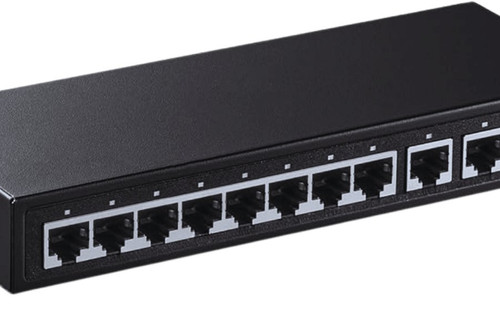
Both switches provide 10 ports operating at gigabit speed (1 Gbps full-duplex per port), and both support single-mode fiber connectivity for backbone links. Neither model is specified as PoE-capable in the provided specs, so edge devices requiring power-over-ethernet would need separate injectors or switches regardless of which unit is selected.
No spec difference in port count, per-port speed, or fiber type is documented between the two models. A buyer requiring more than 10 ports, PoE, or multi-mode fiber support will not find either unit suitable as specified.
Which model offers greater mounting flexibility for cabinet, rack, or field installations?
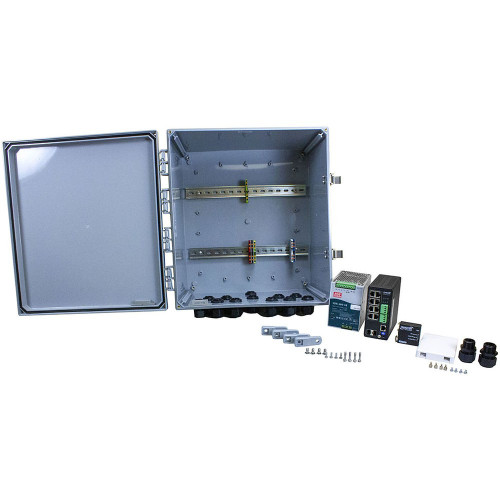
The OCA-1BA1A0 is specified as a DIN rail mount unit shipped with an outdoor cabinet assembly and DIN rail mounting hardware. Its package contents confirm it arrives ready for cabinet-integrated DIN rail deployment; no rack or alternative mount option is listed in its specs.
The OCA-1BA101 is specified as DIN rail mountable and its Mount Type field lists 'Cabinet / DIN rail / 19-inch rack compatible,' indicating compatibility with a broader range of enclosure types including standard 19-inch rack infrastructure. A datasheet is also referenced (/content/product-datasheets/OCA-1BA101.pdf) which may provide further dimensional and mounting detail not captured in the structured specs above. The OCA-1BA1A0 specs do not reference rack compatibility.
How do the two models compare on environmental hardening, warranty, and deployment readiness?
Both units carry an Outdoor environment rating and a Lifetime warranty. Neither spec set provides explicit operating temperature range, ingress protection (IP) rating, or humidity tolerance figures, so a detailed environmental hardening comparison cannot be made from the data provided.
The OCA-1BA1A0 spec describes the unit as 'hardened for industrial/telecom infrastructure' and includes a complete package contents list (switch unit, outdoor cabinet assembly, DIN rail hardware), indicating a more self-contained out-of-box deployment kit. The OCA-1BA101 does not list package contents in the provided specs, so whether mounting hardware or a cabinet assembly is included cannot be confirmed from available data.
Which should you choose: the OCA-1BA1A0 or the OCA-1BA101?
Our take: The OCA-1BA101 is the stronger choice when installation sites require flexible enclosure options, as its specs explicitly list cabinet, DIN rail, and 19-inch rack compatibility versus the OCA-1BA1A0's DIN rail and outdoor cabinet spec only. Conversely, the OCA-1BA1A0 is documented to ship with a complete outdoor cabinet assembly and DIN rail hardware included, making it the lower-friction choice for standalone outdoor cabinet builds where the enclosure is not pre-existing. Both units are identically matched on the three most critical specs: 10 gigabit ports, single-mode fiber support, and a Lifetime warranty. No difference in throughput, management capability, fiber type, or environmental rating is discernible from the provided specifications. Buyers deploying into existing 19-inch rack infrastructure should favor the OCA-1BA101; buyers building a new outdoor cabinet enclosure from scratch should favor the OCA-1BA1A0 based on its documented included hardware.
Side-by-Side Comparison
Spec-for-spec, from manufacturer data.
| Specification | Transition Networks OCA-1BA1A0 | Transition Networks OCA-1BA101 |
|---|---|---|
| SKU | OCA-1BA1A0 | OCA-1BA101 |
| Product Type | Switch | Switch |
| Port Count | 10 | 10 |
| Port Speed | Gigabit (1 Gbps) | Gigabit (1 Gbps) |
| Fiber Type | Single Mode | Single Mode |
| Management | Unmanaged | Unmanaged |
| DIN Rail Mount | Yes | Yes |
| Rack Mount (19-inch) | Not specified | Compatible (per spec) |
| Mount Types Listed | DIN Rail / Outdoor Cabinet | Cabinet / DIN Rail / 19-inch Rack |
| Environment Rating | Outdoor | Outdoor |
| Hardened / Industrial | Yes (per spec) | Not explicitly stated |
| Warranty | Lifetime | Lifetime |
| Package Contents Documented | Yes (switch, cabinet, DIN hardware) | Not listed in provided specs |
| Datasheet Available | — | Yes (/content/product-datasheets/OCA-1BA101.pdf) |
| Configuration Required | None (plug-and-play) | None (plug-and-play) |
Frequently Asked Questions
Which should you choose: the OCA-1BA1A0 or the OCA-1BA101?
The OCA-1BA101 is the stronger choice when installation sites require flexible enclosure options, as its specs explicitly list cabinet, DIN rail, and 19-inch rack compatibility versus the OCA-1BA1A0's DIN rail and outdoor cabinet spec only. Conversely, the OCA-1BA1A0 is documented to ship with a complete outdoor cabinet assembly and DIN rail hardware included, making it the lower-friction choice for standalone outdoor cabinet builds where the enclosure is not pre-existing. Both units are identically matched on the three most critical specs: 10 gigabit ports, single-mode fiber support, and a Lifetime warranty. No difference in throughput, management capability, fiber type, or environmental rating is discernible from the provided specifications. Buyers deploying into existing 19-inch rack infrastructure should favor the OCA-1BA101; buyers building a new outdoor cabinet enclosure from scratch should favor the OCA-1BA1A0 based on its documented included hardware.
Is the OCA-1BA1A0 or OCA-1BA101 better for an existing 19-inch rack cabinet?
Based on the provided specs, the OCA-1BA101 is the better fit. Its Mount Type is listed as 'Cabinet / DIN rail / 19-inch rack compatible,' while the OCA-1BA1A0 specs reference only DIN rail and outdoor cabinet mounting. No rack compatibility is documented for the OCA-1BA1A0.
Do either of these switches support PoE to power IP cameras directly?
Neither the OCA-1BA1A0 nor the OCA-1BA101 is specified as PoE-capable in the provided specs. Both are listed simply as gigabit switches with no power-delivery feature noted. Separate PoE injectors or a PoE-capable switch would be required to power IP cameras or access control readers at the edge.
Which model comes with mounting hardware included in the box?
The OCA-1BA1A0 spec explicitly lists package contents: the switch unit, an outdoor cabinet assembly, and DIN rail mounting hardware. The OCA-1BA101 spec does not include a package contents list in the provided data, so whether mounting hardware is included cannot be confirmed without consulting the referenced datasheet or the manufacturer directly.
More Network Switch Comparisons
- TP-Link IES210GPP vs Transition Networks OCA-1AB201-NA
- TP-Link IES210GPP vs Transition Networks OCA-1BA1A0
- TP-Link IES210GPP vs Transition Networks OCA-1BA101
- TP-Link IES210GPP vs TP-Link DS110GMP
- TP-Link IES210GPP vs TP-Link SG1210PP
- TP-Link DS110GMP vs Transition Networks OCA-1AB201-NA
Network Switch Buying Guides
Get a Second Opinion on Your Camera Choice
Share your site layout, coverage goals, and budget. Our team will validate the camera selection, flag anything we would change, and recommend products that match the use case.