
TP-Link IES210GPP vs Transition Networks OCA-1BA1A0: Specification Comparison
Both the TP-Link IES210GPP and the Transition Networks OCA-1BA1A0 are 10-port gigabit industrial switches designed for demanding infrastructure deployments outside standard office environments. The IES210GPP is a managed PoE++ switch with DIN-rail and wall-mount options, SDN controller integration, and a 240 W PoE budget targeting active-device-dense security and industrial networks. The OCA-1BA1A0 is an unmanaged, non-PoE switch packaged in an outdoor cabinet assembly on a DIN-rail, targeting hardened telecom and field-infrastructure applications where simplicity and outdoor enclosure matter more than powered ports.
In This Guide
- How do the port configurations and switching throughput compare?
- What are the PoE capabilities and power architecture differences between these two switches?
- How do these switches differ in management capability, mounting options, and environmental ratings?
- Which should you choose: the IES210GPP or the OCA-1BA1A0?
- Side-by-Side Specs
- FAQ
How do the port configurations and switching throughput compare?
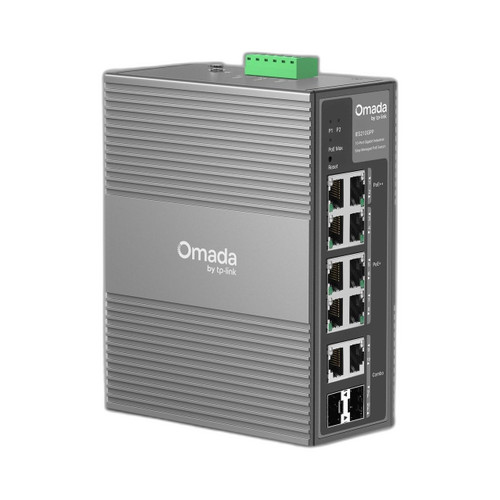
The IES210GPP provides 10 ports broken into six 10/100/1000 Mbps PoE+ RJ45 ports, two 10/100/1000 Mbps PoE++ RJ45 ports, and two combo SFP uplink slots (1000BASE-X), giving installers both copper density and fiber uplink flexibility. Its switching fabric is rated at 20 Gbps, which is non-blocking at gigabit line rate across all 10 ports.
The OCA-1BA1A0 is documented as a 10-port gigabit ethernet switch with single-mode fiber support. However, the exact port breakdown — how many are copper RJ45 versus fiber SFP, and whether any SFP slots are combo or dedicated — is not specified in the available data. Switching capacity is likewise not specified, so a direct throughput comparison cannot be made. Buyers requiring a verified non-blocking fabric spec should request that data from Transition Networks before selecting the OCA-1BA1A0 for high-density uplink scenarios.
What are the PoE capabilities and power architecture differences between these two switches?
The IES210GPP supports IEEE 802.3af, 802.3at, and 802.3bt across its eight powered ports: six ports deliver up to 30 W each (PoE+/802.3at), and two ports deliver up to 95 W each (PoE++/802.3bt), accommodating high-draw devices such as PTZ cameras, multi-radio access points, and industrial sensors. The total PoE budget is 240 W. The unit also features 1+1 redundant power input, providing resilience against single power-supply failure — a meaningful attribute in unmanned or remote installations.
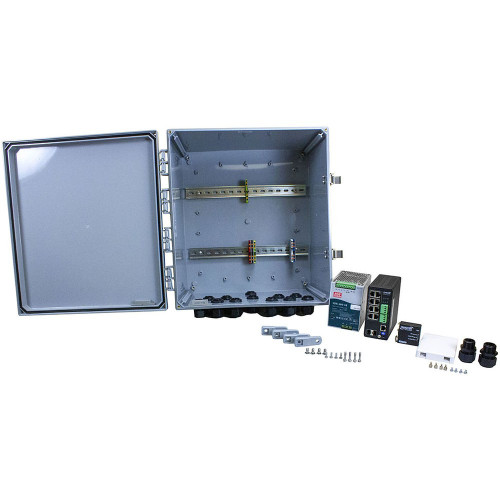
PoE capability is not specified for the OCA-1BA1A0. Installers who need to power IP cameras, access control readers, or wireless devices directly from the switch would need to add external PoE injectors or midspans, increasing cabling complexity and cost. The OCA-1BA1A0's outdoor cabinet assembly may, however, provide a weather-resistant enclosure advantage in certain field deployments where the switch itself must survive direct environmental exposure rather than being housed inside a protected IDF or cabinet.
How do these switches differ in management capability, mounting options, and environmental ratings?
The IES210GPP is a fully managed switch integrating with TP-Link's Omada SDN controller platform, enabling centralized configuration, VLAN segmentation, QoS policies, port mirroring, link aggregation, and remote monitoring across multi-site deployments. It supports both DIN-rail and wall-mount installation. Its environmental rating is IP40 and it is specified for operation from -40°C to 75°C (-40°F to 167°F) with ±6 kV common-mode surge protection on Ethernet ports. Power standby consumption is 5.64–5.95 W.
The OCA-1BA1A0 is unmanaged — no CLI, no web interface, no controller integration. Configuration is limited to plug-and-play operation, which simplifies deployment but eliminates per-port control, VLAN capability, and remote diagnostics. It ships with a DIN-rail mount and an outdoor cabinet assembly, making it suited for exposed field locations. Operating temperature range, IP rating, and surge tolerance are not specified in the available data, which limits the ability to verify its suitability against a specific environmental spec sheet without consulting Transition Networks directly. The OCA-1BA1A0 carries a lifetime warranty, versus warranty terms not stated for the IES210GPP in the provided specifications.
Which should you choose: the IES210GPP or the OCA-1BA1A0?
Our take: The IES210GPP is the stronger choice when the deployment requires powered ports, centralized network management, or verified environmental ratings against a published spec. It delivers a 240 W PoE budget across 802.3af/at/bt, versus no PoE on the OCA-1BA1A0; a verified 20 Gbps non-blocking switching fabric, versus an unspecified capacity on the OCA-1BA1A0; and a published -40°C to 75°C operating range with IP40 and ±6 kV surge protection, versus environmental specs that are absent from OCA-1BA1A0 documentation. The OCA-1BA1A0 warrants consideration in outdoor field enclosures where plug-and-play simplicity, single-mode fiber connectivity, and a lifetime warranty are the primary decision criteria and powered endpoints are handled externally — but buyers should obtain the full data sheet to confirm temperature and surge ratings before committing it to a hardened infrastructure role.
Side-by-Side Comparison
Spec-for-spec, from manufacturer data.
| Specification | TP-Link IES210GPP | Transition Networks OCA-1BA1A0 |
|---|---|---|
| Brand | TP-Link | Transition Networks |
| MPN | IES210GPP | OCA-1BA1A0 |
| Total Ports | 10 | 10 |
| Port Breakdown | 6× PoE+ RJ45, 2× PoE++ RJ45, 2× SFP combo uplink | Not specified (10 gigabit ethernet ports; single-mode fiber support noted) |
| SFP Slots | 2 (1000BASE-X combo) | — |
| Switching Capacity | 20 Gbps | — |
| Management | Managed (Omada SDN) | Unmanaged |
| PoE Standard | IEEE 802.3af / 802.3at / 802.3bt | — |
| PoE Budget | 240 W | — |
| Max PoE Per Port | 95 W (PoE++ ports); 30 W (PoE+ ports) | — |
| Operating Temperature | -40°C to 75°C (-40°F to 167°F) | — |
| IP Rating | IP40 | — |
| Surge Protection | ±6 kV common mode (Ethernet ports) | — |
| Mount Type | DIN Rail / Wall | DIN Rail |
| Outdoor Enclosure | Not included | Outdoor cabinet assembly included |
| Warranty | — | Lifetime |
Frequently Asked Questions
Which should you choose: the IES210GPP or the OCA-1BA1A0?
The IES210GPP is the stronger choice when the deployment requires powered ports, centralized network management, or verified environmental ratings against a published spec. It delivers a 240 W PoE budget across 802.3af/at/bt, versus no PoE on the OCA-1BA1A0; a verified 20 Gbps non-blocking switching fabric, versus an unspecified capacity on the OCA-1BA1A0; and a published -40°C to 75°C operating range with IP40 and ±6 kV surge protection, versus environmental specs that are absent from OCA-1BA1A0 documentation. The OCA-1BA1A0 warrants consideration in outdoor field enclosures where plug-and-play simplicity, single-mode fiber connectivity, and a lifetime warranty are the primary decision criteria and powered endpoints are handled externally — but buyers should obtain the full data sheet to confirm temperature and surge ratings before committing it to a hardened infrastructure role.
Can the TP-Link IES210GPP power a PTZ camera or a high-wattage wireless access point?
Yes. Two of its eight PoE ports support IEEE 802.3bt (PoE++), each capable of delivering up to 95 W, which covers virtually all PTZ cameras and high-draw multi-radio access points on the market. The remaining six ports deliver up to 30 W each under 802.3at. The total system PoE budget is 240 W, so installers should verify the aggregate draw of all connected devices does not exceed that figure.
Does the Transition Networks OCA-1BA1A0 support PoE, and can it be managed remotely?
PoE capability is not specified for the OCA-1BA1A0 in the available product data — buyers should confirm with Transition Networks before planning a deployment that requires powered endpoints. The switch is unmanaged, meaning it has no web interface, CLI, or controller integration; it operates as a plug-and-play device with no per-port configuration, VLAN support, or remote monitoring capability.
Which switch is better suited for an outdoor or exposed-environment installation?
The OCA-1BA1A0 ships with an outdoor cabinet assembly and is described as hardened for industrial and telecom infrastructure, suggesting it is designed for exposed deployments — however, specific IP rating and operating temperature range are not provided in the available specifications. The IES210GPP carries a published IP40 rating and a -40°C to 75°C operating range with ±6 kV Ethernet surge protection, but IP40 does not provide dust or water ingress protection suitable for unenclosed outdoor use. Installers deploying either unit outdoors should verify enclosure ratings against the site's environmental classification before selection.
More Network Switch Comparisons
- TP-Link IES210GPP vs Transition Networks OCA-1AB201-NA
- TP-Link IES210GPP vs Transition Networks OCA-1BA101
- TP-Link IES210GPP vs TP-Link DS110GMP
- TP-Link IES210GPP vs TP-Link SG1210PP
- TP-Link DS110GMP vs Transition Networks OCA-1AB201-NA
- TP-Link DS110GMP vs Transition Networks OCA-1BA1A0
Network Switch Buying Guides
Get a Second Opinion on Your Camera Choice
Share your site layout, coverage goals, and budget. Our team will validate the camera selection, flag anything we would change, and recommend products that match the use case.