
TP-Link DS110GMP vs Transition Networks OCA-1BA1A0: Specification Comparison
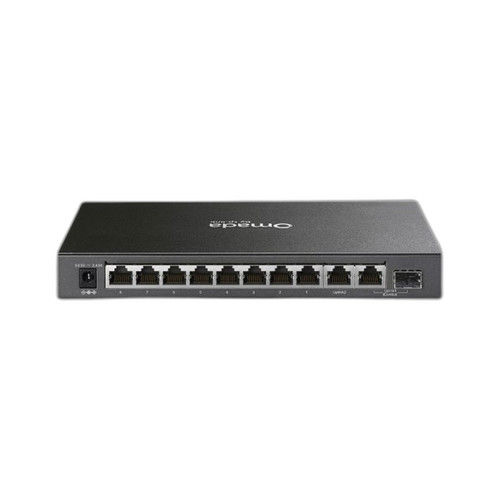
Both the TP-Link DS110GMP and the Transition Networks OCA-1BA1A0 are 10-port gigabit unmanaged switches, but they are engineered for fundamentally different deployment contexts. The DS110GMP targets indoor desktop or wall-mount installations with a full 8-port PoE+ budget of 123 W, purpose-built for powering IP cameras and access-control devices. The OCA-1BA1A0 is a hardened outdoor cabinet unit on DIN rail with single-mode fiber uplink, designed for industrial and telecom edge sites. This comparison examines PoE capability, mounting and environmental ratings, and fiber/uplink architecture across the two platforms.
In This Guide
- Which switch delivers the PoE power budget your edge devices actually need?
- Which switch survives the physical and environmental demands of your installation site?
- Which switch's uplink and backplane architecture fits your network topology?
- Which should you choose: the DS110GMP or the OCA-1BA1A0?
- Side-by-Side Specs
- FAQ
Which switch delivers the PoE power budget your edge devices actually need?
The DS110GMP provides 802.3at/af PoE+ on 8 of its 10 ports with a total budget of 123 W and a per-port maximum of 30 W. This supports simultaneous powering of multiple high-draw devices such as PTZ cameras, IP intercoms, or dual-band access points without an external injector or midspan. An Extend Mode stretches PoE reach to 250 m at reduced speed, useful for camera runs that exceed the standard 100 m copper limit.
The OCA-1BA1A0 specifications provided list no PoE capability, no PoE budget, and no per-port power figure. Buyers requiring powered endpoints at the switch port would need separate injectors or a PoE midspan, adding cost and cabinet space. If PoE is a hard requirement for the deployment, the OCA-1BA1A0 does not satisfy it based on the available specs.
Which switch survives the physical and environmental demands of your installation site?
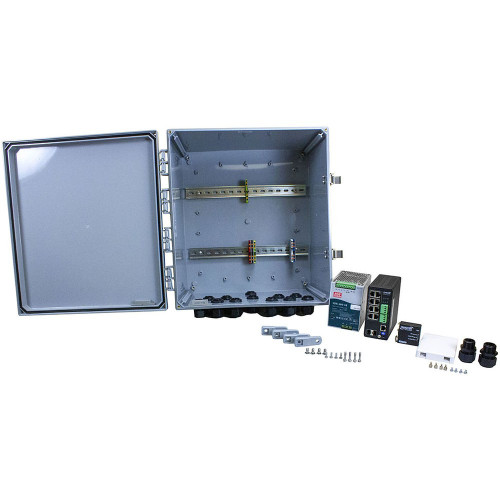
The OCA-1BA1A0 is rated for outdoor deployment, shipped with an outdoor cabinet assembly, and mounts on DIN rail — the standard form factor for industrial enclosures, traffic cabinets, and telecom huts. Its environmental class is described as hardened for industrial and telecom infrastructure. No specific operating temperature range is provided in the available specs, but the outdoor cabinet designation implies tolerance for conditions beyond typical commercial indoor ranges.
The DS110GMP is rated for indoor operation only, with an operating temperature range of 0 °C to 40 °C (32 °F to 104 °F) and storage down to -40 °C. It mounts to a wall or sits desktop. Deploying it in an uncontrolled outdoor environment — subject to condensation, dust, wide thermal swings, or direct weather exposure — would fall outside its rated operating envelope. Installers considering roadside, parking-structure, or utility-cabinet deployments must account for this limitation.
Which switch's uplink and backplane architecture fits your network topology?
The DS110GMP includes one combo SFP/RJ45 gigabit uplink slot, accepting either a copper RJ45 connection or a gigabit SFP transceiver (multimode or single-mode depending on the SFP module chosen). Its switching capacity is stated at 20 Gbps non-blocking. The combo slot provides flexibility but constitutes a single uplink path; no redundant uplink or stacking capability is listed in the provided specs.
The OCA-1BA1A0 specifies single-mode fiber support, which natively extends copper-equivalent gigabit links to distances well beyond 550 m (exact fiber port count and reach figures are not provided in the available specs). Single-mode is the dominant choice for outdoor campus runs, inter-building links, and utility infrastructure where runs can exceed several kilometers. Switching capacity, backplane speed, and forwarding rate figures are not provided for the OCA-1BA1A0 in the available specs.
Which should you choose: the DS110GMP or the OCA-1BA1A0?
Our take: The DS110GMP is the stronger choice when the installation is indoors, endpoints need switch-fed power, and budget is a primary constraint. It delivers 123 W of PoE+ across 8 ports, a 20 Gbps non-blocking backplane, and a combo SFP uplink — all confirmed in its specifications. The OCA-1BA1A0 is the appropriate choice when the switch must live in an outdoor or industrial cabinet on DIN rail with single-mode fiber uplinks, where the DS110GMP's 0 °C–40 °C indoor rating and desktop/wall form factor are disqualifying. Three concrete spec deltas: (1) PoE budget — 123 W vs. not specified; (2) operating environment — indoor-only vs. outdoor-rated cabinet; (3) mounting — wall/desktop vs. DIN rail. Buyers deploying at roadside enclosures, utility cabinets, or campus outdoor nodes should evaluate the OCA-1BA1A0; those equipping indoor IDF closets or office security rooms powering cameras and intercoms should specify the DS110GMP.
Side-by-Side Comparison
Spec-for-spec, from manufacturer data.
| Specification | TP-Link DS110GMP | Transition Networks OCA-1BA1A0 |
|---|---|---|
| Product Type | Desktop Managed Switch (Unmanaged) | Outdoor Cabinet Switch (Unmanaged) |
| Total Ports | 10 | 10 |
| Port Speed | 10/100/1000 Mbps | Gigabit |
| PoE Standard | 802.3af / 802.3at (PoE+) | — |
| PoE Ports | 8 | — |
| Total PoE Budget | 123 W | — |
| Max PoE per Port | 30 W | — |
| Uplink / Fiber | 1× combo SFP/RJ45 (Gigabit) | Single-mode fiber |
| Switching Capacity | 20 Gbps | — |
| Mount Type | Wall / Desktop | DIN Rail |
| Operating Environment | Indoor only | Outdoor (cabinet) |
| Operating Temp | 0 °C to 40 °C | Not specified |
| Storage Temp | -40 °C to 70 °C | — |
| Management | Unmanaged | Unmanaged |
| Extend Mode / Range | 250 m (Extend Mode) | — |
| Warranty | — | Lifetime |
Frequently Asked Questions
Which should you choose: the DS110GMP or the OCA-1BA1A0?
The DS110GMP is the stronger choice when the installation is indoors, endpoints need switch-fed power, and budget is a primary constraint. It delivers 123 W of PoE+ across 8 ports, a 20 Gbps non-blocking backplane, and a combo SFP uplink — all confirmed in its specifications. The OCA-1BA1A0 is the appropriate choice when the switch must live in an outdoor or industrial cabinet on DIN rail with single-mode fiber uplinks, where the DS110GMP's 0 °C–40 °C indoor rating and desktop/wall form factor are disqualifying. Three concrete spec deltas: (1) PoE budget — 123 W vs. not specified; (2) operating environment — indoor-only vs. outdoor-rated cabinet; (3) mounting — wall/desktop vs. DIN rail. Buyers deploying at roadside enclosures, utility cabinets, or campus outdoor nodes should evaluate the OCA-1BA1A0; those equipping indoor IDF closets or office security rooms powering cameras and intercoms should specify the DS110GMP.
Can the DS110GMP or OCA-1BA1A0 power IP cameras directly from the switch port?
Only the DS110GMP provides PoE+, with 123 W total and up to 30 W per port across 8 ports — sufficient to power most IP cameras, intercoms, and access readers without external injectors. The OCA-1BA1A0 specifications provided list no PoE capability; cameras connected to it would require separate power sources or midspan injectors.
Which switch is suitable for an outdoor traffic or utility cabinet installation?
The OCA-1BA1A0 is explicitly rated for outdoor deployment and ships with an outdoor cabinet assembly and DIN rail hardware, making it appropriate for roadside, parking, and utility-cabinet sites. The DS110GMP is rated only for 0 °C to 40 °C indoor environments; deploying it outdoors would exceed its rated operating conditions based on the provided specifications.
Does either switch support single-mode fiber uplinks for long-distance runs?
The OCA-1BA1A0 specifies single-mode fiber support, which enables gigabit links over distances that exceed copper and multimode limits — suitable for inter-building or campus runs. The DS110GMP includes one combo SFP/RJ45 slot; single-mode capability depends on the SFP transceiver module installed, which is not bundled in the listed package contents. The OCA-1BA1A0's fiber port count and maximum reach distance are not stated in the available specifications.
More Network Switch Comparisons
- TP-Link IES210GPP vs Transition Networks OCA-1AB201-NA
- TP-Link IES210GPP vs Transition Networks OCA-1BA1A0
- TP-Link IES210GPP vs Transition Networks OCA-1BA101
- TP-Link IES210GPP vs TP-Link DS110GMP
- TP-Link IES210GPP vs TP-Link SG1210PP
- TP-Link DS110GMP vs Transition Networks OCA-1AB201-NA
Network Switch Buying Guides
Get a Second Opinion on Your Camera Choice
Share your site layout, coverage goals, and budget. Our team will validate the camera selection, flag anything we would change, and recommend products that match the use case.