
TP-Link IES210GPP vs Transition Networks OCA-1BA101: Specification Comparison
Both the TP-Link IES210GPP and the Transition Networks OCA-1BA101 are 10-port gigabit industrial DIN-rail switches targeting cabinet, panel, and outdoor edge deployments. The IES210GPP adds managed PoE/PoE++ capability for powering IP cameras and other field devices; the OCA-1BA101 is an unmanaged, non-PoE unit with single-mode fiber support and a lifetime warranty. This comparison covers PoE power delivery and port architecture, environmental ruggedness, and management and integration — the three axes most relevant to installers choosing between these two platforms.
In This Guide
How do the port architecture and PoE power delivery compare?
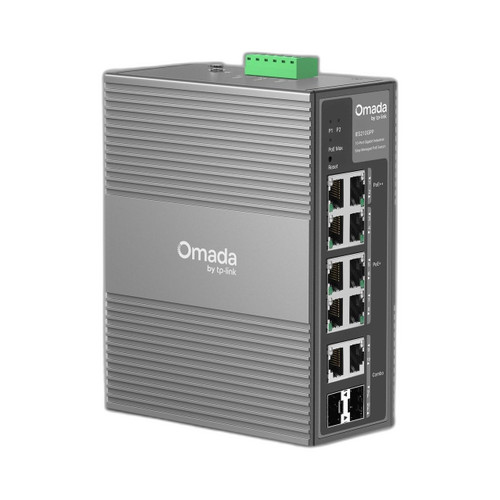
The IES210GPP provides 10 ports broken into 6× PoE+ RJ45 ports (802.3at, 30 W each), 2× PoE++ RJ45 ports (802.3bt, up to 95 W combined for those two ports), and 2× SFP combo uplink slots (1000BASE-X), with a total PoE budget of 240 W and a 20 Gbps switching fabric. It supports 802.3af/at/bt across its copper ports.
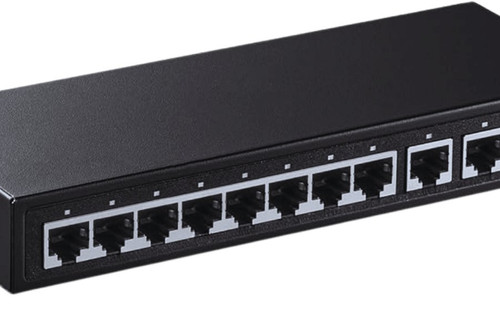
The OCA-1BA101 also has 10 gigabit ports, includes single-mode fiber connectivity for backbone extension, and is DIN-rail mountable — but it carries no PoE capability whatsoever and no SFP slot count is stated in the provided specifications.
For any deployment requiring power delivery to IP cameras, access control readers, intercoms, or wireless APs over copper, the IES210GPP is the only viable option of the two. The OCA-1BA101's single-mode fiber support is a genuine differentiator for long-haul backbone runs where ground-loop isolation matters, a feature the IES210GPP spec sheet does not address.
Which switch is better suited for harsh environmental conditions?
The IES210GPP is rated for an operating temperature range of -40 °C to 75 °C (-40 °F to 167 °F) and carries an IP40 ingress-protection rating, meaning it is protected against solid objects larger than 1 mm but not against dust or moisture. It also specifies ±6 kV surge protection in common mode on its Ethernet ports.
The OCA-1BA101 carries an 'Outdoor' environment rating in its provided specifications. However, no specific IP rating, operating temperature range, or surge/transient protection figures are included in the data provided for this model. The outdoor rating suggests suitability for exterior or harsh-environment cabinet installations, but the absence of a documented IP class or temperature window prevents a direct numeric comparison.
The IES210GPP's -40 °C floor and stated surge specification are verifiable, spec-sheet-confirmed figures. The OCA-1BA101's 'Outdoor' designation is noted but cannot be quantitatively benchmarked against the IES210GPP without manufacturer-provided temperature and protection data.
How do the two switches differ in management capability and system integration?
The IES210GPP is a fully managed switch with native integration into TP-Link's Omada SDN controller platform. This enables centralized policy management, VLAN configuration, QoS, port-level monitoring, and cloud or on-premises controller options — important for multi-site or enterprise physical-security deployments where per-port visibility and remote management reduce truck rolls.
The OCA-1BA101 is explicitly unmanaged (plug-and-play). There is no CLI, no web GUI, no VLAN support, and no controller integration specified. Installation requires no configuration, which reduces commissioning time and eliminates the need for network-trained personnel on site.
The OCA-1BA101 carries a lifetime warranty, a significant long-term support differentiator that is not matched by any warranty figure stated in the IES210GPP specifications provided. Buyers for whom longevity assurance outweighs management capability should weigh this explicitly.
Which should you choose: the IES210GPP or the OCA-1BA101?
Our take: The IES210GPP is the stronger choice when the deployment requires powering IP cameras or other PoE/PoE++ devices, centralized network management via Omada SDN, or documented surge protection on Ethernet ports. It delivers a 240 W PoE budget across 8 powered ports, a verified -40 °C to 75 °C operating range, and a 20 Gbps switching fabric — all spec-confirmed figures the OCA-1BA101 cannot match because it carries no PoE capability at all. Conversely, the OCA-1BA101 is the correct selection when single-mode fiber backbone connectivity is required for long-distance or ground-loop-isolated runs, when zero-configuration installation is a priority, or when a lifetime warranty is a procurement requirement — none of which the IES210GPP specifications address. Platform qualifier: the IES210GPP belongs in Omada-managed or PoE-camera-dense environments; the OCA-1BA101 suits fiber-extended, low-touch, or warranty-sensitive edge cabinets.
Side-by-Side Comparison
Spec-for-spec, from manufacturer data.
| Specification | TP-Link IES210GPP | Transition Networks OCA-1BA101 |
|---|---|---|
| Product Type | Industrial Managed PoE Switch | Industrial Unmanaged Switch |
| Total Ports | 10 | 10 |
| Port Speed | Gigabit (10/100/1000 Mbps) | Gigabit |
| PoE Support | Yes — 802.3af/at/bt | None specified |
| PoE Budget | 240 W | — |
| PoE+ Ports (30 W) | 6 | — |
| PoE++ Ports (95 W combined) | 2 | — |
| SFP / Fiber Uplink Slots | 2× SFP combo (1000BASE-X) | Single-mode fiber (port count not specified) |
| Switching Fabric | 20 Gbps | — |
| Management | Managed — Omada SDN | Unmanaged (plug-and-play) |
| Operating Temperature | -40 °C to 75 °C | Not specified in provided specs |
| IP Rating | IP40 | Not specified in provided specs |
| Environment Rating | Industrial | Outdoor |
| Surge Protection (Ethernet) | ±6 kV common mode | — |
| DIN Rail Mount | Yes | Yes |
| Warranty | Not stated in provided specs | Lifetime |
Frequently Asked Questions
Which should you choose: the IES210GPP or the OCA-1BA101?
The IES210GPP is the stronger choice when the deployment requires powering IP cameras or other PoE/PoE++ devices, centralized network management via Omada SDN, or documented surge protection on Ethernet ports. It delivers a 240 W PoE budget across 8 powered ports, a verified -40 °C to 75 °C operating range, and a 20 Gbps switching fabric — all spec-confirmed figures the OCA-1BA101 cannot match because it carries no PoE capability at all. Conversely, the OCA-1BA101 is the correct selection when single-mode fiber backbone connectivity is required for long-distance or ground-loop-isolated runs, when zero-configuration installation is a priority, or when a lifetime warranty is a procurement requirement — none of which the IES210GPP specifications address. Platform qualifier: the IES210GPP belongs in Omada-managed or PoE-camera-dense environments; the OCA-1BA101 suits fiber-extended, low-touch, or warranty-sensitive edge cabinets.
Can the IES210GPP or OCA-1BA101 power IP cameras directly?
Only the IES210GPP can power IP cameras. It provides 6 PoE+ ports at 30 W each and 2 PoE++ ports (802.3bt) with up to 95 W combined, against a 240 W total PoE budget. The OCA-1BA101 has no PoE capability specified — cameras on that switch would require separate power injectors or PoE mid-spans.
Which switch is better for a remote, unmanned cabinet where no one can reconfigure it on-site?
The OCA-1BA101 is better suited to that scenario. It is unmanaged and plug-and-play, requiring no initial configuration and no ongoing CLI or controller access. It also carries a lifetime warranty. The IES210GPP is managed and benefits from an Omada SDN controller, which adds value only if controller infrastructure and trained staff are available.
Does either switch support fiber uplinks for long-distance backbone runs?
The IES210GPP includes 2× SFP combo uplink slots supporting 1000BASE-X, which accommodates both single-mode and multi-mode SFP transceivers depending on the module installed. The OCA-1BA101 specifies single-mode fiber support. The IES210GPP's fiber capability depends on the transceiver selected; neither switch's datasheet specifies maximum fiber reach in the provided specifications.
More Network Switch Comparisons
- TP-Link IES210GPP vs Transition Networks OCA-1AB201-NA
- TP-Link IES210GPP vs Transition Networks OCA-1BA1A0
- TP-Link IES210GPP vs TP-Link DS110GMP
- TP-Link IES210GPP vs TP-Link SG1210PP
- TP-Link DS110GMP vs Transition Networks OCA-1AB201-NA
- TP-Link DS110GMP vs Transition Networks OCA-1BA1A0
Network Switch Buying Guides
Get a Second Opinion on Your Camera Choice
Share your site layout, coverage goals, and budget. Our team will validate the camera selection, flag anything we would change, and recommend products that match the use case.