
TP-Link SX6632YF vs Comnet CWG26F4T22M: Specification Comparison
Both the TP-Link SX6632YF and Comnet CWG26F4T22M are 26-port rack-mountable managed switches targeting commercial and enterprise LAN infrastructure. The SX6632YF is a high-throughput all-fiber stackable L3 aggregation switch built around 10G/25G SFP+ ports, while the CWG26F4T22M is a Gigabit copper-plus-fiber L2/L2+ managed switch with 22 RJ-45 copper ports and limited SFP uplinks. Buyers considering both are typically evaluating aggregation or backbone switching versus access-layer switching within a 26-port form factor.
In This Guide
- Which switch delivers higher port density and throughput for backbone or access-layer deployments?
- How do the two switches compare in physical build, power requirements, and operating environment tolerances?
- Which switch offers more advanced management, routing, and ecosystem integration capabilities?
- Which should you choose: the SX6632YF or the CWG26F4T22M?
- Side-by-Side Specs
- FAQ
Which switch delivers higher port density and throughput for backbone or access-layer deployments?
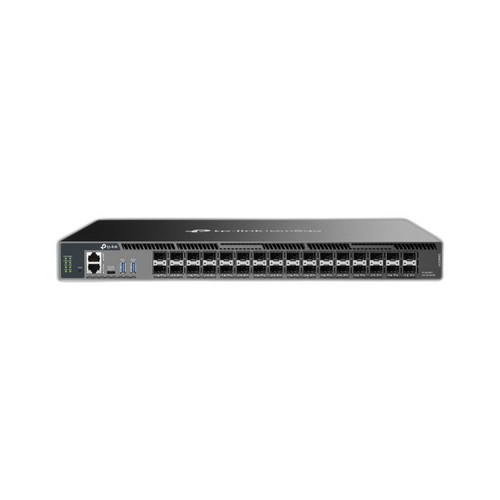
The SX6632YF provides 26×10G SFP+ ports plus 6×25G SFP28 uplink ports — all fiber — yielding a switching capacity of 820 Gbps on a non-blocking fabric. This positions it firmly as a spine or aggregation switch for high-density 10G environments.
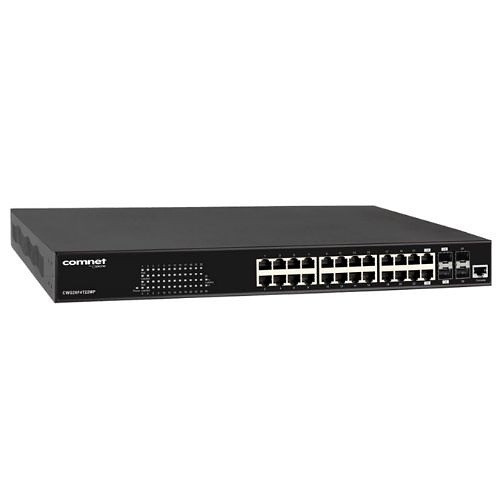
The CWG26F4T22M offers 22×10/100/1000 Mbps RJ-45 copper ports, 2×Combo RJ-45/SFP ports, and 2×SFP slots, with a switching bandwidth of 52 Gbps and a forwarding rate of 38.688 Mpps. This is a Gigabit access-layer profile with modest uplink capacity.
The throughput delta is decisive: 820 Gbps vs. 52 Gbps — a 15.8× difference. Buyers needing multi-gig inter-switch links or 10G edge connectivity should note the SX6632YF's port speed is 10–25× higher per port. The CWG26F4T22M's copper RJ-45 majority suits endpoint connections without requiring fiber NICs.
How do the two switches compare in physical build, power requirements, and operating environment tolerances?
The SX6632YF measures 440×380×44 mm (17.3×15.0×1.7 in) and accepts 100–240 V AC 50/60 Hz. Its operating temperature spec is listed as '&' in the provided data — this value is absent or corrupted and cannot be reported.
The CWG26F4T22M measures 342×431×44 mm (13.46×16.97×1.73 in) and also accepts 100–240 VAC 50/60 Hz. Maximum power consumption is specified at 25 W. Operating temperature is documented at 0°C to +50°C, storage at −20°C to +80°C, and humidity at 10–90% non-condensing.
Both are 1U 19-inch rack-mountable. The CWG26F4T22M carries explicit environmental certifications: mechanical shock (IEC60068-2-27), free fall (IEC60068-2-32), and vibration (IEC60068-2-6), plus EMI/EMS compliance (FCC Part 15 CISPR Class A, EN61000-4 series). These ruggedness certifications are absent from the SX6632YF spec set provided. The CWG26F4T22M is also TAA Compliant; no TAA status is listed for the SX6632YF.
Which switch offers more advanced management, routing, and ecosystem integration capabilities?
The SX6632YF is a Layer 3 managed switch with full dynamic routing: OSPF, RIPv2, VRRP, ECMP, PIM-SM/DM, ERPS, PBR, and static routing. It supports stacking of up to 9 units and integrates with TP-Link's Omada SDN controller. Management interfaces include CLI, SNMP v1/v2c/v3, and RMON. Storage is 2×4 MB NOR flash plus 8 GB eMMC, running a Quad-Core ARM processor at 1.2 GHz.
The CWG26F4T22M supports static routing only at L3, with redundancy via STP/RSTP/MSTP and link aggregation via LACP and static trunk. It supports up to 4,000 VLANs, an 8,000-entry MAC table, 8 priority queues per port, and jumbo frames up to 9.6 KB. No SDN controller, stacking, or dynamic routing protocols are listed in the provided specifications.
For network architects requiring dynamic routing, SDN management, or scalable stacking, the SX6632YF's protocol depth (OSPF, VRRP, PIM multicast) and Omada integration are materially more capable. The CWG26F4T22M's 4,000 VLAN capacity and 8 QoS queues are adequate for structured access-layer deployments where static routing suffices and SDN is not required.
Which should you choose: the SX6632YF or the CWG26F4T22M?
Our take: The SX6632YF is the stronger choice when the deployment requires high-throughput aggregation, dynamic routing, or a scalable 10G/25G fiber backbone. Its 820 Gbps switching fabric is 15.8× the CWG26F4T22M's 52 Gbps, and its L3 routing suite (OSPF, VRRP, PIM-SM/DM) far exceeds the CWG26F4T22M's static-route-only L3. Stacking up to 9 units and Omada SDN integration add operational scalability absent from the Comnet. Conversely, the CWG26F4T22M is the appropriate choice for copper-dominant access-layer wiring closets where endpoints connect via RJ-45, TAA compliance is required, ruggedness certifications (IEC60068-2 shock/vibration/free-fall) are contractually mandated, and a 25 W power draw is a design constraint. Note: the SX6632YF operating temperature spec was not valid in the provided data and could not be confirmed.
Side-by-Side Comparison
Spec-for-spec, from manufacturer data.
| Specification | TP-Link SX6632YF | Comnet CWG26F4T22M |
|---|---|---|
| Product Type | Stackable L3 Managed Aggregation Switch | L2/L2+ Managed Access Switch |
| Total Ports | 32 (26×10G SFP+ + 6×25G SFP28) | 26 (22×RJ-45 + 2×Combo RJ-45/SFP + 2×SFP) |
| Port Speed (Data) | 10G SFP+ / 25G SFP28 | 10/100/1000 Mbps (copper); 1G SFP |
| Copper RJ-45 Data Ports | — (none listed) | 22×10/100/1000 Mbps + 2×Combo |
| Switching Capacity | 820 Gbps | 52 Gbps |
| Forwarding Rate | — | 38.688 Mpps |
| Switching Latency | — | 7 µs |
| Layer 3 Routing | OSPF, RIPv2, VRRP, ECMP, PIM-SM/DM, PBR, Static | Static Route only |
| Stacking | Up to 9 units | — |
| Max VLANs | — | 4,000 |
| MAC Table Size | — | 8,000 entries |
| Management | CLI, SNMP v1/v2c/v3, RMON, Omada SDN | — |
| Redundancy Protocols | ERPS, RSTP/MSTP (implied) | STP, RSTP, MSTP |
| Power Supply Input | 100–240 V AC 50/60 Hz | 100–240 VAC 50/60 Hz |
| Max Power Consumption | — | 25 W |
| Operating Temperature | — (spec not valid in provided data) | 0°C to +50°C |
| Dimensions (W×D×H) | 440×380×44 mm | 342×431×44 mm |
| Weight | — | 5.9 kg (13.1 lbs) |
| TAA Compliant | — | Yes |
| Ruggedness Certifications | — | IEC60068-2-27 / -32 / -6 (shock/fall/vibration) |
Frequently Asked Questions
Which should you choose: the SX6632YF or the CWG26F4T22M?
The SX6632YF is the stronger choice when the deployment requires high-throughput aggregation, dynamic routing, or a scalable 10G/25G fiber backbone. Its 820 Gbps switching fabric is 15.8× the CWG26F4T22M's 52 Gbps, and its L3 routing suite (OSPF, VRRP, PIM-SM/DM) far exceeds the CWG26F4T22M's static-route-only L3. Stacking up to 9 units and Omada SDN integration add operational scalability absent from the Comnet. Conversely, the CWG26F4T22M is the appropriate choice for copper-dominant access-layer wiring closets where endpoints connect via RJ-45, TAA compliance is required, ruggedness certifications (IEC60068-2 shock/vibration/free-fall) are contractually mandated, and a 25 W power draw is a design constraint. Note: the SX6632YF operating temperature spec was not valid in the provided data and could not be confirmed.
Is the SX6632YF or CWG26F4T22M better for a larger multi-switch campus deployment?
The SX6632YF is better suited for larger deployments. It supports stacking up to 9 units under a single management plane and provides dynamic routing protocols (OSPF, VRRP, ECMP) needed for multi-site or multi-tier campus fabrics. The CWG26F4T22M does not list stacking capability or dynamic routing in its specifications, making it more appropriate as a standalone access-layer switch.
Which switch should I choose if most of my endpoints connect via copper Ethernet cables?
Choose the CWG26F4T22M. It provides 22×10/100/1000 Mbps RJ-45 copper ports plus 2 combo RJ-45/SFP ports, making it directly compatible with standard copper-cabled endpoints. The SX6632YF's 26 ports are all SFP+ fiber — it has no native copper RJ-45 data ports — so copper endpoints would require media converters or copper SFP transceivers.
Does either switch meet TAA compliance requirements for U.S. government or federally funded projects?
Only the CWG26F4T22M is listed as TAA Compliant in the provided specifications. No TAA compliance status is stated for the SX6632YF. Buyers with federal procurement requirements should verify TAA status directly with TP-Link before specifying the SX6632YF.
More Network Switch Comparisons
- TP-Link SX6632YF vs Comnet CWGE26FX2TX24MSPOE
- TP-Link SX6632YF vs Comnet CNGE26FX2TX24MSPOE2
- Comnet CWG26F4T22MP vs Comnet CWG26F4T22M
- Comnet CWG26F4T22MP vs Comnet CWGE26FX2TX24MSPOE
- Comnet CWG26F4T22M vs Comnet CWGE26FX2TX24MSPOE
- Comnet CNGE26FX2TX24MSPOE2 vs Comnet CWG26F4T22MP
Network Switch Buying Guides
Get a Second Opinion on Your Camera Choice
Share your site layout, coverage goals, and budget. Our team will validate the camera selection, flag anything we would change, and recommend products that match the use case.