
TP-Link SG3218XP-M2 vs Ubiquiti USW-PRO-MAX-16: Specification Comparison
The TP-Link SG3218XP-M2 and Ubiquiti USW-PRO-MAX-16 are both 16-port L2+ managed switches targeting small-to-midsize deployments requiring centralized management. The SG3218XP-M2 adds 2.5GBASE-T per-access-port speed, multi-gigabit uplinks, and an integrated PoE++ budget, while the USW-PRO-MAX-16 prioritizes compact power draw and NDAA compliance within the UniFi ecosystem at standard Gigabit access speeds. This comparison evaluates port throughput, PoE capability, and management and compliance fit.
In This Guide
- Which switch delivers higher port speeds and overall switching throughput?
- Which switch can power more or higher-wattage PoE devices?
- Which switch better fits enterprise management requirements, regulatory compliance, and physical deployment conditions?
- Which should you choose: the SG3218XP-M2 or the USW-PRO-MAX-16?
- Side-by-Side Specs
- FAQ
Which switch delivers higher port speeds and overall switching throughput?
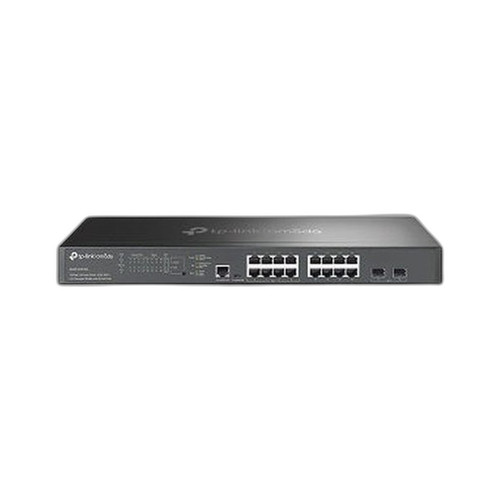
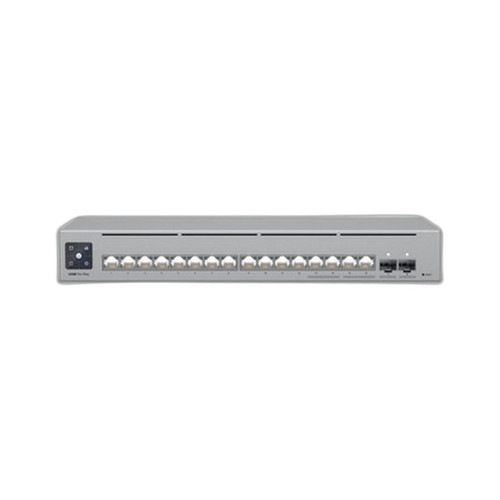
The SG3218XP-M2 provides 16 access ports running at 2.5GBASE-T (2.5 Gbps per port) plus 2 × 10G SFP+ fiber uplinks, yielding a total switching capacity of 80 Gbps. The USW-PRO-MAX-16 provides 16 access ports at 1 Gbps each with a switching capacity of 84 Gbps and a stated forwarding rate of 62 Mpps; no forwarding rate figure is given for the SG3218XP-M2.
On a per-port basis the SG3218XP-M2 delivers 2.5× more bandwidth to each edge device (2.5 Gbps vs. 1 Gbps), which matters for multi-gig Wi-Fi 6/6E APs, NVRs pulling simultaneous high-res streams, or workstations with 2.5G NICs. The USW-PRO-MAX-16's aggregate switching capacity (84 Gbps) slightly exceeds the SG3218XP-M2 (80 Gbps), though both figures are well above the sum of their physical port capacities.
The SG3218XP-M2's 2 × 10G SFP+ uplinks allow high-bandwidth aggregation to a core switch. The USW-PRO-MAX-16 specs provided do not list dedicated uplink ports beyond the 16 × 1G ports.
Which switch can power more or higher-wattage PoE devices?
The SG3218XP-M2 supports 802.3af (15.4 W), 802.3at (30 W), and 802.3bt / PoE++ (60 W) on 8 of its 16 ports, with a total PoE power budget of 240 W. This budget is large enough to simultaneously power eight 30 W 802.3at cameras or a mix of PoE++ devices such as pan-tilt cameras, high-power APs, or door-controller panels.
The USW-PRO-MAX-16 specs provided do not list any PoE capability. Buyers who need to power IP cameras, access control readers, intercoms, or wireless APs directly from the switch must factor in external PoE injectors or a separate PoE switch when choosing the USW-PRO-MAX-16, adding cost and rack space.
For surveillance or access-control deployments where edge devices draw power over Ethernet, the SG3218XP-M2's 240 W PoE++ budget is a significant differentiator. The USW-PRO-MAX-16 is better suited to environments where all edge devices have their own power sources.
Which switch better fits enterprise management requirements, regulatory compliance, and physical deployment conditions?
The SG3218XP-M2 is managed via CLI, SNMP v1/v2c/v3, and RMON within the Omada SDN ecosystem. It supports Static Routing, VLAN, QoS, ACL, and STP/RSTP/MSTP, classifying it as L2+. Flash storage is 32 MB. Operating temperature range is 0°C to 50°C. NDAA Section 889 compliance is not stated in the provided specifications.
The USW-PRO-MAX-16 is managed through the UniFi controller platform. It holds certifications for NDAA Section 889, CE, FCC, IC, and Anatel — making it explicitly compliant for U.S. federal and government-adjacent deployments where NDAA compliance is required. Its operating temperature range is −5°C to 40°C, 5°C cooler on the low end but 10°C lower on the upper limit than the SG3218XP-M2.
The USW-PRO-MAX-16 consumes only 25 W total system power versus the SG3218XP-M2's 240 W (which includes PoE delivery). Its SGCC steel enclosure and external low-voltage power adapter (4.8–5.2 V DC) may present installation constraints in environments that lack a suitable adapter. The SG3218XP-M2 accepts standard 100–240 V AC directly. Management platform lock-in is a real consideration: the SG3218XP-M2 requires Omada controllers; the USW-PRO-MAX-16 requires UniFi controllers.
Which should you choose: the SG3218XP-M2 or the USW-PRO-MAX-16?
Our take: The SG3218XP-M2 is the stronger choice when the deployment requires multi-gigabit access speeds, integrated PoE++ power delivery, or a wider operating temperature ceiling. Concretely: it delivers 2.5 Gbps per access port versus 1 Gbps on the USW-PRO-MAX-16 — a 2.5× edge-speed advantage; it supplies 240 W of PoE++ budget across 8 ports while the USW-PRO-MAX-16 lists no PoE capability; and it operates up to 50°C versus 40°C, a meaningful margin in warmer IDF closets or outdoor-rated enclosures. Conversely, the USW-PRO-MAX-16 is the correct choice for organizations with a NDAA Section 889 mandate — a compliance status the SG3218XP-M2 does not confirm — and for UniFi-standardized environments where a single-pane-of-glass controller is already in place. Its 25 W system draw also makes it far more energy-efficient for non-PoE use cases.
Side-by-Side Comparison
Spec-for-spec, from manufacturer data.
| Specification | TP-Link SG3218XP-M2 | Ubiquiti USW-PRO-MAX-16 |
|---|---|---|
| Access Ports | 16 × 2.5GBASE-T RJ45 | 16 × 1 Gbps Ethernet |
| Uplink Ports | 2 × 10G SFP+ | — |
| Switching Capacity | 80 Gbps | 84 Gbps |
| Forwarding Rate | — | 62 Mpps |
| PoE Standard | 802.3af/at/bt (PoE++) | — |
| PoE-Capable Ports | 8 of 16 | — |
| Total PoE Budget | 240 W | — |
| System Power Draw | 240 W (max) | 25 W |
| Power Input | 100–240 V AC, 50/60 Hz | 4.8–5.2 V DC / AC adapter |
| Management | L2+ CLI, SNMP v1/v2c/v3, RMON, Omada SDN | UniFi controller (Ethernet managed) |
| NDAA Section 889 | Not stated | Compliant |
| Operating Temp | 0°C to 50°C | −5°C to 40°C |
| Dimensions (mm) | 294 × 180 × 44 | 325.1 × 160 × 43.7 |
| Weight | — | 1.95 kg (4.3 lb) |
| Enclosure | Rack-mount | SGCC steel |
| Certifications | — | CE, FCC, IC, Anatel, NDAA §889 |
Frequently Asked Questions
Which should you choose: the SG3218XP-M2 or the USW-PRO-MAX-16?
The SG3218XP-M2 is the stronger choice when the deployment requires multi-gigabit access speeds, integrated PoE++ power delivery, or a wider operating temperature ceiling. Concretely: it delivers 2.5 Gbps per access port versus 1 Gbps on the USW-PRO-MAX-16 — a 2.5× edge-speed advantage; it supplies 240 W of PoE++ budget across 8 ports while the USW-PRO-MAX-16 lists no PoE capability; and it operates up to 50°C versus 40°C, a meaningful margin in warmer IDF closets or outdoor-rated enclosures. Conversely, the USW-PRO-MAX-16 is the correct choice for organizations with a NDAA Section 889 mandate — a compliance status the SG3218XP-M2 does not confirm — and for UniFi-standardized environments where a single-pane-of-glass controller is already in place. Its 25 W system draw also makes it far more energy-efficient for non-PoE use cases.
Can the SG3218XP-M2 power IP cameras directly, and how many can it handle?
Yes. The SG3218XP-M2 supports PoE++ (802.3af/at/bt) on 8 of its 16 ports with a shared 240 W budget. At 802.3at (30 W each) it can fully power up to 8 cameras simultaneously; at 802.3af (15.4 W each) it can power all 8 PoE ports at once with budget to spare. The USW-PRO-MAX-16 does not list PoE in its specifications.
Is either switch approved for use in U.S. federal or government-funded projects requiring NDAA Section 889 compliance?
The USW-PRO-MAX-16 is explicitly listed as NDAA Section 889 compliant in its specifications. The SG3218XP-M2's specifications do not state NDAA compliance. Buyers with a federal, state, or municipal NDAA requirement should verify TP-Link's current compliance status independently before specifying the SG3218XP-M2.
Do these switches require proprietary controllers or can they be managed standalone?
The SG3218XP-M2 supports standalone CLI and SNMP management without a controller, though Omada SDN controller software is available for centralized management. The USW-PRO-MAX-16 is part of the UniFi ecosystem; its specifications do not describe standalone CLI access, and full-featured management typically requires a UniFi Network controller. Buyers standardized on neither platform should weigh controller licensing and infrastructure costs.
More Network Switch Comparisons
- TP-Link SG3218XP-M2 vs TP-Link DS1016G
- TP-Link SG3218XP-M2 vs TP-Link SG2218
- TP-Link DS1016G vs Ubiquiti USW-PRO-MAX-16
- TP-Link DS1016G vs TP-Link SG2218
- TP-Link SG2218 vs Ubiquiti USW-PRO-MAX-16
- Ubiquiti USW-PRO-MAX-16 vs TP-Link DS1016GE
Network Switch Buying Guides
Get a Second Opinion on Your Camera Choice
Share your site layout, coverage goals, and budget. Our team will validate the camera selection, flag anything we would change, and recommend products that match the use case.