
TP-Link DS1016G vs TP-Link SG2218: Specification Comparison
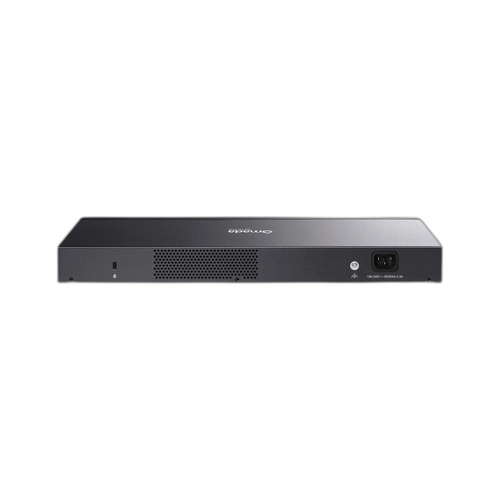
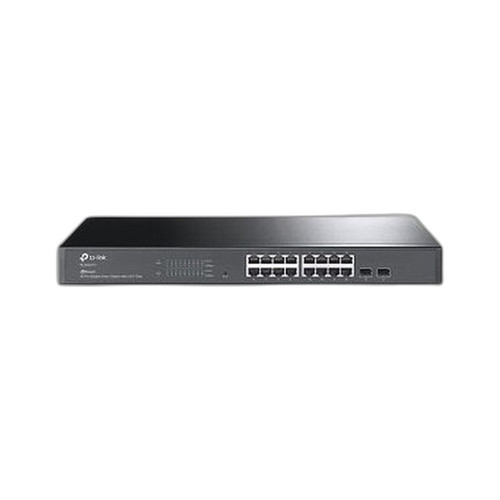
Both the TP-Link DS1016G and TL-SG2218 are 16-port gigabit Ethernet switches in rack-mountable form factors, making them cross-shoppable by installers building out camera or general-purpose IP networks. The critical divergence is management tier: the DS1016G is an unmanaged plug-and-play device, while the TL-SG2218 is a smart-managed switch with VLAN, QoS, and SFP uplink capability. Buyers choosing between them are weighing simplicity and cost against control, uplink flexibility, and network segmentation — a genuine trade-off in small-to-mid-scale security deployments.
In This Guide
- Which switch delivers more usable port density and throughput for a 16-camera or mixed-endpoint deployment?
- How do the two switches compare on power architecture, PoE capability, and operating environment?
- What level of network control and platform integration does each switch offer?
- Which should you choose: the DS1016G or the SG2218?
- Side-by-Side Specs
- FAQ
Which switch delivers more usable port density and throughput for a 16-camera or mixed-endpoint deployment?
Both switches provide 16 × 10/100/1000 Mbps RJ45 ports, so raw copper port count is identical. The DS1016G, however, posts a switching capacity of 32 Gbps against the TL-SG2218's 20 Gbps (the highest figure cited across the TL-SG2218's inconsistent spec entries of 16/16/20 Gbps). The DS1016G also specifies a forwarding rate of 23.8 Mpps, a figure absent from the TL-SG2218's provided specs. The TL-SG2218 adds two SFP uplink slots supporting both single-mode and multi-mode fiber transceivers (sold separately), giving it a path to fiber backbone aggregation that the DS1016G entirely lacks. For a flat, self-contained camera LAN, the DS1016G's higher switching capacity is adequate; for tiered architectures requiring fiber uplinks to an aggregation switch, the TL-SG2218's SFP slots are the deciding factor.
How do the two switches compare on power architecture, PoE capability, and operating environment?
The DS1016G draws power from a universal AC input (100–240 VAC, 50/60 Hz) with a measured consumption of 10.68 W at 220 V/50 Hz, and it provides no PoE output — cameras or APs on this switch require separate injectors or PoE switches downstream. Its operating temperature range is 0 °C to 40 °C with storage rated to −40 °C/70 °C. The TL-SG2218 is powered by an external DC adapter (53.5 VDC / 1.31 A per spec), which differs from the '5V DC' entry also present in the spec set — those two values are contradictory and neither should be relied upon without consulting the current datasheet. The TL-SG2218 spec lists PoE support (802.3af/at) with a budget cited variously as 61 W and 62 W; however, given the inconsistency in multiple spec fields for this model, buyers should verify PoE capability and budget against the manufacturer's current datasheet before specifying. Operating temperature for the TL-SG2218 is not stated in the provided specs.
What level of network control and platform integration does each switch offer?
The DS1016G is explicitly unmanaged (plug-and-play), offering two notable layer-2 features per spec: Isolation Mode (limiting traffic between ports 1–14) and Loop Prevention across all ports. It maintains an 8K MAC address table. There is no VLAN, QoS, SNMP, or remote management capability. The TL-SG2218 is a smart-managed switch in TP-Link's JetStream/Omada line, meaning it supports centralized management — though the specific management platform (Omada SDN Controller, web GUI, or CLI) is not confirmed in the provided specs. VLAN, QoS, and traffic-shaping features typical of the JetStream tier are not enumerated in the provided spec data and cannot be confirmed here. The DS1016G's Omada branding in its product name suggests potential Omada ecosystem compatibility, but no management features are listed in the provided specs, so this cannot be stated as fact.
Which should you choose: the DS1016G or the SG2218?
Our take: The DS1016G is the stronger choice when a buyer needs a high-throughput, zero-configuration gigabit switch for a flat, dedicated camera LAN with no segmentation requirements. Its 32 Gbps switching capacity exceeds the TL-SG2218's spec-cited maximum of 20 Gbps, and its 23.8 Mpps forwarding rate is a concrete throughput figure the TL-SG2218 specs do not provide. It draws from a universal AC supply at only 10.68 W, simplifying installation. The TL-SG2218 is the stronger choice when the deployment requires smart management (VLAN segmentation, QoS prioritization, or remote monitoring), fiber uplinks via its 2 SFP slots, or potential PoE delivery — capabilities entirely absent on the DS1016G. Note that multiple TL-SG2218 spec fields (switching capacity, power input, PoE budget, dimensions) contain contradictory values; buyers should obtain and cross-check the current manufacturer datasheet before finalizing any PoE or power-budget calculation.
Side-by-Side Comparison
Spec-for-spec, from manufacturer data.
| Specification | TP-Link DS1016G | TP-Link SG2218 |
|---|---|---|
| Product Type | Unmanaged Gigabit Switch | Smart Managed Gigabit Switch |
| RJ45 Ports | 16 × 10/100/1000 Mbps | 16 × 10/100/1000 Mbps |
| SFP Uplink Slots | — | 2 |
| Fiber Support | — | Single-mode and multi-mode (transceivers sold separately) |
| Switching Capacity | 32 Gbps | 20 Gbps (highest cited; spec inconsistent) |
| Forwarding Rate | 23.8 Mpps | — |
| MAC Address Table | 8K | — |
| Management | Plug-and-play (unmanaged) | Smart managed |
| PoE Support | None | 802.3af/at (spec inconsistent; verify datasheet) |
| PoE Budget | — | 61–62 W (spec inconsistent) |
| Power Input | 100–240 VAC, 50/60 Hz | 53.5 VDC / 1.31 A external adapter (spec inconsistent) |
| Power Consumption | 10.68 W (220 V / 50 Hz) | — |
| Operating Temp | 0 °C to 40 °C | — |
| Storage Temp | −40 °C to 70 °C | — |
| Mount Type | Rack | Wall; Rack |
| Certifications | CE, FCC, RoHS | — |
Frequently Asked Questions
Which should you choose: the DS1016G or the SG2218?
The DS1016G is the stronger choice when a buyer needs a high-throughput, zero-configuration gigabit switch for a flat, dedicated camera LAN with no segmentation requirements. Its 32 Gbps switching capacity exceeds the TL-SG2218's spec-cited maximum of 20 Gbps, and its 23.8 Mpps forwarding rate is a concrete throughput figure the TL-SG2218 specs do not provide. It draws from a universal AC supply at only 10.68 W, simplifying installation. The TL-SG2218 is the stronger choice when the deployment requires smart management (VLAN segmentation, QoS prioritization, or remote monitoring), fiber uplinks via its 2 SFP slots, or potential PoE delivery — capabilities entirely absent on the DS1016G. Note that multiple TL-SG2218 spec fields (switching capacity, power input, PoE budget, dimensions) contain contradictory values; buyers should obtain and cross-check the current manufacturer datasheet before finalizing any PoE or power-budget calculation.
Can either switch power IP cameras directly without a separate PoE injector?
Based on the provided specs, only the TL-SG2218 lists PoE support (802.3af/at with a budget cited as 61–62 W). The DS1016G has no PoE capability per its specs — cameras connected to it would require separate PoE injectors or a PoE-capable switch upstream. However, the TL-SG2218's PoE figures appear in inconsistent entries; confirm against the current manufacturer datasheet before relying on them for system design.
Is either switch manageable, and does that matter for a security camera network?
The DS1016G is unmanaged — no VLANs, no QoS, no remote access. The TL-SG2218 is smart-managed, supporting centralized configuration (specific platform not confirmed in provided specs). For simple, dedicated camera LANs with a single subnet, an unmanaged switch is often sufficient. For mixed networks, multi-VLAN segmentation between cameras and corporate traffic, or deployments requiring QoS to prioritize camera streams, the TL-SG2218's managed capability is the relevant differentiator.
Which switch is better suited if I need to uplink to a fiber backbone?
The TL-SG2218 includes 2 SFP slots supporting both single-mode and multi-mode fiber transceivers (transceivers sold separately), enabling fiber uplinks to an aggregation or core switch. The DS1016G provides only RJ45 copper ports with a maximum cable run of 100 m (UTP) and has no SFP or fiber uplink capability. For any deployment requiring fiber interconnects, the TL-SG2218 is the only viable choice between these two models.
More Network Switch Comparisons
- TP-Link SG3218XP-M2 vs Ubiquiti USW-PRO-MAX-16
- TP-Link SG3218XP-M2 vs TP-Link DS1016G
- TP-Link SG3218XP-M2 vs TP-Link SG2218
- TP-Link DS1016G vs Ubiquiti USW-PRO-MAX-16
- TP-Link SG2218 vs Ubiquiti USW-PRO-MAX-16
- Ubiquiti USW-PRO-MAX-16 vs TP-Link DS1016GE
Network Switch Buying Guides
Get a Second Opinion on Your Camera Choice
Share your site layout, coverage goals, and budget. Our team will validate the camera selection, flag anything we would change, and recommend products that match the use case.