
TP-Link SG3210XHP-M2 vs TP-Link S4500-8GP2F: Specification Comparison
Both the TP-Link SG3210XHP-M2 and S4500-8GP2F are 8-port PoE managed switches from TP-Link's Omada ecosystem, making them direct cross-shop candidates for IP camera installers and small-to-mid network deployments. The comparison centers on three axes that matter most in this class: PoE power delivery and per-port wattage, uplink speed and switching capacity, and management depth and mounting flexibility. Specs for both products are drawn from TP-Link's own published datasheets.
In This Guide
- Which switch delivers more PoE power, and does per-port wattage matter for your cameras?
- How do switching capacity and uplink speed compare between these two switches?
- What management features and physical deployment options does each switch offer?
- Which should you choose: the SG3210XHP-M2 or the S4500-8GP2F?
- Side-by-Side Specs
- FAQ
Which switch delivers more PoE power, and does per-port wattage matter for your cameras?
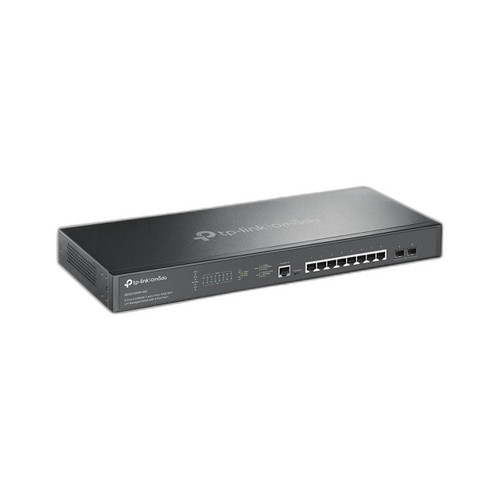
The SG3210XHP-M2 carries a 240 W PoE budget governed by 802.3bt (PoE++), which allows up to 90 W on a single port. Its eight data ports run at 2.5GBASE-T and are backward-compatible with 1G and 100M devices. This headroom supports power-hungry endpoints such as PTZ cameras, multi-sensor domes, access control panels with heaters, and Wi-Fi 6 APs without splitting budget across an external injector.
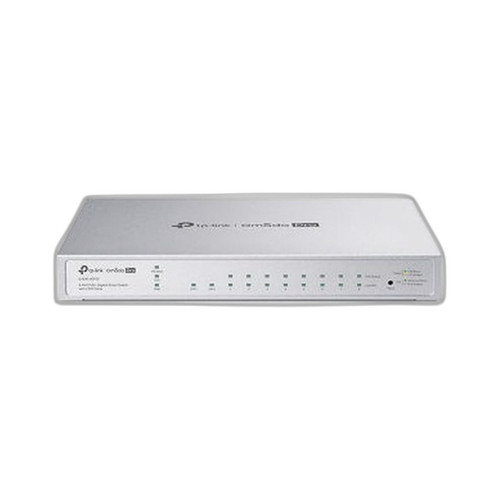
The S4500-8GP2F operates at a published PoE budget of 58 W under 802.3at (PoE+), with a per-port ceiling of 30 W. Its eight ports are standard Gigabit (1GBASE-T). For a typical 8-camera install where each fixed dome draws 12–15 W, the 58 W budget constrains simultaneous full-load use; a thermal dome or a PTZ that draws 25–30 W leaves little margin for the remaining ports. The power supply is an external 53.5 VDC/1.31 A adapter, not an internal AC unit.
How do switching capacity and uplink speed compare between these two switches?
The SG3210XHP-M2 provides 80 Gbps of switching capacity with two 10G SFP+ uplink slots. In a VMS or NVR-aggregation scenario, these uplinks allow full non-blocking throughput of 2.5G across all eight access ports simultaneously while leaving 60 Gbps of headroom on the fabric.
The S4500-8GP2F is specified at 16 Gbps switching capacity with two SFP uplink slots (fiber type listed as single-mode in the spec data; uplink speed is not explicitly stated beyond the 16 Gbps fabric figure). The S4500-8GP2F's Gigabit access ports max out at 1 Gbps per port, and the 16 Gbps fabric is sufficient for non-blocking 1G traffic across all eight ports. No 10G uplink speed is confirmed in the provided specifications.
What management features and physical deployment options does each switch offer?
The SG3210XHP-M2 is classified as an L2+ managed switch supporting CLI, SNMP v1/v2c/v3, RMON, 802.1x with RADIUS/TACACS+, VLAN, QoS, ACL, STP/RSTP/MSTP, IGMP snooping, LACP, and static routing. It is rack-mountable in a 1U form factor (440 × 180 × 44 mm) and fits standard 19-inch enclosures. Memory is 32 MB. Operating temperature is 0 °C to 50 °C.
The S4500-8GP2F is designated a 'Smart PoE+' switch (not L2+), with management features including SNMP Trap/Inform and EEE (Energy Efficient Ethernet). It supports both wall and rack mounting (11.6 × 7.1 × 1.7 in), making it more flexible for smaller or distributed installs without a rack. Memory is also 32 MB. A maximum range figure of 64 m is listed in the spec data, though context for this value is not further elaborated in the provided specifications. Static routing capability is not listed for the S4500-8GP2F.
Which should you choose: the SG3210XHP-M2 or the S4500-8GP2F?
Our take: The SG3210XHP-M2 is the stronger choice when powering high-wattage endpoints, aggregating to a 10G core, or requiring full L2+ management controls. Its 240 W PoE++ budget is 4.1× the S4500-8GP2F's 58 W, its 80 Gbps switching fabric is 5× larger, and its 10G SFP+ uplinks versus the S4500-8GP2F's unconfirmed-speed SFP slots represent a meaningful throughput advantage for NVR or VMS uplinks. The S4500-8GP2F is appropriate for cost-sensitive, low-density fixed-camera installs where standard Gigabit access, 30 W-per-port PoE+, and flexible wall or rack mounting are sufficient—particularly in locations without a rack enclosure. Buyers standardized on Omada Pro management should note the S4500-8GP2F sits in the Omada Pro sub-line while the SG3210XHP-M2 is standard Omada; verify controller compatibility before deploying both on the same management plane.
Side-by-Side Comparison
Spec-for-spec, from manufacturer data.
| Specification | TP-Link SG3210XHP-M2 | TP-Link S4500-8GP2F |
|---|---|---|
| PoE Standard | 802.3bt (PoE++) | 802.3at (PoE+) |
| PoE Budget | 240 W | 58 W |
| Max PoE per Port | 90 W (802.3bt) | 30 W (802.3at) |
| Access Port Speed | 2.5GBASE-T | 1GBASE-T (Gigabit) |
| Number of Access Ports | 8 | 8 |
| Uplink Slots | 2 × 10G SFP+ | 2 × SFP (speed not specified in provided specs) |
| Switching Capacity | 80 Gbps | 16 Gbps |
| Management Level | L2+ Managed (CLI, SNMP v1/v2c/v3) | Smart Managed (SNMP Trap/Inform) |
| Static Routing | Yes | — |
| 802.1x / RADIUS / TACACS+ | Yes | — |
| Power Supply | 100–240 V AC internal | 53.5 VDC / 1.31 A external adapter |
| Mount Type | Rack | Wall and Rack |
| Dimensions | 440 × 180 × 44 mm | 294.6 × 180 × 43.2 mm (11.6 × 7.1 × 1.7 in) |
| Memory | 32 MB | 32 MB |
| Operating Temperature | 0 °C to 50 °C | — |
| Omada Sub-line | Omada | Omada Pro |
Frequently Asked Questions
Which should you choose: the SG3210XHP-M2 or the S4500-8GP2F?
The SG3210XHP-M2 is the stronger choice when powering high-wattage endpoints, aggregating to a 10G core, or requiring full L2+ management controls. Its 240 W PoE++ budget is 4.1× the S4500-8GP2F's 58 W, its 80 Gbps switching fabric is 5× larger, and its 10G SFP+ uplinks versus the S4500-8GP2F's unconfirmed-speed SFP slots represent a meaningful throughput advantage for NVR or VMS uplinks. The S4500-8GP2F is appropriate for cost-sensitive, low-density fixed-camera installs where standard Gigabit access, 30 W-per-port PoE+, and flexible wall or rack mounting are sufficient—particularly in locations without a rack enclosure. Buyers standardized on Omada Pro management should note the S4500-8GP2F sits in the Omada Pro sub-line while the SG3210XHP-M2 is standard Omada; verify controller compatibility before deploying both on the same management plane.
Can either switch power a PTZ camera or a heater-equipped dome that draws more than 30 W?
Only the SG3210XHP-M2 can. It supports 802.3bt (PoE++) at up to 90 W per port. The S4500-8GP2F is limited to 802.3at (PoE+) at a maximum of 30 W per port, which would not be sufficient for endpoints exceeding that threshold.
Which switch is better suited for a wall-mount install without a rack enclosure?
The S4500-8GP2F lists both wall and rack mounting options. The SG3210XHP-M2 specifies rack mounting only in the provided specifications, so it is not confirmed for wall mounting.
Do both switches support SNMP and enterprise-grade access control like 802.1x?
The SG3210XHP-M2 explicitly supports SNMP v1/v2c/v3, RMON, and 802.1x with RADIUS/TACACS+. The S4500-8GP2F lists SNMP Trap/Inform but 802.1x and RADIUS/TACACS+ support are not stated in the provided specifications.
More Network Switch Comparisons
- Vivotek IHT-1271 vs TP-Link SG3210XHP-M2
- Vivotek IHT-1271 vs TP-Link S4500-8GP2F
- Vivotek IHT-1271 vs TP-Link SG1210P
- Vivotek IHT-1271 vs Allied Telesis AT-x530L-10GHXm-10
- Vivotek IHT-1271 vs Vivotek GEV-108A-130
- Vivotek IHT-1271 vs Vivotek IHT-1000
Network Switch Buying Guides
Get a Second Opinion on Your Camera Choice
Share your site layout, coverage goals, and budget. Our team will validate the camera selection, flag anything we would change, and recommend products that match the use case.