
TP-Link SG3210X-M2 vs Ubiquiti USW-FLEX-2.5G-8: Specification Comparison
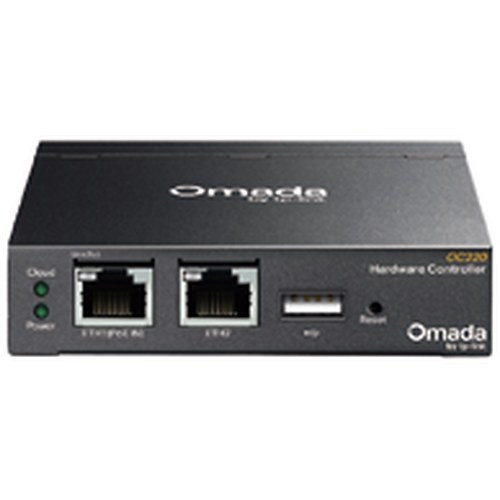
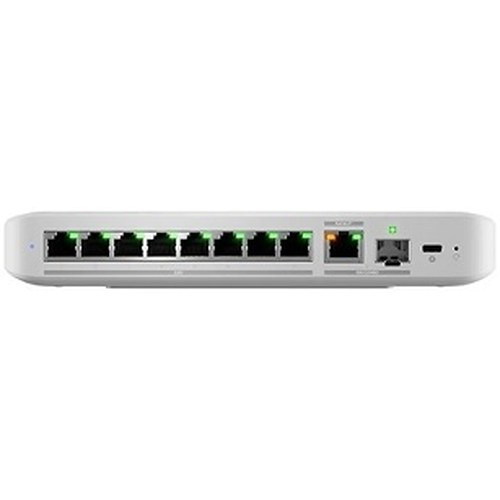
The TP-Link SG3210X-M2 and Ubiquiti USW-FLEX-2.5G-8 are both 8-port 2.5GbE managed switches with a single 10G uplink, targeting the same edge-aggregation and high-density camera-cluster use case. Both are non-PoE-output devices (the Ubiquiti accepts PoE+ as a power input but does not pass PoE to downstream ports per provided specs). This comparison examines switching capacity and throughput, physical form factor and operating environment, and management ecosystem and feature depth — the three axes most relevant to installers selecting a 2.5GbE access switch.
In This Guide
- Which switch delivers more switching capacity and forwarding performance?
- How do these switches compare on physical design, power requirements, and operating environment?
- Which switch offers broader management features and ecosystem integration?
- Which should you choose: the SG3210X-M2 or the USW-FLEX-2.5G-8?
- Side-by-Side Specs
- FAQ
Which switch delivers more switching capacity and forwarding performance?
The TP-Link SG3210X-M2 is specified at 80 Gbps switching capacity and 59.52 Mpps forwarding rate. It provides 8 × 2.5GBASE-T RJ45 copper ports plus 2 × 10G SFP+ uplink slots, yielding a maximum aggregate of 40 Gbps on copper plus 20 Gbps on fiber uplinks.
The Ubiquiti USW-FLEX-2.5G-8 is specified at 60 Gbps switching capacity and 45 Mpps forwarding rate, with a stated non-blocking throughput of 30 Gbps. It provides 8 × 2.5GbE ports plus 1 hybrid 10G uplink port (RJ45 or SFP+) — one fewer uplink slot than the TP-Link.
On paper the SG3210X-M2 holds a 33% advantage in switching capacity (80 vs 60 Gbps) and a 32% advantage in forwarding rate (59.52 vs 45 Mpps), and adds a second 10G uplink path. Buyers who need dual uplinks for redundancy or inter-switch stacking will find only the TP-Link provides that in spec.
How do these switches compare on physical design, power requirements, and operating environment?
The TP-Link SG3210X-M2 measures 294 × 180 × 44 mm (11.6 × 7.1 × 1.7 in) and is rack-mountable (1U) as well as wall- and ceiling-mountable. It draws up to 15.3 W maximum from a standard 100–240 V AC mains supply. Operating temperature is −5 °C to +50 °C. MTBF is specified at 340,091 hours at 25 °C. Memory is 32 MB Flash and 256 MB DRAM.
The Ubiquiti USW-FLEX-2.5G-8 measures 212.9 × 76 × 33.5 mm and weighs 395 g. Its polycarbonate enclosure mounts on a wall, DIN rail, or magnetic surface — but is not rack-mountable per provided specs. Power is supplied via USB-C 5V/3A (external 15 W adapter) or PoE+ input; maximum consumption is 14 W. Operating temperature is −20 °C to +45 °C. No MTBF figure is provided in the supplied specs.
The Ubiquiti unit is meaningfully smaller and lighter, accepts flexible low-voltage power (USB-C or PoE+ passthrough), and is rated 15 °C lower on the cold end (−20 °C vs −5 °C), making it better suited to unheated enclosures or outdoor-rated cabinets. The TP-Link requires a mains AC feed and occupies more space, but fits standard rack infrastructure. The TP-Link's MTBF of 340,091 h is stated; no equivalent figure is available for the Ubiquiti.
Which switch offers broader management features and ecosystem integration?
The TP-Link SG3210X-M2 is an L2+ managed switch controllable via web GUI, CLI, SNMP, RMON, and Omada SDN (TP-Link's cloud or on-premise controller platform). Specified features include 802.1x with RADIUS/TACACS+ authentication, ACLs, QoS (802.1p/DSCP), VLAN and QinQ, STP/RSTP/MSTP, IGMP snooping, ERPS ring protection, LACP, DDM, and OAM. Static routing is also listed, elevating it above a pure L2 device.
The Ubiquiti USW-FLEX-2.5G-8 is managed via Ethernet and integrates into the UniFi ecosystem (UniFi Network controller, cloud or local). Specified features include 256 VLANs with QoS. The provided specs do not enumerate CLI access, SNMP, RMON, RADIUS/TACACS+, STP variants, IGMP snooping, ERPS, LACP, DDM, OAM, or static routing. NDAA compliance is explicitly stated; the TP-Link spec does not include an NDAA declaration.
The TP-Link spec sheet lists a substantially longer feature set including L2+ static routing, ERPS ring protection, and TACACS+ — features relevant to integrators building resilient or enterprise-grade topologies. The Ubiquiti's spec depth is narrower as provided; buyers already standardized on UniFi will value its native controller integration. NDAA compliance is confirmed only for the Ubiquiti in the provided specs.
Which should you choose: the SG3210X-M2 or the USW-FLEX-2.5G-8?
Our take: The SG3210X-M2 is the stronger choice when maximum switching headroom, dual uplink paths, and deep L2+ feature coverage are the priority. It outspecifies the USW-FLEX-2.5G-8 by 33% on switching capacity (80 vs 60 Gbps), adds a second 10G SFP+ uplink slot versus the Ubiquiti's single hybrid port, and lists a significantly longer management feature set including ERPS ring protection, LACP, SNMP/RMON, and static routing — none of which appear in the Ubiquiti's provided specs. The USW-FLEX-2.5G-8 is the stronger choice when compact form factor, flexible low-voltage power (USB-C or PoE+ input), cold-environment operation (rated to −20 °C vs −5 °C), and confirmed NDAA compliance are decisive. Platform lock-in matters: the TP-Link fits Omada deployments; the Ubiquiti fits UniFi. Installers building resilient multi-uplink or mixed-routing topologies should favor the TP-Link; those deploying compact, DIN-rail or magnetically mounted nodes in UniFi environments should favor the Ubiquiti.
Side-by-Side Comparison
Spec-for-spec, from manufacturer data.
| Specification | TP-Link SG3210X-M2 | Ubiquiti USW-FLEX-2.5G-8 |
|---|---|---|
| Product Type | L2+ Managed Switch | Managed Switch |
| Total Access Ports | 8 × 2.5GBASE-T RJ45 | 8 × 2.5GbE RJ45 |
| Uplink Ports | 2 × 10G SFP+ | 1 × 10G Hybrid (RJ45/SFP+) |
| Switching Capacity | 80 Gbps | 60 Gbps |
| Forwarding Rate | 59.52 Mpps | 45 Mpps |
| Non-Blocking Throughput | — | 30 Gbps |
| Power Input | 100–240 V AC | USB-C 5V/3A or PoE+ input |
| Max Power Consumption | 15.3 W | 14 W |
| Operating Temperature | −5 °C to +50 °C | −20 °C to +45 °C |
| Form Factor / Mount | 1U Rack, Wall, Ceiling | Desktop, Wall, DIN-rail, Magnetic |
| Dimensions | 294 × 180 × 44 mm | 212.9 × 76 × 33.5 mm |
| Weight | — | 395 g (0.87 lb) |
| Management Platform | Omada SDN (Web, CLI, SNMP, RMON) | UniFi (Ethernet management) |
| VLAN Support | QinQ + standard VLANs | 256 VLANs |
| NDAA Compliant | — | Yes |
| MTBF | 340,091 h @ 25 °C | — |
Frequently Asked Questions
Which should you choose: the SG3210X-M2 or the USW-FLEX-2.5G-8?
The SG3210X-M2 is the stronger choice when maximum switching headroom, dual uplink paths, and deep L2+ feature coverage are the priority. It outspecifies the USW-FLEX-2.5G-8 by 33% on switching capacity (80 vs 60 Gbps), adds a second 10G SFP+ uplink slot versus the Ubiquiti's single hybrid port, and lists a significantly longer management feature set including ERPS ring protection, LACP, SNMP/RMON, and static routing — none of which appear in the Ubiquiti's provided specs. The USW-FLEX-2.5G-8 is the stronger choice when compact form factor, flexible low-voltage power (USB-C or PoE+ input), cold-environment operation (rated to −20 °C vs −5 °C), and confirmed NDAA compliance are decisive. Platform lock-in matters: the TP-Link fits Omada deployments; the Ubiquiti fits UniFi. Installers building resilient multi-uplink or mixed-routing topologies should favor the TP-Link; those deploying compact, DIN-rail or magnetically mounted nodes in UniFi environments should favor the Ubiquiti.
Is the SG3210X-M2 or USW-FLEX-2.5G-8 better for larger deployments needing fiber uplinks?
The SG3210X-M2 provides two 10G SFP+ uplink slots versus the USW-FLEX-2.5G-8's single hybrid 10G port (RJ45 or SFP+). If your aggregation design requires dual fiber uplinks — for redundancy or uplink bonding — only the TP-Link accommodates that in spec. The Ubiquiti's single hybrid uplink is sufficient for straightforward single-uplink topologies.
Can the USW-FLEX-2.5G-8 be powered without a nearby AC outlet?
Yes. The Ubiquiti USW-FLEX-2.5G-8 accepts power via USB-C (5V/3A) or via PoE+ (802.3at) input, so it can be powered from an upstream PoE+ switch without a local mains connection. The TP-Link SG3210X-M2 requires a 100–240 V AC mains supply; no PoE or USB-C power input is listed in its spec.
Which switch is confirmed NDAA-compliant for government or regulated projects?
The Ubiquiti USW-FLEX-2.5G-8 is explicitly listed as NDAA compliant in the provided specifications. The TP-Link SG3210X-M2 specifications provided do not include an NDAA compliance declaration. Buyers with federal or NDAA-sensitive procurement requirements should verify TP-Link's NDAA status directly with the manufacturer before specifying the SG3210X-M2.
More Network Switch Comparisons
- TP-Link SG2210XMP-M2 vs Ubiquiti USW-FLEX-2.5G-8
- TP-Link SG2210XMP-M2 vs Comnet CNGE8MS
- TP-Link SG2210XMP-M2 vs Lantronix S2220-1014-NA
- TP-Link SG2210XMP-M2 vs TP-Link S4500-8GP
- TP-Link SG2210XMP-M2 vs TP-Link SG2008P
- TP-Link S4500-8GP vs Ubiquiti USW-FLEX-2.5G-8
Network Switch Buying Guides
Get a Second Opinion on Your Camera Choice
Share your site layout, coverage goals, and budget. Our team will validate the camera selection, flag anything we would change, and recommend products that match the use case.