
TP-Link SG1210PP vs Transition Networks OCA-1BA101: Specification Comparison
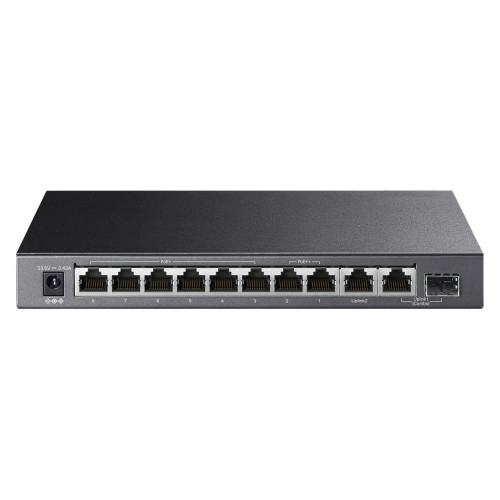
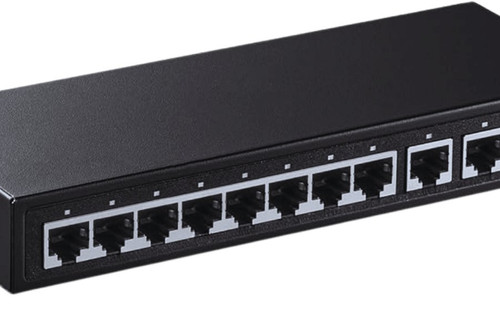
Both the TP-Link TL-SG1210PP and the Transition Networks OCA-1BA101 are 10-port Gigabit unmanaged switches targeting physical-security edge deployments — IP cameras, access control panels, and wireless APs. The TP-Link is a desktop/wall-mount unit with an 8-port PoE budget of 123 W and one SFP combo slot, aimed at indoor consolidated closets or desktop runs. The Transition Networks unit is a DIN rail-mount, single-mode-fiber-capable switch rated for outdoor cabinet use with a lifetime warranty. The comparison centers on PoE capability, installation environment, and fiber/uplink architecture.
In This Guide
- Which switch delivers the PoE power budget your edge devices actually need?
- Which switch fits your physical installation environment — indoor desktop or outdoor DIN rail cabinet?
- How does each switch handle fiber uplinks and management for a multi-site or structured-cabling deployment?
- Which should you choose: the SG1210PP or the OCA-1BA101?
- Side-by-Side Specs
- FAQ
Which switch delivers the PoE power budget your edge devices actually need?
The TL-SG1210PP provides 8 PoE-capable ports with a total budget of 123 W. TP-Link specifies compatibility with Port 1–4 for an extended-range mode (up to 250 m) at reduced speeds, and the switch supports PoE Auto Recovery to restart unresponsive powered devices without manual intervention. This makes it directly capable of powering IP cameras, wireless APs, and VoIP endpoints without a separate injector or power supply run.
The OCA-1BA101 specifications provided list no PoE capability on any port. No PoE budget, no PoE standard (802.3af/at/bt), and no powered-device compatibility are stated in its spec data. Installers requiring PoE at the OCA-1BA101 would need external midspan injectors or locally powered endpoints at every device drop, adding both cost and installation complexity.
Which switch fits your physical installation environment — indoor desktop or outdoor DIN rail cabinet?
The TL-SG1210PP is specified for desktop or wall-mount installation. No ingress protection (IP) rating, no operating temperature range beyond standard indoor conditions, and no hardened enclosure are listed in its provided specs. It is suited to indoor telecom closets, wall-mount enclosures, or desktop consolidation points where ambient environmental controls are present.
The OCA-1BA101 is specified with DIN rail mounting and an Outdoor environment rating, and its marketing description references cabinet and 19-inch rack compatibility. No specific IP rating or operating temperature range is present in the provided spec data, but the outdoor designation signals a hardened or at minimum weatherized form factor appropriate for roadside cabinets, parking-structure enclosures, and industrial panels where the TL-SG1210PP is not rated for use.
How does each switch handle fiber uplinks and management for a multi-site or structured-cabling deployment?
The TL-SG1210PP includes one SFP combo slot, described as a Gigabit SFP combo slot suitable for fiber backhaul or core uplink. No fiber type restriction (single-mode vs. multimode) is stated in the provided specs for that SFP slot. The switch also offers three named operating modes — Priority Mode, Isolation Mode, and PoE Auto Recovery — giving installers limited but real traffic-engineering controls without a full CLI. Both units are unmanaged in the traditional sense (no SNMP, no web GUI is specified for either).
The OCA-1BA101 specifies single-mode fiber support, which is the correct choice for long-haul inter-building or campus backbone runs (typically beyond 550 m where multimode reaches its limit). No SFP slot count, no operating modes, and no management interface beyond plug-and-play are stated in the provided specs. The switch carries a lifetime warranty, which no warranty data in the TL-SG1210PP specs matches or contradicts — warranty duration for the TP-Link unit is not stated in the provided data.
Which should you choose: the SG1210PP or the OCA-1BA101?
Our take: The TL-SG1210PP is the stronger choice when the installation requires powering PoE devices — cameras, APs, or access readers — from a single indoor switch, while the OCA-1BA101 is the stronger choice when the deployment demands outdoor-rated DIN rail mounting or single-mode fiber backbone connectivity. The SG1210PP's 123 W PoE budget across 8 ports eliminates separate injectors; the OCA-1BA101 lists zero PoE capability, meaning every endpoint needs its own power source. Conversely, the OCA-1BA101 carries an outdoor environment rating and DIN rail form factor the SG1210PP does not claim. The OCA-1BA101 also specifies single-mode fiber support, extending backbone reach beyond typical multimode limits; the TL-SG1210PP offers one SFP combo slot with no fiber-type restriction stated. For a standard indoor IP-camera closet, specify the SG1210PP. For a hardened outdoor cabinet or fiber-fed industrial panel with separately powered devices, specify the OCA-1BA101.
Side-by-Side Comparison
Spec-for-spec, from manufacturer data.
| Specification | TP-Link SG1210PP | Transition Networks OCA-1BA101 |
|---|---|---|
| Product Type | Desktop Gigabit PoE Switch | DIN Rail Gigabit Switch |
| Total Ports | 10 | 10 |
| Port Speed | Gigabit | Gigabit |
| PoE Ports | 8 | — |
| PoE Budget | 123 W | — |
| SFP / Fiber Uplink Slots | 1 (Gigabit SFP combo) | — |
| Fiber Type Supported | Not stated in provided specs | Single-mode |
| Extended Range Mode | 250 m (Ports 1–4) | — |
| Mount Type | Desktop / Wall | DIN Rail |
| Environment Rating | Not stated in provided specs | Outdoor |
| Management | Unmanaged (Priority, Isolation, PoE Auto Recovery modes) | Unmanaged (plug-and-play) |
| Warranty | Not stated in provided specs | Lifetime |
| SKU / MPN | TL-SG1210PP | OCA-1BA101 |
| Brand | TP-Link | Transition Networks |
Frequently Asked Questions
Which should you choose: the SG1210PP or the OCA-1BA101?
The TL-SG1210PP is the stronger choice when the installation requires powering PoE devices — cameras, APs, or access readers — from a single indoor switch, while the OCA-1BA101 is the stronger choice when the deployment demands outdoor-rated DIN rail mounting or single-mode fiber backbone connectivity. The SG1210PP's 123 W PoE budget across 8 ports eliminates separate injectors; the OCA-1BA101 lists zero PoE capability, meaning every endpoint needs its own power source. Conversely, the OCA-1BA101 carries an outdoor environment rating and DIN rail form factor the SG1210PP does not claim. The OCA-1BA101 also specifies single-mode fiber support, extending backbone reach beyond typical multimode limits; the TL-SG1210PP offers one SFP combo slot with no fiber-type restriction stated. For a standard indoor IP-camera closet, specify the SG1210PP. For a hardened outdoor cabinet or fiber-fed industrial panel with separately powered devices, specify the OCA-1BA101.
Can either switch power IP cameras directly without a separate PoE injector?
Only the TL-SG1210PP provides PoE, with a stated 123 W budget across 8 ports. The OCA-1BA101 specifications list no PoE capability; cameras connected to it would require their own power supplies or external midspan injectors.
Which switch is appropriate for an outdoor roadside or parking-structure cabinet?
The OCA-1BA101 is specified with an Outdoor environment rating and DIN rail mounting, making it the documented choice for hardened cabinet deployments. The TL-SG1210PP specifies desktop or wall-mount installation with no outdoor or ingress-protection rating in its provided data.
Does either switch support single-mode fiber for long inter-building runs?
The OCA-1BA101 explicitly specifies single-mode fiber support. The TL-SG1210PP includes one SFP combo slot but its provided specs do not state which fiber types — single-mode or multimode — that slot supports; installers should confirm transceiver compatibility with TP-Link documentation before specifying it for a long-haul single-mode run.
More Network Switch Comparisons
- TP-Link IES210GPP vs Transition Networks OCA-1AB201-NA
- TP-Link IES210GPP vs Transition Networks OCA-1BA1A0
- TP-Link IES210GPP vs Transition Networks OCA-1BA101
- TP-Link IES210GPP vs TP-Link DS110GMP
- TP-Link IES210GPP vs TP-Link SG1210PP
- TP-Link DS110GMP vs Transition Networks OCA-1AB201-NA
Network Switch Buying Guides
Get a Second Opinion on Your Camera Choice
Share your site layout, coverage goals, and budget. Our team will validate the camera selection, flag anything we would change, and recommend products that match the use case.