
TP-Link S4500-8GP2F vs TP-Link SG1210P: Specification Comparison
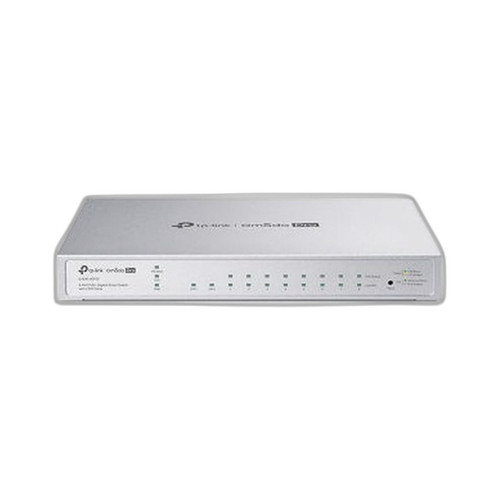
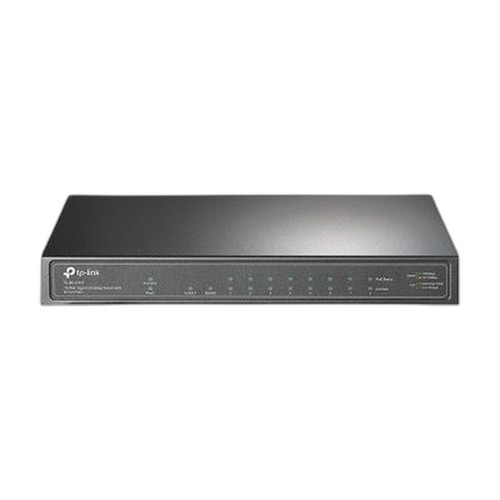
Both the TP-Link S4500-8GP2F and the TL-SG1210P are gigabit PoE+ switches aimed at IP security and networking deployments, making them genuine cross-shop candidates for installers evaluating an 8–10 port PoE switch. The S4500-8GP2F is a managed, rack/wall-mountable Omada Pro unit with SFP uplink slots, while the TL-SG1210P is an unmanaged desktop switch with a higher total PoE budget and an extended-range PoE mode. This comparison examines PoE capacity and port density, management capability and deployment form factor, and power architecture and environmental operating parameters.
In This Guide
- Which switch delivers more PoE headroom and how many powered devices can each support?
- Which switch offers more control and flexibility for installation and ongoing network administration?
- How do the two switches compare on power supply architecture, switching throughput, and operating environment?
- Which should you choose: the S4500-8GP2F or the SG1210P?
- Side-by-Side Specs
- FAQ
Which switch delivers more PoE headroom and how many powered devices can each support?
The TL-SG1210P provides a total PoE budget of 120 W across its 8 PoE+ ports, with up to 30 W available per port under 802.3at. It also supports a PoE extend mode that stretches reach to 250 m per the specs. The S4500-8GP2F carries a PoE budget listed variously as 58 W–62 W in the provided specs, with 802.3af/at support and a per-port maximum of 30 W per the card bullets. The TL-SG1210P's 120 W aggregate budget is roughly double that of the S4500-8GP2F, meaning it can sustain more simultaneously powered devices at higher draw without throttling. For deployments where several PoE+ cameras or access points run at or near 15–25 W each, the TL-SG1210P has a clear capacity advantage on raw PoE budget.
Which switch offers more control and flexibility for installation and ongoing network administration?
The S4500-8GP2F is a managed switch operating under the TP-Link Omada Pro ecosystem. Its listed management features include SNMP Trap/Inform and EEE (Energy Efficient Ethernet), and it carries 32 MB of onboard storage for configuration. It includes 2 SFP uplink slots for fiber connectivity (single-mode per the specs) and supports both wall and rack mounting. The TL-SG1210P is explicitly unmanaged—plug-and-play with no SNMP, VLAN, or CLI access listed. Its management notation references app-based provisioning and Wi-Fi 6 management, though these appear to describe companion device capabilities rather than the switch's own management plane, as the spec clearly marks it unmanaged. For any deployment requiring traffic segmentation, QoS, port monitoring, or integration into a managed Omada controller environment, the S4500-8GP2F is the only viable option of the two.
How do the two switches compare on power supply architecture, switching throughput, and operating environment?
The S4500-8GP2F is powered by an external adapter rated 53.5 VDC / 1.31 A and has a switching capacity of 16 Gbps per the specs (a second figure of 20 Gbps also appears in the raw data; the lower 16 Gbps figure is used here as the conservative value). Throughput is listed at 16 Gbps. The TL-SG1210P is powered by 12 V DC external supply; no switching capacity figure is provided in the specs. The TL-SG1210P lists an operating temperature range of 0–40°C (32–104°F); no equivalent operating temperature range is given for the S4500-8GP2F in the provided specs. The TL-SG1210P's 12 V DC supply is simpler and more commonly available. The S4500-8GP2F's higher supply voltage (53.5 V) is consistent with delivering PoE over longer internal power rails but requires the specific bundled adapter.
Which should you choose: the S4500-8GP2F or the SG1210P?
Our take: The S4500-8GP2F is the stronger choice when management, fiber uplinks, or Omada Pro integration are required, while the TL-SG1210P is the better fit when raw PoE budget and simplicity are the primary drivers. Three concrete spec deltas define the decision: (1) PoE budget—the TL-SG1210P delivers 120 W aggregate versus 58–62 W on the S4500-8GP2F, nearly double the headroom for simultaneously powered devices; (2) Management—the S4500-8GP2F is a fully managed switch with SNMP and 32 MB storage, while the TL-SG1210P is explicitly unmanaged with no listed CLI or VLAN capability; (3) Uplinks—the S4500-8GP2F includes 2 SFP slots (single-mode fiber capable), which the TL-SG1210P lacks entirely. Choose the S4500-8GP2F for managed Omada Pro networks, fiber uplink requirements, or sites needing SNMP visibility. Choose the TL-SG1210P for unmanaged, budget-conscious installs where powering more high-draw devices simultaneously is the priority.
Side-by-Side Comparison
Spec-for-spec, from manufacturer data.
| Specification | TP-Link S4500-8GP2F | TP-Link SG1210P |
|---|---|---|
| MPN | S4500-8GP2F | TL-SG1210P |
| Product Type | Smart PoE+ Switch (Managed) | Desktop PoE+ Switch (Unmanaged) |
| Total Ports | 8 RJ-45 + 2 SFP | 10 (8 PoE+ + 2 uplink RJ-45) |
| PoE Standard | 802.3af/at | 802.3at (PoE+) |
| Total PoE Budget | 58–62 W | 120 W |
| Max PoE per Port | 30 W | 30 W |
| SFP Uplink Slots | 2 (Single Mode) | — |
| Switching Capacity | 16 Gbps | — |
| Management | Managed (SNMP Trap/Inform, EEE) | Unmanaged |
| Onboard Storage | 32 MB | — |
| Power Supply | 53.5 VDC / 1.31 A External Adapter | 12 V DC External |
| PoE Extend Mode | — | Yes (up to 250 m) |
| Mount Type | Wall; Rack | Wall; Rack |
| Operating Temperature | — | 0–40°C (32–104°F) |
| Ecosystem | Omada Pro | — |
| Form Factor | Rackmount/Wall | Desktop |
Frequently Asked Questions
Which should you choose: the S4500-8GP2F or the SG1210P?
The S4500-8GP2F is the stronger choice when management, fiber uplinks, or Omada Pro integration are required, while the TL-SG1210P is the better fit when raw PoE budget and simplicity are the primary drivers. Three concrete spec deltas define the decision: (1) PoE budget—the TL-SG1210P delivers 120 W aggregate versus 58–62 W on the S4500-8GP2F, nearly double the headroom for simultaneously powered devices; (2) Management—the S4500-8GP2F is a fully managed switch with SNMP and 32 MB storage, while the TL-SG1210P is explicitly unmanaged with no listed CLI or VLAN capability; (3) Uplinks—the S4500-8GP2F includes 2 SFP slots (single-mode fiber capable), which the TL-SG1210P lacks entirely. Choose the S4500-8GP2F for managed Omada Pro networks, fiber uplink requirements, or sites needing SNMP visibility. Choose the TL-SG1210P for unmanaged, budget-conscious installs where powering more high-draw devices simultaneously is the priority.
Can I manage VLANs or monitor traffic on either of these switches?
Only the S4500-8GP2F supports managed functions—its specs list SNMP Trap/Inform and it carries 32 MB of onboard storage for configuration. The TL-SG1210P is explicitly unmanaged; no VLAN, QoS, or SNMP capability is listed in its specifications.
Which switch can power more PoE+ cameras at the same time?
The TL-SG1210P has a total PoE budget of 120 W across 8 PoE+ ports, compared to 58–62 W on the S4500-8GP2F. At a typical IP camera draw of 12–15 W, the TL-SG1210P can sustain roughly twice as many simultaneously powered devices before hitting its budget ceiling.
Does either switch support fiber uplinks for connecting to a core switch or NVR over distance?
Yes—the S4500-8GP2F includes 2 SFP slots supporting single-mode fiber per its specifications. The TL-SG1210P has no SFP slots listed in its specs; its only uplink is a standard RJ-45 gigabit port.
More Network Switch Comparisons
- Vivotek IHT-1271 vs TP-Link SG3210XHP-M2
- Vivotek IHT-1271 vs TP-Link S4500-8GP2F
- Vivotek IHT-1271 vs TP-Link SG1210P
- Vivotek IHT-1271 vs Allied Telesis AT-x530L-10GHXm-10
- Vivotek IHT-1271 vs Vivotek GEV-108A-130
- Vivotek IHT-1271 vs Vivotek IHT-1000
Network Switch Buying Guides
Get a Second Opinion on Your Camera Choice
Share your site layout, coverage goals, and budget. Our team will validate the camera selection, flag anything we would change, and recommend products that match the use case.