
TP-Link DS105G-M2 vs TP-Link SG2005P-PD: Specification Comparison
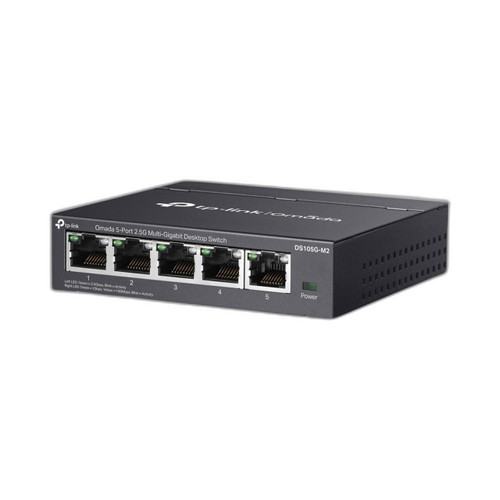
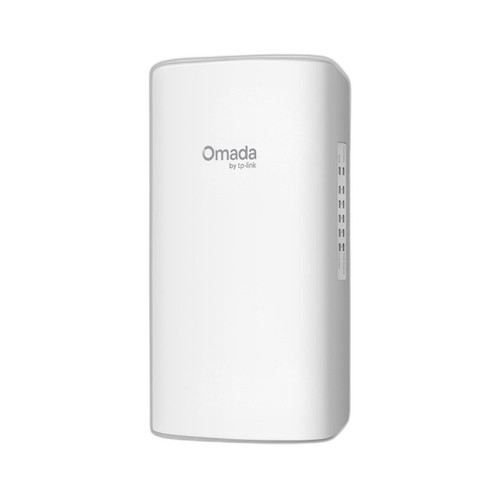
Both the TP-Link DS105G-M2 and SG2005P-PD are 5-port desktop switches in the Omada ecosystem, but they serve fundamentally different buyer profiles. The DS105G-M2 is an unmanaged 2.5G multi-gigabit switch designed for high-throughput LAN uplinks in indoor environments. The SG2005P-PD is a managed gigabit smart switch that accepts PoE++ power input and distributes PoE+ to downstream devices, rated IP66 for outdoor deployment. This comparison evaluates speed and throughput, power and environmental resilience, and management and feature depth.
In This Guide
Which switch delivers higher port speed and backplane throughput?
The DS105G-M2 operates all five ports at 2.5 Gbps, yielding a 25 Gbps non-blocking aggregate backplane. This is 2.5× the per-port bandwidth of legacy gigabit links and allows simultaneous full-rate operation across all ports without congestion.
The SG2005P-PD runs all five ports at standard Gigabit (10/100/1000 Mbps), with a 10 Gbps switching capacity and a 7.44 Mpps forwarding rate. While adequate for surveillance camera streams and standard LAN traffic, its per-port ceiling is one-quarter that of the DS105G-M2.
For environments requiring high-throughput uplinks—NAS transfers, Wi-Fi 6 APs, or multi-gigabit WAN handoffs—the DS105G-M2's 25 Gbps backplane and 2.5G ports are the clear specification advantage. The SG2005P-PD's 10 Gbps switching capacity is sufficient for typical IP camera or access-control workloads at gigabit speeds.
Which switch is better suited for harsh or outdoor operating environments?
The SG2005P-PD carries an IP66 ingress protection rating, making it sealed against dust and powerful water jets. Its operating temperature range spans −40°C to +60°C (−40°F to +140°F), covering extreme cold and heat. It requires no external power supply: it draws all operating power from a single 802.3bt PoE++ source on port 5 (up to 90W input), and distributes up to 64W across ports 1–4 for downstream PoE devices. Mount options include wall and pole.
The DS105G-M2 carries no IP rating per the provided specifications. Its operating temperature is limited to −5°C to 40°C (23°F to 104°F), unsuitable for outdoor or uncontrolled environments. Storage temperature extends to −40°C to 70°C, but that does not reflect operational limits. No PoE output capability is stated in the specifications.
For outdoor surveillance enclosures, pole-mount deployments, or any location subject to weather, dust, or temperature extremes, the SG2005P-PD's IP66 rating and −40°C floor make it the only viable option between the two. The DS105G-M2 is strictly an indoor, conditioned-space device.
Which switch offers greater network management and security feature depth?
The SG2005P-PD is a managed smart switch supporting Omada SDN and standalone modes. Documented management features include SNMP Trap/Inform, Static Routing, ACL, QoS, VLAN, 802.1X authentication with RADIUS/TACACS+, and IEEE 802.1az Energy Efficient Ethernet. Memory is specified at 32 MB Flash and 256 MB DRAM. It also supports PoE passthrough up to 200 m.
The DS105G-M2 is unmanaged. The only network intelligence specified is loop prevention monitoring, which is described as switchable. No VLAN, QoS, ACL, authentication, or SNMP capability is listed. There is no management interface.
For segmented networks, access control policies, or any deployment requiring remote visibility and configuration—common in security system integrations—the SG2005P-PD provides the necessary management infrastructure. The DS105G-M2 is a plug-and-play device appropriate where simplicity and raw throughput matter more than control.
Which should you choose: the DS105G-M2 or the SG2005P-PD?
Our take: The DS105G-M2 is the stronger choice when indoor, high-throughput connectivity is the priority and no management or PoE output is required; the SG2005P-PD is the stronger choice for managed, outdoor, or PoE-distribution deployments. Key spec deltas: (1) port speed—DS105G-M2 runs at 2.5 Gbps vs. 1 Gbps on the SG2005P-PD, with a 25 Gbps vs. 10 Gbps backplane; (2) environmental resilience—SG2005P-PD is IP66-rated with a −40°C to +60°C operating range vs. the DS105G-M2's unrated, −5°C to 40°C indoor-only envelope; (3) management depth—SG2005P-PD supports Omada SDN, VLANs, ACLs, 802.1X, and SNMP while the DS105G-M2 is fully unmanaged. Specifiers deploying IP cameras in outdoor enclosures or requiring network segmentation should select the SG2005P-PD; those building high-speed indoor LAN segments with no PoE or management requirement should select the DS105G-M2.
Side-by-Side Comparison
Spec-for-spec, from manufacturer data.
| Specification | TP-Link DS105G-M2 | TP-Link SG2005P-PD |
|---|---|---|
| Product Type | Unmanaged Desktop Switch | Managed Smart Switch |
| Managed | No | Yes (Omada SDN / Standalone) |
| Ports | 5 | 5 |
| Port Speed | 2.5 Gbps (Multi-Gigabit) | 10/100/1000 Mbps (Gigabit) |
| Switching Capacity | 25 Gbps | 10 Gbps |
| Forwarding Rate | — | 7.44 Mpps |
| SFP Slots | 0 | — |
| PoE Output | — | 64W across ports 1–4 (802.3af/at) |
| PoE Input | — | 802.3bt (90W) on port 5 only |
| IP Rating | — | IP66 |
| Operating Temperature | −5°C to 40°C | −40°C to +60°C |
| Storage Temperature | −40°C to 70°C | — |
| Mount Type | Wall | Wall; Pole |
| VLAN / QoS / ACL | — | Yes |
| 802.1X / RADIUS / TACACS+ | — | Yes |
| Memory | — | 32 MB Flash; 256 MB DRAM |
Frequently Asked Questions
Which should you choose: the DS105G-M2 or the SG2005P-PD?
The DS105G-M2 is the stronger choice when indoor, high-throughput connectivity is the priority and no management or PoE output is required; the SG2005P-PD is the stronger choice for managed, outdoor, or PoE-distribution deployments. Key spec deltas: (1) port speed—DS105G-M2 runs at 2.5 Gbps vs. 1 Gbps on the SG2005P-PD, with a 25 Gbps vs. 10 Gbps backplane; (2) environmental resilience—SG2005P-PD is IP66-rated with a −40°C to +60°C operating range vs. the DS105G-M2's unrated, −5°C to 40°C indoor-only envelope; (3) management depth—SG2005P-PD supports Omada SDN, VLANs, ACLs, 802.1X, and SNMP while the DS105G-M2 is fully unmanaged. Specifiers deploying IP cameras in outdoor enclosures or requiring network segmentation should select the SG2005P-PD; those building high-speed indoor LAN segments with no PoE or management requirement should select the DS105G-M2.
Can either switch power IP cameras directly?
Only the SG2005P-PD outputs PoE. It accepts up to 90W 802.3bt input on port 5 and distributes up to 64W across ports 1–4 using 802.3af/at standards, supporting up to four powered devices. The DS105G-M2 has no PoE output capability specified.
Is the DS105G-M2 or SG2005P-PD suitable for mounting outside a building?
Only the SG2005P-PD is rated for outdoor use. Its IP66 certification and −40°C to +60°C operating range support pole-mount and outdoor enclosure installation. The DS105G-M2 carries no IP rating and is rated only to −5°C to 40°C, limiting it to indoor, climate-controlled spaces.
Which switch works with the Omada SDN controller?
The SG2005P-PD supports Omada SDN management as well as standalone operation, enabling centralized configuration, VLAN segmentation, QoS, and 802.1X policy enforcement. The DS105G-M2 is unmanaged and does not integrate with the Omada SDN controller; it offers only local loop prevention monitoring.
More Network Switch Comparisons
- TP-Link SG2005P-PD vs Ubiquiti USW-FLEX-2.5G-5
- TP-Link SG2005P-PD vs TP-Link ES205G
- TP-Link SG2005P-PD vs TP-Link DS105G
- TP-Link ES205G vs Ubiquiti USW-FLEX-2.5G-5
- TP-Link ES205G vs TP-Link DS105G
- Ubiquiti USW-FLEX-2.5G-5 vs TP-Link DS105G
Network Switch Buying Guides
Get a Second Opinion on Your Camera Choice
Share your site layout, coverage goals, and budget. Our team will validate the camera selection, flag anything we would change, and recommend products that match the use case.