
TP-Link SG2005P-PD vs TP-Link DS105G: Specification Comparison
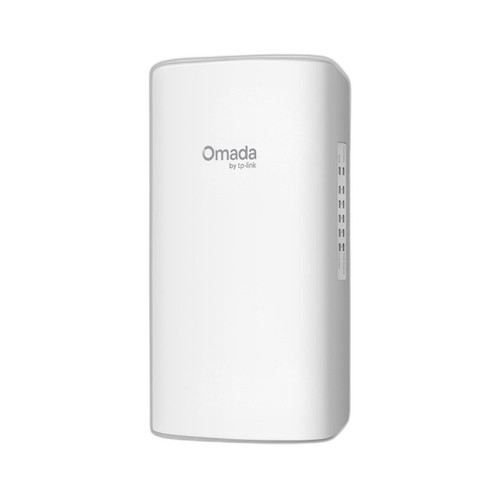
Both the TP-Link SG2005P-PD and DS105G are 5-port gigabit switches with 10 Gbps switching capacity, making them nominally cross-shoppable at the port-count level. However, they occupy fundamentally different market segments: the SG2005P-PD is a managed, IP66-rated, PoE-passthrough switch designed for outdoor or enclosure deployment under Omada SDN, while the DS105G is an unmanaged, indoor-only desktop switch powered by an AC adapter. This comparison examines management depth, environmental ruggedness, and power architecture — the three axes that will drive a buyer's decision.
In This Guide
Which switch gives you more network control and visibility?
The SG2005P-PD is a fully managed switch operating under TP-Link's Omada SDN platform or in standalone mode. It supports SNMP Trap/Inform, 802.1X port authentication with RADIUS/TACACS+, ACL, QoS, VLAN segmentation, static routing, and IEEE 802.1az Energy Efficient Ethernet. Flash memory is 32 MB with 256 MB DRAM, providing a capable firmware environment for policy enforcement. Encryption and access control are built in.
The DS105G is plug-and-play with zero management capability. No VLAN, no QoS, no SNMP, no authentication — traffic is forwarded without inspection or policy. For a small office edge aggregator where simplicity is the goal, that is sufficient. For any deployment requiring network segmentation, access control, or integration into a managed infrastructure, it is a non-starter. The DS105G does not specify onboard memory.
Buyers who need to segment camera VLANs, enforce 802.1X on endpoints, or integrate with a cloud-managed Omada controller will find only the SG2005P-PD meets those requirements. The DS105G serves pure Layer 1/2 aggregation with no configuration overhead.
Which switch is rated for outdoor or harsh-environment installation?
The SG2005P-PD carries an IP66 ingress protection rating, meaning it is dust-tight and protected against powerful water jets. Its operating temperature range is −40°C to +60°C (−40°F to +140°F), covering arctic-level cold and high-heat enclosures. It is also certified CE, FCC, and RoHS, and its form factor supports wall and pole mounting. These specifications make it suitable for outdoor surveillance enclosures, roadside cabinets, and industrial edge locations.
The DS105G is rated for 0°C to 40°C (32°F to 104°F) only. No IP rating is specified, indicating it is not rated for moisture or dust exposure. Its compact 99.8 × 97.8 × 25 mm desktop chassis and AC adapter power supply presuppose a dry, climate-controlled indoor environment. It supports wall mounting but is not rated for outdoor use.
The 80°C operating temperature gap and the presence versus absence of an IP rating represent a hard selection boundary. If the switch must live outside a building, in an enclosure subject to condensation, or in any environment below 0°C or above 40°C, only the SG2005P-PD is specified for that deployment.
How does each switch receive power, and what PoE does it deliver?
The SG2005P-PD receives power exclusively via 802.3af/at/bt (PoE++) on port 5 — it requires no AC adapter and draws power from an upstream PoE switch or injector. Depending on the input standard, it delivers: 64W to ports 1–4 from a 90W 802.3bt (Type 4) source; 44W from a 60W 802.3bt (Type 3) source; 19W from an 802.3at source; or 6W from an 802.3af source. Ports 1–4 output PoE+, enabling the switch to power downstream cameras, access points, or other PoE devices. Maximum PoE range is specified at 200 m.
The DS105G is powered by an included AC power adapter and consumes a maximum of 3.1 W. It does not provide PoE output on any port. The spec field '_PoE: PoE' appears in the raw data but no PoE budget, PoE port count, or PoE standard is listed elsewhere in the DS105G spec set, and the product is described as an unmanaged desktop switch with an AC adapter — this field is treated as a data artifact and not a confirmed capability.
For any deployment where the switch itself must be powered over Ethernet (eliminating the need for local AC) or where downstream devices require PoE, the SG2005P-PD is the only option between the two. The DS105G adds no PoE capability and requires an AC outlet.
Which should you choose: the SG2005P-PD or the DS105G?
Our take: The SG2005P-PD is the stronger choice when the deployment requires outdoor or harsh-environment installation, managed network control, or PoE-based power distribution — which describes the majority of surveillance edge switch use cases. Key spec deltas: the SG2005P-PD is rated IP66 and operates to −40°C versus the DS105G's unrated indoor-only 0–40°C range; the SG2005P-PD delivers up to 64W of PoE+ output to four downstream ports while the DS105G provides zero PoE output; and the SG2005P-PD supports VLAN, 802.1X, QoS, SNMP, and Omada SDN management versus the DS105G's plug-and-play only. The DS105G is appropriate solely for simple indoor desktop aggregation where AC power is available, no PoE is needed, and network policy is handled upstream. Buyers deploying cameras in outdoor enclosures, requiring network segmentation, or running cabling longer than 100 m should specify the SG2005P-PD.
Side-by-Side Comparison
Spec-for-spec, from manufacturer data.
| Specification | TP-Link SG2005P-PD | TP-Link DS105G |
|---|---|---|
| Product Type | Managed Gigabit PoE Switch | Unmanaged Desktop Switch |
| Managed | Yes (Omada SDN / standalone) | No (plug-and-play only) |
| Ports | 5 × 10/100/1000 Mbps | 5 × Gigabit |
| Switching Capacity | 10 Gbps | 10 Gbps |
| Forwarding Rate | 7.44 Mpps | — |
| PoE Output | 64W to ports 1–4 (802.3bt input) | None specified |
| PoE Input Standard | 802.3af / 802.3at / 802.3bt (port 5) | AC adapter only |
| Max PoE Budget | 64W (90W 802.3bt source) | — |
| Power Consumption | Powered via upstream PoE (no AC) | 3.1 W max (AC adapter) |
| IP Rating | IP66 | Not specified |
| Operating Temperature | −40°C to +60°C | 0°C to 40°C |
| Mount Type | Wall; Pole | Wall |
| Dimensions | 103.0 × 41.6 × 186.2 mm | 99.8 × 97.8 × 25 mm |
| Weight | 0.370 kg (0.82 lbs) | — |
| Memory | Flash 32 MB / DRAM 256 MB | Not specified |
| Certifications | CE, FCC, RoHS | FCC, CE, RoHS |
Frequently Asked Questions
Which should you choose: the SG2005P-PD or the DS105G?
The SG2005P-PD is the stronger choice when the deployment requires outdoor or harsh-environment installation, managed network control, or PoE-based power distribution — which describes the majority of surveillance edge switch use cases. Key spec deltas: the SG2005P-PD is rated IP66 and operates to −40°C versus the DS105G's unrated indoor-only 0–40°C range; the SG2005P-PD delivers up to 64W of PoE+ output to four downstream ports while the DS105G provides zero PoE output; and the SG2005P-PD supports VLAN, 802.1X, QoS, SNMP, and Omada SDN management versus the DS105G's plug-and-play only. The DS105G is appropriate solely for simple indoor desktop aggregation where AC power is available, no PoE is needed, and network policy is handled upstream. Buyers deploying cameras in outdoor enclosures, requiring network segmentation, or running cabling longer than 100 m should specify the SG2005P-PD.
Can I use the DS105G to power my IP cameras directly?
No. The DS105G does not specify any PoE output capability and is powered by an AC adapter drawing only 3.1 W maximum. It cannot supply power to cameras or other PoE devices. The SG2005P-PD, by contrast, delivers up to 64W of PoE+ across ports 1–4 (when fed by a 90W 802.3bt source on port 5).
Is the SG2005P-PD or DS105G better suited for a wiring closet inside a building?
For a dry, climate-controlled indoor wiring closet with AC power available, either switch can aggregate gigabit traffic at 10 Gbps switching capacity. If the closet requires VLAN segmentation, 802.1X access control, or integration with an Omada SDN controller, only the SG2005P-PD supports those features. If the requirement is purely plug-and-play aggregation with no management overhead, the DS105G is simpler and draws only 3.1 W.
Will the SG2005P-PD work without an AC outlet at the installation point?
Yes. The SG2005P-PD is powered entirely via 802.3bt PoE++ on its port 5 and includes no AC adapter. It requires an upstream PoE switch or injector capable of delivering 802.3af, 802.3at, or 802.3bt on that port. The available PoE output budget to ports 1–4 scales with the input standard: 6W (802.3af in), 19W (802.3at in), 44W (60W bt in), or 64W (90W bt in).
More Network Switch Comparisons
- TP-Link SG2005P-PD vs Ubiquiti USW-FLEX-2.5G-5
- TP-Link SG2005P-PD vs TP-Link ES205G
- TP-Link ES205G vs Ubiquiti USW-FLEX-2.5G-5
- TP-Link ES205G vs TP-Link DS105G
- Ubiquiti USW-FLEX-2.5G-5 vs TP-Link DS105G
- Ubiquiti USW-FLEX-2.5G-5 vs TP-Link DS105G-M2
Network Switch Buying Guides
Get a Second Opinion on Your Camera Choice
Share your site layout, coverage goals, and budget. Our team will validate the camera selection, flag anything we would change, and recommend products that match the use case.