
TP-Link SG2005P-PD vs TP-Link ES205G: Specification Comparison
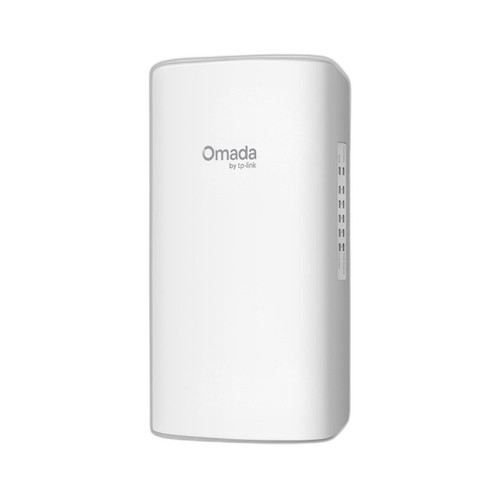
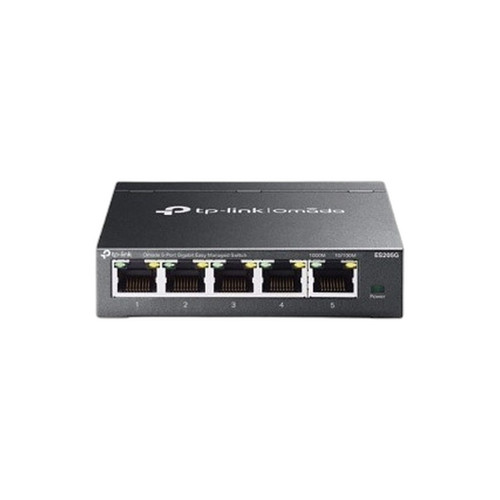
Both the TP-Link SG2005P-PD and ES205G are 5-port gigabit managed switches operating under the Omada SDN platform, making them legitimate cross-shop candidates for small-site network deployments. The key differentiator is deployment context: the SG2005P-PD is a PoE-powered, PoE-distributing switch built for outdoor or enclosure use, while the ES205G is a compact, AC-powered desktop/wall-mount unit sized for indoor installations. This comparison examines PoE architecture and power, environmental ratings and physical form, and management depth.
In This Guide
- Which switch handles PoE power delivery and sourcing differently — and does that matter for your deployment?
- Which switch is better suited for outdoor, industrial, or thermally challenging installation environments?
- Which switch offers deeper management, security, and Layer 2/3 feature sets for network administrators?
- Which should you choose: the SG2005P-PD or the ES205G?
- Side-by-Side Specs
- FAQ
Which switch handles PoE power delivery and sourcing differently — and does that matter for your deployment?
The SG2005P-PD is purpose-built around PoE: it receives power exclusively via an 802.3af/at/bt (PoE++) source on port 5 — no AC adapter is used — and distributes PoE+ output across ports 1–4. Depending on the input standard, it can deliver up to 64 W total (with a 90 W Type 4 / 802.3bt input), 44 W (60 W Type 3 input), 19 W (802.3at input), or 6 W (802.3af input). This makes it a true PoE pass-through extender, extending powered network connectivity without requiring a local AC outlet — valuable inside outdoor enclosures or junction boxes.
The ES205G carries no PoE output capability based on the provided specifications; it is powered by a conventional 5 VDC / 0.6 A AC adapter. A '65 W' figure appears in its specs under 'Power Watts,' but no PoE port count, PoE standard, or per-port budget is listed — this figure cannot be verified as a PoE delivery spec and is not cited as such in the product type or interface descriptions. Buyers requiring PoE-powered endpoints (cameras, APs, VoIP phones) should not assume the ES205G provides PoE output.
Which switch is better suited for outdoor, industrial, or thermally challenging installation environments?
The SG2005P-PD carries an IP66 ingress-protection rating, meaning it is dust-tight and protected against powerful water jets. Its operating temperature range spans −40 °C to +60 °C (−40 °F to +140 °F), covering extreme cold and moderate heat without derating. It supports wall and pole mounting, and its form factor (4.1 × 1.6 × 7.3 in, 0.82 lbs) is sized for enclosure or pole-mount deployments common in outdoor surveillance and industrial networking.
The ES205G carries no IP rating in the provided specifications. Its operating temperature range is 0 °C to 40 °C (32 °F to 104 °F) — a standard commercial-indoor range that excludes freezing conditions and limits high-heat environments. Its dimensions (3.9 × 3.9 × 1.0 in) and listed installation modes (desktop/wall-mounting) position it as a compact indoor unit. It is not rated for outdoor use based on available specs.
Which switch offers deeper management, security, and Layer 2/3 feature sets for network administrators?
The SG2005P-PD is explicitly described as a 'Smart Switch' with both Omada SDN and standalone management modes. Its documented feature set includes static routing, ACLs, QoS, VLAN support, and 802.1X port authentication backed by RADIUS/TACACS+ — a meaningful Layer 2+ security and traffic-management stack. It also supports SNMP Trap/Inform and IEEE 802.1az Energy Efficient Ethernet (EEE). Memory is specified at 32 MB Flash and 256 MB DRAM.
The ES205G is listed as a 'Managed Switch' with Omada SDN support, but its management feature list in the provided specs is limited to 'DHCP Client.' No ACL, QoS, VLAN, 802.1X, or routing capabilities are documented. Memory is listed as 64 Mbit Flash and 4 Mbit Packet Buffer — notably smaller than the SG2005P-PD's DRAM. Both switches share identical switching capacity (10 Gbps) and near-identical forwarding rates (7.44 Mpps vs. 7.4 Mpps), so raw throughput is not a differentiator.
Which should you choose: the SG2005P-PD or the ES205G?
Our take: The SG2005P-PD is the stronger choice when deployments require outdoor-rated, PoE-powered switching with deep Layer 2+ management. It carries an IP66 environmental rating versus no documented IP rating for the ES205G, operates across a −40 °C to +60 °C range versus the ES205G's 0 °C to 40 °C indoor window, and eliminates the need for a local AC outlet by drawing power from an 802.3bt PoE source while distributing up to 64 W across four downstream ports. On the management side, the SG2005P-PD documents ACL, QoS, VLAN, static routing, and 802.1X with RADIUS/TACACS+ support; the ES205G's provided specs list only DHCP Client. The ES205G is a practical fit for compact, climate-controlled indoor deployments where PoE output is not required and a 5 VDC adapter is acceptable. Buyers already standardized on the Omada SDN platform can manage both centrally, but the SG2005P-PD is clearly the outdoor and feature-depth choice.
Side-by-Side Comparison
Spec-for-spec, from manufacturer data.
| Specification | TP-Link SG2005P-PD | TP-Link ES205G |
|---|---|---|
| Product Type | Managed Gigabit PoE Switch | Managed Switch |
| Ports | 5 × 10/100/1000Mbps | 5 × 10/100/1000Mbps RJ45 |
| Switching Capacity | 10 Gbps | 10 Gbps |
| Forwarding Rate | 7.44 Mpps | 7.4 Mpps |
| PoE Input | 802.3bt (PoE++) on port 5 | — |
| PoE Output | Up to 64 W across ports 1–4 (802.3bt input) | — |
| Power Supply | 802.3af/at/bt PoE source (no AC adapter) | 5 VDC / 0.6 A AC adapter |
| IP Rating | IP66 | — |
| Operating Temperature | −40 °C to +60 °C | 0 °C to 40 °C |
| Mount Type | Wall; Pole | Desktop; Wall |
| Dimensions | 4.1 × 1.6 × 7.3 in (103 × 41.6 × 186.2 mm) | 3.9 × 3.9 × 1.0 in (99.8 × 98 × 25 mm) |
| Weight | 0.82 lbs (0.370 kg) | — |
| Memory | 32 MB Flash; 256 MB DRAM | 64 Mbit Flash; 4 Mbit Packet Buffer |
| Layer 2/3 Features | VLAN, ACL, QoS, Static Routing, 802.1X | DHCP Client (only feature listed in specs) |
| Authentication | RADIUS / TACACS+ | — |
| Certifications | CE, FCC, RoHS | CE, FCC, RoHS |
Frequently Asked Questions
Which should you choose: the SG2005P-PD or the ES205G?
The SG2005P-PD is the stronger choice when deployments require outdoor-rated, PoE-powered switching with deep Layer 2+ management. It carries an IP66 environmental rating versus no documented IP rating for the ES205G, operates across a −40 °C to +60 °C range versus the ES205G's 0 °C to 40 °C indoor window, and eliminates the need for a local AC outlet by drawing power from an 802.3bt PoE source while distributing up to 64 W across four downstream ports. On the management side, the SG2005P-PD documents ACL, QoS, VLAN, static routing, and 802.1X with RADIUS/TACACS+ support; the ES205G's provided specs list only DHCP Client. The ES205G is a practical fit for compact, climate-controlled indoor deployments where PoE output is not required and a 5 VDC adapter is acceptable. Buyers already standardized on the Omada SDN platform can manage both centrally, but the SG2005P-PD is clearly the outdoor and feature-depth choice.
Can the SG2005P-PD or ES205G power IP cameras directly?
The SG2005P-PD can power PoE cameras on ports 1–4, delivering up to 64 W total when fed by an 802.3bt source. The ES205G has no documented PoE output capability in the provided specifications, so it cannot directly power PoE cameras.
Which switch can I install in an outdoor enclosure or on a pole?
The SG2005P-PD is rated IP66 (dust-tight, water-jet resistant) and supports wall and pole mounting with an operating range of −40 °C to +60 °C, making it suitable for outdoor enclosures. The ES205G carries no IP rating per available specs and is rated only to 0 °C to 40 °C, limiting it to indoor, climate-controlled environments.
Both switches are listed as Omada managed — do they have the same feature depth?
No. Based on available specifications, the SG2005P-PD documents ACLs, QoS, VLANs, static routing, and 802.1X authentication with RADIUS/TACACS+. The ES205G's documented management features list only DHCP Client. Both carry the Omada SDN label, but the SG2005P-PD's published spec sheet shows a substantially deeper Layer 2+ feature set.
More Network Switch Comparisons
- TP-Link SG2005P-PD vs Ubiquiti USW-FLEX-2.5G-5
- TP-Link SG2005P-PD vs TP-Link DS105G
- TP-Link ES205G vs Ubiquiti USW-FLEX-2.5G-5
- TP-Link ES205G vs TP-Link DS105G
- Ubiquiti USW-FLEX-2.5G-5 vs TP-Link DS105G
- Ubiquiti USW-FLEX-2.5G-5 vs TP-Link DS105G-M2
Network Switch Buying Guides
Get a Second Opinion on Your Camera Choice
Share your site layout, coverage goals, and budget. Our team will validate the camera selection, flag anything we would change, and recommend products that match the use case.