
TP-Link SG2005P-PD vs Ubiquiti USW-FLEX-2.5G-5: Specification Comparison
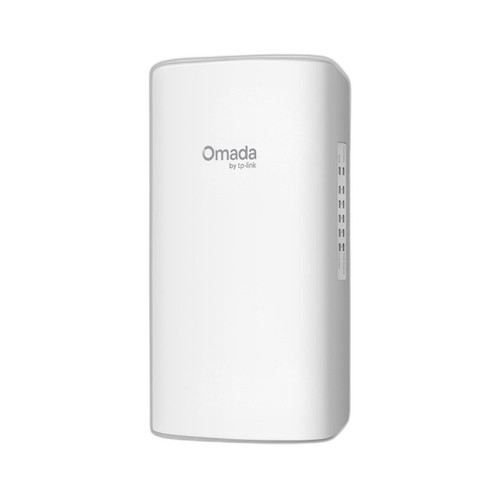
The TP-Link SG2005P-PD and Ubiquiti USW-FLEX-2.5G-5 are both 5-port managed switches aimed at edge and distributed network deployments, but they differ substantially in port speed, power architecture, and environmental hardening. The TP-Link draws its own power via PoE-in and pushes PoE-out to downstream devices, making it a PoE extender/switch hybrid. The Ubiquiti delivers 2.5G multi-speed ports with USB-C or PoE input but provides no PoE output. Buyers cross-shopping these are typically choosing between outdoor-ready PoE distribution at gigabit speeds versus compact high-throughput 2.5G edge switching for indoor or light-duty environments.

In This Guide
- Which switch delivers more bandwidth and port flexibility?
- How do the two switches handle power sourcing, PoE delivery, and environmental exposure?
- What management capabilities and platform ecosystems do these switches support?
- Which should you choose: the SG2005P-PD or the USW-FLEX-2.5G-5?
- Side-by-Side Specs
- FAQ
Which switch delivers more bandwidth and port flexibility?
The USW-FLEX-2.5G-5 holds a clear throughput advantage: all five ports operate at 2.5G (with auto-fallback to 1G/100M/10M), yielding a 25 Gbps switching capacity and 19 Mpps forwarding rate. The SG2005P-PD is a pure gigabit switch—all five ports run at 10/100/1000 Mbps—with a 10 Gbps switching capacity and 7.44 Mpps forwarding rate. For deployments feeding Wi-Fi 6/6E APs, NVRs, or workstations that can saturate a gigabit link, the Ubiquiti's 2.5G ports provide headroom the TP-Link cannot match. The TP-Link's port 5 is exclusively a PoE-in upstream port, leaving only four ports for downstream devices; all five Ubiquiti ports are peer data ports with no such constraint.
How do the two switches handle power sourcing, PoE delivery, and environmental exposure?
Power architecture is the sharpest differentiator. The SG2005P-PD is a PoE-powered, PoE-passthrough switch: it draws up to 90W via 802.3bt (PoE++) on port 5 and redistributes up to 64W across ports 1–4 (802.3at on each). No AC adapter or DC injector is required at the switch itself—critical for outdoor enclosures. It carries an IP66 rating and is specified to operate from −40°C to +60°C, making it genuinely suited for pole-mount or weatherproof-cabinet installations. The USW-FLEX-2.5G-5 accepts 5V DC via USB-C or 802.3af PoE input (6.4W budget) but provides no PoE output to downstream devices. Its polycarbonate enclosure carries no stated IP rating, and its operating range is −20°C to +45°C. For outdoor surveillance cable runs or harsh-environment closets, the TP-Link's IP66 hardening and wider thermal window are decisive advantages.
What management capabilities and platform ecosystems do these switches support?
The SG2005P-PD integrates into TP-Link's Omada SDN ecosystem, supporting both cloud and standalone management. It implements SNMP Trap/Inform, 802.1X authentication with RADIUS/TACACS+, ACL, QoS, static routing, VLAN, and IEEE 802.1az EEE. Flash is 32 MB; DRAM is 256 MB. The USW-FLEX-2.5G-5 is managed via Ubiquiti's UniFi controller (Layer 2+ managed), supports 256 VLANs and a 4,000-entry MAC table, and receives its management traffic over standard Ethernet—no separate management port is listed. Neither switch's spec sheet discloses Layer 3 routing capability for the Ubiquiti, while the TP-Link explicitly lists static routing. Buyers already invested in Omada or UniFi controller infrastructure will find switching ecosystems largely non-interchangeable; platform lock-in is a real factor in this price bracket.
Which should you choose: the SG2005P-PD or the USW-FLEX-2.5G-5?
Our take: The SG2005P-PD is the stronger choice when the installation is outdoors, PoE-chain-fed, and requires distributing power to cameras or APs downstream—its IP66 rating, −40°C to +60°C tolerance, 64W PoE output budget, and zero-AC-adapter power architecture are specs the USW-FLEX-2.5G-5 simply does not offer. Conversely, the USW-FLEX-2.5G-5 wins when throughput matters: 25 Gbps switching capacity and 2.5G per-port speeds versus the TP-Link's 10 Gbps and 1G maximum—a 2.5× bandwidth advantage. The Ubiquiti also posts a higher forwarding rate (19 Mpps vs. 7.44 Mpps) and NDAA compliance that the TP-Link spec sheet does not claim. Choose the SG2005P-PD for outdoor surveillance closets, pole-mount enclosures, or any run requiring PoE passthrough in a Omada environment; choose the USW-FLEX-2.5G-5 for indoor edge aggregation, mixed 2.5G/1G device populations, or UniFi-managed deployments where PoE output is not required.
Side-by-Side Comparison
Spec-for-spec, from manufacturer data.
| Specification | TP-Link SG2005P-PD | Ubiquiti USW-FLEX-2.5G-5 |
|---|---|---|
| Port Count | 5 (1 PoE-in upstream + 4 downstream) | 5 (all peer data ports) |
| Port Speed | 10/100/1000 Mbps (Gigabit) | 2.5G / 1G / 100M / 10M (multi-speed) |
| Switching Capacity | 10 Gbps | 25 Gbps |
| Forwarding Rate | 7.44 Mpps | 19 Mpps |
| PoE Output | Yes — 64W total, 802.3at ports 1–4 | No PoE output |
| PoE Input (self-power) | 802.3bt (PoE++, up to 90W) on port 5 | 802.3af, 6.4W max |
| Alternate Power Input | PoE only (no AC adapter) | USB-C 5V DC, 1A |
| Power Budget (output) | 64W (90W input) / 44W (60W) / 19W (at) / 6W (af) | — |
| IP / Ingress Rating | IP66 | Not specified |
| Operating Temperature | −40°C to +60°C | −20°C to +45°C |
| Enclosure / Form Factor | Wall/pole-mount outdoor | Compact desktop, polycarbonate |
| VLAN Support | Yes (count not specified in provided specs) | 256 VLANs |
| MAC Table | — | 4,000 entries |
| 802.1X / RADIUS | Yes (RADIUS/TACACS+) | Not specified |
| NDAA Compliant | Not stated in provided specs | Yes |
| Management Platform | Omada SDN / standalone | UniFi controller (Layer 2+) |
| Certifications | CE, FCC, RoHS | CE, FCC, IC, Anatel |
| Dimensions | 103.0 × 41.6 × 186.2 mm | 117.1 × 90 × 21.2 mm |
| Weight | 370 g (0.82 lb) | 206 g (7.3 oz) |
Frequently Asked Questions
Which should you choose: the SG2005P-PD or the USW-FLEX-2.5G-5?
The SG2005P-PD is the stronger choice when the installation is outdoors, PoE-chain-fed, and requires distributing power to cameras or APs downstream—its IP66 rating, −40°C to +60°C tolerance, 64W PoE output budget, and zero-AC-adapter power architecture are specs the USW-FLEX-2.5G-5 simply does not offer. Conversely, the USW-FLEX-2.5G-5 wins when throughput matters: 25 Gbps switching capacity and 2.5G per-port speeds versus the TP-Link's 10 Gbps and 1G maximum—a 2.5× bandwidth advantage. The Ubiquiti also posts a higher forwarding rate (19 Mpps vs. 7.44 Mpps) and NDAA compliance that the TP-Link spec sheet does not claim. Choose the SG2005P-PD for outdoor surveillance closets, pole-mount enclosures, or any run requiring PoE passthrough in a Omada environment; choose the USW-FLEX-2.5G-5 for indoor edge aggregation, mixed 2.5G/1G device populations, or UniFi-managed deployments where PoE output is not required.
Can either switch power IP cameras or APs without a separate PoE injector?
Only the SG2005P-PD provides PoE output—up to 64W distributed across ports 1–4 (802.3at per port) when fed a 90W 802.3bt source on port 5. The USW-FLEX-2.5G-5 accepts PoE input to power itself (802.3af, 6.4W) but passes no PoE power to connected devices. If downstream PoE devices must be powered through the switch, the SG2005P-PD is the only viable option of the two.
Which switch is rated for outdoor or harsh-environment installation?
The SG2005P-PD carries an IP66 ingress protection rating and is specified from −40°C to +60°C, making it suitable for outdoor enclosures, pole mounts, and extreme-temperature environments. The USW-FLEX-2.5G-5 has a polycarbonate enclosure with no stated IP rating and a narrower operating range of −20°C to +45°C. For any installation exposed to weather, dust, or temperatures below −20°C, the TP-Link is the appropriate choice based on published specs.
Is the USW-FLEX-2.5G-5 or SG2005P-PD better for connecting newer 2.5G-capable devices like Wi-Fi 6E APs or NVRs?
The USW-FLEX-2.5G-5 is the clear answer: all five ports are native 2.5G with auto-negotiation down to 1G/100M/10M, providing 25 Gbps total switching capacity. The SG2005P-PD is limited to 10/100/1000 Mbps on all ports and a 10 Gbps switching fabric. If any attached device can utilize 2.5G—Wi-Fi 6E APs, newer NVRs, or workstations with 2.5G NICs—the Ubiquiti eliminates the gigabit bottleneck that the TP-Link cannot avoid.
More Network Switch Comparisons
- TP-Link SG2005P-PD vs TP-Link ES205G
- TP-Link SG2005P-PD vs TP-Link DS105G
- TP-Link ES205G vs Ubiquiti USW-FLEX-2.5G-5
- TP-Link ES205G vs TP-Link DS105G
- Ubiquiti USW-FLEX-2.5G-5 vs TP-Link DS105G
- Ubiquiti USW-FLEX-2.5G-5 vs TP-Link DS105G-M2
Network Switch Buying Guides
Get a Second Opinion on Your Camera Choice
Share your site layout, coverage goals, and budget. Our team will validate the camera selection, flag anything we would change, and recommend products that match the use case.