
Sato WWCLP2201-NAR vs Sato WWCLP3B01-WAR: Specification Comparison
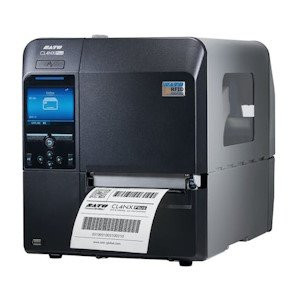
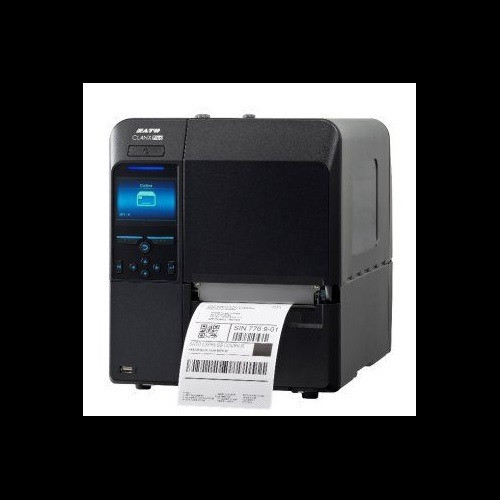
Both the Sato WWCLP2201-NAR and the Sato WWCLP3B01-WAR are industrial direct thermal/thermal transfer label printers from the CL4NX Plus platform, sharing identical chassis dimensions, print speed, media handling, memory, connectivity, power requirements, and operating environment. The primary differentiation lies in print resolution and RFID capability: the WWCLP2201-NAR is a 305 dpi barcode/label printer, while the WWCLP3B01-WAR offers 609 dpi resolution and adds 13.56 MHz HF RFID tag encoding. Buyers choosing between them are trading off resolution and RFID against application requirements and budget.
In This Guide
- Which model delivers the resolution and encoding capability your labels require?
- How do both models handle media, ribbon, and throughput demands in an industrial environment?
- Are connectivity, memory, display, and operating environment equivalent between the two models?
- Which should you choose: the WWCLP2201-NAR or the WWCLP3B01-WAR?
- Side-by-Side Specs
- FAQ
Which model delivers the resolution and encoding capability your labels require?
The WWCLP2201-NAR prints at 305 dpi, suitable for standard 1D barcodes, shipping labels, compliance labels, and retail or pharmaceutical applications where moderate barcode density is acceptable at 14 ips throughput. The WWCLP3B01-WAR doubles the resolution to 609 dpi at the same 14 ips print speed, enabling finer dot pitch for small text, high-density 2D barcodes (QR, Data Matrix), and micro-printing applications where label real estate is constrained or readability under magnification is required.
Beyond print resolution, the WWCLP3B01-WAR adds 13.56 MHz HF RFID encoding with auto-optimization (auto-antenna tuning per the product specification). This enables simultaneous label printing and RFID inlay programming on a single pass — a capability the WWCLP2201-NAR entirely lacks. If your workflow requires HF RFID tags (NFC-compatible, ISO 15693/14443 frequencies), the WWCLP3B01-WAR is the only option between these two. The WWCLP2201-NAR has no RFID specification listed.
How do both models handle media, ribbon, and throughput demands in an industrial environment?
Both printers share an identical media handling profile: maximum media width 5.04 inches, minimum 0.87 inches, maximum print width 4.09 inches, and maximum roll diameter 10 inches. Ribbon capacity is also identical at a maximum length of 1,968 ft, meaning ribbon change intervals and consumable logistics are the same across both models. Print speed is 14 ips for both units, so throughput per shift is equivalent when printing comparable label content.
Both support Direct Thermal and Thermal Transfer print modes, giving operators the flexibility to run without ribbon on heat-sensitive media or use ribbon for durability-demanding labels (chemical exposure, outdoor use). Neither model has a documented advantage in media versatility or throughput based on the provided specifications. Frame material is only specified for the WWCLP3B01-WAR — rigid cast aluminum with corrosion-resistant material — while no frame material specification is listed for the WWCLP2201-NAR.
Are connectivity, memory, display, and operating environment equivalent between the two models?
Connectivity is functionally identical across both models: Ethernet, Wi-Fi, and USB are listed for both. The WWCLP2201-NAR specification additionally mentions Bluetooth in one data field, while the WWCLP3B01-WAR specification does not list Bluetooth — buyers requiring Bluetooth connectivity should verify directly with Sato, as the WWCLP3B01-WAR spec does not confirm it.
Memory is identical: 2 GB Flash, 256 MB SDRAM, and 100 MB user storage on both. Display is a 3.5-inch Full-Color LCD on both units. Operating temperature range is 41°F to 104°F (5°C to 40°C) for both, and power input is AC 100–240V, 50/60Hz on both. Physical dimensions (10.66" x 17.99" x 12.63") and weight (33 lbs / 15 kg) are identical. Warranty is 1 year for both. The operating environment poses no differentiation between models based on available specifications.
Which should you choose: the WWCLP2201-NAR or the WWCLP3B01-WAR?
Our take: The WWCLP3B01-WAR is the stronger choice when your application demands higher print resolution or HF RFID tag encoding; the WWCLP2201-NAR is appropriate when 305 dpi barcode output is sufficient and RFID is not required. Concretely: (1) resolution doubles from 305 dpi to 609 dpi on the WWCLP3B01-WAR, enabling finer text and high-density 2D symbologies the WWCLP2201-NAR cannot match; (2) the WWCLP3B01-WAR adds 13.56 MHz HF RFID encoding with auto-antenna tuning — a capability absent entirely from the WWCLP2201-NAR; (3) the WWCLP3B01-WAR specifies a rigid cast aluminum frame with corrosion-resistant material, while no frame material is listed for the WWCLP2201-NAR. All other parameters — speed, media range, memory, connectivity, power, operating temperature, and weight — are identical. Deployments in healthcare, library, access-card, or NFC-tag workflows should select the WWCLP3B01-WAR; high-volume standard-label environments where 305 dpi suffices may find the WWCLP2201-NAR adequate.
Side-by-Side Comparison
Spec-for-spec, from manufacturer data.
| Specification | Sato WWCLP2201-NAR | Sato WWCLP3B01-WAR |
|---|---|---|
| SKU / MPN | WWCLP2201-NAR | WWCLP3B01-WAR |
| Print Resolution | 305 dpi | 609 dpi |
| Print Speed | 14 ips | 14 ips |
| Print Method | Direct Thermal / Thermal Transfer | Direct Thermal / Thermal Transfer |
| Max Print Width | 4.09" | 4.09" |
| Min Media Width | 0.87" | 0.87" |
| Max Media Width | 5.04" | 5.04" |
| Max Roll Diameter | 10" | 10" |
| Max Ribbon Length | 1,968 ft | 1,968 ft |
| RFID Capability | — | 13.56 MHz HF with auto-optimization |
| Connectivity | Ethernet, Wi-Fi, USB, Bluetooth (per datasheet field) | Ethernet, Wi-Fi, USB |
| Display | 3.5" Full-Color LCD | 3.5" Full-Color LCD |
| Memory Flash | 2 GB | 2 GB |
| Memory SDRAM | 256 MB | 256 MB |
| User Storage | 100 MB | 100 MB |
| Frame Material | — | Rigid cast aluminum, corrosion-resistant |
| Power Input | AC 100–240V, 50/60Hz | AC 100–240V, 50/60Hz |
| Operating Temp | 41°F–104°F (5°C–40°C) | 41°F–104°F (5°C–40°C) |
| Dimensions (W x D x H) | 10.66" x 17.99" x 12.63" | 10.66" x 17.99" x 12.63" |
| Weight | 33 lbs / 15 kg | 33 lbs / 15 kg |
| Warranty | 1 year | 1 year |
Frequently Asked Questions
Which should you choose: the WWCLP2201-NAR or the WWCLP3B01-WAR?
The WWCLP3B01-WAR is the stronger choice when your application demands higher print resolution or HF RFID tag encoding; the WWCLP2201-NAR is appropriate when 305 dpi barcode output is sufficient and RFID is not required. Concretely: (1) resolution doubles from 305 dpi to 609 dpi on the WWCLP3B01-WAR, enabling finer text and high-density 2D symbologies the WWCLP2201-NAR cannot match; (2) the WWCLP3B01-WAR adds 13.56 MHz HF RFID encoding with auto-antenna tuning — a capability absent entirely from the WWCLP2201-NAR; (3) the WWCLP3B01-WAR specifies a rigid cast aluminum frame with corrosion-resistant material, while no frame material is listed for the WWCLP2201-NAR. All other parameters — speed, media range, memory, connectivity, power, operating temperature, and weight — are identical. Deployments in healthcare, library, access-card, or NFC-tag workflows should select the WWCLP3B01-WAR; high-volume standard-label environments where 305 dpi suffices may find the WWCLP2201-NAR adequate.
Does either printer support RFID tag encoding?
Only the WWCLP3B01-WAR supports RFID. It encodes 13.56 MHz HF tags with auto-antenna tuning. The WWCLP2201-NAR has no RFID capability listed in its specifications.
Is the print speed the same on both models even though the resolution is different?
Yes. Both the WWCLP2201-NAR (305 dpi) and the WWCLP3B01-WAR (609 dpi) are specified at 14 inches per second. The WWCLP3B01-WAR achieves twice the dot density without a throughput penalty based on the provided specifications.
Do both printers handle the same label and ribbon sizes?
Yes. Both accept media from 0.87 to 5.04 inches wide, print up to 4.09 inches wide, support roll diameters up to 10 inches, and accept ribbon up to 1,968 ft. Consumable compatibility and media logistics are identical between the two models.
More Label Printer Comparisons
- Honeywell PX940 vs Sato WWCLP3B01-WAR
- Honeywell PX940 vs Sato WWCLP3801-NAR
- Honeywell PX940 vs Sato WWCLP3801-WAR
- Honeywell PX940 vs Wasp WPL408
- Honeywell PX940 vs Honeywell PX4654-020
- Honeywell PX940 vs Honeywell PX6654-000
Label Printer Buying Guides
Get a Second Opinion on Your Camera Choice
Share your site layout, coverage goals, and budget. Our team will validate the camera selection, flag anything we would change, and recommend products that match the use case.