
Honeywell PX940 vs Honeywell PX6654-000: Specification Comparison
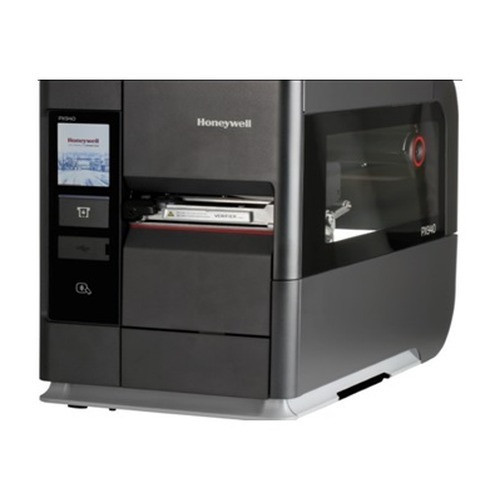
Both the Honeywell PX940 (PX940V3H110060202) and the Honeywell PM45 (1-PX6654-000) are industrial-class direct thermal and thermal transfer label printers running Android OS, each featuring a 3.5-inch color touch LCD and support for major emulation languages including ZPL II, ZSim2, Direct Protocol, and Fingerprint. A buyer evaluating either unit is likely sourcing for a warehouse, manufacturing, or distribution environment requiring rugged, high-volume label output. The key differentiator is that the PX940 integrates a barcode verifier for point-of-print quality control, while the PM45 is a standard industrial printer without that capability.

In This Guide
- How do print performance and media handling capabilities compare between the PX940 and PM45?
- How do the processing power, memory, and connectivity options differ between the two printers?
- How do the physical footprint, weight, and operating environment specifications compare?
- Which should you choose: the PX940 or the PX6654-000?
- Side-by-Side Specs
- FAQ
How do print performance and media handling capabilities compare between the PX940 and PM45?
The PX940 specifies a print speed range of 25–350 mm/s at 203 DPI with a maximum print width of 105.7 mm (4.16 in). It supports ribbon lengths up to 450 m (1,476 ft) with a maximum media roll diameter of 213 mm (8.38 in), and includes integrated label finishing hardware: a rewinder, peeler, and label taken sensor. The ribbon configuration supports both ink-in and ink-out orientations on a 3-inch core.
The PM45 specifies a maximum print width of 108 mm (4.25 in), which is marginally wider than the PX940. However, the PM45 specs provided do not include print speed, maximum ribbon length, media roll diameter, ribbon core size, or integrated label finishing options such as a rewinder or peeler. Buyers requiring detailed media handling specifications for the PM45 should consult the manufacturer datasheet directly.
On the verifier dimension, the PX940 includes an integrated barcode verifier supporting both 1D (ISO/IEC 15416) and 2D (ISO/IEC 15415) standards. The PM45 specs list no verifier capability.
How do the processing power, memory, and connectivity options differ between the two printers?
The PX940 is equipped with a dual-core ARM Cortex-A9 1 GHz processor, 1 GB DDR3 SDRAM, and 256 MB Flash storage. This processor and memory configuration supports more compute-intensive tasks, including real-time barcode verification and management of a larger, heavier unit.
The PM45 is specified with 256 MB SDRAM and 512 MB Flash. No processor model or clock speed is listed in the provided specs. Compared to the PX940, the PM45 has less RAM (256 MB vs. 1 GB) but more Flash storage (512 MB vs. 256 MB). Neither spec sheet clarifies what workloads the differing memory configurations are optimized for.
On connectivity, the PX940 supports Ethernet, Bluetooth Low Energy, USB, and Wi-Fi (802.11 a/b/g/n/ac). The PM45 supports Ethernet, Wi-Fi, USB, and RS-232 (per the tilde-prefixed spec line); no Bluetooth is listed for the PM45. Both units run Android OS. The PM45 also lists RS-232 as a connectivity option, which the PX940 specs do not mention.
How do the physical footprint, weight, and operating environment specifications compare?
The PX940 with verifier is substantially larger and heavier: 261 × 506 × 398.7 mm (10.3 × 19.9 × 15.7 in) and 23.5 kg (51.8 lbs). This weight and size is attributable in part to the integrated verifier assembly. Both units share the same operating temperature range of 5 to 40°C (41 to 104°F) and the same storage temperature floor of -20°C.
The PM45 is notably more compact at 483 × 295 × 284 mm (19.0 × 11.6 × 11.2 in) and weighs 12.1 kg (26.7 lbs) — roughly half the weight of the PX940. Note that while the PM45's length dimension (483 mm) exceeds the PX940's, its height (284 mm) is considerably shorter, making it a lower-profile unit on a workstation or cart.
The PM45 specs include a humidity specification of 10–90% non-condensing; the PX940 specs do not list a humidity rating. The PM45 storage temperature spec lists an upper limit of 152°F (66.7°C), while the PX940 lists 70°C (158°F) — a minor difference that may reflect spec document rounding.
Which should you choose: the PX940 or the PX6654-000?
Our take: The PX940 is the stronger choice when point-of-print barcode verification to ISO/IEC 15415/15416 standards is a hard requirement, such as in pharmaceutical, automotive, or regulated traceability environments. Three concrete spec deltas drive this: the PX940 integrates a 1D and 2D barcode verifier that the PM45 entirely lacks; it carries 1 GB DDR3 SDRAM versus the PM45's 256 MB SDRAM, supporting more complex label and verification workloads; and it adds Bluetooth LE and 802.11 a/b/g/n/ac Wi-Fi versus the PM45's unspecified Wi-Fi plus RS-232. Conversely, the PM45 is the appropriate choice for standard high-volume industrial labeling where verification is not required, space is constrained, or a lighter unit (12.1 kg vs. 23.5 kg) is operationally necessary. Buyers on platforms requiring RS-232 legacy serial connections should note only the PM45 lists that interface.
Side-by-Side Comparison
Spec-for-spec, from manufacturer data.
| Specification | Honeywell PX940 | Honeywell PX6654-000 |
|---|---|---|
| Series / Family | PX940 | PM45 |
| SKU | PX940V3H110060202 | 1-PX6654-000 |
| Print Method | Direct Thermal / Thermal Transfer | Direct Thermal / Thermal Transfer |
| Print Resolution | 203 DPI | Not specified |
| Print Speed | 25–350 mm/s at 203 DPI | Not specified |
| Max Print Width | 105.7 mm (4.16 in) | 108 mm (4.25 in) |
| Processor | Dual-core ARM Cortex-A9 1 GHz | Not specified |
| RAM | 1 GB DDR3 SDRAM | 256 MB SDRAM |
| Flash Storage | 256 MB | 512 MB |
| Display | 3.5 in Color Touch LCD | 3.5 in Color Touch LCD |
| Connectivity | Ethernet, Wi-Fi 802.11 a/b/g/n/ac, Bluetooth LE, USB | Ethernet, Wi-Fi, USB, RS-232 |
| Emulations | ZPL II, ZSim2, Direct Protocol, Fingerprint, Intermec | ZPL II, ZSim2, Direct Protocol, Fingerprint, IPL |
| Integrated Barcode Verifier | 1D (ISO/IEC 15416) and 2D (ISO/IEC 15415) | — |
| Max Ribbon Length | 450 m (1,476 ft) | Not specified |
| Operating Temperature | 5 to 40°C (41 to 104°F) | 5 to 40°C (41 to 104°F) |
| Weight | 23.5 kg (51.8 lbs) with verifier | 12.1 kg (26.7 lbs) |
Frequently Asked Questions
Which should you choose: the PX940 or the PX6654-000?
The PX940 is the stronger choice when point-of-print barcode verification to ISO/IEC 15415/15416 standards is a hard requirement, such as in pharmaceutical, automotive, or regulated traceability environments. Three concrete spec deltas drive this: the PX940 integrates a 1D and 2D barcode verifier that the PM45 entirely lacks; it carries 1 GB DDR3 SDRAM versus the PM45's 256 MB SDRAM, supporting more complex label and verification workloads; and it adds Bluetooth LE and 802.11 a/b/g/n/ac Wi-Fi versus the PM45's unspecified Wi-Fi plus RS-232. Conversely, the PM45 is the appropriate choice for standard high-volume industrial labeling where verification is not required, space is constrained, or a lighter unit (12.1 kg vs. 23.5 kg) is operationally necessary. Buyers on platforms requiring RS-232 legacy serial connections should note only the PM45 lists that interface.
Does the PX940 or PM45 include an integrated barcode verifier?
Only the PX940 includes an integrated barcode verifier. It supports both 1D verification to ISO/IEC 15416 and 2D verification to ISO/IEC 15415. The PM45 specs list no verifier capability.
Which printer has more memory — the PX940 or the PM45?
The PX940 has significantly more RAM: 1 GB DDR3 SDRAM versus 256 MB SDRAM in the PM45. The PM45 has more Flash storage (512 MB versus 256 MB in the PX940). No processor specification is provided for the PM45; the PX940 uses a dual-core ARM Cortex-A9 at 1 GHz.
Is the PX940 or PM45 better suited for space-constrained or mobile cart installations?
The PM45 is better suited for space-constrained installations. It weighs 12.1 kg (26.7 lbs) compared to 23.5 kg (51.8 lbs) for the PX940 with verifier, and its lower profile height (284 mm vs. 398.7 mm) makes it easier to integrate on standard worksurfaces or carts.
More Label Printer Comparisons
- Honeywell PX940 vs Sato WWCLP3B01-WAR
- Honeywell PX940 vs Sato WWCLP3801-NAR
- Honeywell PX940 vs Sato WWCLP3801-WAR
- Honeywell PX940 vs Wasp WPL408
- Honeywell PX940 vs Honeywell PX4654-020
- Sato WWCLP3B01-WAR vs Wasp WPL408
Label Printer Buying Guides
Get a Second Opinion on Your Camera Choice
Share your site layout, coverage goals, and budget. Our team will validate the camera selection, flag anything we would change, and recommend products that match the use case.