
Honeywell PX940 vs Sato WWCLP3B01-WAR: Specification Comparison
Both the Honeywell PX940 (PX940V3H110060202) and the Sato CL4NX Plus (WWCLP3B01-WAR) are industrial thermal label printers supporting direct thermal and thermal transfer print methods, designed for high-volume production environments. This comparison evaluates them across print performance, physical and media handling specifications, and connectivity and intelligence features — the three axes most relevant to buyers selecting an industrial printer for demanding label output applications.
In This Guide
- How do the PX940 and WWCLP3B01-WAR compare on print resolution, speed, and verification capability?
- How do the two printers differ in media capacity, ribbon handling, RFID capability, and physical footprint?
- How do the PX940 and WWCLP3B01-WAR compare on connectivity, onboard computing, and emulation/integration support?
- Which should you choose: the PX940 or the WWCLP3B01-WAR?
- Side-by-Side Specs
- FAQ
How do the PX940 and WWCLP3B01-WAR compare on print resolution, speed, and verification capability?
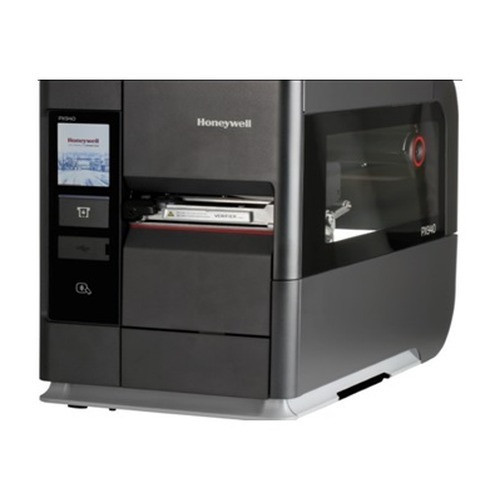
The Honeywell PX940 is specified at 203 DPI with a print speed range of 25–350 mm/s (approximately 1–14 ips) at that resolution, and a maximum print width of 105.7 mm (4.16 in). A defining differentiator is its integrated barcode verifier, conforming to ISO/IEC 15416 for 1D and ISO/IEC 15415 for 2D symbols — point-of-print quality control built into the unit itself.
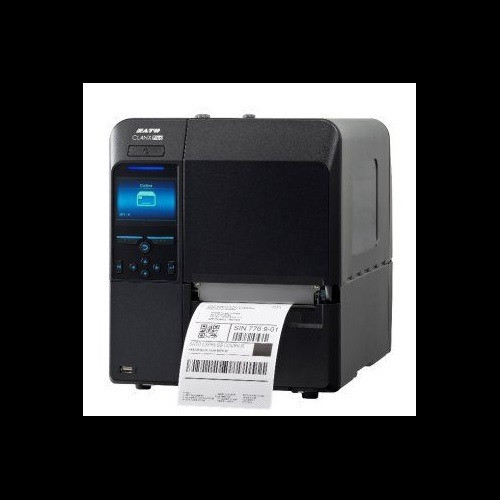
The Sato CL4NX Plus is specified at 609 DPI (with a secondary field also listing 203 DPI — the 609 DPI figure is stated in the product title, tagline, and tilde-prefixed marketing specs, and is treated here as the operative resolution). Its print speed is listed at 14 ips with a maximum print width of 4.09 in. No integrated barcode verifier is listed in the provided specifications.
For applications requiring ISO-compliant barcode verification at the point of print, the PX940's built-in verifier is a direct functional advantage not matched by the WWCLP3B01-WAR's listed specs. The WWCLP3B01-WAR's 609 DPI resolution is a significant advantage for fine-detail or high-density label requirements where 203 DPI is insufficient.
How do the two printers differ in media capacity, ribbon handling, RFID capability, and physical footprint?
The Sato CL4NX Plus accepts media widths from 0.87 in to 5.04 in and supports media roll diameters up to 10 in (254 mm). Its ribbon capacity is 1,968 ft. It also incorporates 13.56 MHz HF RFID encoding with auto-antenna tuning — a capability entirely absent from the PX940's listed specifications. The frame is described as rigid cast aluminum with corrosion-resistant material.
The Honeywell PX940 supports a maximum media roll diameter of 213 mm (8.38 in) and a maximum ribbon length of 450 m (1,476 ft). Media width minimum is not specified in the provided data. It includes label handling options of rewinder, peeler, and label taken sensor. The PX940 weighs 23.5 kg (51.8 lbs) with verifier and measures 261 × 506 × 398.7 mm. The Sato unit weighs 33 lbs (15 kg) and measures 10.66 × 17.99 × 12.63 in — notably lighter despite its larger ribbon capacity.
Buyers with HF RFID label encoding requirements will find only the WWCLP3B01-WAR addresses that need from the specs provided. The PX940's larger ribbon capacity (1,476 ft vs. the WWCLP3B01-WAR's 1,968 ft) is lower, but the PX940 adds the rewinder/peeler finishing hardware not listed for the Sato unit.
How do the PX940 and WWCLP3B01-WAR compare on connectivity, onboard computing, and emulation/integration support?
The Honeywell PX940 runs Android on a dual-core ARM Cortex-A9 1 GHz processor with 1 GB DDR3 SDRAM and 256 MB Flash. Connectivity includes Ethernet, 802.11 a/b/g/n/ac Wi-Fi, Bluetooth LE, and USB. It supports emulations including ZPL II, ZSim2, Direct Protocol, Fingerprint, and Intermec — a broad compatibility matrix for mixed-fleet or multi-vendor environments. The 3.5 in color touch LCD is confirmed.
The Sato CL4NX Plus lists Ethernet, Wi-Fi, and USB connectivity with a 3.5 in full-color LCD touchscreen. Memory is 2 GB Flash and 256 MB SDRAM, with 100 MB user storage. No operating system, processor model, Bluetooth version, or emulation language list is provided in the specifications supplied.
The PX940's explicit emulation list (ZPL II, Intermec Fingerprint, Direct Protocol) is directly relevant to installers migrating from Zebra or legacy Intermec fleets. The WWCLP3B01-WAR's larger Flash memory (2 GB vs. 256 MB) may benefit label storage or firmware headroom, but processor and OS details are not available to compare.
Which should you choose: the PX940 or the WWCLP3B01-WAR?
Our take: The PX940 is the stronger choice when ISO-compliant point-of-print barcode verification, broad emulation compatibility (ZPL II, Intermec, Direct Protocol), and wireless Bluetooth plus 802.11ac connectivity are required in the same unit. The PX940 delivers integrated 1D/2D verification to ISO/IEC 15416 and 15415 — a capability absent from the WWCLP3B01-WAR's listed specs — and supports five named emulation languages versus none listed for the Sato. Conversely, the WWCLP3B01-WAR is the clear choice when 609 DPI print resolution or 13.56 MHz HF RFID label encoding is a hard requirement, neither of which is offered by the PX940. The Sato also carries a larger ribbon capacity (1,968 ft vs. 1,476 ft) and is lighter (15 kg vs. 23.5 kg). Buyers in pharmaceutical, retail compliance, or regulated traceability environments needing verified print quality should favor the PX940; RFID-dependent supply-chain or smart-label deployments requiring high-resolution output point to the WWCLP3B01-WAR.
Side-by-Side Comparison
Spec-for-spec, from manufacturer data.
| Specification | Honeywell PX940 | Sato WWCLP3B01-WAR |
|---|---|---|
| Print Method | Direct Thermal / Thermal Transfer | Direct Thermal / Thermal Transfer |
| Print Resolution | 203 DPI | 609 DPI |
| Print Speed | 25–350 mm/s (1–14 ips) at 203 DPI | 14 ips |
| Max Print Width | 105.7 mm (4.16 in) | 4.09 in |
| Integrated Barcode Verifier | Yes — 1D ISO/IEC 15416, 2D ISO/IEC 15415 | — |
| RFID Capability | — | 13.56 MHz HF with auto-antenna tuning |
| Display | 3.5 in Color Touch LCD | 3.5 in Full-Color LCD Touchscreen |
| Connectivity | Ethernet, 802.11 a/b/g/n/ac Wi-Fi, Bluetooth LE, USB | Ethernet, Wi-Fi, USB |
| Processor | Dual-core ARM Cortex-A9 1 GHz | — |
| RAM | 1 GB DDR3 SDRAM | 256 MB SDRAM |
| Flash Storage | 256 MB | 2 GB (+ 100 MB user storage) |
| Operating System | Android | — |
| Emulations Supported | ZPL II, ZSim2, Direct Protocol, Fingerprint, Intermec | — |
| Max Ribbon Length | 450 m (1,476 ft) | 1,968 ft |
| Max Media Roll Diameter | 213 mm (8.38 in) | 10 in (254 mm) |
| Weight | 23.5 kg (51.8 lbs) with verifier | 15 kg (33 lbs) |
Frequently Asked Questions
Which should you choose: the PX940 or the WWCLP3B01-WAR?
The PX940 is the stronger choice when ISO-compliant point-of-print barcode verification, broad emulation compatibility (ZPL II, Intermec, Direct Protocol), and wireless Bluetooth plus 802.11ac connectivity are required in the same unit. The PX940 delivers integrated 1D/2D verification to ISO/IEC 15416 and 15415 — a capability absent from the WWCLP3B01-WAR's listed specs — and supports five named emulation languages versus none listed for the Sato. Conversely, the WWCLP3B01-WAR is the clear choice when 609 DPI print resolution or 13.56 MHz HF RFID label encoding is a hard requirement, neither of which is offered by the PX940. The Sato also carries a larger ribbon capacity (1,968 ft vs. 1,476 ft) and is lighter (15 kg vs. 23.5 kg). Buyers in pharmaceutical, retail compliance, or regulated traceability environments needing verified print quality should favor the PX940; RFID-dependent supply-chain or smart-label deployments requiring high-resolution output point to the WWCLP3B01-WAR.
Which printer should I choose if my operation requires barcode grade verification at the point of print?
Only the Honeywell PX940 includes an integrated barcode verifier in its listed specifications, conforming to ISO/IEC 15416 (1D) and ISO/IEC 15415 (2D). The Sato WWCLP3B01-WAR's provided specifications do not list any built-in verification capability. If grade verification is a compliance or quality requirement, the PX940 addresses it directly without an external verifier.
Does either printer support RFID label encoding?
Yes — the Sato WWCLP3B01-WAR specifies 13.56 MHz HF RFID encoding with auto-antenna tuning. The Honeywell PX940's provided specifications contain no mention of RFID capability. Buyers whose label programs include HF RFID inlays should select the WWCLP3B01-WAR.
Will either printer work in a mixed fleet that already uses Zebra ZPL-based label formats?
The Honeywell PX940 explicitly lists ZPL II and ZSim2 among its supported emulations, making it directly compatible with existing Zebra-format label files. The Sato WWCLP3B01-WAR's provided specifications do not list supported emulation languages, so ZPL compatibility cannot be confirmed from the data supplied.
More Label Printer Comparisons
- Honeywell PX940 vs Sato WWCLP3801-NAR
- Honeywell PX940 vs Sato WWCLP3801-WAR
- Honeywell PX940 vs Wasp WPL408
- Honeywell PX940 vs Honeywell PX4654-020
- Honeywell PX940 vs Honeywell PX6654-000
- Sato WWCLP3B01-WAR vs Wasp WPL408
Label Printer Buying Guides
Get a Second Opinion on Your Camera Choice
Share your site layout, coverage goals, and budget. Our team will validate the camera selection, flag anything we would change, and recommend products that match the use case.