
Honeywell PX940 vs Sato WWCLP3801-NAR: Specification Comparison
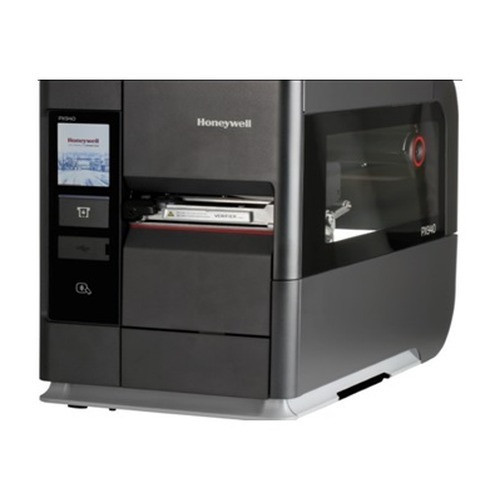
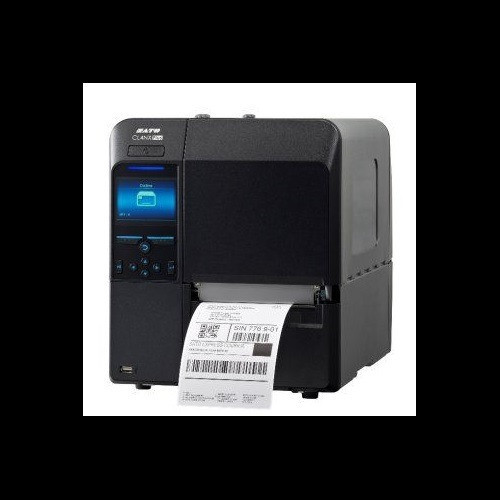
Both the Honeywell PX940 (PX940V3H110060202) and the Sato CL4NX Plus (WWCLP3801-NAR) are industrial-grade direct thermal and thermal transfer label printers targeting demanding production and warehouse environments. The PX940 differentiates itself with an integrated barcode verifier and dual-core processing, while the CL4NX Plus leads on print resolution and adds HF RFID encoding capability. This comparison evaluates them across the three dimensions most relevant to industrial label printer buyers: print performance and resolution, media and ribbon handling capacity, and connectivity plus platform integration.
In This Guide
- Which printer delivers higher resolution and faster throughput for industrial label production?
- Which unit handles larger media rolls and ribbon loads for high-volume unattended runs?
- Which printer offers broader connectivity and platform integration for enterprise and IT environments?
- Which should you choose: the PX940 or the WWCLP3801-NAR?
- Side-by-Side Specs
- FAQ
Which printer delivers higher resolution and faster throughput for industrial label production?
The Sato CL4NX Plus (WWCLP3801-NAR) is specified at 609 DPI with a maximum print speed of 14 ips (approximately 356 mm/s). The Honeywell PX940 (PX940V3H110060202) is specified at 203 DPI with a print speed range of 25–350 mm/s (1–14 ips). At comparable speeds, the CL4NX Plus produces significantly more detail per inch — 609 DPI versus 203 DPI — which matters for fine-pitch barcodes, small font sizes, and high-density 2D codes.
Note that the PX940 spec sheet also lists a 'Print Resolution: 203' field in one section while carrying a separate 'Resolution DPI' field; both sources confirm 203 DPI for the Honeywell unit. The Sato spec lists '609dpi at 14 ips' as its headline resolution. Print width is close: 105.7 mm (4.16 in) for the PX940 versus 4.09 in for the CL4NX Plus — a negligible difference for most label stock.
The Honeywell PX940 adds an integrated barcode verifier (ISO/IEC 15416 for 1D, ISO/IEC 15415 for 2D) that validates each label at point of print. No barcode verifier is listed in the Sato CL4NX Plus spec. For regulated industries where label quality must be certified — pharma, aerospace, GS1 compliance — this is a material functional difference.
Which unit handles larger media rolls and ribbon loads for high-volume unattended runs?
The Sato CL4NX Plus supports a maximum media roll diameter of 10 inches (254 mm) and a maximum ribbon length of 1,968 ft (600 m). The Honeywell PX940 supports a maximum media roll diameter of 213 mm (8.38 in) and a maximum ribbon length of 1,476 ft (450 m). On both dimensions, the CL4NX Plus holds more material per load, which translates to fewer operator interventions in high-volume unattended production.
The Sato unit accepts core sizes of 1 inch and 3 inches. The Honeywell PX940 specifies a 3-inch ribbon core and supports ink-in and ink-out ribbon configurations. Core size compatibility for the CL4NX Plus media side is not stated beyond the roll diameter. The Honeywell unit specifies a maximum media roll diameter in millimeters (213 mm / 8.38 in), which is smaller than the Sato's 10-inch (254 mm) capacity.
The CL4NX Plus also adds HF RFID encoding at 13.56 MHz — a capability entirely absent from the PX940 spec. For smart label or asset-tracking applications requiring both a printed label and an embedded RFID chip encoded in a single pass, only the Sato unit supports this from the listed specs.
Which printer offers broader connectivity and platform integration for enterprise and IT environments?
Both printers include Ethernet, Wi-Fi, and USB. The Honeywell PX940 additionally specifies Bluetooth Low Energy (for Print Set MC configuration via user guide) and 802.11 a/b/g/n/ac Wi-Fi. The Sato CL4NX Plus spec lists Wi-Fi but does not detail the Wi-Fi standard or Bluetooth capability.
The Honeywell PX940 runs Android OS on a dual-core ARM Cortex-A9 1 GHz processor with 1 GB DDR3 SDRAM and 256 MB Flash. The Sato CL4NX Plus is specified with 256 MB SDRAM, 2 GB Flash, and 100 MB user storage; no operating system or processor is listed in the provided spec. The PX940's Android platform and named processor give IT teams a concrete integration target; the CL4NX Plus platform details are not available from the provided specification.
Emulation support is documented only for the Honeywell unit: ZPL II, ZSim2, Direct Protocol, Fingerprint, and Intermec. No emulation list is provided for the Sato CL4NX Plus in the supplied spec data. For shops already running Zebra ZPL label templates or Intermec-based workflows, the PX940's named emulations are a concrete compatibility data point the Sato spec does not match.
Which should you choose: the PX940 or the WWCLP3801-NAR?
Our take: The PX940 is the stronger choice when point-of-print label verification, named ZPL/Intermec emulation, and a documented Android platform are priorities; the CL4NX Plus is the stronger choice when 609 DPI resolution, HF RFID encoding, larger media roll capacity, or longer ribbon runs are the deciding factors. Concretely: the CL4NX Plus prints at 609 DPI versus the PX940's 203 DPI — three times the resolution; it holds a 600 m ribbon versus the PX940's 450 m; and it adds 13.56 MHz HF RFID encoding not available on the PX940. Conversely, only the PX940 includes an integrated ISO/IEC 15415/15416 barcode verifier and lists specific emulations (ZPL II, ZSim2, Fingerprint, Intermec). Choose the PX940 for compliance-driven label verification on existing Zebra or Intermec label infrastructures; choose the CL4NX Plus for high-resolution smart-label or RFID asset-tagging lines where ribbon and roll capacity reduce changeover frequency.
Side-by-Side Comparison
Spec-for-spec, from manufacturer data.
| Specification | Honeywell PX940 | Sato WWCLP3801-NAR |
|---|---|---|
| Print Method | Direct Thermal / Thermal Transfer | Direct Thermal / Thermal Transfer |
| Print Resolution | 203 DPI | 609 DPI |
| Print Speed (max) | 350 mm/s (14 ips) at 203 DPI | 14 ips (356 mm/s) |
| Max Print Width | 105.7 mm (4.16 in) | 4.09 in (103.9 mm) |
| Integrated Barcode Verifier | Yes — 1D ISO/IEC 15416 and 2D ISO/IEC 15415 | — |
| RFID Encoding | — | HF 13.56 MHz |
| Max Ribbon Length | 450 m (1,476 ft) | 600 m (1,968 ft) |
| Max Media Roll Diameter | 213 mm (8.38 in) | 10 in (254 mm) |
| Ribbon Core Size | 3 in | 1 in and 3 in |
| Display | 3.5 in Color Touch LCD | 3.5 in Full-Color LCD Touchscreen |
| Connectivity | Ethernet, Wi-Fi 802.11 a/b/g/n/ac, Bluetooth LE, USB | Ethernet, Wi-Fi, USB |
| Memory (SDRAM) | 1 GB DDR3 SDRAM | 256 MB SDRAM |
| Flash Storage | 256 MB Flash | 2 GB Flash |
| Operating System | Android | — |
| Emulations | ZPL II, ZSim2, Direct Protocol, Fingerprint, Intermec | — |
| Weight | 23.5 kg (51.8 lbs) with verifier | 15 kg (33 lbs) |
Frequently Asked Questions
Which should you choose: the PX940 or the WWCLP3801-NAR?
The PX940 is the stronger choice when point-of-print label verification, named ZPL/Intermec emulation, and a documented Android platform are priorities; the CL4NX Plus is the stronger choice when 609 DPI resolution, HF RFID encoding, larger media roll capacity, or longer ribbon runs are the deciding factors. Concretely: the CL4NX Plus prints at 609 DPI versus the PX940's 203 DPI — three times the resolution; it holds a 600 m ribbon versus the PX940's 450 m; and it adds 13.56 MHz HF RFID encoding not available on the PX940. Conversely, only the PX940 includes an integrated ISO/IEC 15415/15416 barcode verifier and lists specific emulations (ZPL II, ZSim2, Fingerprint, Intermec). Choose the PX940 for compliance-driven label verification on existing Zebra or Intermec label infrastructures; choose the CL4NX Plus for high-resolution smart-label or RFID asset-tagging lines where ribbon and roll capacity reduce changeover frequency.
Does either printer support RFID encoding?
Yes — the Sato CL4NX Plus (WWCLP3801-NAR) includes integrated HF RFID encoding at 13.56 MHz. The Honeywell PX940 (PX940V3H110060202) does not list any RFID capability in the provided specifications.
Which printer is better for GS1 or pharmaceutical barcode compliance verification?
The Honeywell PX940 includes an integrated barcode verifier rated to ISO/IEC 15416 (1D) and ISO/IEC 15415 (2D) for point-of-print quality control. No barcode verifier is listed for the Sato CL4NX Plus in the provided specifications, meaning external verification would need to be added separately if compliance grading is required.
Which unit will require less frequent ribbon and media roll changes in a high-volume line?
The Sato CL4NX Plus supports a 600 m maximum ribbon length and a 10-inch (254 mm) maximum media roll diameter. The Honeywell PX940 supports a 450 m maximum ribbon length and a 213 mm (8.38 in) maximum media roll diameter. The CL4NX Plus holds approximately 33% more ribbon and a larger media roll, which reduces changeover frequency in continuous high-volume production runs.
More Label Printer Comparisons
- Honeywell PX940 vs Sato WWCLP3B01-WAR
- Honeywell PX940 vs Sato WWCLP3801-WAR
- Honeywell PX940 vs Wasp WPL408
- Honeywell PX940 vs Honeywell PX4654-020
- Honeywell PX940 vs Honeywell PX6654-000
- Sato WWCLP3B01-WAR vs Wasp WPL408
Label Printer Buying Guides
Get a Second Opinion on Your Camera Choice
Share your site layout, coverage goals, and budget. Our team will validate the camera selection, flag anything we would change, and recommend products that match the use case.