
Honeywell PX940 vs Honeywell PX4654-020: Specification Comparison
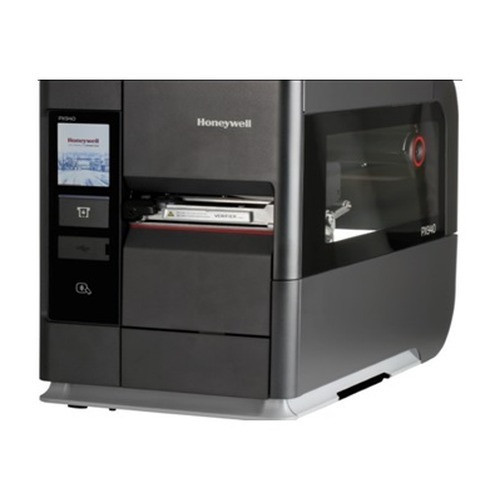
Both the Honeywell PX940 (PX940V3H110060202) and the Honeywell PM45 (1-PX4654-020) are Android-based industrial thermal label printers supporting direct thermal and thermal transfer print methods, 3.5-inch color touch displays, and a shared set of label emulations. They occupy the same general class of industrial desktop/workstation printers and are cross-shoppable by buyers evaluating a ruggedized, high-throughput labeling solution for warehouse, manufacturing, or logistics environments. The primary differentiator is that the PX940 integrates a certified barcode verifier, while the PM45 is a print-only unit at a lighter weight and smaller footprint.

In This Guide
- How do print performance and quality assurance capabilities compare between the PX940 and PM45?
- Which unit offers more processing power and media handling capacity for demanding label runs?
- How do connectivity options, physical footprint, and environmental ratings differ between the two printers?
- Which should you choose: the PX940 or the PX4654-020?
- Side-by-Side Specs
- FAQ
How do print performance and quality assurance capabilities compare between the PX940 and PM45?
The PX940 specifies a print speed range of 25–350 mm/s at 203 DPI with a maximum print width of 105.7 mm (4.16 in). Its most distinctive capability is an integrated barcode verifier that validates both 1D barcodes to ISO/IEC 15416 and 2D barcodes to ISO/IEC 15415 at the point of print — enabling inline quality control without a separate verification station.
The PM45 lists a maximum print width of 108 mm (4.25 in), fractionally wider than the PX940. However, the PM45 spec set does not include a print speed figure, a print resolution (DPI), or any barcode verification capability. Buyers who require certified barcode grade output for regulated industries (healthcare, aerospace, retail compliance) will find only the PX940 addresses that requirement from the provided specs.
Which unit offers more processing power and media handling capacity for demanding label runs?
The PX940 is equipped with a dual-core ARM Cortex-A9 processor running at 1 GHz, 1 GB DDR3 SDRAM, and 256 MB Flash. It supports ribbon lengths up to 450 m (1,476 ft) on a 3-inch core in both ink-in and ink-out configurations, and accommodates media roll diameters up to 213 mm (8.38 in). Label finishing options include an integrated rewinder, peeler, and label taken sensor.
The PM45 specifies 256 MB SDRAM and 512 MB Flash; its processor model and clock speed are not stated in the provided specs. The PM45 spec set does not include maximum ribbon length, maximum media roll diameter, ribbon core size, or label finishing options such as a rewinder or peeler. Buyers running long unattended ribbon runs or requiring automated label finishing will find the PX940 spec set more complete on these dimensions.
How do connectivity options, physical footprint, and environmental ratings differ between the two printers?
The PX940 connects via Ethernet, Wi-Fi (802.11 a/b/g/n/ac), Low Power Bluetooth, and USB. Its physical dimensions are 261 × 506 × 398.7 mm and it weighs 23.5 kg (51.8 lbs) with the verifier installed. Storage temperature range is –20 to 70 °C; operating temperature is 5 to 40 °C.
The PM45 connects via Ethernet, Wi-Fi, USB, and RS-232 (noted in the connectivity tilde field); Bluetooth is not specified. The PM45 is substantially more compact at 483 × 295 × 284 mm and lighter at 12.1 kg (26.7 lbs) — roughly half the weight of the PX940. Storage temperature is –20 to 70 °C with an upper limit of 152 °F (vs. 158 °F for the PX940); operating temperature is the same 5 to 40 °C. The PM45 also specifies a humidity rating of 10–90% non-condensing, which is not stated for the PX940. The PM45 includes RS-232 connectivity absent from the PX940 spec, while the PX940 adds Bluetooth absent from the PM45 spec.
Which should you choose: the PX940 or the PX4654-020?
Our take: The PX940 is the stronger choice when point-of-print barcode verification, higher processor resources, or extended ribbon capacity are mandatory requirements. It uniquely provides integrated 1D/2D barcode verification to ISO/IEC 15415/15416, a dual-core 1 GHz ARM Cortex-A9 with 1 GB DDR3 SDRAM versus the PM45's unspecified processor and 256 MB SDRAM, and a rated ribbon capacity of 450 m versus no ribbon capacity figure stated for the PM45. Conversely, the PM45 is the more practical option where bench or cart space is constrained — at 12.1 kg and a smaller chassis it is roughly half the weight of the 23.5 kg PX940 — and where RS-232 legacy host integration is needed. Buyers without a barcode verification mandate and with space or weight restrictions should evaluate the PM45; regulated-label environments requiring certified grade output at the printer have no equivalent option in the PM45 spec set.
Side-by-Side Comparison
Spec-for-spec, from manufacturer data.
| Specification | Honeywell PX940 | Honeywell PX4654-020 |
|---|---|---|
| Series / Family | PX940 | PM45 |
| SKU | PX940V3H110060202 | 1-PX4654-020 |
| Print Method | Direct Thermal / Thermal Transfer | Direct Thermal / Thermal Transfer |
| Print Resolution | 203 DPI | Not specified |
| Print Speed | 25–350 mm/s at 203 DPI | Not specified |
| Maximum Print Width | 105.7 mm (4.16 in) | 108 mm (4.25 in) |
| Processor | Dual-core ARM Cortex-A9 1 GHz | Not specified |
| RAM | 1 GB DDR3 SDRAM | 256 MB SDRAM |
| Flash Storage | 256 MB | 512 MB |
| Display | 3.5 in Color Touch LCD | 3.5 in Color Touch LCD |
| Connectivity | Ethernet, Wi-Fi 802.11 a/b/g/n/ac, Bluetooth LE, USB | Ethernet, Wi-Fi, USB, RS-232 |
| Barcode Verifier | Integrated 1D (ISO/IEC 15416) and 2D (ISO/IEC 15415) | — |
| Max Ribbon Length | 450 m (1,476 ft) | Not specified |
| Max Media Roll Diameter | 213 mm (8.38 in) | Not specified |
| Label Finishing | Rewinder, Peeler, Label Taken Sensor | Not specified |
| Emulations | ZPL II, ZSim2, Direct Protocol, Fingerprint, Intermec | ZPL II, ZSim2, Direct Protocol, Fingerprint, IPL |
| Operating Temperature | 5 to 40 C (41 to 104 F) | 5 to 40 C (41 to 104 F) |
| Storage Temperature | -20 to 70 C (-4 to 158 F) | -20 to 70 C (-4 to 152 F) |
| Weight | 23.5 kg (51.8 lbs) with verifier | 12.1 kg (26.7 lbs) |
| Dimensions (mm) | 261 x 506 x 398.7 | 483 x 295 x 284 |
| Operating System | Android | Android |
Frequently Asked Questions
Which should you choose: the PX940 or the PX4654-020?
The PX940 is the stronger choice when point-of-print barcode verification, higher processor resources, or extended ribbon capacity are mandatory requirements. It uniquely provides integrated 1D/2D barcode verification to ISO/IEC 15415/15416, a dual-core 1 GHz ARM Cortex-A9 with 1 GB DDR3 SDRAM versus the PM45's unspecified processor and 256 MB SDRAM, and a rated ribbon capacity of 450 m versus no ribbon capacity figure stated for the PM45. Conversely, the PM45 is the more practical option where bench or cart space is constrained — at 12.1 kg and a smaller chassis it is roughly half the weight of the 23.5 kg PX940 — and where RS-232 legacy host integration is needed. Buyers without a barcode verification mandate and with space or weight restrictions should evaluate the PM45; regulated-label environments requiring certified grade output at the printer have no equivalent option in the PM45 spec set.
Does either printer support barcode verification without a separate scanner?
Yes — the PX940 includes an integrated barcode verifier certified to ISO/IEC 15416 (1D) and ISO/IEC 15415 (2D), enabling grade-based quality checks at the point of print. The PM45 spec set does not list any barcode verification capability; a separate verifier would be required.
Is the PX940 or PM45 better suited for installations with limited counter or cart space?
The PM45 is significantly more compact. Its footprint is 483 × 295 × 284 mm and it weighs 12.1 kg (26.7 lbs). The PX940 measures 261 × 506 × 398.7 mm and weighs 23.5 kg (51.8 lbs) with the verifier — nearly double the weight. For space- or mobility-constrained deployments the PM45 has a clear physical advantage based on the provided specs.
Which printer should I choose if my host system uses an RS-232 serial interface?
The PM45 lists RS-232 in its connectivity spec, making it compatible with legacy serial hosts. The PX940 spec set does not mention RS-232; its listed interfaces are Ethernet, Wi-Fi 802.11 a/b/g/n/ac, Bluetooth LE, and USB. If RS-232 connectivity is required and barcode verification is not, the PM45 is the appropriate selection based on the available specifications.
More Label Printer Comparisons
- Honeywell PX940 vs Sato WWCLP3B01-WAR
- Honeywell PX940 vs Sato WWCLP3801-NAR
- Honeywell PX940 vs Sato WWCLP3801-WAR
- Honeywell PX940 vs Wasp WPL408
- Honeywell PX940 vs Honeywell PX6654-000
- Sato WWCLP3B01-WAR vs Wasp WPL408
Label Printer Buying Guides
Get a Second Opinion on Your Camera Choice
Share your site layout, coverage goals, and budget. Our team will validate the camera selection, flag anything we would change, and recommend products that match the use case.