
Honeywell PX940 vs Wasp WPL408: Specification Comparison
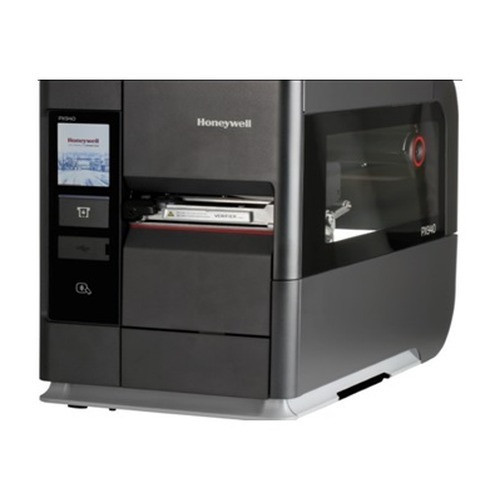
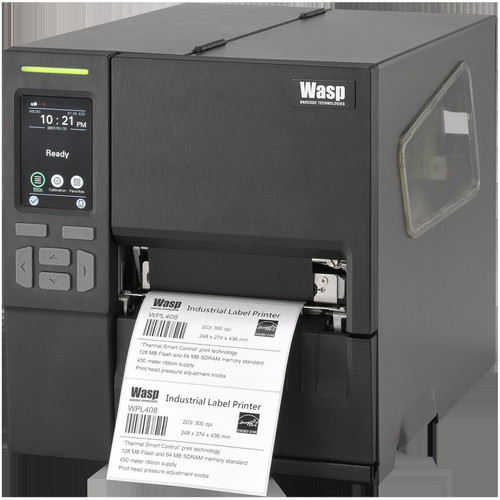
Both the Honeywell PX940 (PX940V3H110060202) and the Wasp WPL408 (633809007170) are industrial-grade thermal label printers built for demanding label production environments. This comparison covers the three dimensions most critical to industrial printer buyers: print performance and media handling, processing power and connectivity, and verification plus finishing capabilities. The PX940 adds an integrated barcode verifier, while the WPL408 targets mid-volume operations with a broader interface suite including a serial port.
In This Guide
- How do print speed, resolution, and media capacity compare between the PX940 and WPL408?
- Which printer offers stronger processing power and a more complete connectivity suite?
- Does either printer include barcode verification or advanced finishing, and how do their environmental ratings compare?
- Which should you choose: the PX940 or the WPL408?
- Side-by-Side Specs
- FAQ
How do print speed, resolution, and media capacity compare between the PX940 and WPL408?
Both printers share a 203 DPI print resolution, so output quality at that setting is equivalent on paper. Print speed is where they diverge: the Honeywell PX940 is rated at 25–350 mm/s (approximately 1–14 ips) at 203 DPI, while the Wasp WPL408 is rated at 10 ips. At maximum speed the PX940 is approximately 40% faster than the WPL408, which matters for high-volume label runs where throughput is a bottleneck.
Max print width is nearly identical: 105.7 mm (4.16 in) on the PX940 versus 107.95 mm (4.25 in) on the WPL408—a negligible 0.09-inch difference that will not affect most label formats. Ribbon capacity is also close: the PX940 supports up to 450 m (1,476 ft) and the WPL408 up to 1,474 ft (approximately 449 m), making ribbon-change frequency essentially equal. Both support thermal transfer and direct thermal print methods. Media roll diameter is specified only for the PX940 at 213 mm (8.38 in); the WPL408 spec does not state a maximum roll diameter.
The PX940 specifies a 3-inch ribbon core; the WPL408 does not specify core size in the provided data. Paper/media width range is documented only for the WPL408 at 1.6–4.3 inches; the PX940 spec does not break out a minimum media width in the provided data.
Which printer offers stronger processing power and a more complete connectivity suite?
The Honeywell PX940 is equipped with a dual-core ARM Cortex-A9 processor running at 1 GHz, 1 GB DDR3 SDRAM, and 256 MB of flash storage. It runs Android OS. The Wasp WPL408 uses a 32-bit RISC CPU (clock speed not specified), 128 MB SDRAM, and 128 MB of flash. The PX940 holds a clear advantage in compute headroom—double the RAM and double the flash—which supports its Android OS, touchscreen UI, and integrated verifier workload.
Connectivity tells a different story. The WPL408 offers USB 2.0, RS-232 serial, Ethernet 10/100 Mbps, USB host, and a WiFi slot—five interface options including a legacy serial port valuable in older manufacturing and warehousing environments. The PX940 provides Ethernet, Bluetooth LE, USB, and 802.11 a/b/g/n/ac Wi-Fi. The PX940 has a stronger wireless specification (dual-band 802.11ac versus the WPL408's WiFi slot with no stated standard), but the WPL408 adds RS-232 serial that the PX940 does not list.
Emulation language support is documented only for the PX940: ZPL II, ZSim2, Direct Protocol, Fingerprint, and Intermec. The WPL408's supported emulations are not stated in the provided specifications. Buyers integrating into ZPL-based label management systems can confirm PX940 compatibility from the spec sheet; WPL408 compatibility would need to be confirmed separately.
Does either printer include barcode verification or advanced finishing, and how do their environmental ratings compare?
The most significant differentiator between these two units is the PX940's integrated barcode verifier. The PX940 (specifically the V3H SKU) includes a built-in verifier compliant with ISO/IEC 15416 for 1D barcodes and ISO/IEC 15415 for 2D barcodes, enabling point-of-print quality control without a separate verification station. The WPL408 has no verifier listed in its specifications.
Label finishing options are specified only for the PX940: it includes a rewinder, peeler, and label taken sensor. The WPL408's provided specifications do not describe any label finishing accessories or built-in finishing mechanisms, though these may be available separately.
Environmental ratings differ between the two. The PX940 has a documented operating temperature of 5–40°C (41–104°F) and a storage temperature of -20 to 70°C (-4 to 158°F). The WPL408 lists a storage range of -40 to 60°C (-40 to 140°F) and does not state an operating temperature range in the provided data. The PX940 is substantially heavier at 23.5 kg (51.8 lbs, with verifier) compared to the WPL408 at 20.28 lbs (approximately 9.2 kg), reflecting the verifier hardware and larger chassis. The PX940's dimensions are 261 × 506 × 398.7 mm versus the WPL408's 247.9 × 274 × 436.1 mm (9.76 × 10.79 × 17.17 in), making the PX940 taller and deeper while the WPL408 has a smaller footprint.
Which should you choose: the PX940 or the WPL408?
Our take: The PX940 is the stronger choice when point-of-print barcode verification and maximum throughput are required. Three concrete spec deltas drive this: (1) print speed—the PX940 reaches 350 mm/s (~14 ips) versus the WPL408's 10 ips, a ~40% throughput advantage at full speed; (2) processing resources—the PX940 doubles the WPL408's RAM (1 GB vs. 128 MB) and flash (256 MB vs. 128 MB), supporting its Android OS and integrated verifier workload; (3) the PX940 includes a built-in ISO/IEC 15415/15416-compliant 1D and 2D barcode verifier, which the WPL408 entirely lacks. The WPL408 is the more appropriate choice for environments requiring RS-232 serial connectivity, a tighter physical footprint, or lower unit cost where verification is handled offline. Buyers standardized on legacy serial-connected host systems should confirm WPL408 emulation language compatibility before purchase, as that detail is absent from the provided specification data.
Side-by-Side Comparison
Spec-for-spec, from manufacturer data.
| Specification | Honeywell PX940 | Wasp WPL408 |
|---|---|---|
| Product Type | Industrial Printer with Integrated Verifier | Industrial Barcode Printer |
| Print Method | Direct Thermal / Thermal Transfer | Thermal Transfer / Direct Thermal |
| Print Resolution | 203 DPI | 203 DPI |
| Max Print Speed | 350 mm/s (~14 ips) at 203 DPI | 10 ips |
| Max Print Width | 105.7 mm (4.16 in) | 107.95 mm (4.25 in) |
| Ribbon Capacity | 450 m (1,476 ft) | 1,474 ft (~449 m) |
| Processor | Dual-core ARM Cortex-A9 @ 1 GHz | 32-bit RISC CPU (speed not specified) |
| RAM | 1 GB DDR3 SDRAM | 128 MB SDRAM |
| Flash Storage | 256 MB | 128 MB |
| Operating System | Android | Not specified |
| Display | 3.5 in color touch LCD | 3.5 in color LCD touchscreen HVGA |
| Wired Connectivity | Ethernet, USB | USB 2.0, RS-232, Ethernet 10/100, USB host |
| Wireless Connectivity | 802.11 a/b/g/n/ac Wi-Fi, Bluetooth LE | WiFi slot (standard not specified) |
| Barcode Verifier | Integrated 1D (ISO/IEC 15416) and 2D (ISO/IEC 15415) | — |
| Label Finishing | Rewinder, peeler, label taken sensor | Not specified |
| Weight | 23.5 kg (51.8 lbs) with verifier | 9.2 kg (20.28 lbs) |
| Operating Temperature | 5 to 40°C (41 to 104°F) | Not specified |
| Storage Temperature | -20 to 70°C (-4 to 158°F) | -40 to 60°C (-40 to 140°F) |
| Emulation Languages | ZPL II, ZSim2, Direct Protocol, Fingerprint, Intermec | Not specified |
| Dimensions (W x H x D) | 261 x 506 x 398.7 mm (10.3 x 19.9 x 15.7 in) | 247.9 x 274 x 436.1 mm (9.76 x 10.79 x 17.17 in) |
Frequently Asked Questions
Which should you choose: the PX940 or the WPL408?
The PX940 is the stronger choice when point-of-print barcode verification and maximum throughput are required. Three concrete spec deltas drive this: (1) print speed—the PX940 reaches 350 mm/s (~14 ips) versus the WPL408's 10 ips, a ~40% throughput advantage at full speed; (2) processing resources—the PX940 doubles the WPL408's RAM (1 GB vs. 128 MB) and flash (256 MB vs. 128 MB), supporting its Android OS and integrated verifier workload; (3) the PX940 includes a built-in ISO/IEC 15415/15416-compliant 1D and 2D barcode verifier, which the WPL408 entirely lacks. The WPL408 is the more appropriate choice for environments requiring RS-232 serial connectivity, a tighter physical footprint, or lower unit cost where verification is handled offline. Buyers standardized on legacy serial-connected host systems should confirm WPL408 emulation language compatibility before purchase, as that detail is absent from the provided specification data.
Do both printers support wireless networking?
Yes, both support wireless connectivity, but to different standards. The Honeywell PX940 includes 802.11 a/b/g/n/ac Wi-Fi (dual-band capable) plus Bluetooth LE. The Wasp WPL408 lists a 'WiFi slot' in its interface specifications, but the supported 802.11 standard is not stated in the provided data. Buyers requiring a specific Wi-Fi generation or dual-band support should verify the WPL408's wireless module specification with Wasp before purchase.
Which printer is better suited for regulated industries that require barcode quality auditing?
The Honeywell PX940 is the only one of the two with an integrated barcode verifier, rated to ISO/IEC 15416 (1D) and ISO/IEC 15415 (2D). This makes it directly suited to regulated environments—pharmaceuticals, medical devices, aerospace, and retail compliance programs—where every printed label must meet a graded quality standard at the time of printing. The Wasp WPL408 has no verifier listed in its specifications; verification in a WPL408 deployment would require a separate offline or inline verifier device.
Can the WPL408 connect to older host systems using a serial interface?
Yes. The Wasp WPL408 lists RS-232 serial as one of its interfaces alongside USB 2.0, Ethernet 10/100 Mbps, USB host, and a WiFi slot. The Honeywell PX940's provided specifications do not list an RS-232 or serial interface; its documented connectivity is Ethernet, USB, 802.11 a/b/g/n/ac Wi-Fi, and Bluetooth LE. For installations with legacy serial-only host connections, the WPL408 has a documented advantage.
More Label Printer Comparisons
- Honeywell PX940 vs Sato WWCLP3B01-WAR
- Honeywell PX940 vs Sato WWCLP3801-NAR
- Honeywell PX940 vs Sato WWCLP3801-WAR
- Honeywell PX940 vs Honeywell PX4654-020
- Honeywell PX940 vs Honeywell PX6654-000
- Sato WWCLP3B01-WAR vs Wasp WPL408
Label Printer Buying Guides
Get a Second Opinion on Your Camera Choice
Share your site layout, coverage goals, and budget. Our team will validate the camera selection, flag anything we would change, and recommend products that match the use case.