
Sato WWCLP3B01-WAR vs Wasp WPL408: Specification Comparison
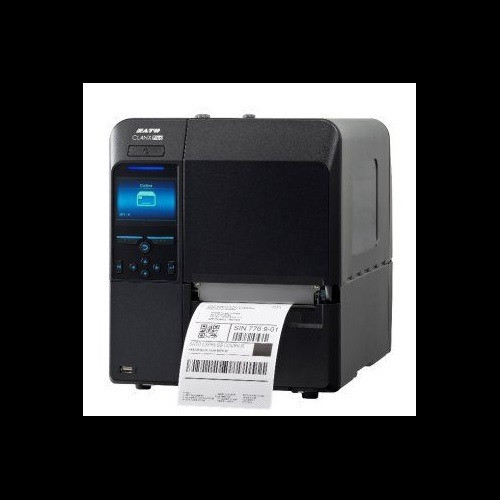
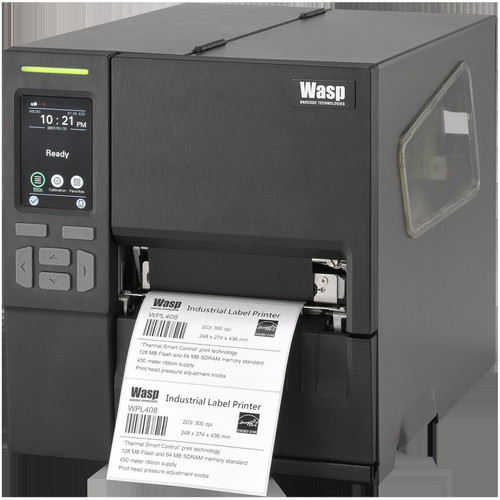
Both products are industrial thermal label printers designed for high-volume barcode and label printing in demanding environments. The Sato CL4NX Plus (WWCLP3B01-WAR) and Wasp WPL408 (633809007170) occupy the same industrial printer class, share dual-mode thermal transfer/direct thermal capability, comparable 4-inch-plus print widths, color LCD touchscreens, and multi-port connectivity including Wi-Fi. The primary differentiators are print resolution, RFID capability, memory, media capacity, and physical footprint—all of which carry real weight in selecting a label printer for enterprise or industrial deployment.
In This Guide
- Which printer delivers higher print quality and throughput?
- Which printer handles larger media capacity, more memory, and specialized encoding like RFID?
- Which printer is better suited to industrial environments and diverse integration scenarios?
- Which should you choose: the WWCLP3B01-WAR or the WPL408?
- Side-by-Side Specs
- FAQ
Which printer delivers higher print quality and throughput?
The Sato WWCLP3B01-WAR prints at 609 dpi with a maximum speed of 14 ips and a maximum print width of 4.09 inches. The Wasp WPL408 prints at 203 dpi at a maximum speed of 10 ips with a maximum print width of 4.25 inches. The Sato's 609 dpi resolution is three times that of the Wasp, which is significant for applications requiring fine barcodes, small fonts, or high-density 2D codes. The Sato also runs 40% faster (14 ips vs. 10 ips), which meaningfully affects throughput in high-volume label runs. The Wasp's 4.25-inch print width is marginally wider than the Sato's 4.09 inches, which may matter for specific wide-label formats.
Which printer handles larger media capacity, more memory, and specialized encoding like RFID?
The Sato WWCLP3B01-WAR supports media widths from 0.87 to 5.04 inches, a maximum media roll diameter of 10 inches, and a ribbon up to 1,968 ft. It carries 2 GB Flash and 256 MB SDRAM, plus 100 MB user storage. Critically, it includes integrated 13.56 MHz HF RFID encoding with auto-antenna optimization—a capability entirely absent from the Wasp WPL408 specs.
The Wasp WPL408 supports paper widths from 1.6 to 4.3 inches, a ribbon up to 1,474 ft, and carries 128 MB Flash and 128 MB SDRAM—half the Flash and SDRAM of the Sato. No RFID capability is listed for the Wasp. The Sato's larger roll capacity and longer ribbon reduce changeover frequency in continuous production environments, and its greater memory allows more label formats, fonts, and graphics to be stored onboard.
Which printer is better suited to industrial environments and diverse integration scenarios?
The Sato WWCLP3B01-WAR features a rigid cast aluminum frame with corrosion-resistant materials, weighing 33 lbs, and operates from 41°F to 104°F (5°C to 40°C). Connectivity includes Ethernet, Wi-Fi, and USB. Power input is AC 100–240V, 50/60Hz. Display is a 3.5-inch full-color LCD touchscreen.
The Wasp WPL408 weighs 20.28 lbs and measures 9.76" W x 10.79" H x 17.17" D. Its interface set is broader on paper—USB 2.0, RS-232 serial, Ethernet 10/100 Mbps, USB host, and a Wi-Fi slot—and it includes a 32-bit RISC CPU. Its display is a 3.5-inch color LCD touchscreen with 6 hardware buttons. No frame material, operating temperature range, or power input specs are provided in the available Wasp data. The Sato's documented cast aluminum build and explicit environmental ratings give it a verifiable ruggedness advantage; the Wasp's RS-232 and USB host ports expand legacy and peripheral integration options not listed for the Sato.
Which should you choose: the WWCLP3B01-WAR or the WPL408?
Our take: The WWCLP3B01-WAR is the stronger choice when print resolution, RFID encoding, and media capacity are primary requirements. Its 609 dpi resolution is three times the Wasp WPL408's 203 dpi, its print speed is 40% faster (14 ips vs. 10 ips), and it adds integrated 13.56 MHz HF RFID encoding that the Wasp does not offer at all. The Sato also carries twice the Flash memory (2 GB vs. 128 MB) and supports a longer ribbon (1,968 ft vs. 1,474 ft), reducing changeover in high-volume runs. Its cast aluminum frame with documented operating temperature specs supports genuine industrial deployments. The Wasp WPL408 is lighter (20.28 lbs vs. 33 lbs), includes RS-232 serial and USB host ports not listed for the Sato, and costs less—making it a reasonable fit for mid-volume label operations without RFID requirements or high-resolution demands.
Side-by-Side Comparison
Spec-for-spec, from manufacturer data.
| Specification | Sato WWCLP3B01-WAR | Wasp WPL408 |
|---|---|---|
| Print Method | Direct Thermal / Thermal Transfer | Thermal Transfer / Direct Thermal |
| Resolution | 609 dpi | 203 dpi |
| Print Speed | 14 ips | 10 ips |
| Max Print Width | 4.09" | 4.25" |
| Media Width Range | 0.87" – 5.04" | 1.6" – 4.3" |
| Max Media Roll Diameter | 10" | — |
| Max Ribbon Length | 1,968 ft | 1,474 ft |
| Flash Memory | 2 GB | 128 MB |
| SDRAM | 256 MB | 128 MB |
| User/Onboard Storage | 100 MB | — |
| RFID | 13.56 MHz HF | — |
| Display | 3.5" Full-Color LCD touchscreen | 3.5" Color LCD touchscreen, 6 buttons |
| Connectivity | Ethernet, Wi-Fi, USB 2.0 | USB 2.0, RS-232, Ethernet 10/100, USB host, Wi-Fi slot |
| Processor | — | 32-bit RISC CPU |
| Weight | 33 lbs (15 kg) | 20.28 lbs |
| Frame / Build Material | Rigid cast aluminum, corrosion-resistant | — |
| Operating Temperature | 41°F – 104°F (5°C – 40°C) | — |
| Power Input | AC 100–240V, 50/60 Hz | — |
| Warranty | 1-year | — |
Frequently Asked Questions
Which should you choose: the WWCLP3B01-WAR or the WPL408?
The WWCLP3B01-WAR is the stronger choice when print resolution, RFID encoding, and media capacity are primary requirements. Its 609 dpi resolution is three times the Wasp WPL408's 203 dpi, its print speed is 40% faster (14 ips vs. 10 ips), and it adds integrated 13.56 MHz HF RFID encoding that the Wasp does not offer at all. The Sato also carries twice the Flash memory (2 GB vs. 128 MB) and supports a longer ribbon (1,968 ft vs. 1,474 ft), reducing changeover in high-volume runs. Its cast aluminum frame with documented operating temperature specs supports genuine industrial deployments. The Wasp WPL408 is lighter (20.28 lbs vs. 33 lbs), includes RS-232 serial and USB host ports not listed for the Sato, and costs less—making it a reasonable fit for mid-volume label operations without RFID requirements or high-resolution demands.
Is the WWCLP3B01-WAR or WPL408 better for printing small barcodes or fine-detail labels?
The WWCLP3B01-WAR is significantly better for fine-detail work. It prints at 609 dpi versus the WPL408's 203 dpi—three times the resolution—which allows smaller, denser barcodes and finer text to remain scannable and legible.
Does either printer support RFID label encoding?
Only the Sato WWCLP3B01-WAR supports RFID encoding. It includes integrated 13.56 MHz HF RFID with auto-antenna optimization. No RFID capability is listed in the Wasp WPL408 specifications.
Which printer is easier to integrate with older serial-based systems or external peripherals?
The Wasp WPL408 lists RS-232 serial and USB host ports in its interface spec, which the Sato WWCLP3B01-WAR's available specifications do not include. If your deployment requires legacy serial connectivity or connecting a USB peripheral directly to the printer, the WPL408 has a documented advantage on that point.
More Label Printer Comparisons
- Honeywell PX940 vs Sato WWCLP3B01-WAR
- Honeywell PX940 vs Sato WWCLP3801-NAR
- Honeywell PX940 vs Sato WWCLP3801-WAR
- Honeywell PX940 vs Wasp WPL408
- Honeywell PX940 vs Honeywell PX4654-020
- Honeywell PX940 vs Honeywell PX6654-000
Label Printer Buying Guides
Get a Second Opinion on Your Camera Choice
Share your site layout, coverage goals, and budget. Our team will validate the camera selection, flag anything we would change, and recommend products that match the use case.