
Honeywell PX940 vs Sato WWCLP3801-WAR: Specification Comparison
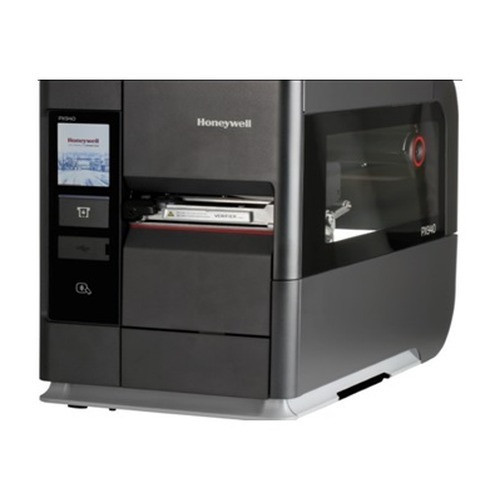
Both the Honeywell PX940V3H110060202 and the Sato WWCLP3801-WAR are industrial-grade direct thermal and thermal transfer label printers targeting high-demand manufacturing, warehousing, and compliance labeling environments. The PX940 differentiates itself with an integrated barcode verifier for point-of-print quality control, while the Sato CL4NX Plus adds 13.56 MHz HF RFID encoding capability and a significantly higher print resolution. This comparison evaluates both units across print performance, media and ribbon handling, and connectivity and intelligence features.

In This Guide
- Which printer delivers better print resolution and speed for demanding label applications?
- How do the two printers compare on media capacity, ribbon handling, and physical build?
- Which unit offers broader connectivity, smarter onboard computing, and more integration options?
- Which should you choose: the PX940 or the WWCLP3801-WAR?
- Side-by-Side Specs
- FAQ
Which printer delivers better print resolution and speed for demanding label applications?
The Sato WWCLP3801-WAR operates at 609 DPI, substantially exceeding the Honeywell PX940's 203 DPI. This difference is significant for applications requiring fine text, dense 2D barcodes, or pharmaceutical-grade label detail where pixel density directly affects readability and regulatory compliance.
On print speed, the Sato is rated at 14 ips (approximately 356 mm/s). The Honeywell PX940 specifies a range of 25–350 mm/s (roughly 1–14 ips) at 203 DPI, placing both units at a comparable top-end throughput ceiling. However, the Honeywell spec is expressed as a range tied to its 203 DPI resolution, while the Sato's 14 ips is stated at 609 DPI — making the Sato's sustained high-resolution throughput the more demanding achievement.
The Honeywell PX940 includes an integrated barcode verifier supporting both 1D (ISO/IEC 15416) and 2D (ISO/IEC 15415) standards. The Sato WWCLP3801-WAR spec does not list any integrated verifier. For operations requiring closed-loop print quality assurance at the point of print, this is a substantive functional difference.
How do the two printers compare on media capacity, ribbon handling, and physical build?
The Sato WWCLP3801-WAR supports a maximum ribbon length of 1,968 ft (approximately 600 m) and a maximum media roll diameter of 10 inches (254 mm). The Honeywell PX940 supports a maximum ribbon length of 450 m (1,476 ft) and a maximum media roll diameter of 213 mm (8.38 in). On both ribbon and media capacity, the Sato offers meaningfully larger consumable capacity, which reduces changeover frequency in high-volume runs.
The Sato specifies a media width range of 0.87 to 5.04 inches and a maximum print width of 4.09 inches. The Honeywell PX940 specifies a maximum print width of 105.7 mm (4.16 in) at 203 DPI; a minimum media width is not provided in the available spec. Both printers support direct thermal and thermal transfer print methods.
The Honeywell PX940 includes integrated label finishing features: a rewinder, peeler, and label taken sensor. The Sato WWCLP3801-WAR's spec does not list equivalent finishing accessories. The Honeywell unit weighs 23.5 kg (51.8 lbs) with verifier; the Sato weighs 33 lbs (approximately 15 kg). The Sato's frame is specified as cast aluminum. The Honeywell's frame material is not stated in the provided spec.
Which unit offers broader connectivity, smarter onboard computing, and more integration options?
The Honeywell PX940 runs Android OS on a dual-core ARM Cortex-A9 1 GHz processor with 1 GB DDR3 SDRAM and 256 MB Flash. Connectivity includes Ethernet, Bluetooth Low Energy, USB, and Wi-Fi (802.11 a/b/g/n/ac). Emulation support covers ZPL II, ZSim2, Direct Protocol, Fingerprint, and Intermec — a broad compatibility set for mixed-fleet or legacy environments.
The Sato WWCLP3801-WAR provides 2 GB Flash, 256 MB SDRAM, and 100 MB user storage. Connectivity covers Ethernet, Wi-Fi, and USB. The Sato does not list Bluetooth. Its operating system and processor are not specified in the provided data. The Sato adds 13.56 MHz HF RFID encoding, which is entirely absent from the Honeywell's spec — a decisive differentiator for supply chains requiring RFID-encoded labels.
The Honeywell PX940 features a 3.5-inch color touch LCD display. The Sato WWCLP3801-WAR also features a 3.5-inch full-color LCD display. Both units share an operating temperature range of 5–40°C (41–104°F). The Honeywell adds a storage temperature specification of -20 to 70°C; this is not provided for the Sato.
Which should you choose: the PX940 or the WWCLP3801-WAR?
Our take: The PX940 is the stronger choice when point-of-print barcode verification to ISO/IEC 15415/15416, broad emulation compatibility across mixed printer fleets, and an Android-based open computing platform are the primary requirements. The PX940 delivers integrated 1D and 2D verification and supports five emulation protocols versus none stated for the Sato. However, the Sato WWCLP3801-WAR holds clear advantages in three measurable areas: its 609 DPI resolution triples the PX940's 203 DPI for fine-detail pharmaceutical and electronics labels; its ribbon capacity of 1,968 ft exceeds the PX940's 1,476 ft, reducing changeover downtime; and it uniquely provides 13.56 MHz HF RFID encoding, which the PX940 entirely lacks. Choose the PX940 for barcode-verification-driven compliance workflows and legacy-emulation environments. Choose the Sato WWCLP3801-WAR for RFID-encoded label production or applications demanding photo-grade print resolution.
Side-by-Side Comparison
Spec-for-spec, from manufacturer data.
| Specification | Honeywell PX940 | Sato WWCLP3801-WAR |
|---|---|---|
| Print Method | Direct Thermal / Thermal Transfer | Direct Thermal / Thermal Transfer |
| Print Resolution | 203 DPI | 609 DPI |
| Max Print Speed | 350 mm/s (14 ips) at 203 DPI | 14 ips |
| Max Print Width | 105.7 mm (4.16 in) | 4.09 in |
| Display | 3.5 in Color Touch LCD | 3.5 in Full-Color LCD |
| Connectivity | Ethernet, Wi-Fi 802.11 a/b/g/n/ac, Bluetooth LE, USB | Ethernet, Wi-Fi, USB |
| Bluetooth | Bluetooth Low Energy | — |
| RFID | — | 13.56 MHz HF |
| Barcode Verifier | Integrated 1D (ISO/IEC 15416) and 2D (ISO/IEC 15415) | — |
| Processor | Dual-core ARM Cortex-A9 1 GHz | — |
| RAM | 1 GB DDR3 SDRAM | 256 MB SDRAM |
| Flash Storage | 256 MB | 2 GB Flash + 100 MB user storage |
| Max Ribbon Length | 450 m (1,476 ft) | 1,968 ft (~600 m) |
| Max Media Roll Diameter | 213 mm (8.38 in) | 10 in (254 mm) |
| Label Handling | Rewinder, Peeler, Label Taken Sensor | — |
| Emulations | ZPL II, ZSim2, Direct Protocol, Fingerprint, Intermec | — |
| Operating Temperature | 5 to 40°C (41 to 104°F) | 41°F to 104°F (5 to 40°C) |
| Weight | 23.5 kg (51.8 lbs) with verifier | 33 lbs (~15 kg) |
| Operating System | Android | — |
| Frame Material | — | Cast aluminum |
Frequently Asked Questions
Which should you choose: the PX940 or the WWCLP3801-WAR?
The PX940 is the stronger choice when point-of-print barcode verification to ISO/IEC 15415/15416, broad emulation compatibility across mixed printer fleets, and an Android-based open computing platform are the primary requirements. The PX940 delivers integrated 1D and 2D verification and supports five emulation protocols versus none stated for the Sato. However, the Sato WWCLP3801-WAR holds clear advantages in three measurable areas: its 609 DPI resolution triples the PX940's 203 DPI for fine-detail pharmaceutical and electronics labels; its ribbon capacity of 1,968 ft exceeds the PX940's 1,476 ft, reducing changeover downtime; and it uniquely provides 13.56 MHz HF RFID encoding, which the PX940 entirely lacks. Choose the PX940 for barcode-verification-driven compliance workflows and legacy-emulation environments. Choose the Sato WWCLP3801-WAR for RFID-encoded label production or applications demanding photo-grade print resolution.
Does either printer support RFID label encoding?
Only the Sato WWCLP3801-WAR supports RFID encoding, operating at 13.56 MHz HF frequency. The Honeywell PX940 spec does not list any RFID capability.
Which printer is better suited for regulated industries that require barcode quality verification?
The Honeywell PX940 includes an integrated barcode verifier compliant with ISO/IEC 15416 (1D) and ISO/IEC 15415 (2D), enabling pass/fail quality checks at the point of print. The Sato WWCLP3801-WAR does not list a built-in verifier in its provided specifications.
How do ribbon and media capacities compare for high-volume continuous runs?
The Sato WWCLP3801-WAR supports up to 1,968 ft of ribbon and a 10-inch maximum media roll diameter. The Honeywell PX940 supports up to 1,476 ft of ribbon and a 8.38-inch maximum media roll diameter, meaning the Sato requires less frequent consumable changes in sustained high-volume operations.
More Label Printer Comparisons
- Honeywell PX940 vs Sato WWCLP3B01-WAR
- Honeywell PX940 vs Sato WWCLP3801-NAR
- Honeywell PX940 vs Wasp WPL408
- Honeywell PX940 vs Honeywell PX4654-020
- Honeywell PX940 vs Honeywell PX6654-000
- Sato WWCLP3B01-WAR vs Wasp WPL408
Label Printer Buying Guides
Get a Second Opinion on Your Camera Choice
Share your site layout, coverage goals, and budget. Our team will validate the camera selection, flag anything we would change, and recommend products that match the use case.